





Louis XVI Pedestal
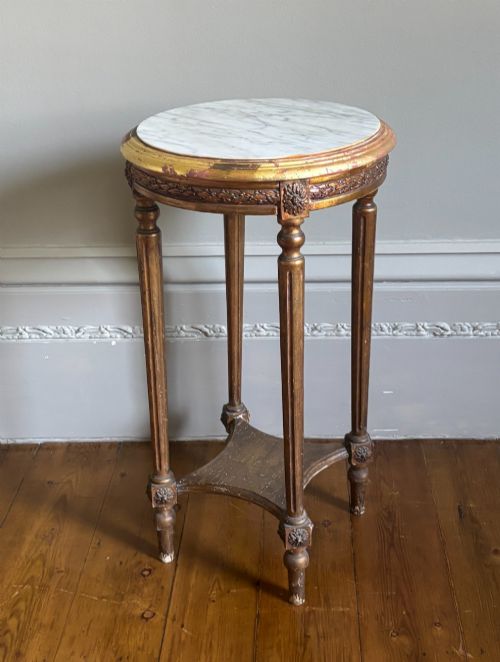
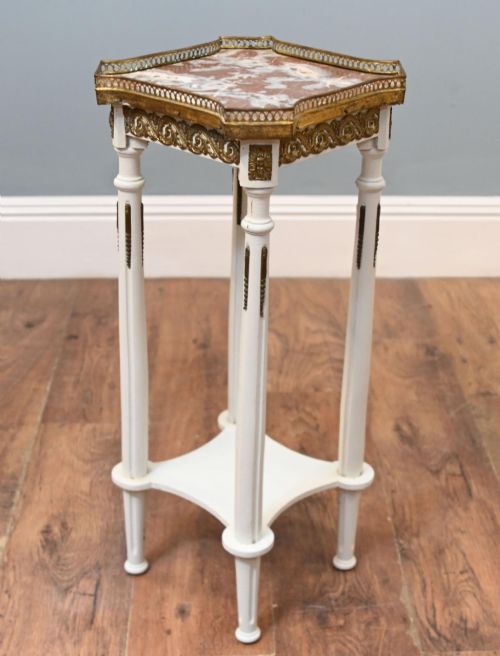
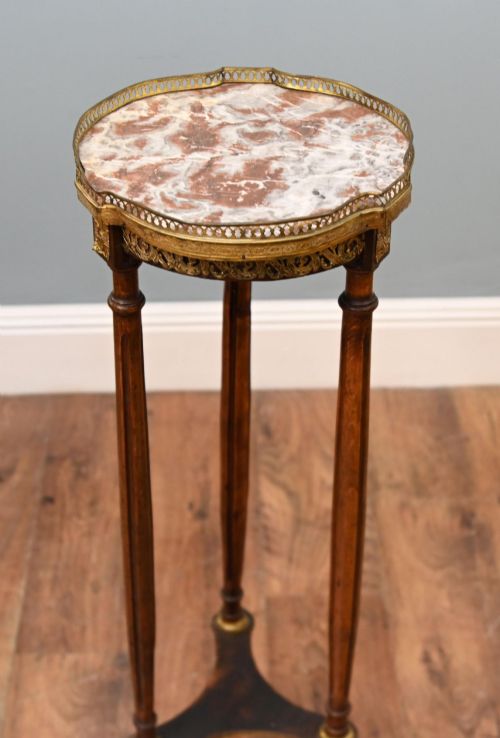
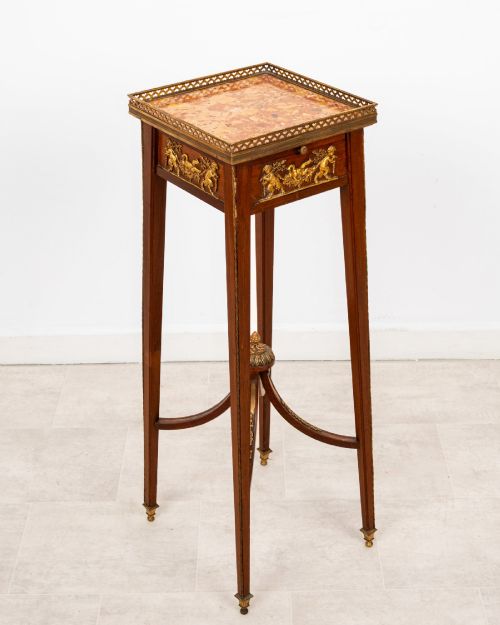
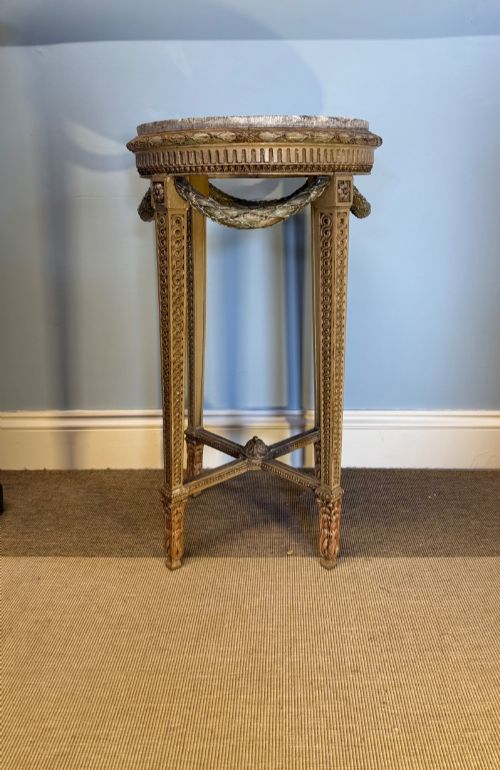
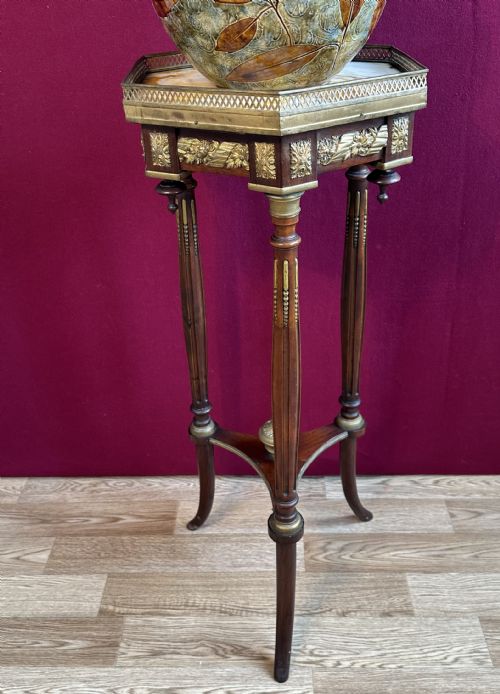
These pieces are louis xvi pedestal supports and display stands designed to elevate sculpture or urns with classical symmetry.
Louis XVI Pedestal
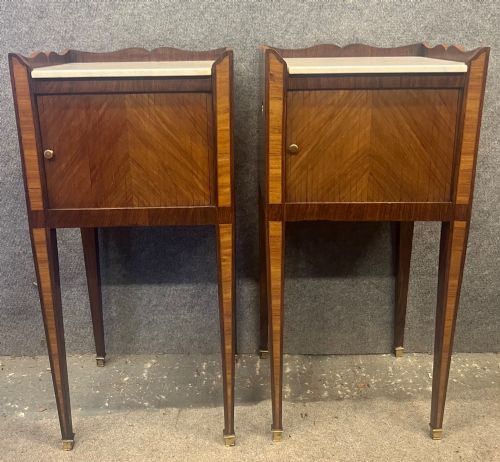
A louis xvi pedestal takes the form of a tall column or stand, frequently appearing alongside related French occasional tables and torchieres. The pieces span the nineteenth century and early decades of the twentieth century, reflecting revivals of neoclassical taste.
Most examples derive from French cabinet-making traditions, incorporating columnar silhouettes intended to display decorative objects or plants. The selections range from straightforward marble columns to ornate stands with giltwood or ormolu mounts.
Materials and Construction
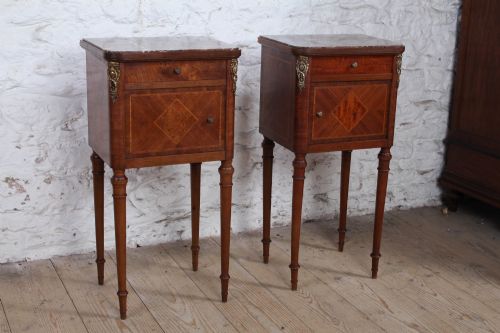
Makers utilised dense timbers such as mahogany, walnut, kingwood, and ebonised wood for the primary structures, often applying fine veneers or marquetry inlay. Brass and ormolu mounts provide structural accents and decorative borders along edges and capitals.
Stone forms a critical component, with polished marble and onyx selected for tabletops and column shafts to create contrasting textures against the timber frames.
Louis XVI Pedestal Retail Price Guide 2026
Typical asking prices for louis xvi pedestal among the pieces listed under this phrase on Sellingantiques today, from the lower quarter to the upper quarter. They describe what is for sale here now, not the wider market.
French neoclassical design principles govern the proportions of these pieces, prioritising straight vertical lines over curved rococo sweeps.
Execution and Detail
Superior examples display crispness in the cast ormolu mounts and precision in the parquetry and marquetry patterns across the wooden surfaces. The integration of heavy stone tops requires robust internal framing to support the weight securely.
Finishing work on the timber, whether French polish or giltwood leaf application, dictates the visual depth and tactile richness of the piece.
François Linke·Weisweller·A Hugnet Paris
The Louis XVI Pedestal Glossary
- Ormolu
- Gilded bronze mounts applied to furniture for decoration. This technique was widely utilised by French makers during the nineteenth century.
- Marquetry
- Fitted patterns of wood veneer forming decorative pictures or geometric designs on furniture surfaces. It requires considerable skill from the cabinet-maker.
- Torchere
- A tall stand or pedestal designed to hold a light or a decorative urn. These pieces follow classical architectural proportions.
- Gueridon
- A small circular table supported by one or more central columns. The form originated in France during the seventeenth century and remained popular in later revivals.
- Parquetry
- Geometric mosaic woodwork used for floors or furniture surfaces. It relies on contrasting wood species to create repeating patterns.
Louis XVI Pedestal: Frequently Asked Questions
What were these pedestals used for originally?
These supports served primarily to elevate art objects, bronze urns, or floral arrangements within elite reception rooms. Their height brought sculptural pieces closer to eye level for inspection.
They also functioned as architectural accents within French interior schemes, reinforcing classical symmetry and balance across a room.
How do I identify a louis xvi pedestal?
Look for straight fluted columns, squared capitals, and symmetrical neoclassical ornamentation referencing ancient Greek and Roman architecture. Ormolu mounts of laurel leaves or ribbons are typical decorative motifs.
The use of contrasting marble tops alongside mahogany or giltwood further signals this specific revival aesthetic.
Where should I place a pedestal in a modern room?
These stands fit well in corners or empty wall spaces where they can hold a ceramic vessel, lamp, or sculpture without obstructing movement. Their vertical proportions draw the eye upward, making them useful for balancing low modern seating.
Ensure the floor surface is level, as heavy marble tops require a stable foundation to prevent tipping.