



German Porcelain Vases
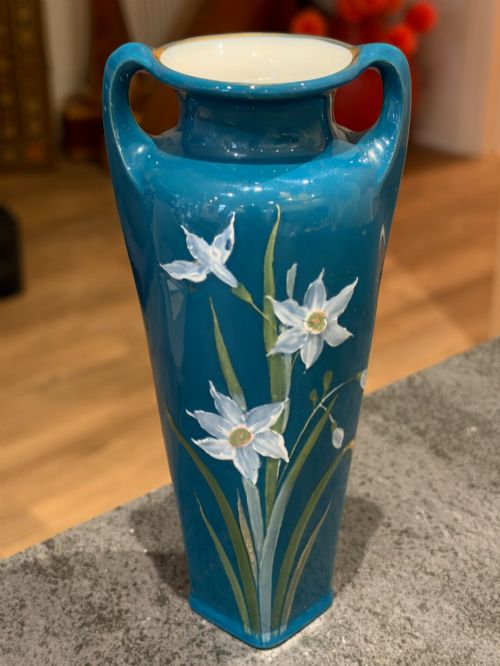
German porcelain vases bring intricate hand-painted floral decoration and neoclassical forms into a room, spanning the nineteenth century up to the nineteen thirties.
German Porcelain Vases
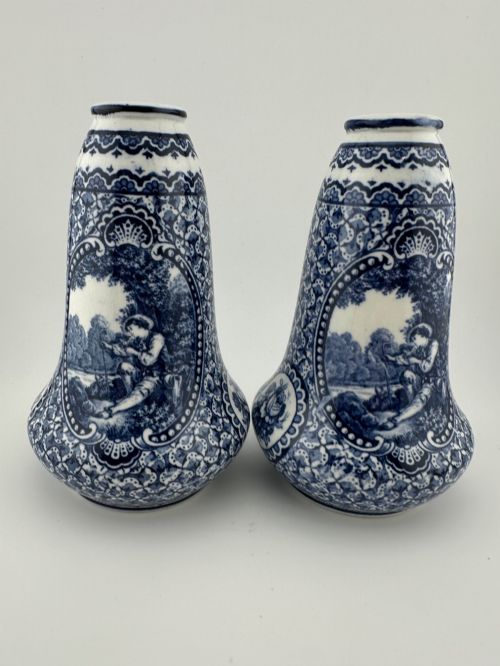
German porcelain vases encompass a rich variety of nineteenth century and early twentieth century decorative forms, including large lidded ginger jars, bulbous urns, and delicate posy holders. When searching for german porcelain vases, buyers typically encounter exuberant revival styles such as Rococo Revival, Louis XVI Revival, and Neoclassical Revival.
Forms range from intimate cabinet pieces to substantial floor-standing pairs measuring over sixty centimetres in height. Lidded vessels and pierced potpourri jars dominate the selection alongside sculptural figural holders.
How they were made
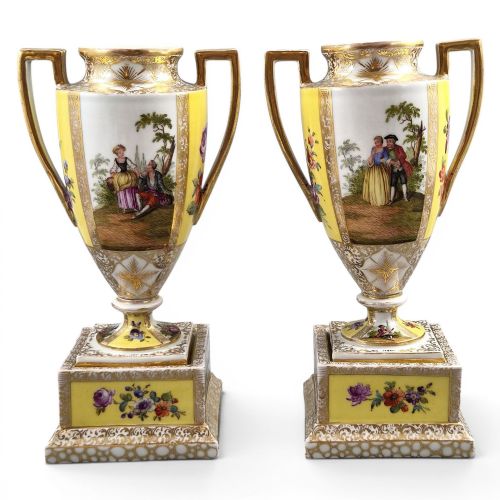
These pieces are manufactured primarily from hard-paste porcelain and glazed earthenware, shaped into complex bulbous or gourd forms. Artisans then applied detailed enamel decoration by hand alongside intricate gilding and gold leaf highlights.
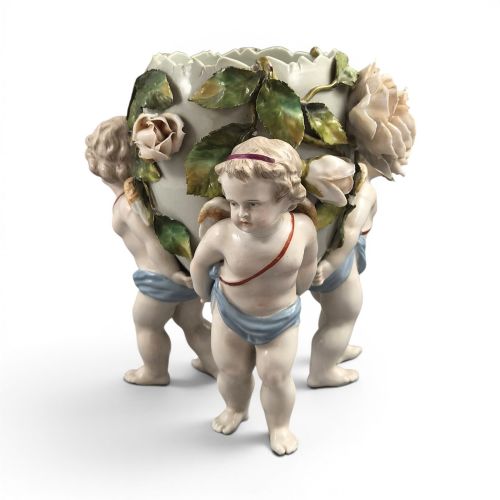
Techniques included both slip casting and manual moulding to create dimensional elements such as cherubs, applied flowers, and pierced latticework. Firing at high temperatures ensured a durable ceramic body before the final enamel and gilt details were fixed.
German Porcelain Vases Retail Price Guide 2026
Typical asking prices for german porcelain vases among the pieces listed under this phrase on Sellingantiques today, from the lower quarter to the upper quarter. They describe what is for sale here now, not the wider market.
Listings feature hard-paste porcelain, enamel, gold leaf, and glazed earthenware across the nineteenth century and the Edwardian period.
What varies in quality
The standard of hand-painting separates ordinary production from exceptional artistic achievement, particularly in the rendering of Watteau scenes and floral motifs. Crisp detail in moulded figures and delicate execution of pierced ceramic work indicate superior craftsmanship.
The application and preservation of gold leaf and gilding impact the overall visual weight of a piece. Original factory marks, such as specific Dresden or Meissen indicators, also influence the standing of an object within its period.
Royal Bonn Franz Anton Mehlem·Sitzendorf·Helena Wolfsohn Dresden·Meissen·Krister KPM Waldenburg·Berlin·Augustas Rex·KPM
The German Porcelain Vases Glossary
- Hard-Paste Porcelain
- A dense, durable ceramic material fired at very high temperatures using kaolin and petuntse. It forms the robust structural body for the majority of these European decorative vessels.
- Potpourri
- A mixture of dried petals and spices historically held within pierced ceramic jars to perfume a room. Lidded vases designed for this purpose feature perforated sections.
- Bisque
- Unglazed ceramic porcelain that has been fired once, offering a matte, marble-like texture. It is frequently utilised for sculptural figures and detailed figural holders.
- Gilding
- The application of gold leaf or gold paint to ceramic surfaces for decorative accent. It highlights handles, rims, and moulded relief details.
- Rococo Revival
- A nineteenth-century design movement inspired by eighteenth-century asymmetry, curves, and naturalistic scrollwork. This aesthetic heavily influences many nineteenth-century German urns and vases.
German Porcelain Vases: Frequently Asked Questions
How do I identify a Sitzendorf vase?
Sitzendorf pieces from the nineteenth century often incorporate sculptural elements like cherubs and hand-painted floral decoration on bulbous bodies.
They frequently take the form of lidded urns, potpourri jars, or egg vases reflecting revival styles.
What is the difference between Meissen and Dresden porcelain?
Meissen represents the historic royal Saxon porcelain manufactory known for its high-art figures and cobalt blue vessels.
Decoration associated with Dresden often encompasses studios and decorators like Helena Wolfsohn working in the broader regional tradition.
How were lidded ginger jars used?
Lidded ginger jars served as decorative display items in nineteenth-century interiors, often complementing large urn pairs on mantelpieces.
Their robust porcelain bodies allowed for elaborate enamel painting and gilt highlights.
What periods do these porcelain vases cover?
The available selection primarily spans the nineteenth century, including the Victorian era, through to Edwardian pieces and items from the nineteen thirties.
Revival styles such as Louis XVI and Neoclassical dominate the nineteenth-century production.