



Classical Porcelain Urns
Classical porcelain urns bring formal proportion and hand-painted detail to a room, drawing on Georgian and Victorian decorative traditions.
Classical Porcelain Urns
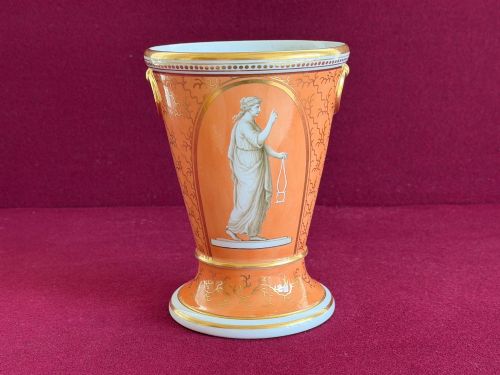
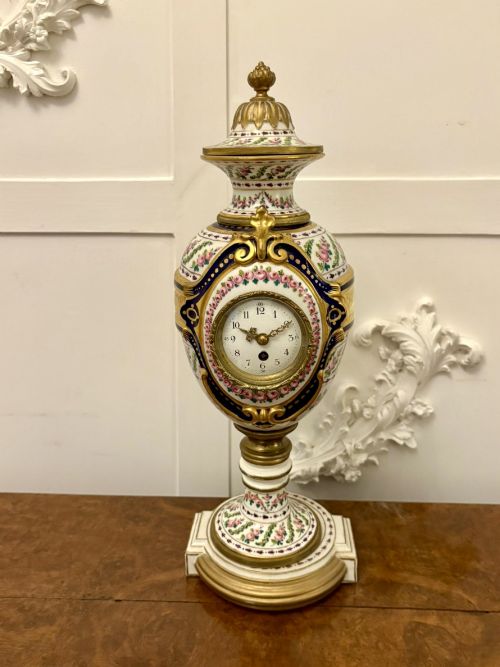
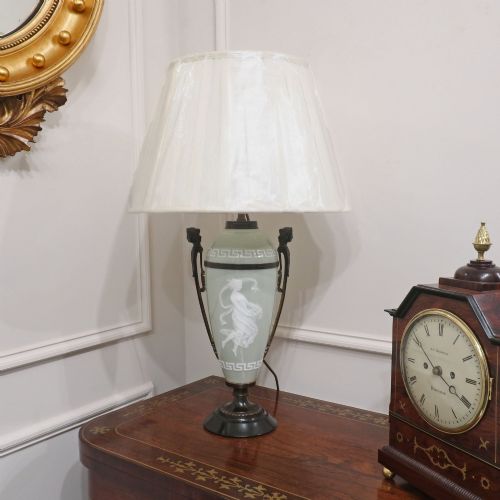
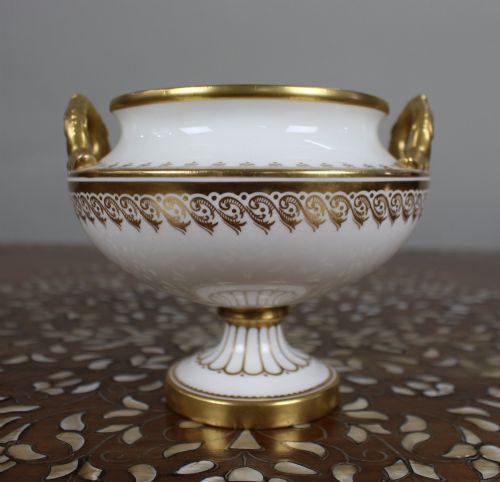
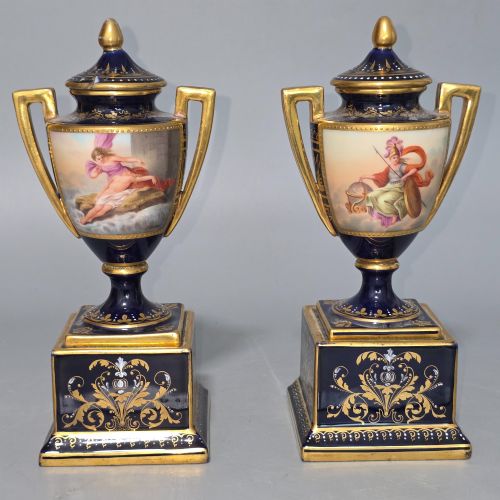
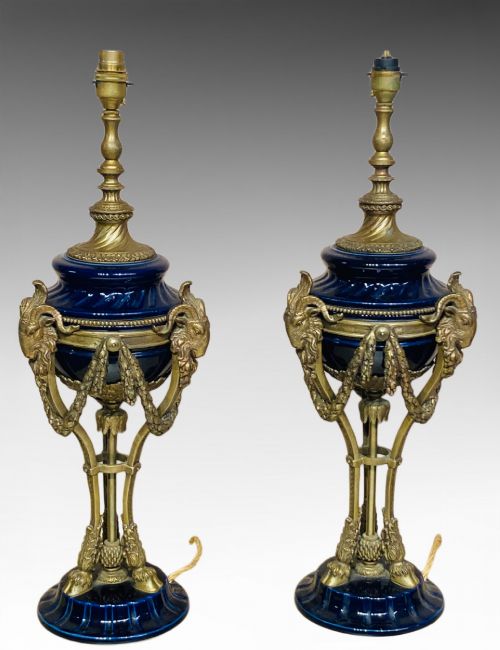
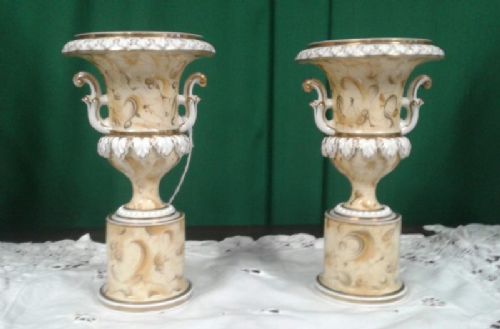
Classical porcelain urns encompass decorative vessels, campana vases, lidded garnitures, and table lamps shaped by Neoclassical, Empire, and Rococo Revival influences.
The pieces appearing on this page span the Georgian era through to the late nineteenth and early twentieth centuries, originating from English, French, German, and Italian potteries.
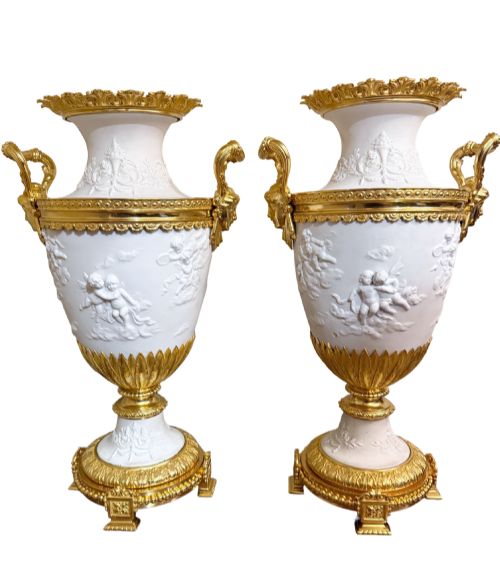
Buyers will encounter single display urns, balanced pairs, and multi-piece sets designed for mantelpieces, pedestals, and formal reception spaces.
Materials and Construction
Potters shaped high-fired ceramic bodies by hand or in moulds, applying coloured glazes, enamel pigments, and delicate pate sur pate relief decoration.
Many specimens incorporate gilt bronze, ormolu mounts, and gold leaf highlights, combining ceramic artistry with metal casting.
Some nineteenth-century makers hid their factory marks beneath heavy ormolu mounts, forcing collectors to become part-time detectives.
Judging Quality
Quality rests upon the crispness of the porcelain modelling, the precision of the hand-painted scenes, and the weight of the ormolu mounts.
Finely executed portrait panels, gilding burnished by hand, and well-documented factory marks distinguish standard production wares from exceptional studio pieces.
Flight And Barr·Meissen·Sevres·Wedgwood·Minton·KPM
The Classical Porcelain Urns Glossary
- Campana urn
- A bell-shaped vessel with a flared rim and footed base, frequently styled on classical antiquity. This form gained immense popularity across Georgian and Victorian households.
- Ormolu
- Gilded bronze mounts applied to the handles, bases, and rims of ceramic urns. The technique requires mercury amalgamation or electroplating to bond gold to the metal base.
- Pate sur pate
- A ceramic decoration method involving layers of liquid white porcelain slip built up on a coloured clay ground to create a low relief cameo effect.
- Garniture
- A matched set of three or more ornamental vases or urns designed to sit together on a mantelpiece or cabinet. These sets were central to formal interior decoration in the nineteenth century.
- Amphora
- A two-handled vase with a narrow neck, modelled on ancient Greek and Roman storage vessels. Potters revived this ancient shape during the nineteenth century for decorative display.
Classical Porcelain Urns: Frequently Asked Questions
Where did people display these urns?
These pieces sat upon mantelpieces, side tables, and dedicated pedestals in nineteenth-century drawing rooms. Pairs and garniture sets anchored the symmetry of a room.
Larger monumental urns stood on the floor or on architectural consoles, serving as focal points within formal hallways and reception spaces.
How do I date a porcelain urn?
Dating relies on factory backstamps, ceramic body composition, and stylistic cues such as Empire or Rococo Revival motifs. Examining the hand-painting style and gilding wear also aids in establishing the period.
Comparing the manufacturing technique with known factory production dates narrows down the decade of creation.
Are these urns waterproof?
Most of these pieces served purely decorative functions rather than acting as practical flower holders. The presence of gilt bronze mounts, delicate enamel work, and internal lamp wiring means they suit dry display best.
Using them for fresh water and flowers risks damaging the historical painted surfaces and interior glazes.
What is a garniture set?
A garniture consists of a matched set of three or five lidded vases or urns designed to be displayed together. The central vessel is typically taller, flanked by smaller matching companion pieces.
This arrangement provided balanced ornamentation for grand nineteenth-century mantelpieces and large furniture tops.