


Gilt Porcelain Mantel Urns
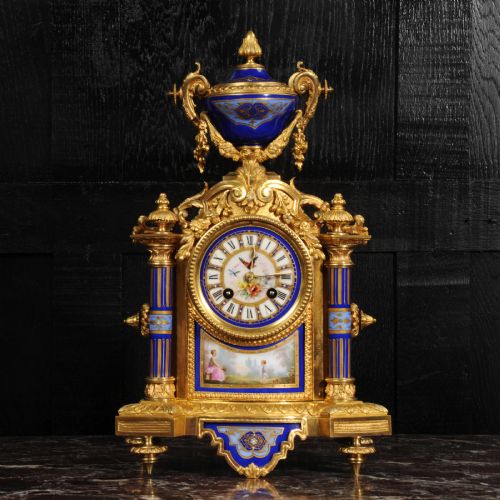
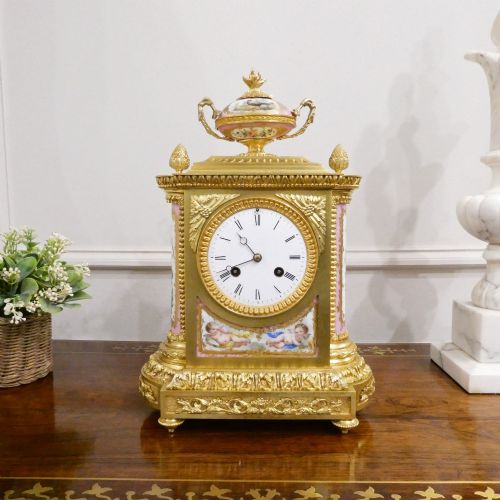
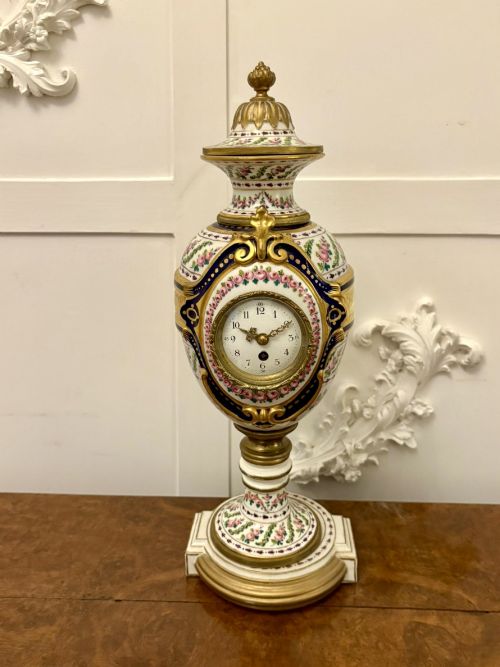
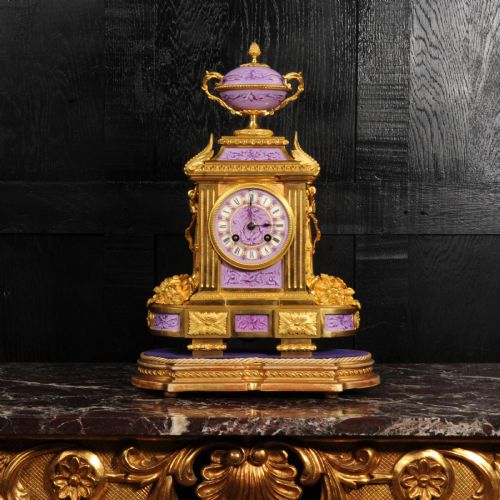
These gilt porcelain mantel urns combine luminous ceramics with gilt metal mounts to anchor a room with architectural symmetry.
Gilt Porcelain Mantel Urns
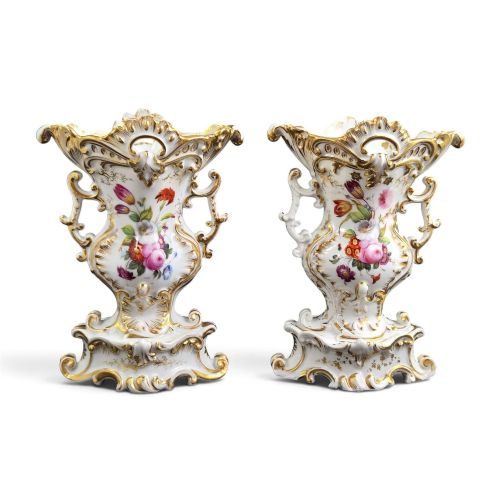
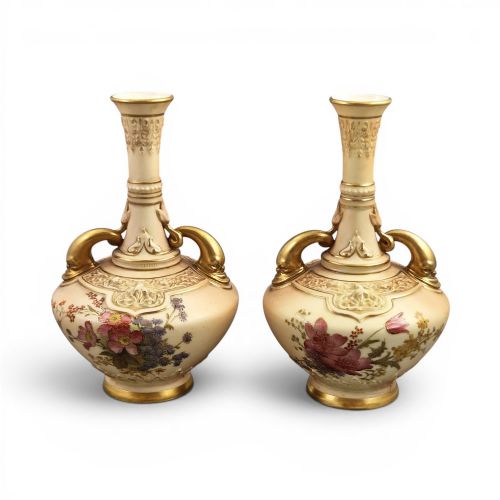
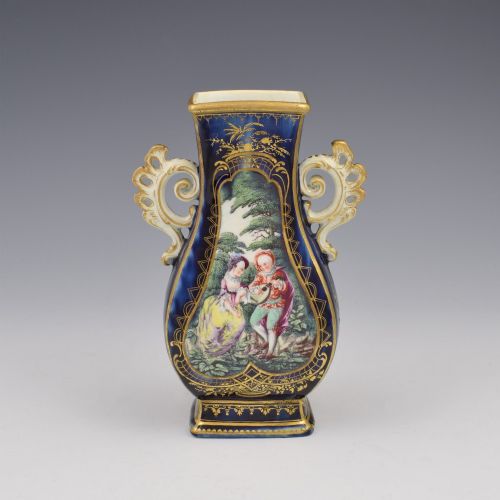
Gilt porcelain mantel urns are decorative vessels designed for display on mantelpieces, often appearing alongside matching side vases or as part of clock garnitures. When exploring this selection, buyers encounter nineteenth-century French and English pieces, including Parisian porcelain and Worcester productions.
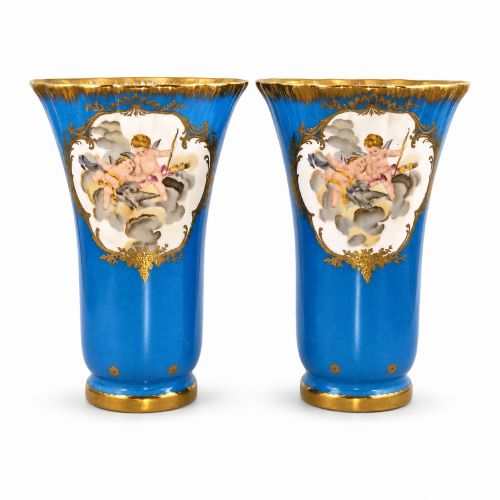
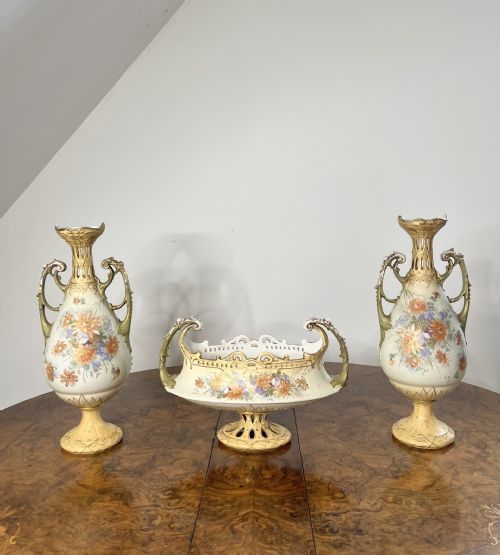
The inventory demonstrates that many forms function as paired garnitures or centrepieces rather than solitary items. These objects incorporate hand-painted scenes, floral motifs, and raised enamel decoration upon cobalt, white, or blush ivory grounds.
Materials and construction
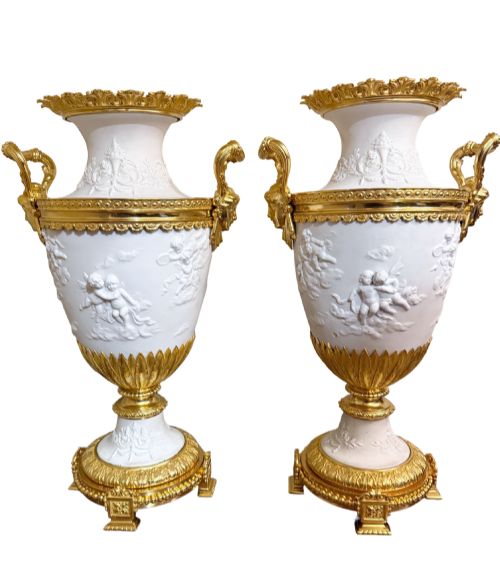
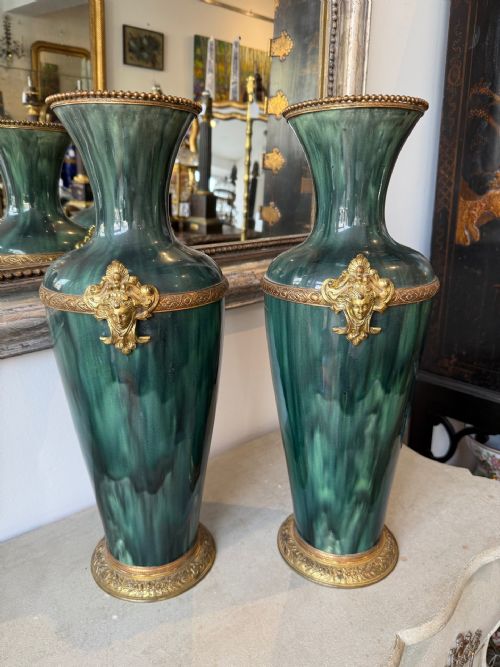
The creation of these pieces relies on the union of fired ceramic bodies with applied ormolu, gilt bronze, and gold leaf mounts. Potteries shaped porcelain bodies by hand or in moulds before applying glazes, enamel colours, and gilding.
Metalworkers cast bronze mounts using the lost-wax method, then chased and gilded the surfaces to frame the porcelain vessels. Mechanics integrated similar gilt materials into clock movements and garniture bases produced by nineteenth-century French makers.
Listings feature nineteenth-century materials including porcelain, ormolu, gilt bronze, and enamel across diverse forms.
Judging quality in gilt porcelain mantel urns
Quality rests upon the crispness of the bronze chasing and the precision of the hand-painted details on the porcelain. Superior examples display finely rendered figurative scenes or botanical studies executed by skilled painters rather than mass-produced transfers.
The harmony between the ceramic body and the metal mounts determines the success of the piece. Heavier, more substantial gilt bronze castings and well-preserved gilding distinguish the finer output from standard workshop fabrications.
Japy Freres·Jean-Baptiste Delettrez·Achille Brocot·Jacob Petit·Samson Paris·Royal Vienna·Royal Worcester·Chelsea Porcelain·Manpei·Hododa·Flight Barr and Barr·Wolfsohn Dresden·Mason·James Stinton·Thomas Steel·Vincenti of Paris
The Gilt Porcelain Mantel Urns Glossary
- Garniture
- A set of decorative objects designed to be displayed together on a mantelpiece, typically consisting of a central clock or vase accompanied by matching side vases.
- Ormolu
- Finely ground high-carat gold applied to a bronze base using a mercury-gilding technique, common in nineteenth-century French metalwork.
- Sèvres
- A French porcelain manufactory renowned for its high-quality ceramic production, royal patronage, and distinctive coloured grounds.
- Bleu Céleste
- A bright turquoise blue enamel ground colour developed at the Sèvres factory during the eighteenth century and imitated by later makers.
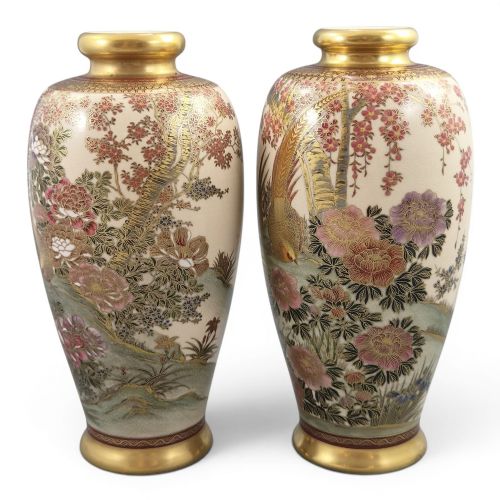
- Mon
- A Japanese emblem or crest used to decorate ceramics such as Satsuma vases.
Gilt Porcelain Mantel Urns: Frequently Asked Questions
Where were these urns displayed?
These urns and garnitures were placed on the mantelpiece above a fireplace as the visual focal point of a formal room. They were also arranged on console tables, pier glasses, and sideboards.
Because they were designed to be viewed from the front, the most detailed hand-painted scenes usually face outward. They served both decorative and architectural functions in period interiors.
What does ormolu mean?
Ormolu refers to gilded bronze mounts applied to decorative objects, clocks, and furniture. The technique involves treating bronze with a gold amalgam to achieve a rich, metallic finish.
In nineteenth-century mantel urns and clocks, ormolu provides structural framing and ornamental handles. The precision of the chasing on the bronze indicates the skill of the metalworker.
How are periods told apart?
Periods are identified through stylistic shifts in form, ornament, and manufacturing techniques. For example, Regency and Louis XVI pieces favor classical restraint, whereas Victorian and Rococo Revival items embrace ornate scrolling and vibrant colours.
Maker marks, material combinations, and the specific style of hand-painting further anchor a piece to its decade of production.