




Gilded Vienna Porcelain Vases
These gilded vienna porcelain vases bring heavy nineteenth-century neoclassical and empire elegance into a room through rich hand-painted detail and gleaming gold leaf.
Gilded Vienna Porcelain Vases
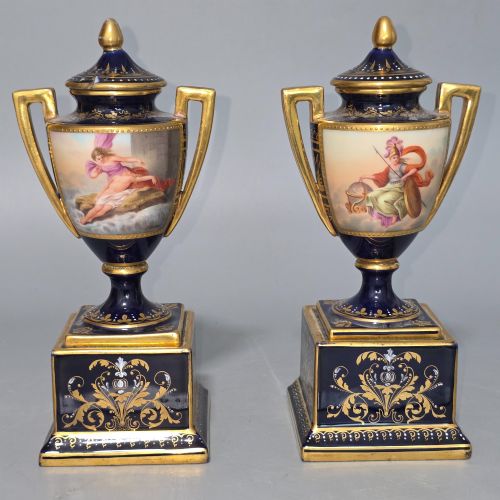
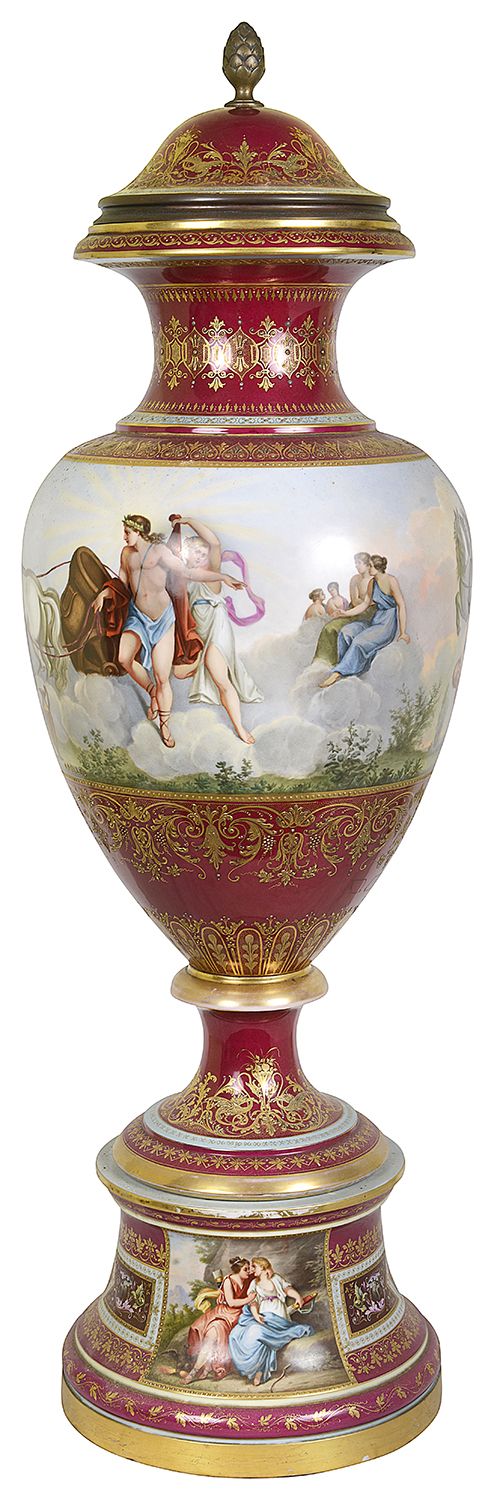
Gilded vienna porcelain vases span the nineteenth century, taking the form of large lidded urns, amphora shapes, and multi-piece garniture sets. These decorative objects draw heavily on neoclassical, empire, and rococo revival styles, often featuring classical figures or ornate portraits.
Buyers meeting these pieces on this page will encounter items ranging from simple nineteenth-century vases to elaborate centrepieces and side vases. Forms include glazed ceramic bodies fitted with decorative wooden bases and substantial handles.
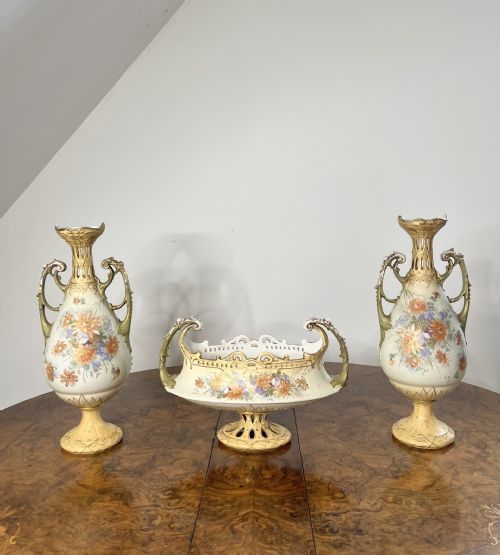
The selection reflects both royal vienna manufactory pieces and independent Vienna style outputs from makers like Ernst Wahliss. Production dates cluster around eighteen-eighty through nineteen hundred, capturing late nineteenth-century European ceramic design.
Quality factors
The fineness of the hand-painted brushwork separates standard production items from masterworks bearing artist signatures like F. Koller. Superior examples display crisp detail in portrait medallions and intricate precision within the surrounding gilt patterns.
The weight and scale of the porcelain body, alongside the depth and coverage of the gold leaf application, indicate the maker's original ambition. Well-preserved enamel colours that retain their vibrancy without fading contribute significantly to a piece's standing.
Some nineteenth-century makers required wooden components simply to keep these hefty gilded giants upright on parlour sideboards.
Ernst Wahliss·F. Koller
The Gilded Vienna Porcelain Vases Glossary
- Garniture
- A set of three or more matching vases or urns designed to be displayed together on a mantelpiece or sideboard.
- Amphora
- A tall ancient-style two-handled jar form adopted by nineteenth-century ceramicists for grand decorative urns.
- Enamel
- Opaque glass-based colour fused to the porcelain surface during firing to create detailed painted scenes and borders.
- Gilding
- The application of gold leaf or gold powder to accentuate handles, rims, and ornamental borders on the ceramic body.
Gilded Vienna Porcelain Vases: Frequently Asked Questions
What are gilded vienna porcelain vases?
These pieces are nineteenth-century ceramic decorative objects originating from Vienna, featuring hand-painted designs and heavy gold leaf embellishment.
They take shapes such as lidded urns, amphoras, and matching garniture sets reflecting neoclassical and empire design tastes.
How were gilded vienna vases used?
Owners displayed these large urns and garniture sets prominently on mantelpieces, pedestals, and central tables in formal nineteenth-century reception rooms.
They served purely as decorative focal points to showcase wealth, artistic taste, and classical learning rather than as functional containers for flowers.
How do I date a vienna porcelain vase?
Dating relies on examining the stylistic markers, such as the transition from strict neoclassical empire forms to flowing art nouveau curves around nineteen hundred.
Factory marks, artist signatures, and recorded periods help narrow the production window between eighteen-fifty and the turn of the century.
How should I clean gilded vienna porcelain?
Maintenance requires only gentle dusting with a soft, dry brush to prevent accumulation on raised enamel and gilt surfaces.
Moisture and harsh cleaning agents must be avoided entirely to protect the delicate hand-painted details and fragile gold leaf from wearing away.