



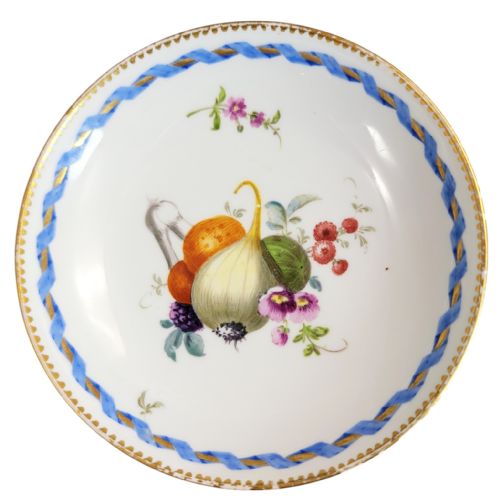


German Porcelain Plate
A german porcelain plate brings centuries of European artistry to the table, offering intricate hand-painted scenes and gilded details that collectors prize.
German Porcelain Plate
When searching for a german porcelain plate, buyers encounter a rich variety of decorative tableware spanning the eighteenth, nineteenth, and early twentieth centuries. These items serve primarily as cabinet plates, dessert dishes, and decorative chargers designed to display tabletop elegance rather than heavy daily use.
The most common examples on this page date from the nineteenth century, including numerous pieces from Meissen alongside works from Dresden, Royal Bonn, Fürstenberg, and Paul Müller Selb. Forms range from simple saucers and square dishes to elaborate reticulated plates and large portrait chargers decorated in styles from Rococo Revival to Neoclassical.
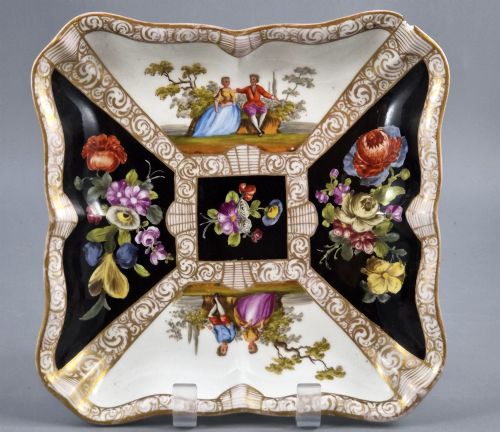
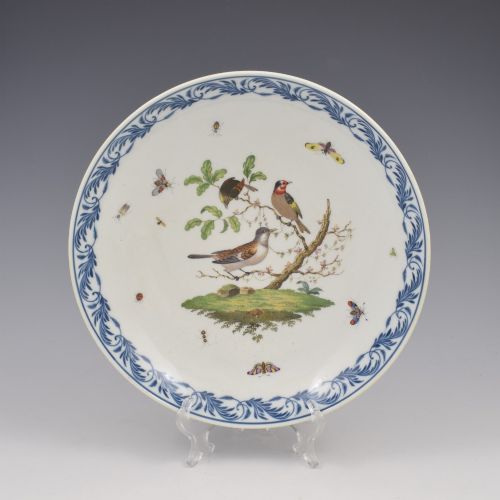
Makers utilised distinct motifs such as Watteau scenes, ornithological bird studies, floral sprays, and Kakiemon patterns. Whether choosing a nineteenth-century cabinet plate or an eighteenth-century dish, collectors find substantial variety in shape, border design, and painted subject matter.
What varies in quality
The finesse of the hand-painted brushwork dictates the upper tier of quality, distinguishing meticulously rendered birds and gallant scenes from repetitive factory decoration. Superior pieces display crisp detail in facial expressions, plumage, and botanical accuracy without blurring along the enamel edges.
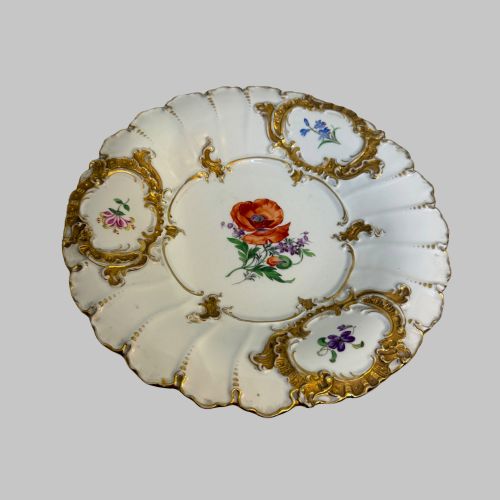
Moulding complexity and the execution of relief work also separate standard items from exceptional ones. Reticulated plates with pierced borders and heavily gilded baroque frameworks require advanced skill during both the throwing and finishing stages.
The preservation of the original gilding and enamel colours remains a primary factor in overall assessment. Pieces retaining vibrant gold leaf and unrubbed polychrome surfaces reflect superior care and manufacturing provenance.
Past offerings include a plate depicting a golden lion, proving that historical ceramic painters occasionally leaned into fierce domestic fauna.
Meissen·Royal Bonn·Furstenberg·Paul Muller Selb·Helena Wolfsohn·Plaue Schierholz
The German Porcelain Plate Glossary
- Hard-paste porcelain
- A dense, vitrified ceramic composed of kaolin and petuntse fired at very high temperatures. This material forms the durable white body typical of fine European decorative plates.
- Reticulated plate
- A ceramic dish featuring an openwork or pierced border created by cutting geometric patterns into the clay before firing. This technique adds an ornamental lightness to the rim.
- Cabinet plate
- A decorative dish intended for display on a wall or within a glass-fronted cabinet rather than for serving food. These pieces usually exhibit higher artistic detail.
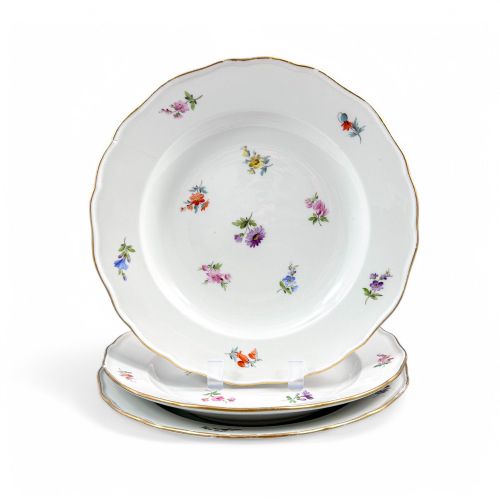
- Streublumen
- A scattered floral pattern consisting of small, individual painted blossoms arranged across a white ceramic surface. This motif appears frequently on nineteenth-century tablewares.
German Porcelain Plate: Frequently Asked Questions
How were these plates used?
Many of these items functioned as cabinet plates or dessert dishes intended for display in dining rooms and parlours. Wealthy households utilised them during formal dining to present sweets and showcase artistic taste.
Over time, collectors moved these decorative chargers and saucers into enclosed cabinets to protect the delicate enamel painting and gold leaf from wear.
How do I identify a Meissen piece?
Makers typically applied crossed swords in blue underglaze to the reverse of genuine Meissen ceramics. Artisans also utilised specific pattern names and period motifs like Streublumen or Kakiemon designs.
Examining the crispness of the hand-painted birds and gallant scenes helps distinguish genuine nineteenth-century output from later reproductions.
What is a cabinet plate?
A cabinet plate is a decorative ceramic dish manufactured primarily for visual display rather than culinary service. These items often feature elaborate hand-painted scenes, gilded borders, and pierced edges.
Because they avoided heavy daily use, cabinet plates usually retain their original enamel colours and gold leaf in high-grade condition.