


Rococo Revival Dish
A rococo revival dish brings swirling asymmetric scrolls, painted scenes and gilt brass mounts into the nineteenth-century interior.
Rococo Revival Dish
When you search for a rococo revival dish, you find nineteenth-century porcelain vessels, sterling silver salts and gilded ormolu stands made across England, France and Germany. These pieces draw heavily on eighteenth-century French motifs, translating curving natural forms into decorative bowls, cabinet plates and serving dishes.
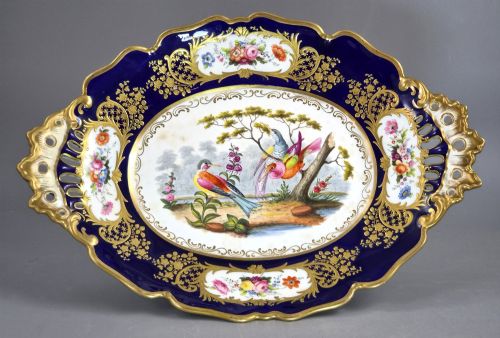
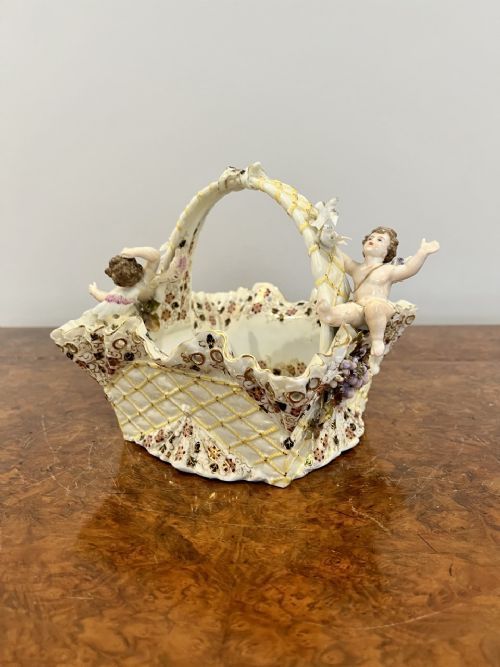
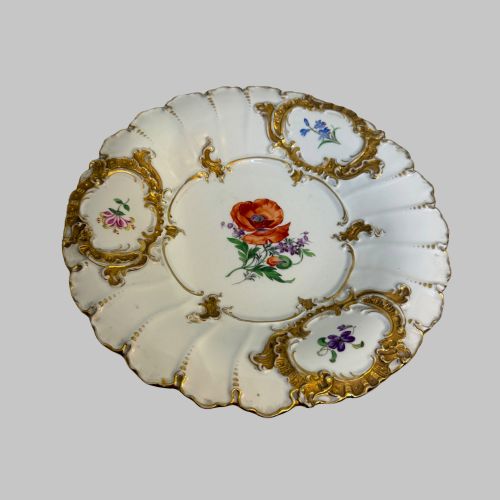
You are most likely to meet mid-to-late nineteenth-century porcelain cabinet plates and decorative baskets featuring hand-painted panels, cobalt grounds or moulded shell contours. Makers across Europe produced these works during the Victorian era for display on sideboards, mantelpieces and drawing-room tables.
The form spans straightforward serving dishes to elaborate centrepieces supported by cherubs, dolphins or scrolling feet. Their primary purpose shifted from formal dining to ornamental display, reflecting the Victorian appetite for revival styles and historicist design.
How they were made
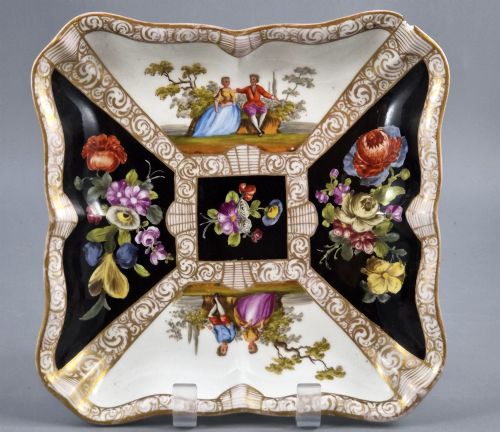
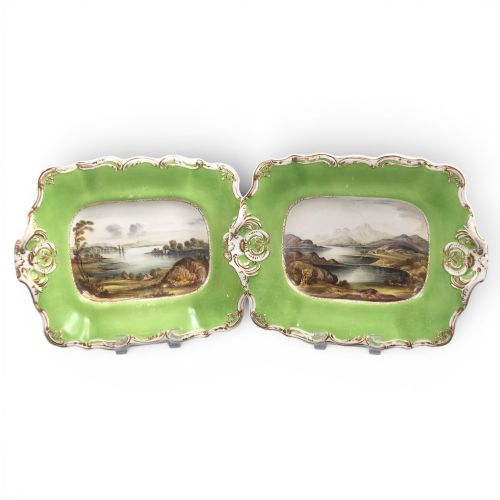
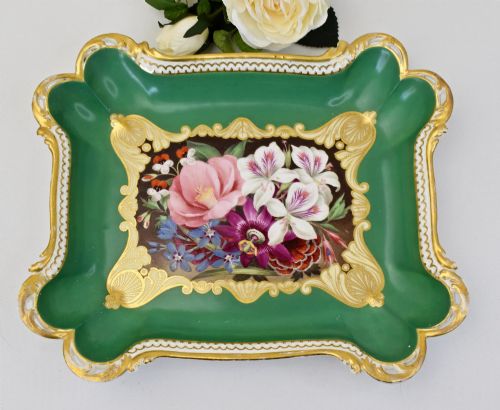
Potters shaped hard-paste and soft-paste porcelain using moulds or throwing techniques, applying cobalt blue grounds, enamel colours and gold leaf by hand. Many factories fired these pieces multiple times to set complex hand-painted Watteau scenes and floral motifs.
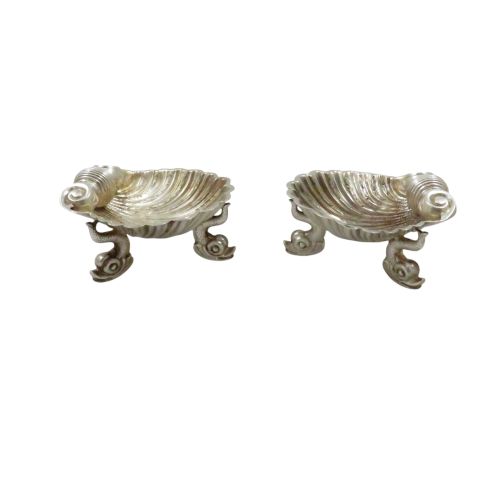
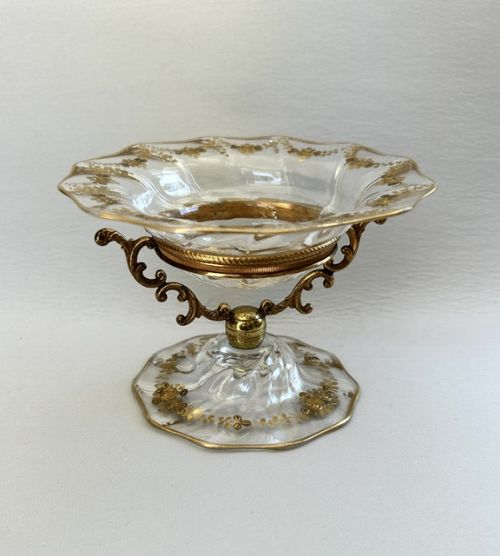
Metal pieces combine sterling silver and cast ormolu, employing chasing, gilding and cut glass. Silversmiths formed shell-shaped salts and dressing table trays with detailed repoussé work, while French and German workshops combined bronze mounts with glass and porcelain.
Nineteenth-century artisans cast bronze cherubs and dolphins to support porcelain bowls, turning everyday dining into theatrical sculpture.
What varies in quality
Quality rests in the crispness of the moulding and the skill of the hand-painting. Finer porcelain dishes display detailed brushwork in figurative scenes and carefully applied gilding that retains its burnished lustre.
The weight and casting definition of ormolu mounts and sterling silver distinguish exceptional pieces from standard production. Sharply chased details on cherubs, dolphin feet and shell rims separate superior nineteenth-century work from simpler factory output.
Coalport·Meissen·Copeland and Garrett·Doe and Rogers·Mintons·John Ridgway·Dresden·Copeland·Helena Wolfsohn·Royal Worcester·Samson Paris·William Comyns
The Rococo Revival Dish Glossary
- Ormolu
- Gilded bronze, widely utilised in the nineteenth century for mounts, stands and decorative hardware. It provides a rich golden contrast to porcelain bodies and cut glass.
- Hard-paste porcelain
- A durable ceramic material fired at high temperatures, composed of kaolin and petuntse. It forms the base of many German and French cabinet plates.
- Cabinet plate
- A decorative ceramic plate intended for display on a wall or within a cabinet rather than for table service. These often feature elaborate painted scenes.
- Repoussé
- A metalworking technique where the smith hammers the design from the reverse side to form raised relief patterns on silver bowls and trays.
- Tazza
- An elevated shallow bowl or cup resting on a foot and stem, frequently cast in ormolu or silver for display purposes.
Rococo Revival Dish: Frequently Asked Questions
What is a rococo revival dish?
A rococo revival dish is a nineteenth-century decorative vessel, porcelain plate or silver tray that copies the asymmetrical scrolls, shells and organic curves of the eighteenth-century French rococo style.
These pieces were produced across England, France and Germany during the Victorian period, serving primarily as ornamental objects for display in drawing rooms and cabinets rather than for everyday dining.
How do I identify a Victorian piece?
You can identify nineteenth-century pieces by examining the factory marks stamped or painted on the underside of the porcelain, alongside hallmarks found on sterling silver items. Stylistic clues such as cobalt blue grounds, hand-painted Watteau scenes and moulded shell forms also point directly to the Victorian era.
Makers often included pattern numbers or registration marks that allow you to date the manufacture of the ceramic or silver precisely.
Were these dishes used for food?
While some pieces functioned as dessert service plates, cream tureens or salt cellars during formal meals, many objects listed under this term were strictly ornamental. Items featuring elaborate ormolu stands, delicate cut glass or fragile porcelain baskets were designed solely for visual display.
Over time, their role shifted entirely from dining room utility to interior decoration and collection.