
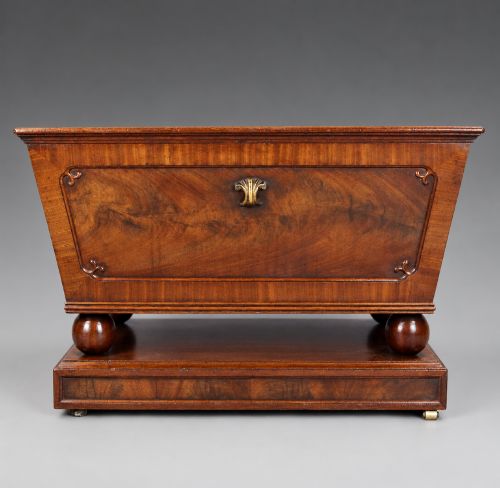
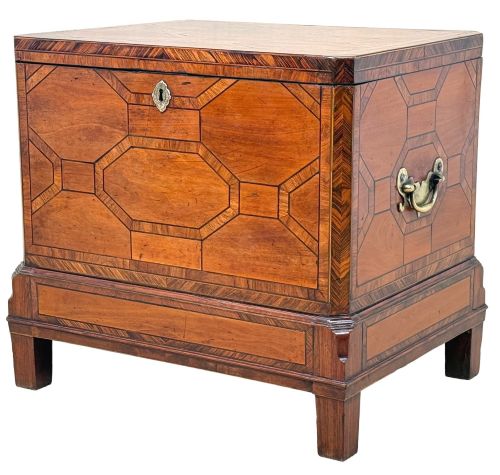
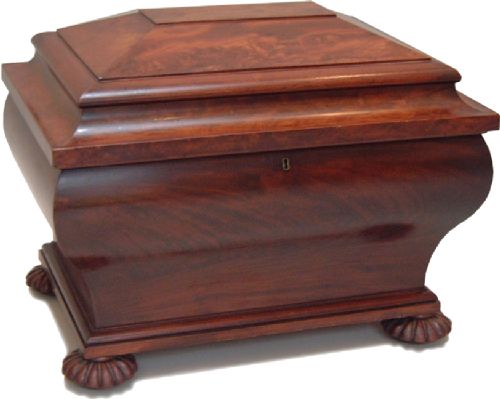
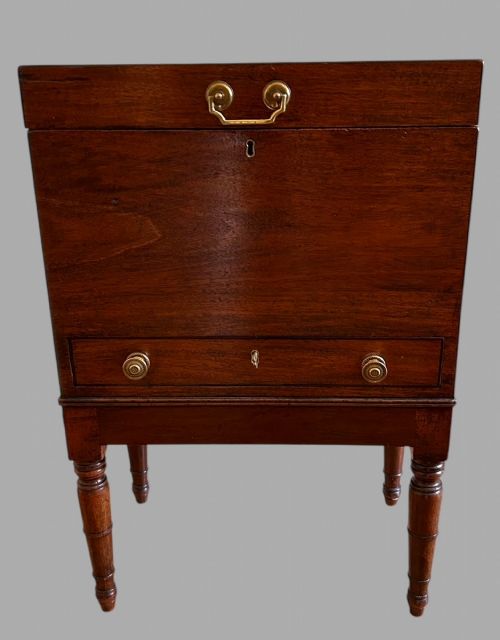
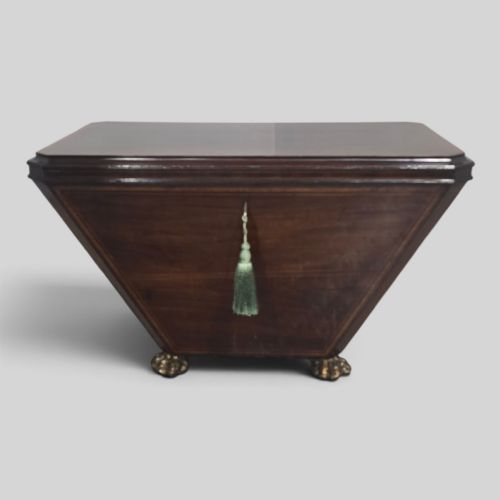
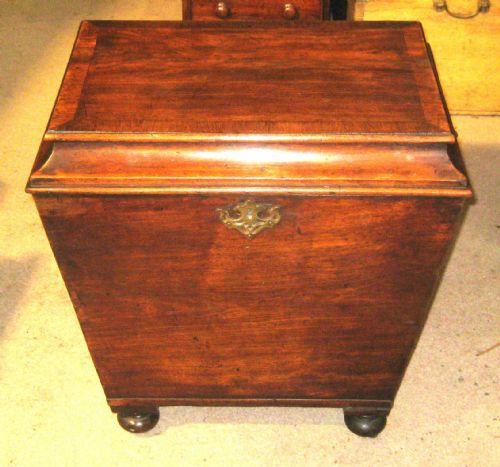
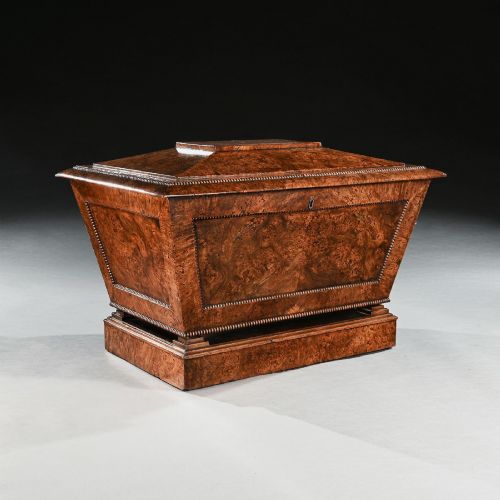
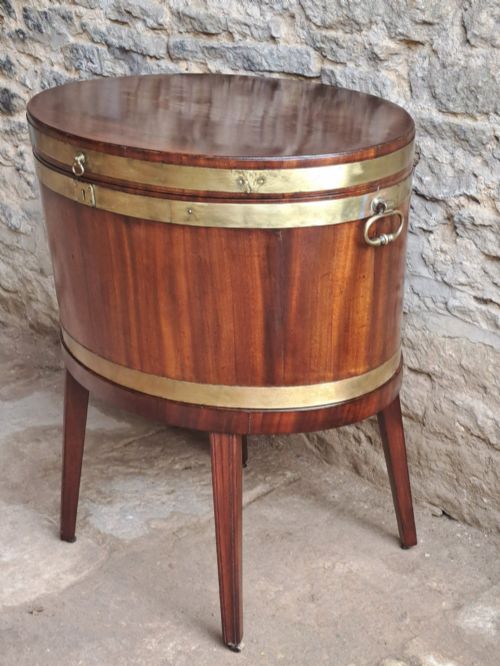
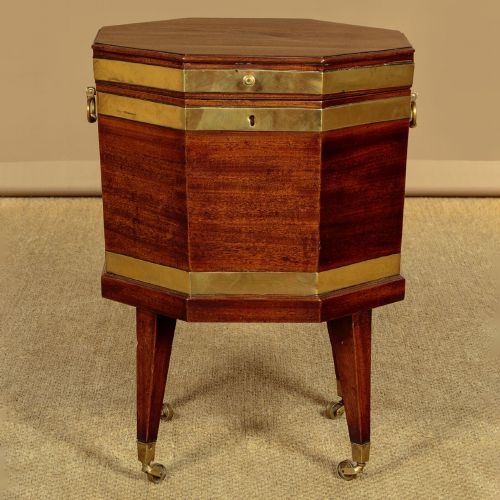
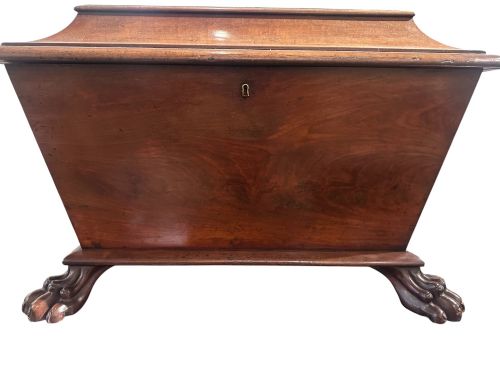
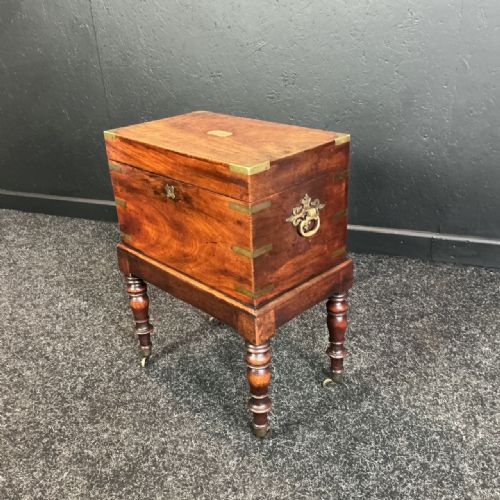
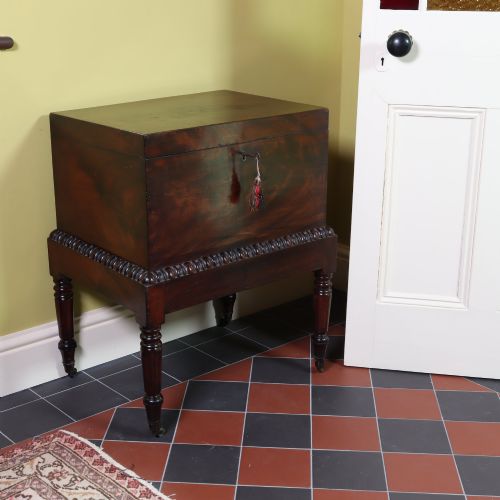

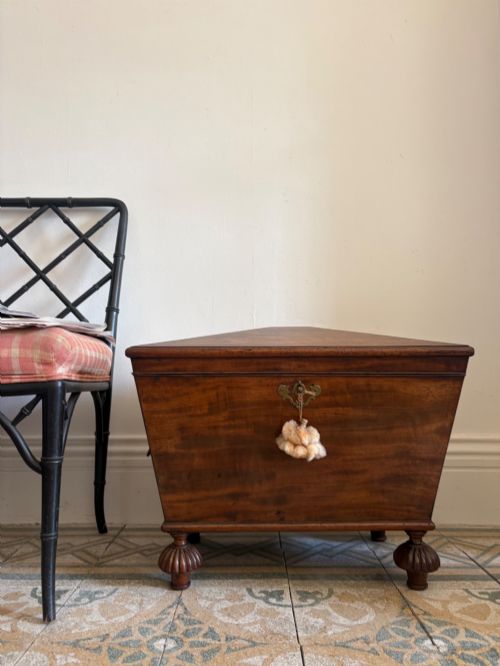


Georgian Wine Sarcophagus
A georgian wine sarcophagus is a grand dining room vessel built to chill bottles, prized for its architectural presence and rich timber figure.

What a georgian wine sarcophagus is
When searching for a georgian wine sarcophagus, buyers encounter substantial dining room containers designed to hold wine bottles in ice during formal meals. These forms appear under various designations in the records, including cellarettes, wine coolers and cellarets.
The pieces on this page span the 18th century, the George III period, the Regency era and the 19th century. They serve as monumental statement items that anchor a traditional dining space while offering practical storage.
Sarcophagus shapes dominate the selection alongside serpentine fronted variants and box forms. Mahogany provides the primary body across the recorded examples.
How they were made
Cabinet makers utilised solid mahogany and applied mahogany veneers over secondary timbers to construct the heavy body of each piece. Boxwood and satinwood provide contrasting stringing and banding details on select examples.
Metalwork played a structural and decorative role, with brass fittings integrated into the design for handles, feet and banding. Joinery techniques ensured the timber could withstand the weight of ice and liquid within the interior.
Retail Price Guide 2026
Typical UK retail prices for georgian wine sarcophagus, calculated from the Sellingantiques database of over a million retail prices indexed since 2003. This retail price guide relies exclusively on Sellingantiques data; no external sources or auction records are used, so the figures do not describe the wider market.
What varies in quality
The distinction between standard examples and the finest pieces rests upon the choice of timber figure and the subtlety of decorative banding. Finer items incorporate complex serpentine fronts and precise satinwood or boxwood inlays rather than plain mahogany surfaces.
Quality also shows in the weight and proportion of the brass mounts and the sharpness of the carving around the feet and handles. The architectural cohesion of the sarcophagus form separates ambitious cabinet work from simpler utilitarian boxes.
The Georgian Wine Sarcophagus Glossary
- Sarcophagus
- A monumental coffin-shaped container form adopted by cabinet makers for grand wine coolers and cellarettes. This design references classical antiquity with its flared profile and heavy proportions.
- Cellarette
- A lockable container or cabinet built specifically to hold wine bottles beneath the dining table or sideboard. These pieces often contained lead lined interiors to hold ice.
- Serpentine
- A curved furniture front characterised by a convex centre flanked by concave wings. This undulating shape requires advanced woodworking skill to execute properly in solid mahogany.
- Satinwood
- A luminous yellowish timber utilised for contrasting inlay work and banding on high end mahogany furniture. It provides a bright visual accent against dark woods.
- George III period
- The stylistic era spanning the long reign of the third monarch, known for refined classical proportions and high quality cabinet making. Pieces from this time show exceptional joinery.
Frequently Asked Questions
How do I date a cellarette?
Dating relies upon examining the timber, secondary woods, hardware and overall style against known periods like George III or Regency. Structural construction methods also offer clues to the era of manufacture.
Evidence from recorded pieces shows styles shifting from straight box forms to elaborate sarcophagus and serpentine shapes across the eighteenth and nineteenth centuries.
Are cellarettes and wine coolers different?
The terms cellarette, wine cooler and wine sarcophagus are often used interchangeably in historical records and modern descriptions to denote bottle storage vessels. Variations in naming simply reflect regional or period terminology rather than a distinct function.
All three forms served the primary purpose of holding bottles and ice within the formal dining room setting.
How do I live with a sarcophagus?
A sarcophagus works well as a standalone decorative focal point in a dining room, hallway or large living space. Many owners utilise the interior cavity for modern storage while displaying the timber surface.
Positioning the piece away from direct heat sources and sunlight protects the antique mahogany and any delicate boxwood or satinwood banding from drying out.