
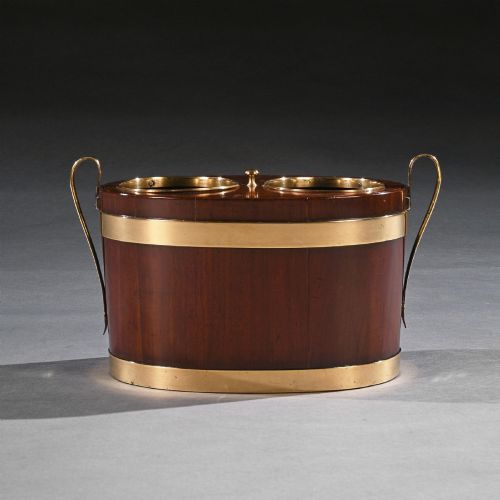
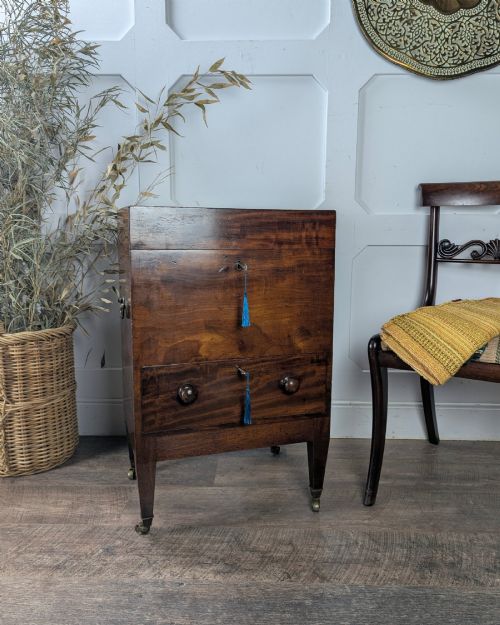
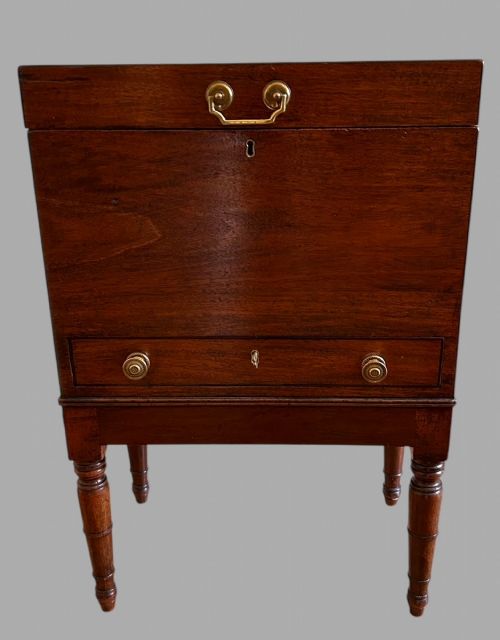
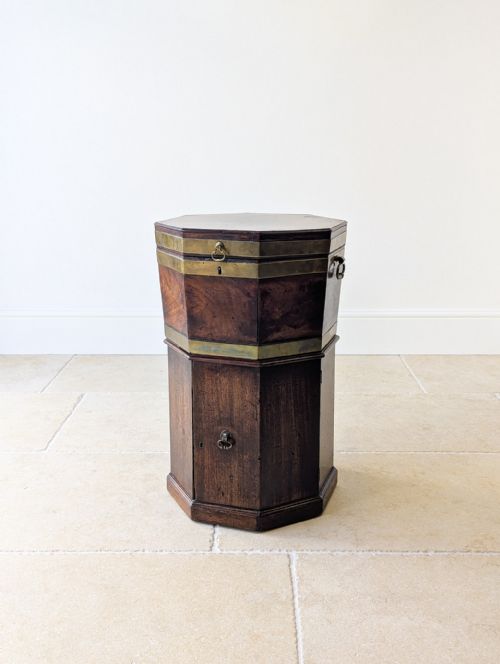
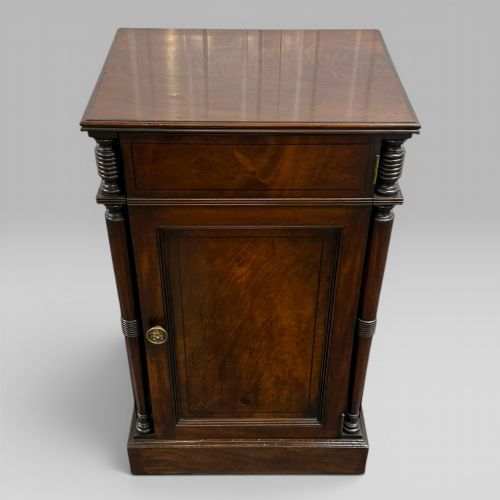
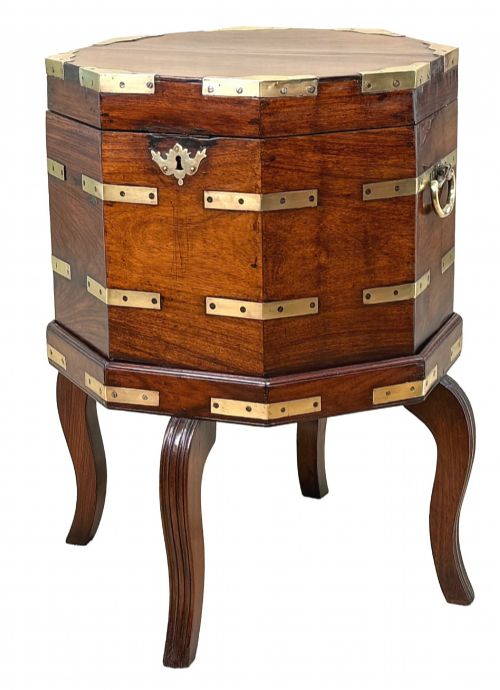

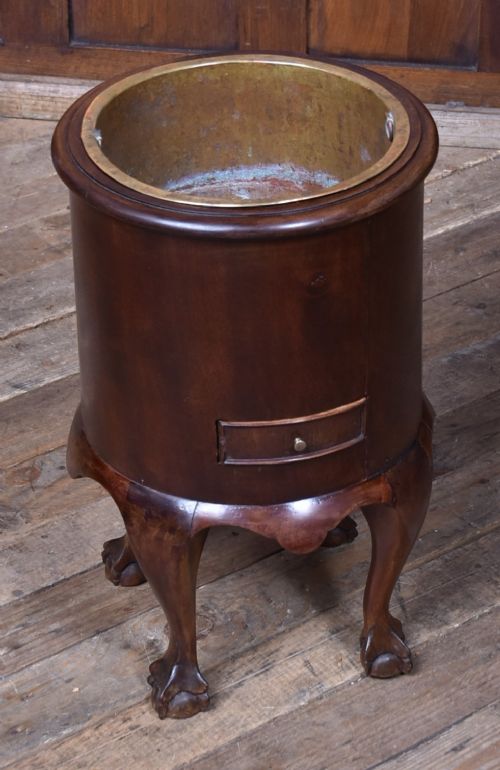
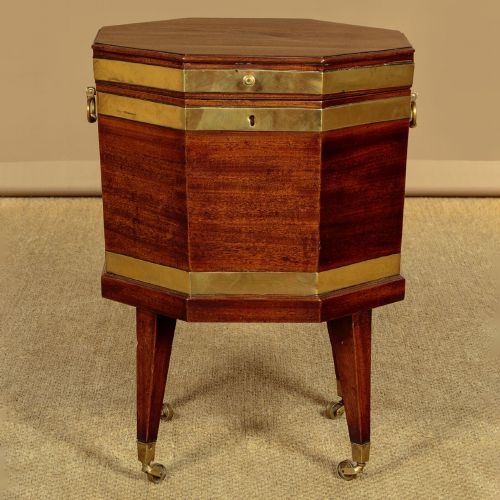


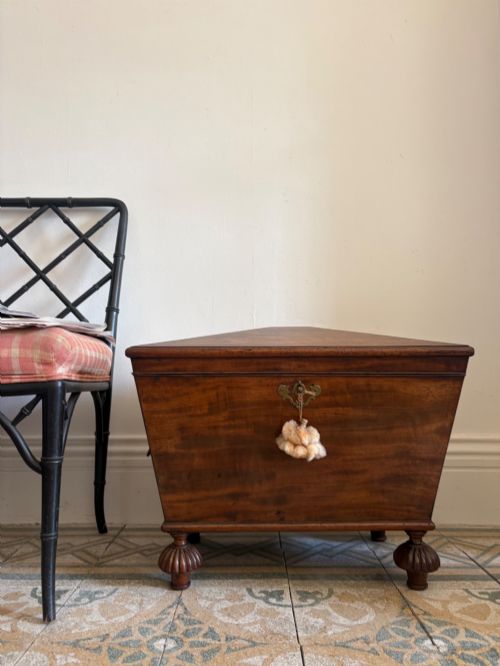
Dark Mahogany Wine Cooler
A dark mahogany wine cooler holds bottles securely while adding unmistakable gravitas to a dining room.
Dark Mahogany Wine Cooler
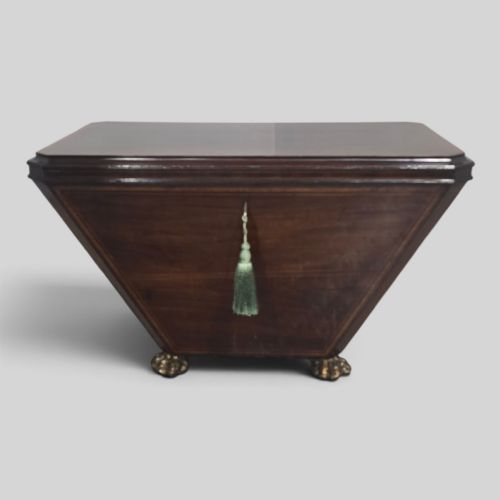
A dark mahogany wine cooler is a specialised storage piece designed to keep bottles chilled or organised for the dining table, often taking the form of a cellarette or sarcophagus. These items originate predominantly from the Georgian, Regency, and Victorian eras, reflecting the domestic habits of elite households.
Materials and construction
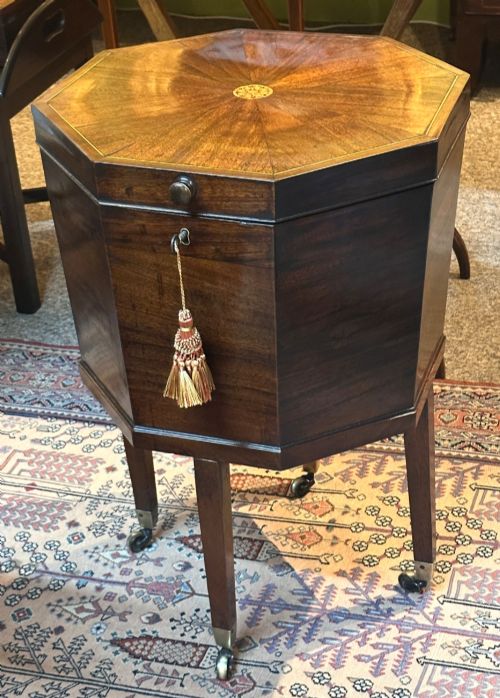
The primary construction relies on solid mahogany or wood veneer, selected for deep grain patterns and sturdy structural properties. Cabinet-makers frequently incorporated satinwood inlay, ormolu mounts, and padouk wood to elevate the decorative scheme of the piece.
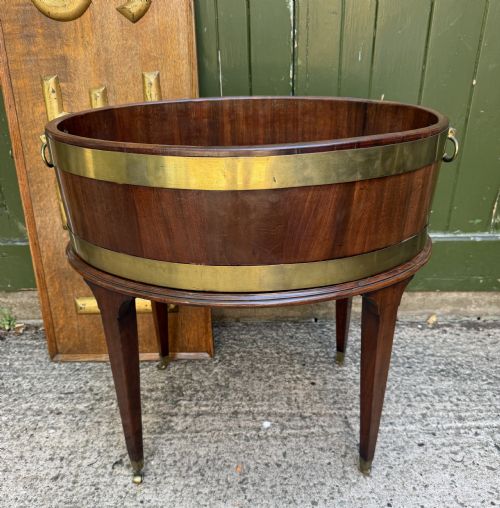
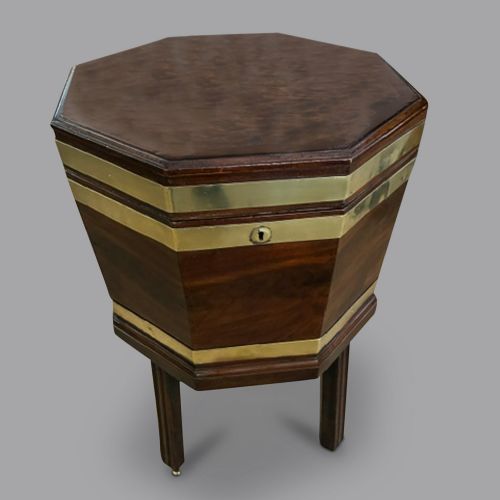
Internal functionality required specialised engineering, utilising lead, zinc, or metal linings to hold ice and water safely without damaging the surrounding timber. Brass bands and hardware provided both structural reinforcement for heavy loaded vessels and visual contrast against the dark wood.
Listings feature mahogany, brass, padouk, and satinwood across Georgian, Regency, and Victorian periods.
Factors affecting quality
Quality rests heavily on the crispness of the carving, the selection of figured timber, and the integrity of internal metal linings. Pieces originating from documented workshops display superior joinery and thoughtful proportions that separate them from standard utilitarian versions.
The presence of original fittings, such as brass castors, handles, and watertight internal compartments, significantly elevates the integrity of a piece. Finer examples balance robust architectural forms with refined decorative details like intricate brass banding or fine inlay.
Edwards and Roberts·Gillows·Gillingtons
The Dark Mahogany Wine Cooler Glossary
- Cellarette
- A lockable container or box designed to hold bottles of wine safely in a dining room. These were often kept beneath the sideboard.
- Sarcophagus form
- A monumental, coffin-like shape with a pitched lid popular during the Regency period for large wine coolers. This design drew inspiration from classical antiquity.
- Brass banding
- Metal strips fitted around the exterior of wooden buckets or coolers for structural reinforcement and decoration. This technique protected the timber from dampness and heavy use.
- Jardiniere
- An ornamental pot or stand for holding plants or flowers, sometimes adapted from or resembling wine cooler forms. These pieces share similar waterproof linings and wooden stands.
Dark Mahogany Wine Cooler: Frequently Asked Questions
What is a dark mahogany wine cooler used for?
These pieces served historically to chill and store wine bottles near the dining table before refrigeration became common. The internal metal linings held ice and water to keep beverages at the correct temperature for guests.
Today, collectors utilise them as decorative floor-standing storage boxes, side tables, or planters within traditional interiors.
How do I distinguish a Regency wine cooler from a Georgian one?
Georgian versions tend to feature straight lines, oval or octagonal shapes, and delicate brass banding reminiscent of traditional cabinet styles. They often rest on straight legs or simple stands.
Regency models frequently adopt heavier sarcophagus shapes with classical paw feet, bold carved details, and prominent ormolu mounts reflecting the influence of the Greek Revival.
Are these coolers still watertight inside?
Many original lead or zinc linings remain intact, but decades of use and temperature changes can cause microscopic splits in the metal seams. Testing with water is generally discouraged unless the lining has been professionally restored.
Most modern owners prefer to use them dry for storing dry goods, accessories, or as display pieces rather than active coolers.
Where were wine coolers placed in a historic dining room?
They typically stood directly on the floor beneath the sideboard or adjacent to the dining table for easy access by servants during meals. Their substantial weight ensured they remained stable even when filled with heavy glass bottles and ice.
In contemporary homes, they function well as freestanding accent pieces in reception rooms, hallways, or studies.