
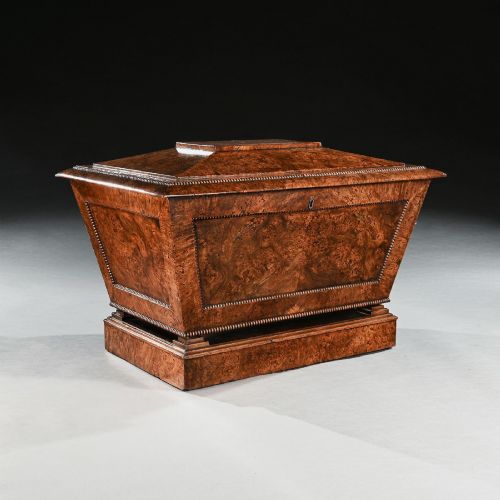
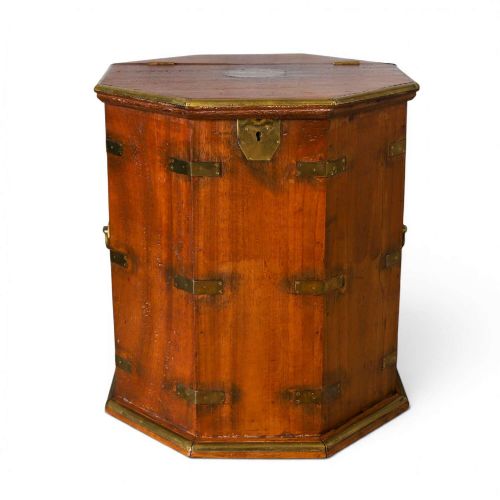

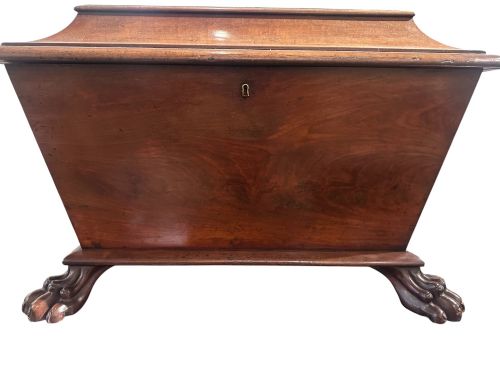
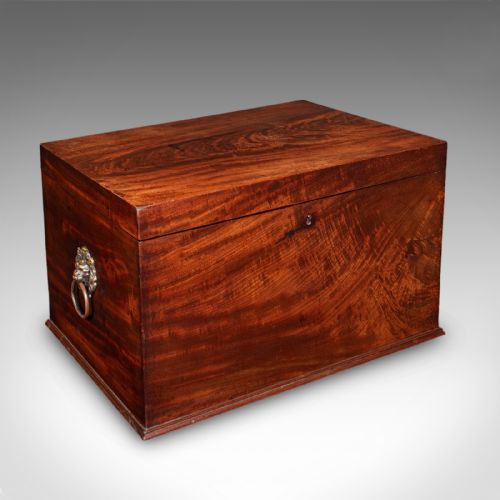
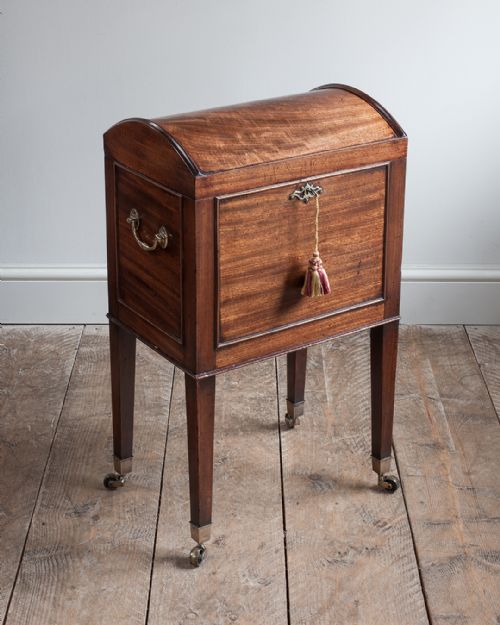


Antique Wine Storage Chest
These antique wine storage chests are substantial mahogany receptacles built to keep bottles cool and close at hand during formal dining.
Identifying your antique wine storage chest
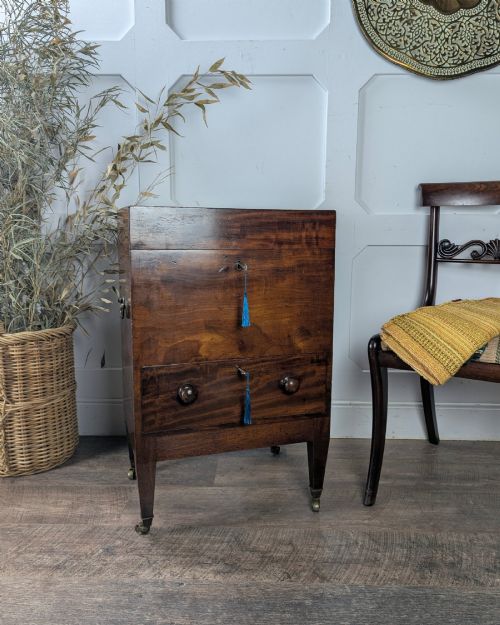
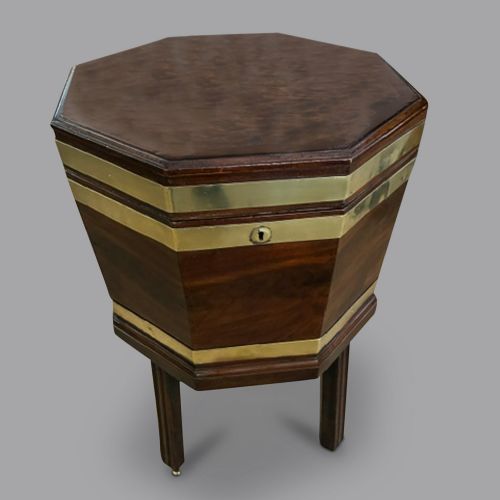
When you search for an antique wine storage chest, you encounter formal dining room furniture designed to house and chill wine bottles during the Georgian and Regency periods. These pieces appear in forms such as cellarettes, wine coolers, and storage chests.
The versions you meet on this page originate from the eighteenth and early nineteenth centuries, displaying the classic proportions of the Georgian and Regency eras. Makers constructed these items to sit beneath sideboards or beside dining tables.
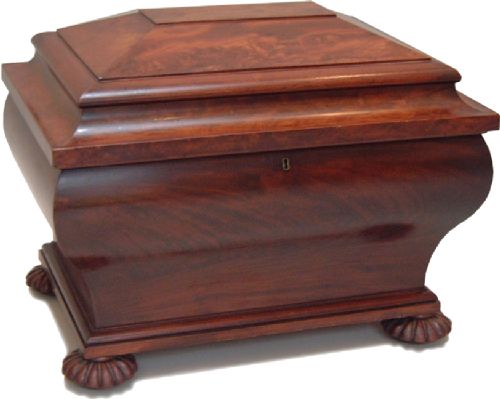
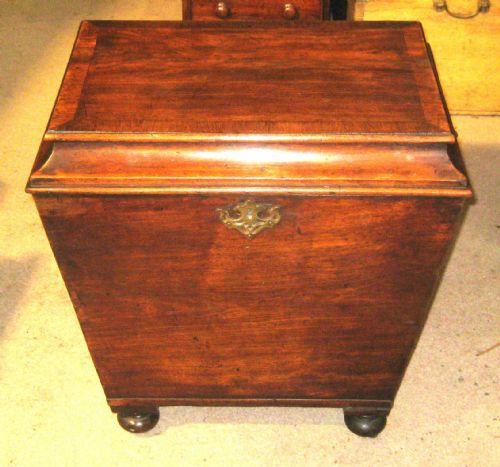
Forms range from simple rectangular storage chests to sophisticated sarcophagus shapes, often fitted with internal compartments to hold bottles securely. Every piece reflects the dining customs of its era, when wine was brought to the table from a cellar stash.
Construction and materials
Carpenters built these wine chests primarily from rich mahogany, sometimes incorporating ebonised wood details for contrast and visual depth. This dense timber provided the sturdy foundation necessary for heavy storage.
Metalwork played a crucial functional and decorative role, with brass fittings utilised for carrying handles, hinges, and secure lock plates. These hardware elements were cast and fitted by hand to withstand the weight of loaded bottles.
Retail Price Guide 2026
Typical UK retail prices for wine storage chest, calculated from the Sellingantiques database of over a million retail prices indexed since 2003. This retail price guide relies exclusively on Sellingantiques data; no external sources or auction records are used, so the figures do not describe the wider market.
Every piece currently listed uses mahogany as its primary material, spanning the Georgian and Regency eras.
Judging the standard of a piece
Quality in these wine chests rests upon the figure of the mahogany timber and the crispness of carved details like fluted tops. Superior examples display carefully selected wood grain that wraps harmoniously around the carcass.
The refinement of the brass hardware and the sophistication of the internal framing distinguish finer workshops from standard production. A well-executed sarcophagus form requires precise joinery to curve smoothly without losing structural integrity.
The Antique Wine Storage Chest Glossary
- Cellarette
- A lockable container used for storing wine bottles in a dining room before service. These vessels often include lead linings or internal divisions.
- Sarcophagus
- A monumental coffin-like shape with a domed lid and tapered sides, popular during the Regency period for wine coolers. This architectural form lent gravity to grand dining interiors.
- Fluted
- Carved with parallel vertical grooves, a decorative treatment frequently seen on the tops or columns of Georgian furniture. This technique adds texture and catches the light across the mahogany surface.
- Ebonised
- Wood treated with a dark finish to imitate ebony, utilised for contrast on mouldings and decorative accents. Cabinet makers employed this process to create striking visual borders.
Frequently Asked Questions
What is an antique wine storage chest?
An antique wine storage chest is a specialised piece of dining room furniture from the Georgian or Regency era designed to hold wine bottles.
These vessels kept wine secure and often cooled near the dining table before it was poured for guests.
How were these chests used?
Dinners in the eighteenth and nineteenth centuries relied on these chests to store multiple bottles close to hand without frequent trips to the cellar.
Servants would retrieve bottles from the fitted interior compartments as the meal progressed through its courses.
What materials are typical?
Mahogany serves as the primary timber across these pieces, prized for its strength and deep warm colour.
Brass handles, hinges, and escutcheons complement the dark wood, alongside occasional details in ebonised wood.
How do I date a wine chest?
Dating relies on observing the stylistic markers of the Georgian and Regency periods, such as sarcophagus shapes or fluted top details.
Construction methods and timber selection also point toward specific decades between the mid-eighteenth and early nineteenth centuries.