


Georgian Transferware Platter
A georgian transferware platter brings robust earthenware, deep blue pigment and narrative scenes from the Regency and early nineteenth century directly to the table.
Georgian Transferware Platter
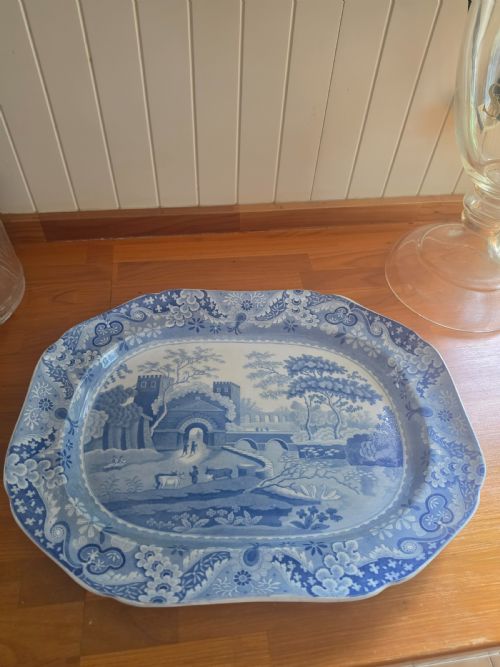
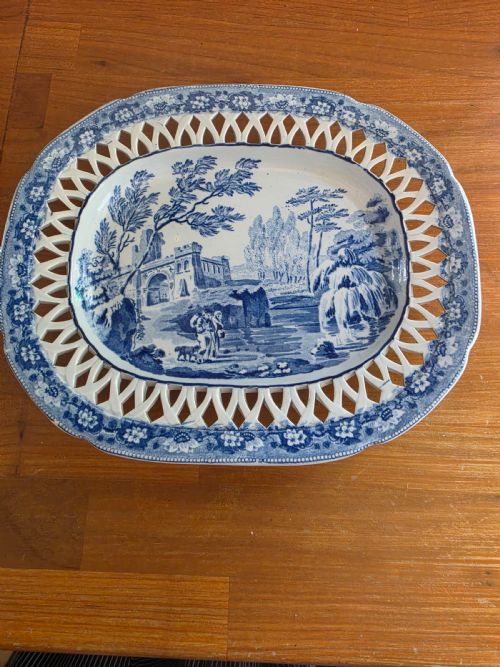
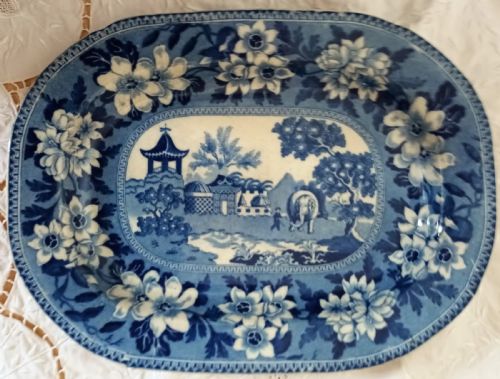
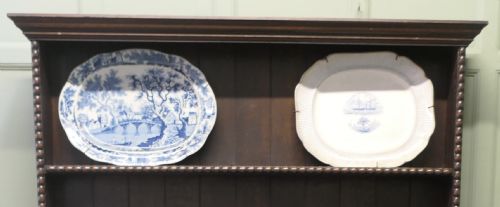
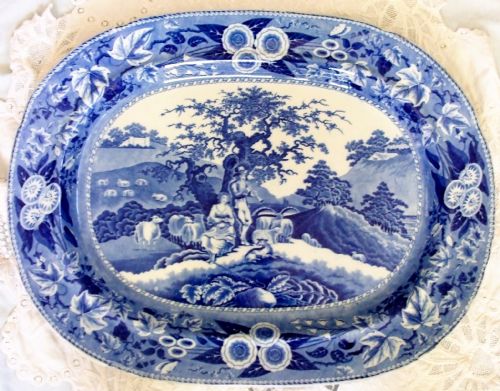
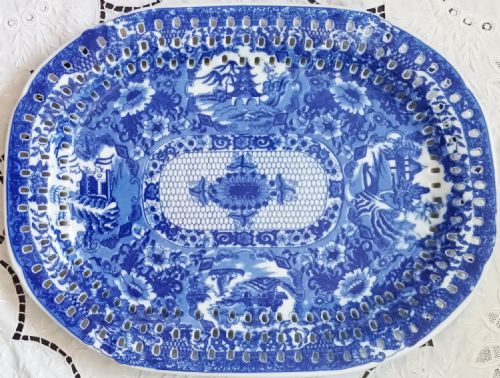
When searching for a georgian transferware platter, buyers encounter large serving dishes, meat platters and footed drainers produced across English potteries during the Georgian and Regency periods. The most common examples take the form of heavy earthenware platters decorated in cobalt pigment with landscape scenes, architectural ruins or traditional chinoiserie motifs.
These items served practical functions in nineteenth century dining rooms, carrying heavy joints of meat or holding draining inserts to separate juices. Surviving pieces often display regional patterns such as the Willow pattern, topographical views or classical ruins printed onto pearlware, ironstone and standard ceramic bodies.
Makers utilised diverse regional styles ranging from English country earthenware to intricate oriental designs influenced by trade and travel. Buyers frequently locate these serving platters alongside matching sauce tureen stands, bread stands and chargers sharing identical transfer printed borders.
Materials and Technique
Potters constructed these objects using earthenware, pearlware or ironstone bodies shaped on wheels or pressed into moulds to form large serving surfaces and pierced drainers. Workers then applied a smooth ceramic glaze over the porous clay body to prepare the piece for firing.
Decoration relied on copper plate printing where craftsmen transferred cobalt pigment designs from engraved metal plates onto tissue paper before pressing the pattern onto the biscuited ceramic. A subsequent high temperature kiln firing melted the glaze and fused the blue pigment permanently into the surface.
Georgian Transferware Platter Retail Price Guide 2026
Typical asking prices for georgian transferware platter among the pieces listed under this phrase on Sellingantiques today, from the lower quarter to the upper quarter. They describe what is for sale here now, not the wider market.
Current listings feature earthenware, ironstone and pearlware bodies decorated exclusively with cobalt pigment transfer prints.
Evaluating Craftsmanship
Quality in these ceramics depends heavily on the clarity and depth of the cobalt pigment transfer, where sharp lines and rich blue tones separate superior examples from blurred or muddy prints. The crispness of moulded details, such as pierced fretwork rims and integrated gravy wells, further distinguishes high grade production.
The sophistication of the engraved narrative scene dictates artistic merit, with complex topographical views and multi-figure compositions reflecting greater skill than repetitive botanical borders. Additionally, the stability and weight of the underlying ironstone or pearlware body contribute to the enduring integrity of the serving dish.
Spode·Davenport·John Rogers And Son·Mason·Minton·Thomas Lakin·Brameld And Co·J And R Clews·Don Pottery·Elkin Knight And Bridgwood
The Georgian Transferware Platter Glossary
- Transferware
- Pottery decorated by printing an engraved design from a copper plate onto paper and transferring it onto the ceramic body before glazing. This mechanical process allowed complex pictorial scenes to be produced efficiently.
- Pearlware
- A refined type of earthenware developed by Josiah Wedgwood featuring a bluish-tinted glaze that pooled in recesses to create a whiter overall appearance. It served as a common ground for early nineteenth century blue and white printing.
- Ironstone
- A heavy, durable ceramic invented in the early nineteenth century designed to resist chipping and cracking. It provided a strong foundation for large heavy meat platters.
- Meat Drainer
- A pierced ceramic insert designed to sit inside a matching platter and allow juices to drain away from roast joints. These removable trays frequently feature matching transfer printed borders.
- Chinoiserie
- A Western decorative style reflecting European interpretations of Chinese artistic traditions and landscapes. It appears frequently on early nineteenth century pottery.
- Charger
- A large decorative plate utilised primarily for presentation or heavy service on dining tables. These substantial pieces display elaborate central transfer printed views.
Georgian Transferware Platter: Frequently Asked Questions
What is a meat drainer?
A meat drainer is a pierced ceramic plate designed to sit snugly inside a larger serving platter during meals. Its purpose was to lift roast meats above accumulated juices.
These inserts often share the exact transfer printed pattern of the outer dish. Surviving sets combine the platter, drainer and sometimes an integrated gravy well.
How do I date these platters?
Dating relies on stylistic markers, ceramic bodies and known operating periods of specific Staffordshire potteries. Early pieces utilise pearlware bodies with pale blue glazes, while later examples employ denser ironstone.
Makers' marks stamped or printed on the reverse provide definitive manufacturing windows. Stylistic shifts from neoclassical ruins to romantic landscapes also help narrow down production eras.
Are these platters safe to use?
Most buyers treat these antique items as decorative display pieces rather than daily tableware. Historic ceramic bodies can be porous and sensitive to modern thermal shock.
Hand washing in warm water preserves the historic glaze and prevents damage to the nineteenth century earthenware. Modern acidic foods can also interact negatively with early ceramic glazes.