
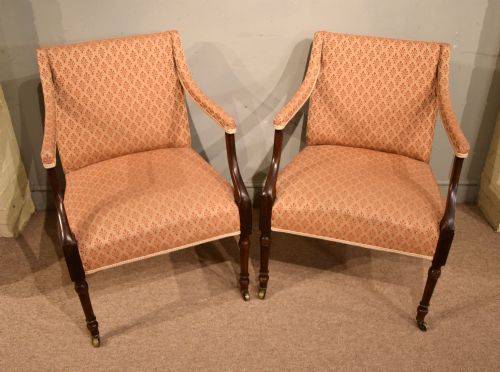
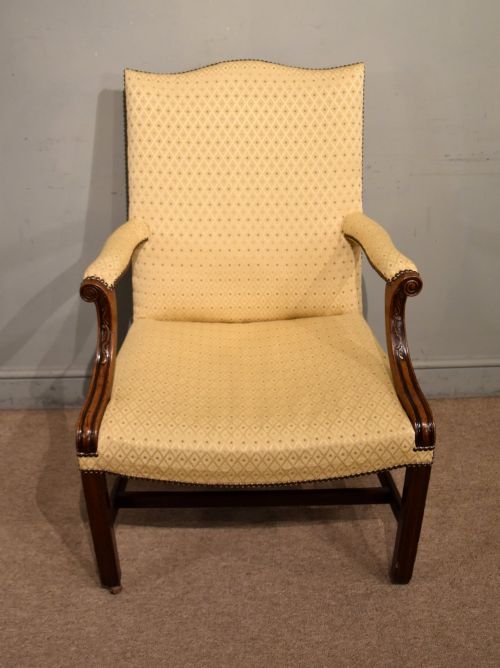
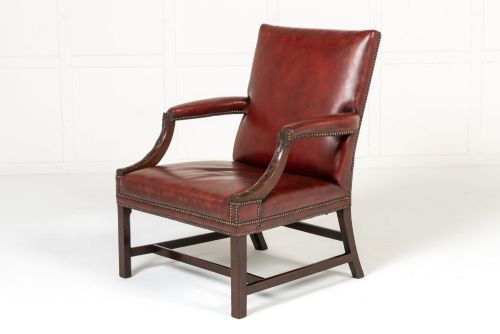
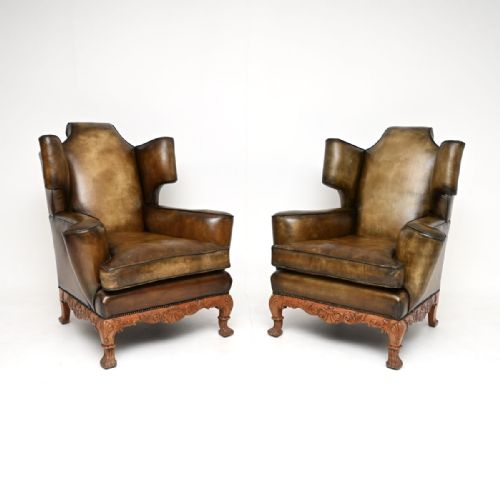
Georgian Style Library Armchair
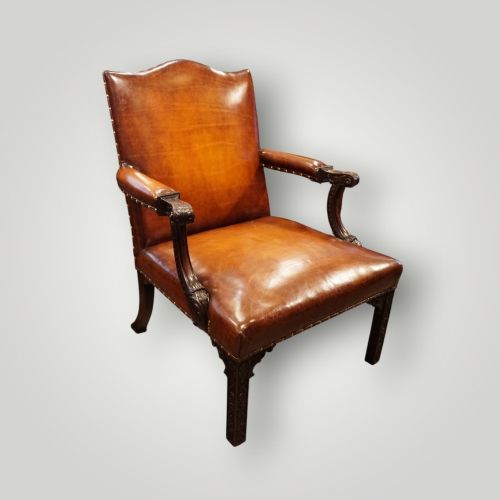
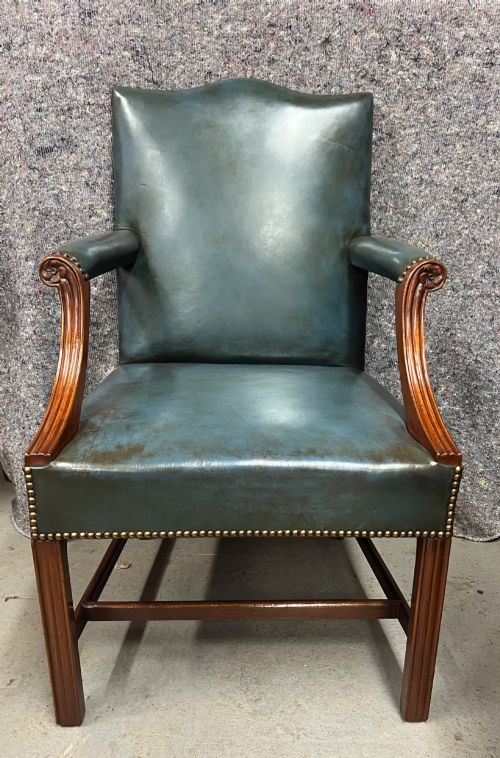
A georgian style library armchair brings substantial seating of traditional form into a room, offering deep comfort alongside formal mahogany and leather framing.
How They Were Made
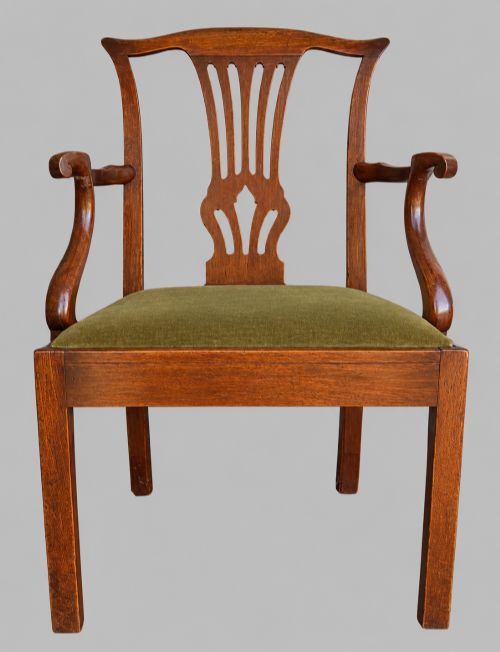
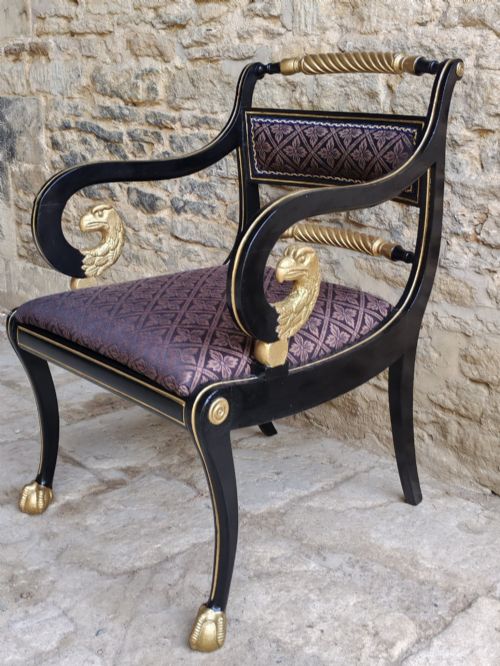
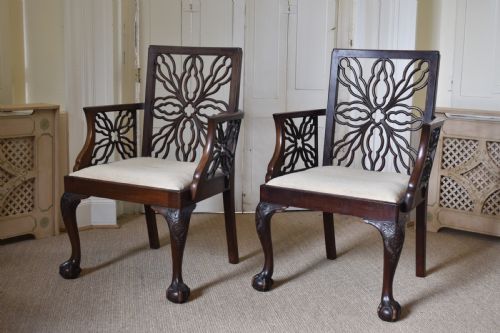
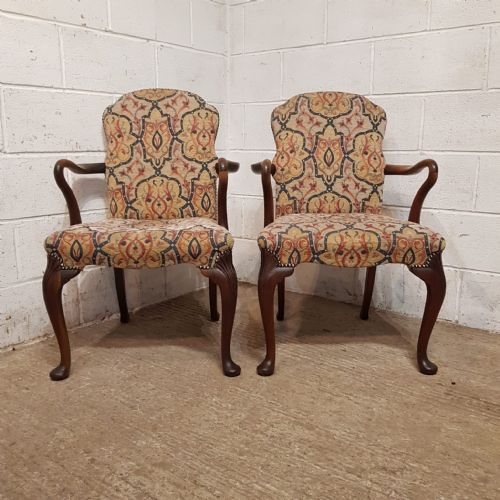
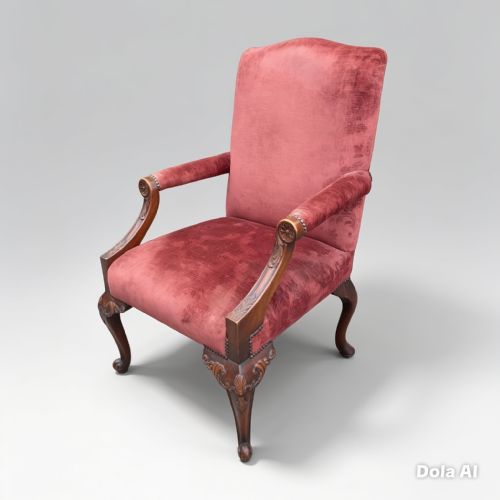
Makers constructed these frames predominantly from solid mahogany and walnut, shaping timber into cabriole legs, scroll arms, and robust back supports. Blind carving often embellishes the mahogany rails of formal seating.
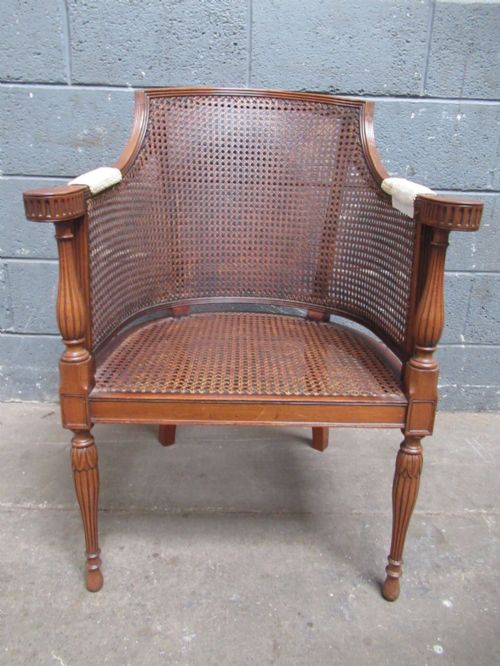
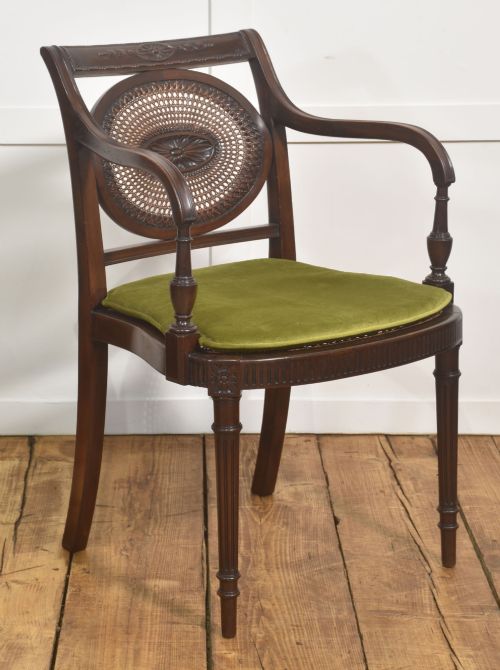
Upholstery relies on traditional materials such as leather, fabric, velvet, and cane inserts. Hides are frequently hand-dyed, while cane panels provide lightweight support within wooden perimeters.
What Varies In Quality
The degree of hand-carving intricacy and timber selection determines the distinction between standard workshops and master cabinet makers. Crisply rendered blind carving and well-figured grain elevate a frame.
The integrity of the original wood structure and the quality of the leather hide define the enduring appeal of each piece. Surviving period surfaces and sympathetic re-upholstering maintain historical character.
Some library chairs hide their extensive reading hours behind remarkably polite cane work.
Gillows
The Georgian Style Library Armchair Glossary
- Gainsborough armchair
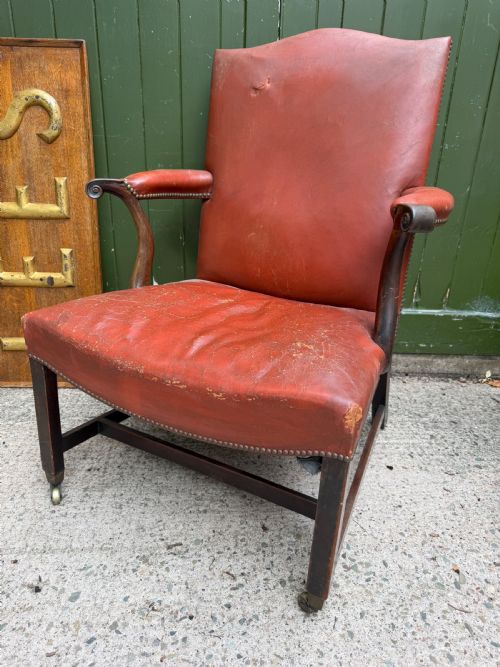
- A wide, upholstered seat with open arms and a padded back, designed during the 18th century for sitting comfortably near a desk or fireplace. This form frequently appears in mahogany with leather upholstery.
- Bergère
- An enclosed upholstered armchair with wooden framing and cane sides or back panels. These seats often feature loose squab cushions.
- Chippendale style
- A decorative design vocabulary characterised by carved cabriole legs, claw-and-ball feet, and intricate fretwork. The aesthetic originates from the mid-18th century pattern books.
- Wingback armchair
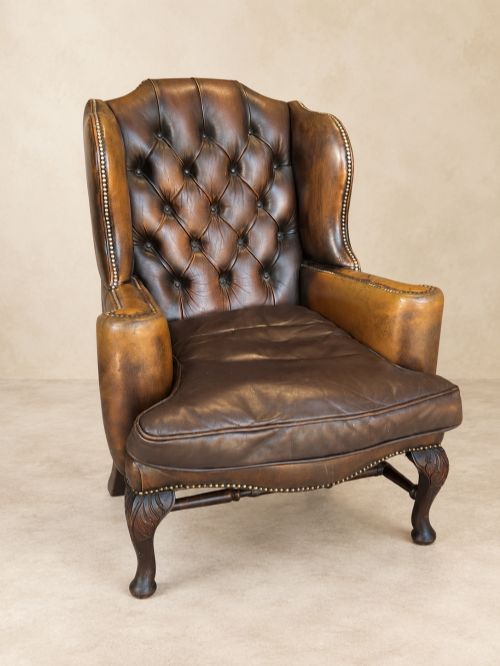
- A high-backed seat featuring projecting side panels designed to shield the occupant from draughts. These pieces appear in leather and fabric variants across multiple centuries.
Georgian Style Library Armchair: Frequently Asked Questions
How do I spot a revival piece?
Revival pieces date from later periods such as the Edwardian era or the early 20th century while imitating 18th-century proportions and carving styles. Examining the timber maturity, construction joints, and secondary woods helps identify the true age.
Cabinet makers during the 1900s and 1920s frequently reproduced George III and Chippendale forms with great technical skill.
Are these chairs suitable for daily desk use?
Many library armchairs and elbow chairs serve well at modern desks, provided the seat height and lumbar support suit the user. Their sturdy mahogany construction accommodates regular sitting.
Options featuring cane work or leather upholstery offer durable surfaces that handle everyday office environments.
What is the difference between an armchair and a bergère?
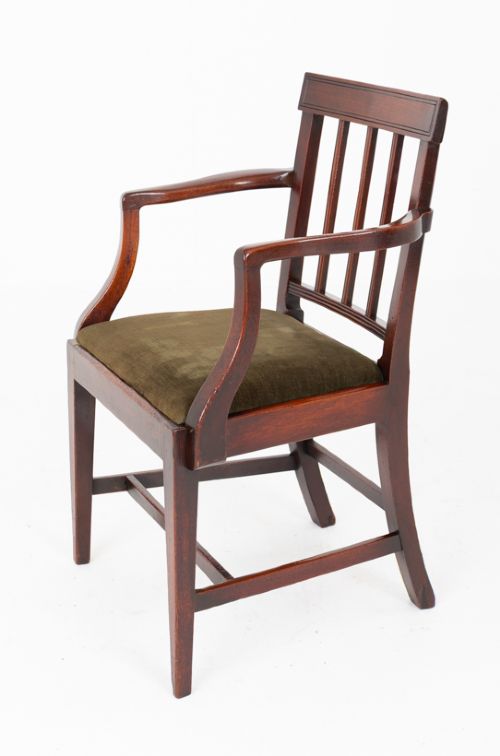
A standard armchair relies on solid upholstered panels or open wooden arms, whereas a bergère incorporates woven cane sides and back panels within the wooden frame. Bergère chairs often possess a lighter visual weight.
Both forms appear across Regency and later 19th-century mahogany designs.