
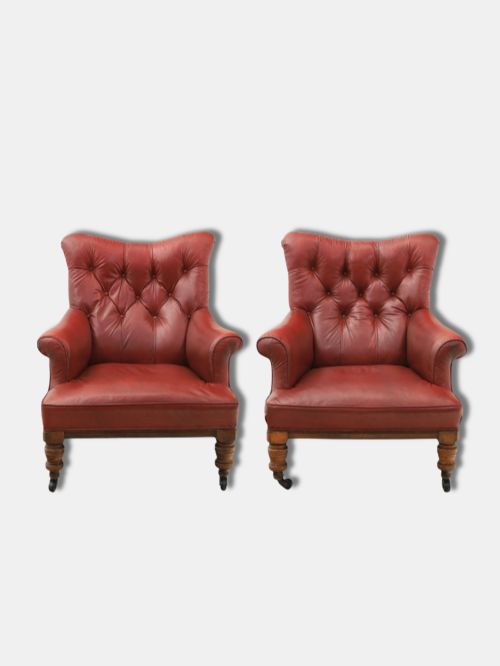
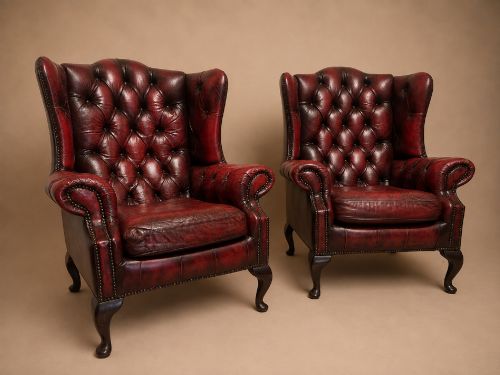
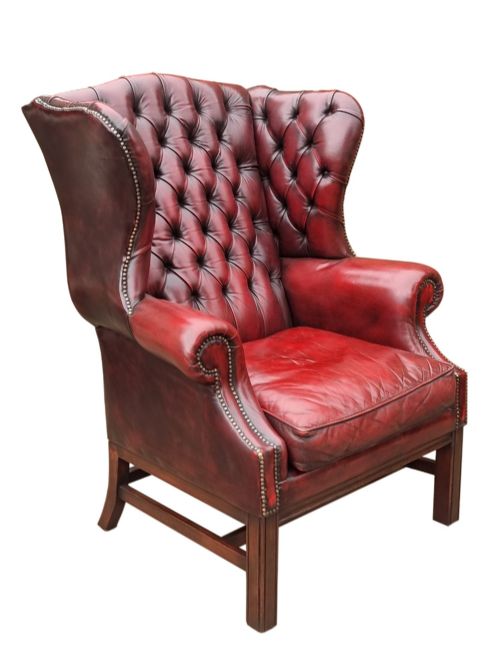


Red Leather Chesterfield Chair
A red leather chesterfield chair brings deep colour and buttoned depth to a room, offering robust seating built from traditional timber frames.
Red Leather Chesterfield Chair
A red leather chesterfield chair provides traditional seating characterised by deep buttoning and rolled arms, appearing across periods from Georgian and Regency eras through to the early twentieth century. Buyers seeking this style will encounter various forms, ranging from library armchairs and wingbacks to reclining variants and desk chairs.
The selection on this page draws on diverse historical influences, including George III styling, Victorian proportions, and William IV designs. Makers constructed these armchairs for studies, libraries, and formal rooms, utilising durable materials designed for daily use.
Examples span the nineteenth and twentieth centuries, featuring both genuine leather and rexine upholstery in oxblood and burgundy tones. Buyers most frequently meet pairs of armchairs, single library seats, and matching footstools across the listings.
How they were made
Craftsmen built the underlying structures using sturdy hardwoods such as mahogany, constructing frames intended to withstand heavy domestic and institutional use. These wooden skeletons support sprung seats and padded backs tailored for sustained comfort.
Upholstery work relies on leather and rexine secured with brass detailing, alongside structural elements in steel and brass. Skilled artisans applied deep buttoning techniques by hand to tension the hide securely across the internal padding.
Some nineteenth-century writing slope chairs cleverly incorporated hidden compartments for correspondence beneath the desk arm.
What varies in quality
The refinement of the timber frame and the depth of the mahogany grain distinguish superior examples from simpler utilitarian seating. Superior construction shows in the precision of the joinery and the balanced proportions of the arms and wings.
Quality also rests in the character of the upholstery, where supple leather develops a rich patina compared to alternative materials like rexine. The tightness of the buttoning and the resilience of the internal stuffing govern how well the chair retains its shape over decades.
The Red Leather Chesterfield Chair Glossary
- Chesterfield
- A traditional style of upholstered seating featuring low backs and rolled arms of equal height, traditionally finished with deep button tufting. This form remains a staple of British interior design.
- Rexine
- A brand of artificial leather cloth utilised as an upholstery material in the early twentieth century. It offers a durable, wipeable surface that mimics the appearance of genuine hide.
- Oxblood
- A dark shade of red with brownish undertones commonly found on traditional leather furniture. This deep hue matures attractively through decades of handling and use.
- Wingback
- An armchair featuring protective flaps, known as wings, attached to the back and designed to shield the sitter from draughts. This form became popular during the Georgian period.
- Library armchair
- A sturdy seating form designed for reading rooms and studies, frequently incorporating mahogany frames and leather upholstery. These chairs emphasise ergonomic support for long periods of reading.
Red Leather Chesterfield Chair: Frequently Asked Questions
How do I date a red leather chesterfield chair?
Dating relies on examining the timber frame, the upholstery materials, and the style of the legs and castors. Georgian and Regency pieces show different proportions and turning methods compared to Edwardian or 1920s examples.
Material choices also offer clues, as genuine leather dominates earlier centuries while rexine appears in twentieth-century iterations. Consulting the construction details helps place the chair within its correct period.
What is the difference between leather and rexine?
Leather is a natural animal hide that breathes, develops a unique patina over time, and softens with use. Rexine is an early manufactured fabric substitute featuring a cloth base coated with nitrocellulose.
While rexine offers practical durability and water resistance, it lacks the organic depth and ageing characteristics of genuine leather. Examining the underside and grain helps identify which material covers the frame.
How do I care for antique leather upholstery?
Maintaining antique leather requires keeping the material away from direct sunlight and heat sources that cause drying and cracking. Regular dusting with a soft cloth prevents particle buildup in the button folds.
Applying specialised leather balms or conditioners periodically helps preserve suppleness. Avoid harsh chemical cleaners that strip the original finish and colour.
Where should I place a wingback chair?
Wingback chairs suit studies, libraries, and drawing rooms where their tall backs provide a commanding focal point. Their original purpose was to block draughts, making them well-suited for placement near fireplaces or in reading corners.
Pairing a wingback with a matching footstool creates a comfortable seating arrangement. Their traditional proportions require sufficient floor space to let the rolled arms and wings stand out.