


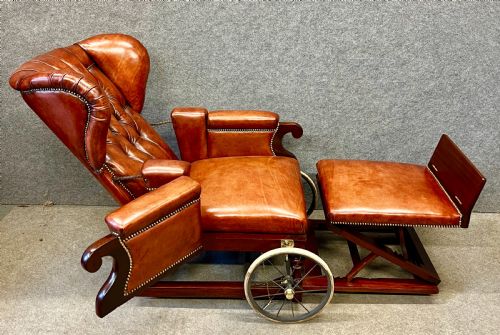

Victorian Leather Recliner
A victorian leather recliner brings nineteenth-century mechanical comfort to a library or study through buttoned hides and heavy timber frames.
Victorian Leather Recliner
When you search for a victorian leather recliner, you encounter seating designed for nineteenth-century reading, convalescence and rest. These pieces combine mechanical adjustment with substantial frames in mahogany, walnut and rosewood.
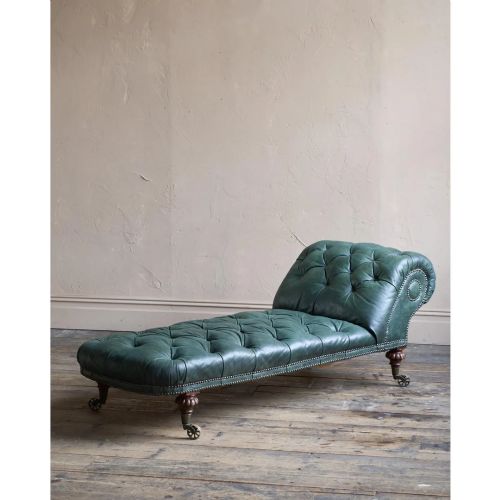
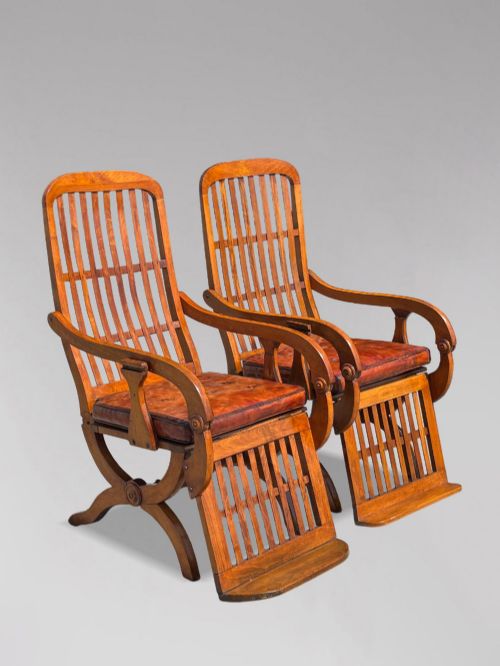
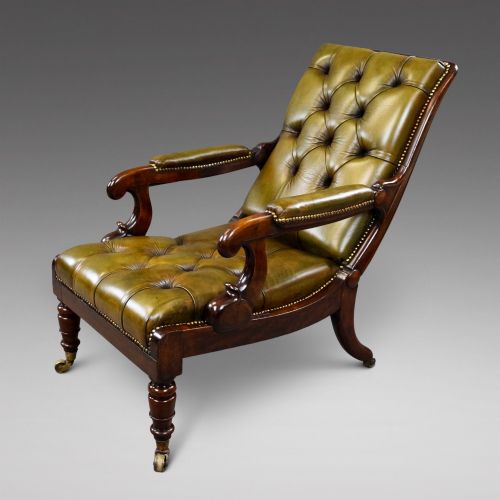
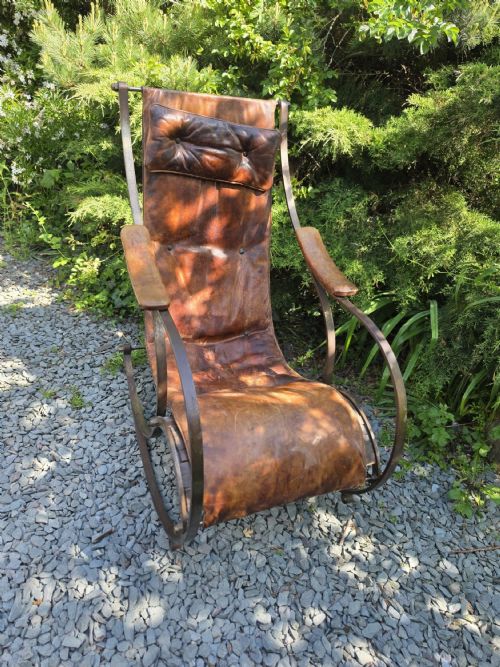
The versions most commonly met on this page span the nineteenth century, including William IV, Regency and Victorian styles. They take the form of library armchairs, rocking chairs, chaise longues and metamorphic reading chairs.
Many examples incorporate adjustable mechanisms, metal studs and footstools tailored for long hours of sitting or reclining. They originate from British, colonial and French workshops of the era.
How they were made
Makers built these frames using dense timber like mahogany, walnut and rosewood, often pairing them with iron and brass internal mechanisms. Leather upholstery was fastened by hand using metal studs.
Adjustable reclining actions relied on heavy metal ratchets and hinges concealed within the wooden armrests and backs. Caning and cane work occasionally supplemented the upholstery on library and bergère forms.
What varies in quality
The calibre of a victorian leather recliner rests upon the sophistication of its mechanical movement and the retention of its original timber frame. Pieces that operate smoothly through multiple reclining positions represent higher workshop standards.
The grade of the leather upholstery and the crispness of the timber carving distinguish standard production from exceptional examples. Maker attribution also separates pieces produced by notable firms from anonymous workshop output.
R W Wingfield·J Foot And Son·Robert Daws·John Ward
The Victorian Leather Recliner Glossary
- Bergère
- An upholstered armchair with an enclosed wooden frame where the sides are frequently filled with cane work. This French-inspired form appears in nineteenth-century library settings.
- Metamorphic
- A descriptive term for furniture that transforms into another form, such as an armchair converting into a reclining lounge or incorporating a writing slope.
- Button leather
- Upholstery technique where leather is pulled tight and secured with deep tufting and buttons, creating a cushioned geometric pattern on the backrest.
- Colonial
- A style reflecting British influence and tropical adaptation in nineteenth-century overseas territories, often seen in plantation furniture forms.
Victorian Leather Recliner: Frequently Asked Questions
How do these reclining mechanisms work?
The mechanical adjustment relies on heavy iron and brass ratchets concealed within the timber framework. Users alter the angle of the backrest by operating side levers or shifting the position manually.
These systems allow the chair to lock securely into various recline angles suited for reading or resting.
Are footstools included with these chairs?
Certain reclining library chairs and armchairs are accompanied by matching footstools designed in the same nineteenth-century timber and leather finish. These extensions support the legs during full recline.
Not all listings include the original footstool, as many survived independently from the main seating.
What is a metamorphic armchair?
A metamorphic armchair incorporates internal mechanisms that alter its primary function, transforming from a standard seat into a reclining lounge or incorporating a writing slope. These pieces demonstrate nineteenth-century ingenuity in domestic furniture.
They were utilised in studies and libraries where space and multi-purpose furniture carried high utility.
How do I care for nineteenth-century leather?
Nineteenth-century leather upholstery requires regular conditioning to maintain its flexibility and prevent cracking across the buttoned surface. Avoid placing these pieces in direct sunlight or near heat sources.
Gentle dusting and appropriate leather balms preserve the original hide without altering the historical patina.