

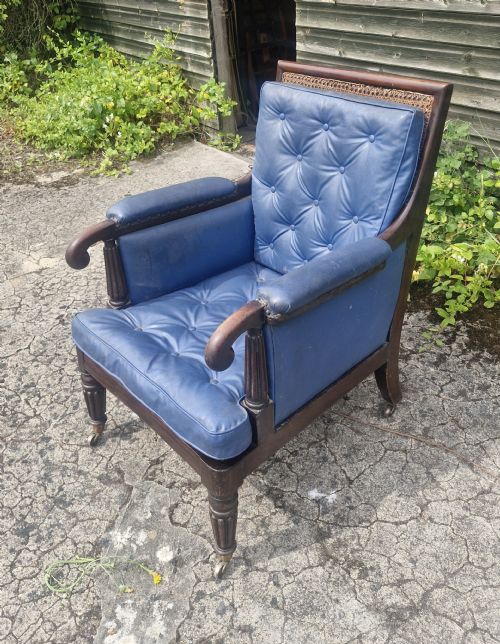


Caned Back Library Chair
A caned back library chair is a sturdy, elegant seat designed for long hours of reading, combining rich timber frames with woven support.
Caned Back Library Chair
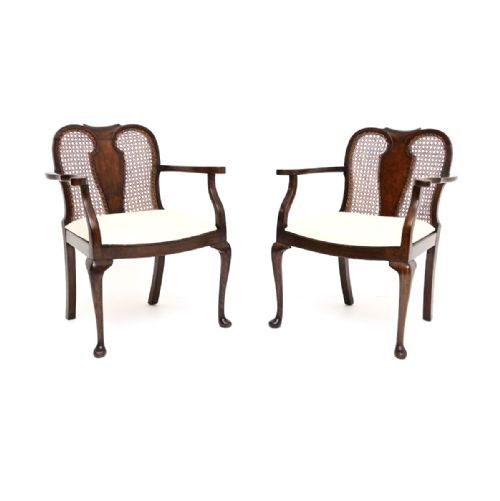
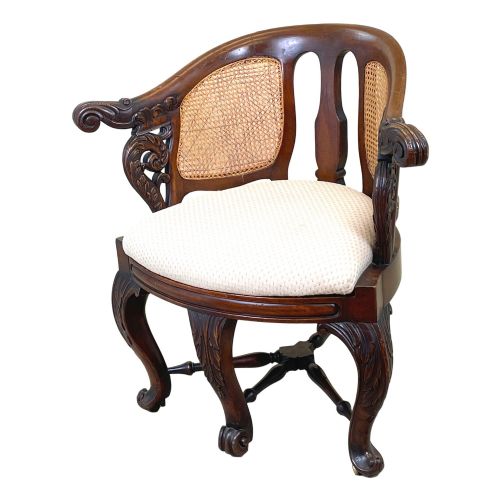
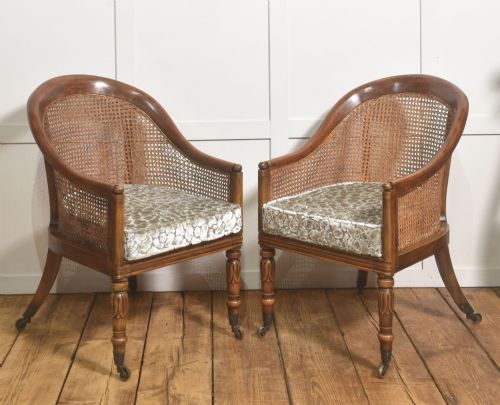
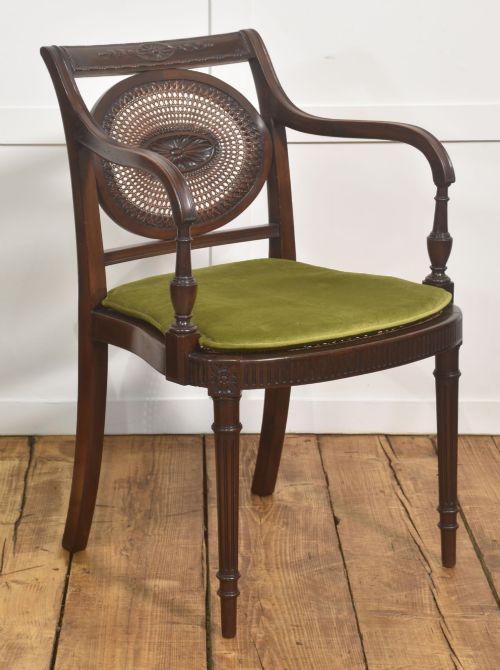
A caned back library chair brings together comfortable seating and practical durability, frequently appearing in forms such as the bergere or traditional armchair. When searching for a caned back library chair, collectors primarily encounter mahogany and walnut frameworks dating from the nineteenth century.
The selection ranges from Regency and William IV periods through to later Victorian examples and twentieth century revivals. These armchairs often feature deep seats and supportive woven backs intended for studies, libraries, and country houses.
Materials and Construction
Cabinetmakers constructed the sturdy frames of these armchairs using dense hardwoods like mahogany, walnut, and ebonised wood. Artisans turned and carved the wood to create robust arm supports and legs, sometimes incorporating brass castors for mobility.
The defining feature involves weaving rattan cane through drilled holes along the frame to form a resilient, flexible back and seat panel. Many examples also integrate upholstered cushions in leather, velvet, or fabric for added comfort.
Caned Back Library Chair Retail Price Guide 2026
Typical asking prices for caned back library chair among the pieces listed under this phrase on Sellingantiques today, from the lower quarter to the upper quarter. They describe what is for sale here now, not the wider market.
Listings feature mahogany, walnut, and ebonised wood alongside woven cane and rattan.
Factors That Determine Quality
The fineness of the cane weaving and the tightness of the tension across the frame set superior pieces apart from simpler versions. Uniformity in the hand-woven pattern indicates skilled craftsmanship and patience during the making process.
The selection of timber, the crispness of the carved details on the mahogany or walnut frame, and the survival of original surface finishes dictate the overall stature of the chair. Heavier framing and balanced proportions also distinguish the finer examples in this range.
Gillows
The Caned Back Library Chair Glossary
- Bergere
- An enclosed upholstered armchair with wooden framing, often featuring cane sides and back panels. This French-inspired form became particularly popular in British seating during the Regency period.
- Cane
- Strips derived from the outer bark of the rattan palm, woven tightly to create light and flexible panels for seating. It provides durable support while allowing air circulation.
- Metamorphic furniture
- Pieces designed to transform into secondary functions, such as an armchair that unfolds into a set of library steps. This ingenious engineering was favoured in nineteenth-century studies.
- Ebonised wood
- Timber treated with a dark stain or chemical process to imitate expensive ebony. Makers utilised this technique on mahogany and other hardwoods to achieve a dramatic black finish.
Caned Back Library Chair: Frequently Asked Questions
How do I care for cane seating?
Keep caned panels slightly hydrated by wiping them occasionally with a damp cloth to prevent the material from becoming brittle. Avoid placing these chairs near direct heat sources or in overly dry rooms.
Regular dusting with a soft brush helps remove particles trapped within the weave. If the cane begins to sag slightly, gentle moistening on the underside can sometimes encourage the fibres to retighten.
What is a bergere chair?
A bergere is a closed-arm upholstered armchair with wooden framework and woven cane panels. These seats offer a deep, comfortable posture suited for prolonged reading.
Originating in earlier French design, British cabinetmakers adapted the style extensively during the Regency and Victorian eras. They frequently paired the exposed timber frame with loose cushions in leather or velvet.
Can these chairs be used daily?
These library armchairs were built for daily study use from robust hardwoods like mahogany and walnut. Their sturdy construction handles normal sitting provided the cane remains in sound condition.
Care should be taken not to place excessive concentrated weight on the woven panels. Adding a supportive cushion can also reduce direct strain on the vintage cane weave.
How do I date a library chair?
Dating relies on examining the timber species, the turning of the wood legs, and the overall stylistic proportions. Regency examples often display classical lines and darker mahogany or ebonised finishes.
Later Victorian and revival pieces from the twentieth century frequently incorporate heavier framing or softer walnut tones. Comparing the construction methods of the joints helps clarify the manufacturing era.