



Neoclassical Library Chair
A neoclassical library chair brings enduring architectural proportion and structured comfort to a room.
Neoclassical Library Chair
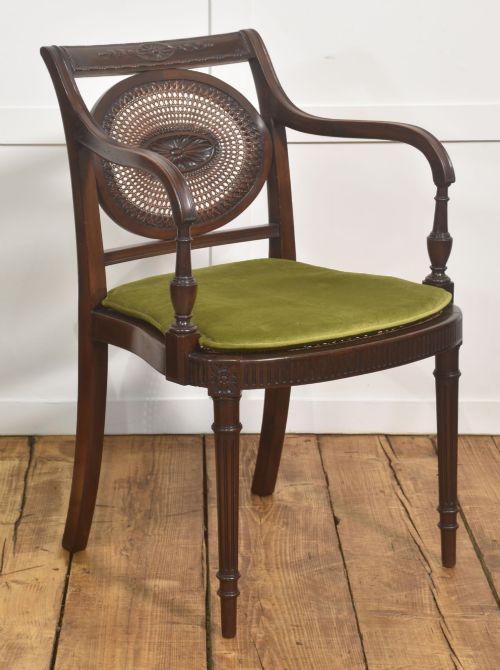
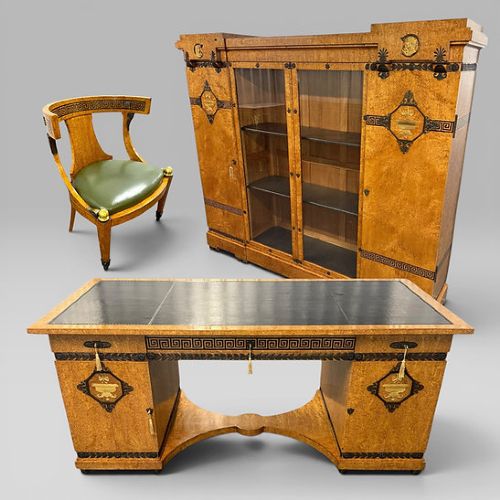
When you search for a neoclassical library chair, you are looking at seating designed for study and formal rooms, drawing on classical motifs from the nineteenth and early twentieth centuries. These pieces appear in forms such as open armchairs, desk chairs, and office sets.
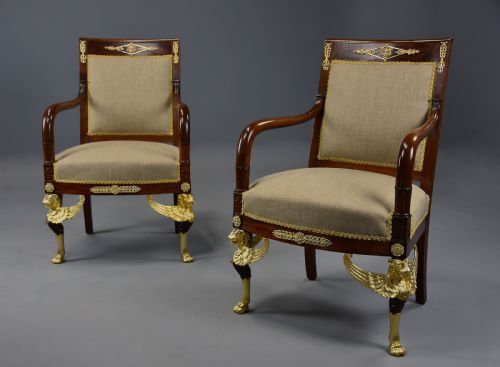
The versions you are most likely to meet on this page span the nineteenth century up to the nineteen-twenties, including Sheraton Revival, French Empire, and various neoclassical revival styles. They utilise rich timbers and traditional upholstery to achieve their characteristic silhouette.
How they were made
Cabinetmakers constructed these frames using dense timbers like mahogany, walnut, satinwood, and burr elm, often shaping the wood to highlight the grain and structural lines. Joinery relied on traditional techniques to ensure durability under daily use.
Surface detailing incorporated brass, gilt bronze or ormolu mounts, alongside cane inserts and upholstery in leather, velvet, and textile. These combined materials added tactile contrast and visual weight to the classical forms.
Neoclassical Library Chair Retail Price Guide 2026
Typical asking prices for neoclassical library chair among the pieces listed under this phrase on Sellingantiques today, from the lower quarter to the upper quarter. They describe what is for sale here now, not the wider market.
What varies in quality
The refinement of the carved ornament and the precision of the timber selection set finer examples apart from simpler workshop production. Crisp detailing in gilt bronze mounts and well-balanced proportions indicate a higher grade of craftsmanship.
The integrity of the structural joinery and the quality of the secondary woods used beneath visible surfaces dictate how well a chair survives centuries of use. Original upholstery materials and preserved patination also contribute significantly to the standing of an individual piece.
Mercier Frères
The Neoclassical Library Chair Glossary
- Ormolu
- Gilded bronze applied as a decorative mount to furniture frames. This technique creates metallic highlights that contrast with dark timbers.
- Fauteuil
- An open-armed upholstered armchair with exposed wooden framing. French cabinetmakers frequently used this form in formal reception rooms.
- Satinwood
- A pale, hard timber with a natural sheen, popular in revival furniture. It provides a bright surface for delicate inlay and carving.
- Empire style
- A neoclassical design movement characterised by heavy classical motifs and military references. It dominated French decorative arts during the early nineteenth century.
- Tub chair
- A curved, enclosed armchair where the back and arms form a continuous semi-circle. This shape offers a secure and enclosed seat.
Neoclassical Library Chair: Frequently Asked Questions
What is a neoclassical library chair?
A neoclassical library chair is a formal seat influenced by ancient Greek and Roman design principles, featuring clean lines, symmetrical geometry, and classical ornament. These chairs were built for reading rooms, studies, and offices.
They appear in various timber forms from the nineteenth and early twentieth centuries, encompassing styles such as French Empire and Sheraton Revival.
How do I identify French Empire style?
French Empire style chairs typically display strong architectural lines, dark mahogany framing, and classical brass or ormolu mounts. The ornament often includes military trophies, sphinxes, and laurel wreaths.
Such pieces date predominantly from the nineteenth century and carry a heavier, more monumental presence than earlier eighteenth-century designs.
Were these chairs used at desks?
Many library and office chairs from this period were specifically tailored for writing desks, featuring swivel mechanisms, adjustable heights, or supportive tub backs. They formed part of larger office sets or were paired with partners desks.
Desk chairs combined functional ergonomics of the era with the formal aesthetic required for a gentleman's study.
How do I care for antique leather upholstery?
Antique leather requires gentle cleaning with a dry or slightly damp cloth, avoiding modern chemical detergents that strip natural oils. Maintaining a stable room humidity prevents the hide from drying and cracking.
Applying a specialist leather conservation wax helps preserve the supple texture and historical patina of the material.