



Georgian Style Floor Clock
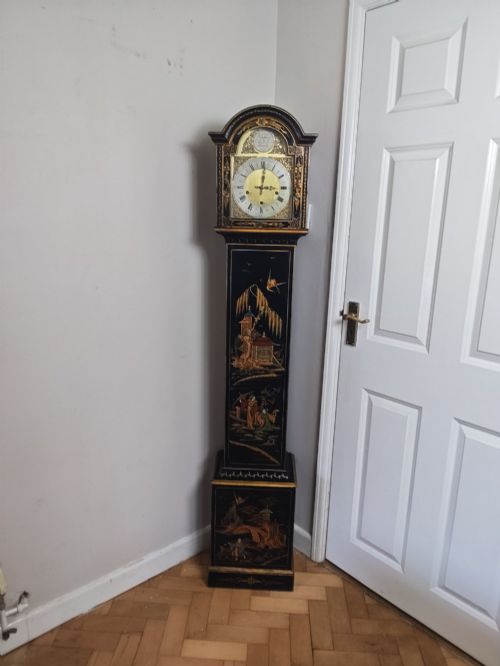
A georgian style floor clock stands tall in a hall, measuring time with a weight-driven movement while anchoring the room with architectural presence.
Georgian Style Floor Clock
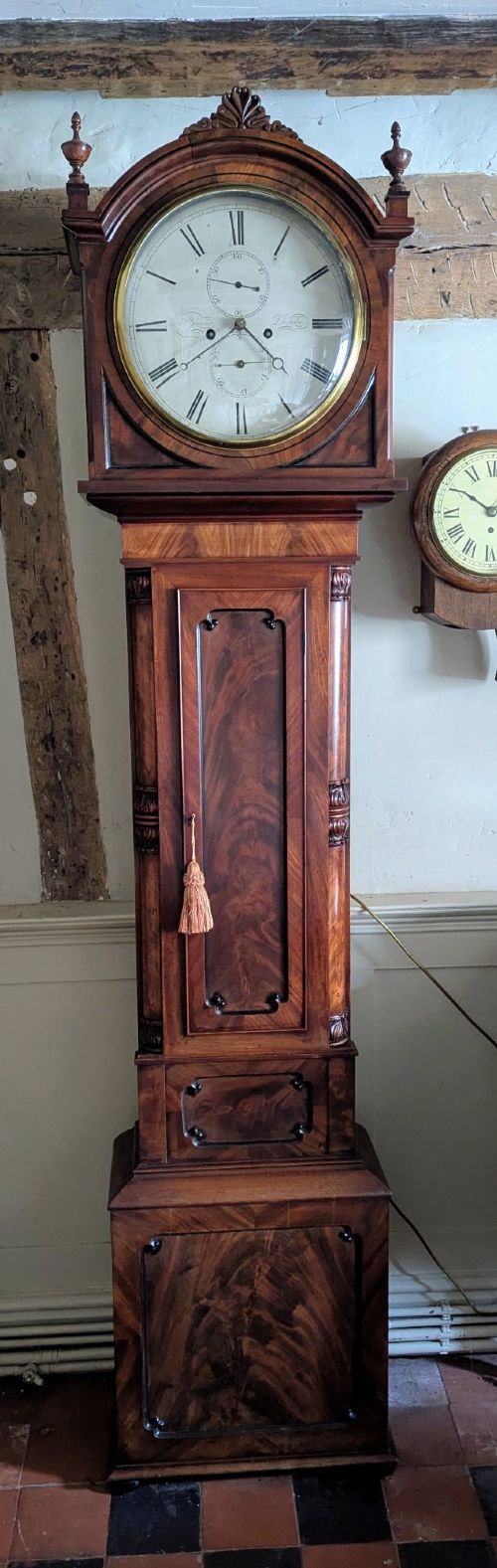
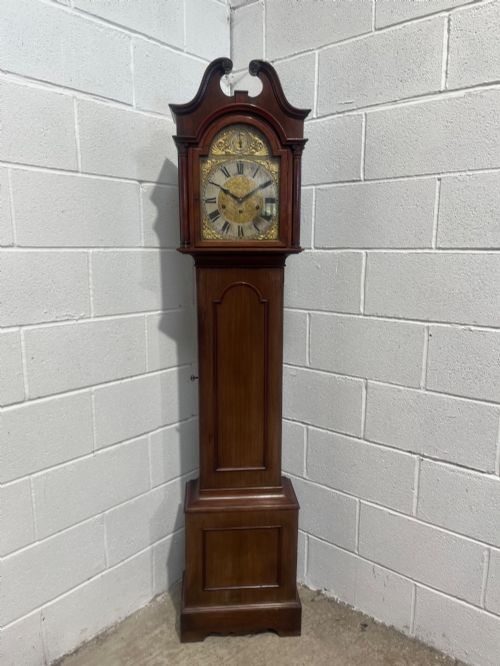
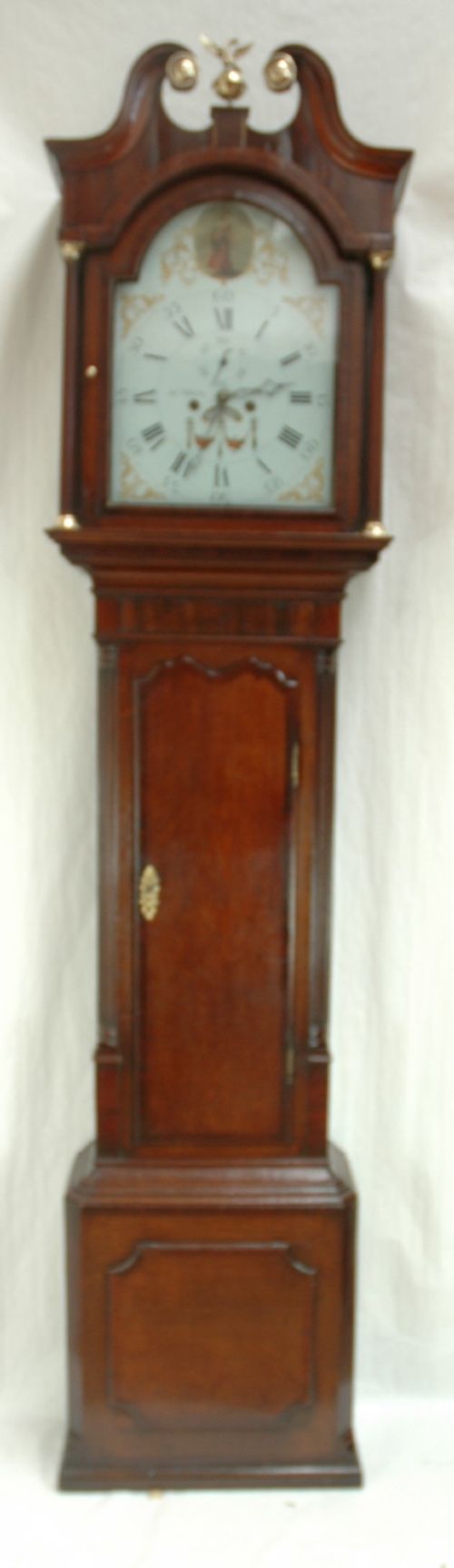
A georgian style floor clock encompasses tall case clocks, longcase clocks, and grandfather clocks spanning multiple eras from the Georgian period through to revival styles in the nineteenth and twentieth centuries. These upright timepieces serve as functional furniture and decorative statements, often built with tall wooden trunks designed to protect swinging pendulums and falling weights.
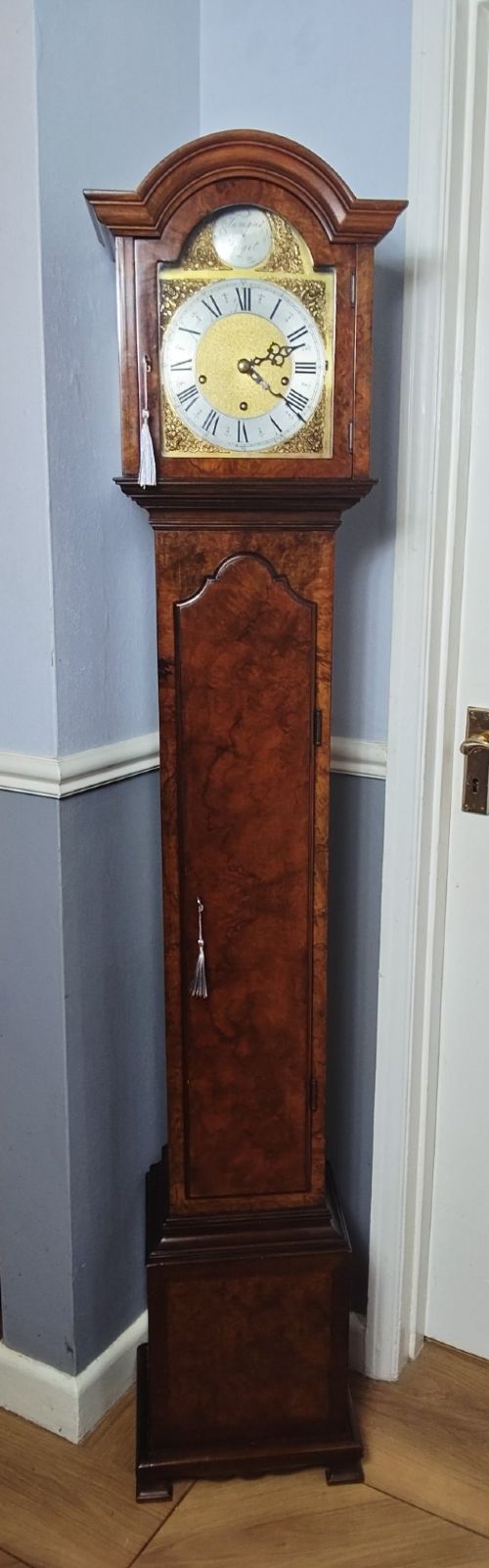
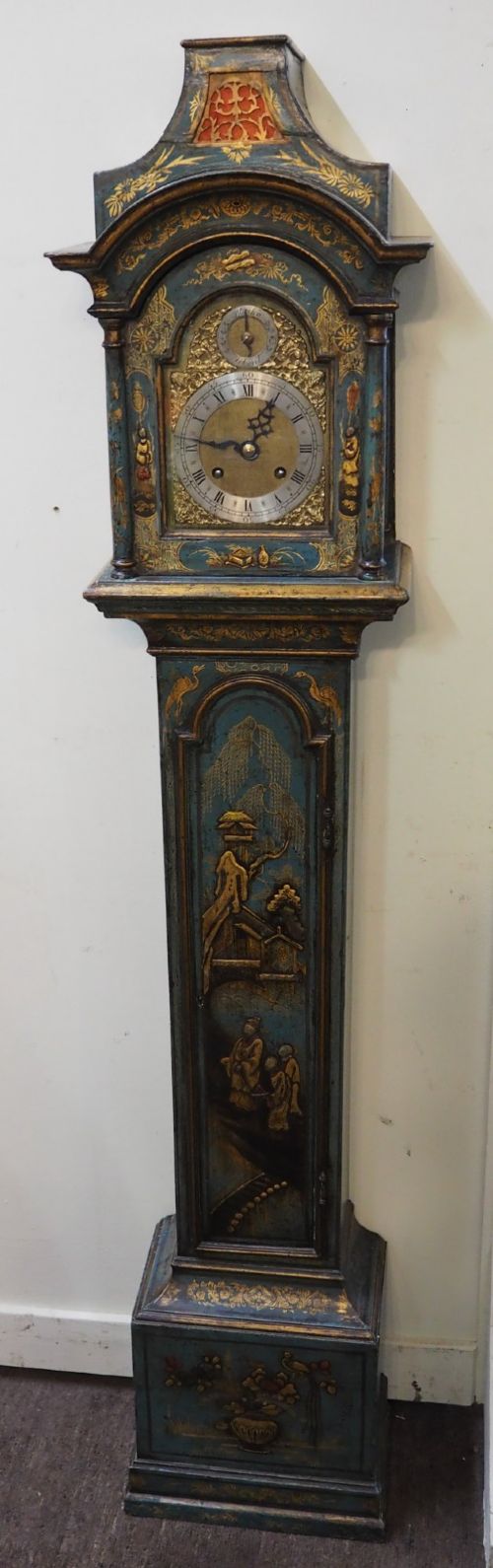
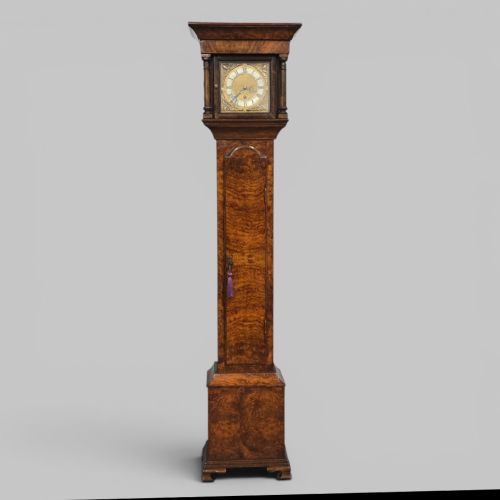
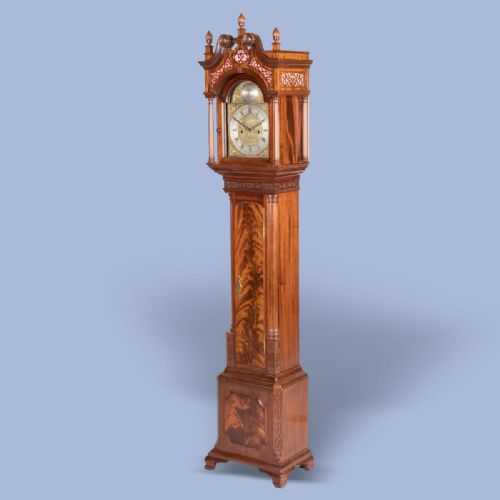
The pieces appearing on this page demonstrate considerable variety in scale, stretching from full-size domestic regulators down to smaller grandmother and granddaughter proportions. Materials span rich timbers like mahogany, walnut, and burr walnut alongside painted surfaces and decorative finishes.
Originating in the Georgian era, the style persists across Edwardian and Victorian revivals as well as later twentieth-century interpretations. Buyers encounter traditional wood finishes alongside intricate lacquer work and gilt details.
Materials and construction
Construction relies heavily on cabinet timbers, predominantly mahogany and walnut, selected for their grain and stability over long vertical spans. Workshops applied specialist finishes including lacquer, gold leaf, and marquetry inlay to elevate the visual impact of the case.
Movements incorporate brass gears, glass dial covers, and complex striking mechanisms mounted on bells or gongs. These mechanical elements require precise housing within the wooden trunk and hood to ensure accurate timekeeping.
Listings feature woods including mahogany, walnut, burr walnut, and golden oak, alongside decorative finishes like lacquer and gold leaf.
Distinctions in quality
Quality rests upon the proportion and balance of the wooden case, where finer examples display carefully selected burr walnut or figured mahogany veneers rather than plain timber. The integration of musical or quarter-chiming movements adds significant mechanical complexity to the construction.
Detailing on the dial and case separates standard production from superior craftsmanship. Finely executed marquetry inlay, painted scenes, and signed mechanical movements indicate higher workshop standards.
LISTER & SONS·Camerer Cuss & Co·Gardner of London·DENT OF LONDON
The Georgian Style Floor Clock Glossary
- Longcase clock
- A tall pendulum clock enclosed in a wooden case standing directly on the floor. These timepieces are frequently referred to as grandfather clocks.
- Grandmother clock
- A smaller, more slender version of the traditional longcase clock, typically produced during the twentieth century. They suit rooms with lower ceilings where a standard grandfather clock would overwhelm the space.
- Chinoiserie
- A decorative style employing hand-painted oriental motifs, often featuring figures, pagodas, and landscapes on a lacquered background. This technique appears on specific clock cases to create an exotic aesthetic.
- Regulator
- A precision pendulum clock designed for exceptional accuracy in timekeeping. These movements often omit striking trains to focus purely on measuring time.
Georgian Style Floor Clock: Frequently Asked Questions
How do I wind a floor clock?
Winding involves using a key or pulling cords to raise the internal weights or tension the springs depending on the specific movement design. Care must be taken not to overwind the mechanism.
Regular winding keeps the pendulum swinging and ensures the striking train operates correctly at the appointed hours.
Where should I place a grandfather clock?
Position the clock against a stable interior wall away from direct sunlight and heating vents to protect the wooden case and delicate internal mechanics. A level floor is essential for the pendulum to swing evenly.
Placing the piece in a hallway or principal room allows the chime to resonate through the home while providing adequate clearance for the tall case.
What is the difference between a grandfather and grandmother clock?
Grandfather clocks are the standard full-height longcase timepieces developed in the seventeenth and eighteenth centuries. They possess large proportions and substantial movements.
Grandmother clocks are scaled-down versions introduced later, featuring shorter cases and more compact movements suited to smaller modern interiors.
Do all these clocks chime?
Not all floor clocks feature striking or chiming mechanisms. Some simpler models indicate time silently through hands on a dial without bells or gongs.
Others include quarter-chiming movements or musical cylinders that play melodies on the hour and quarter-hour.