


Weight Driven Floor Clock
A weight driven floor clock anchors a room with mechanical gravity, bringing historical timekeeping and steady pendulum motion directly into your home.
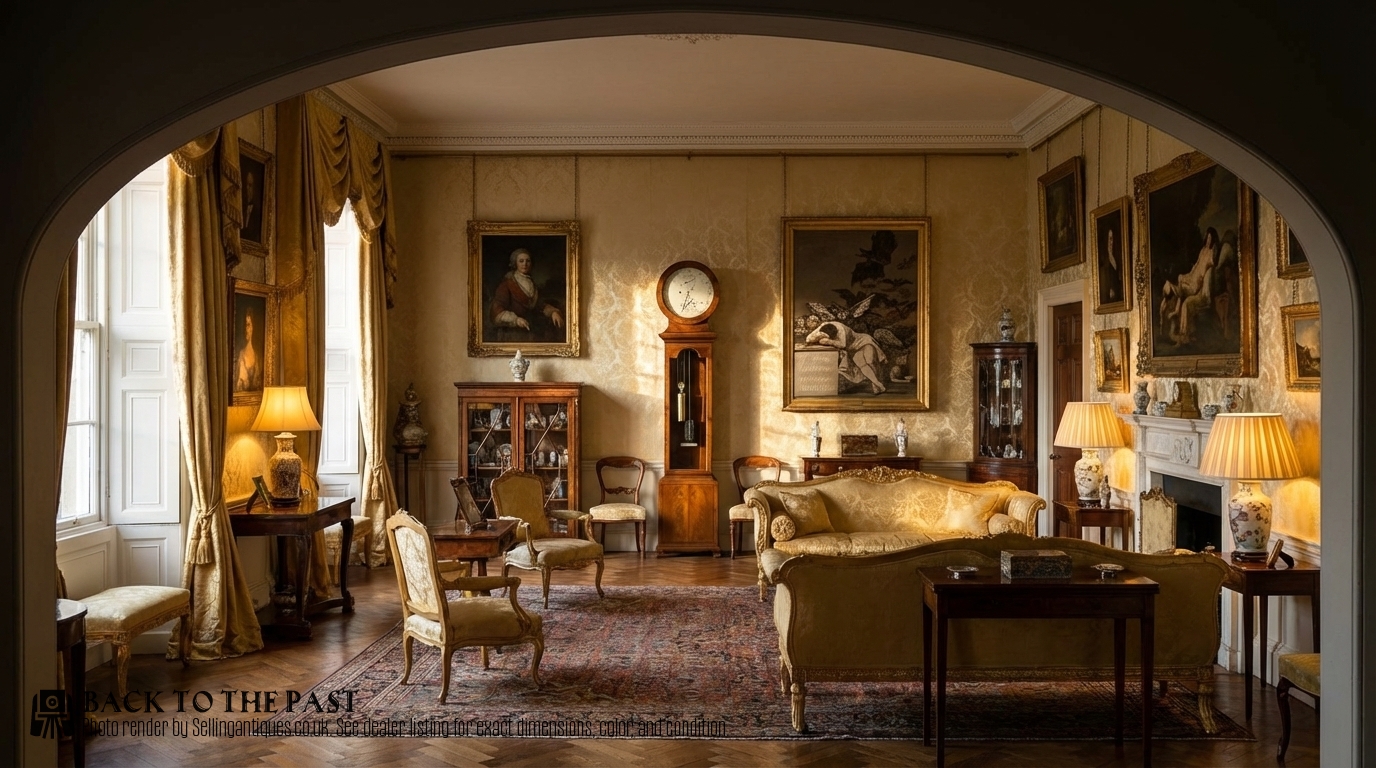
Weight Driven Floor Clock
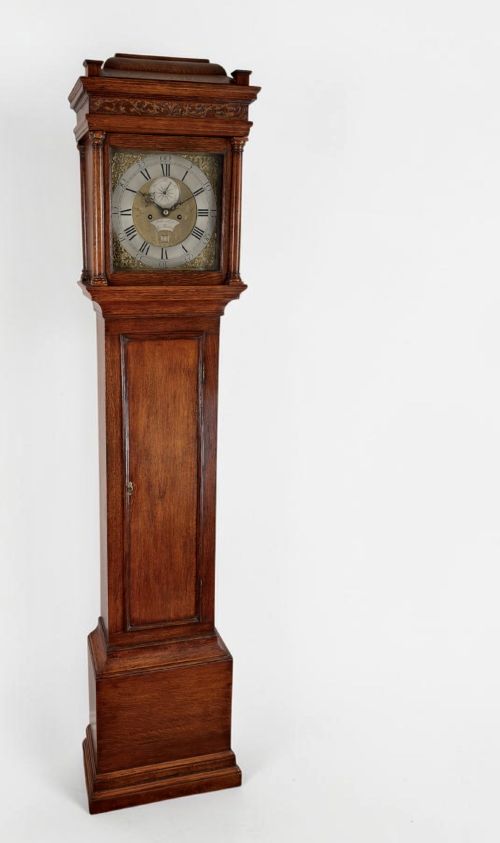
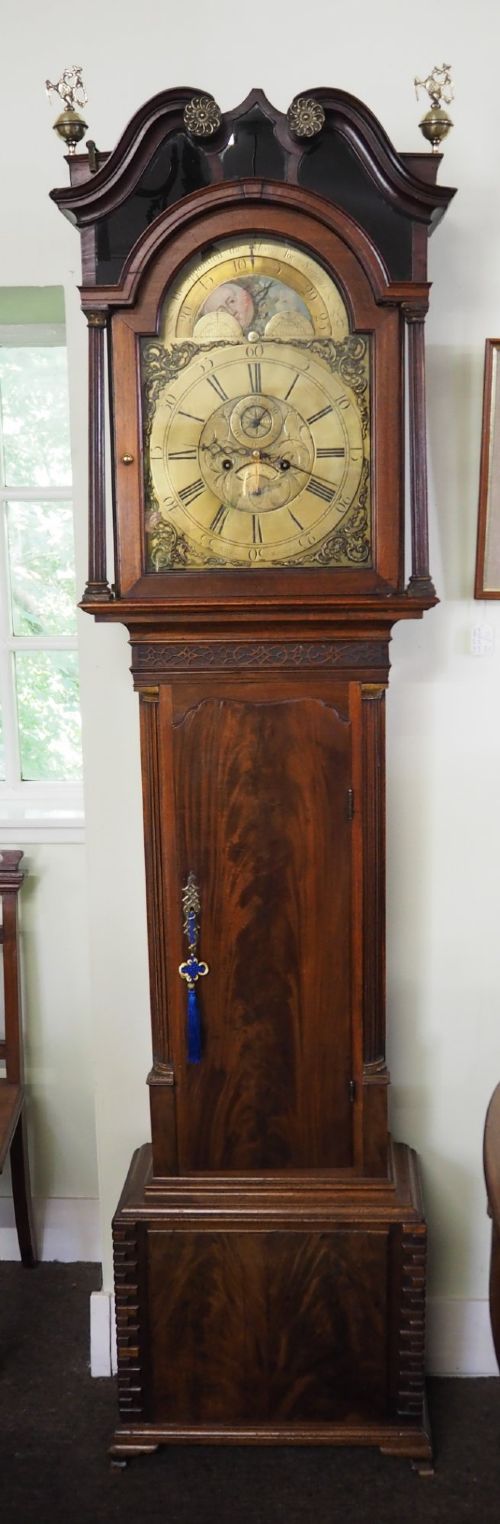
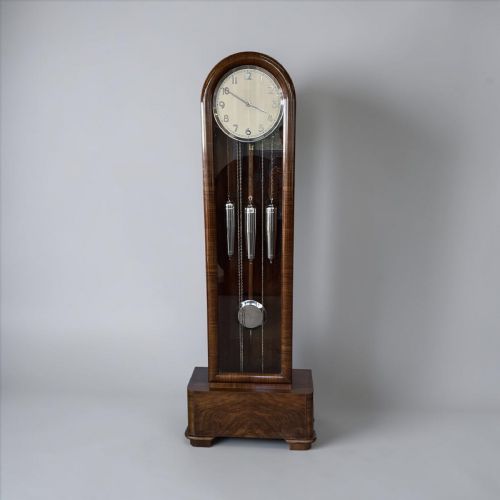
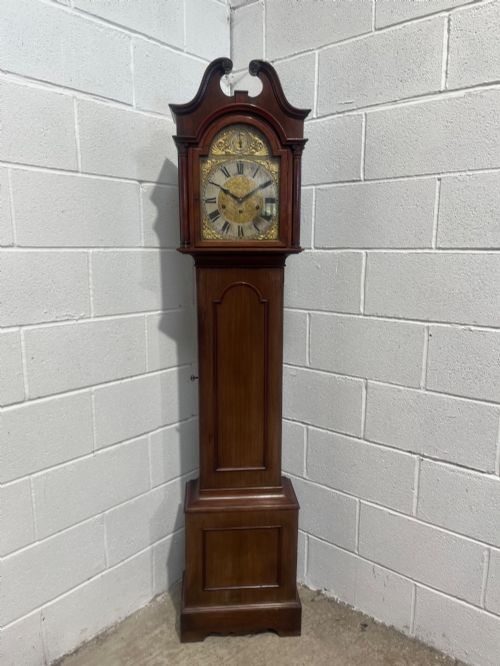
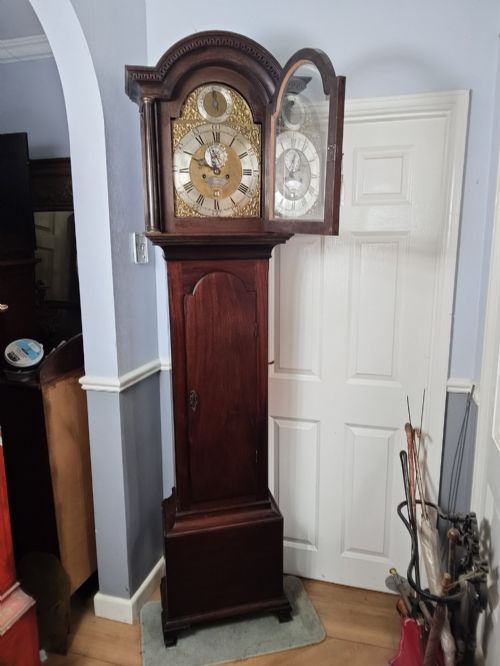
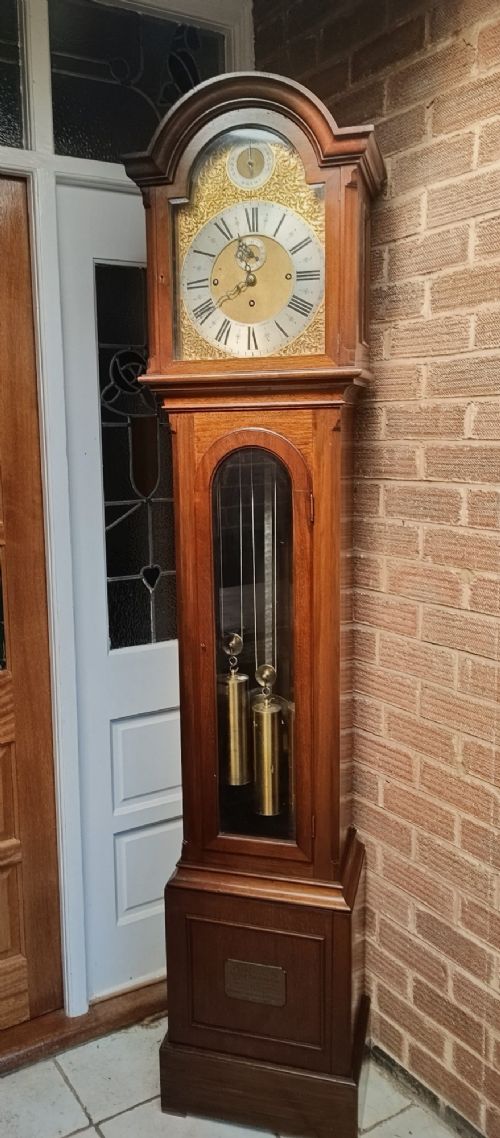
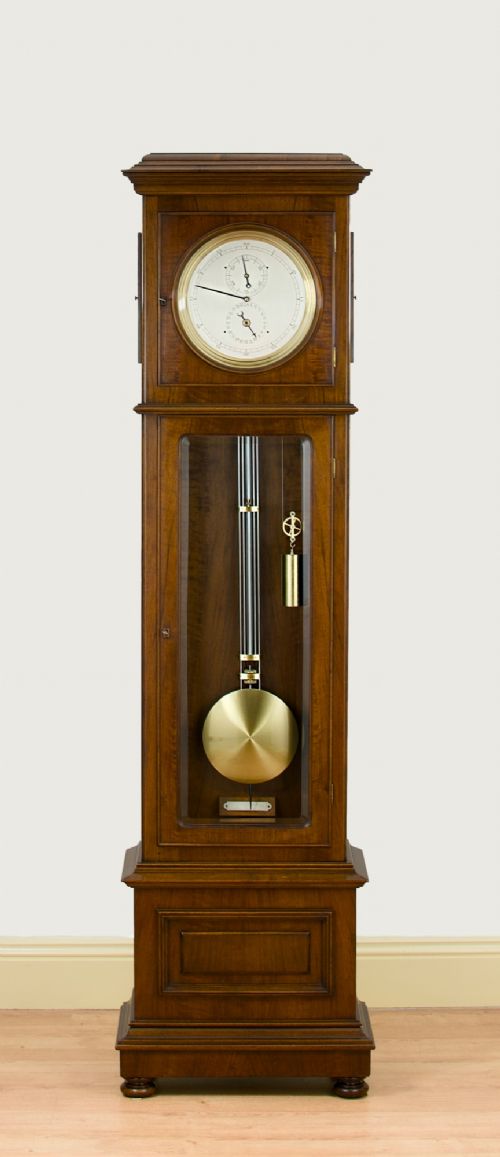
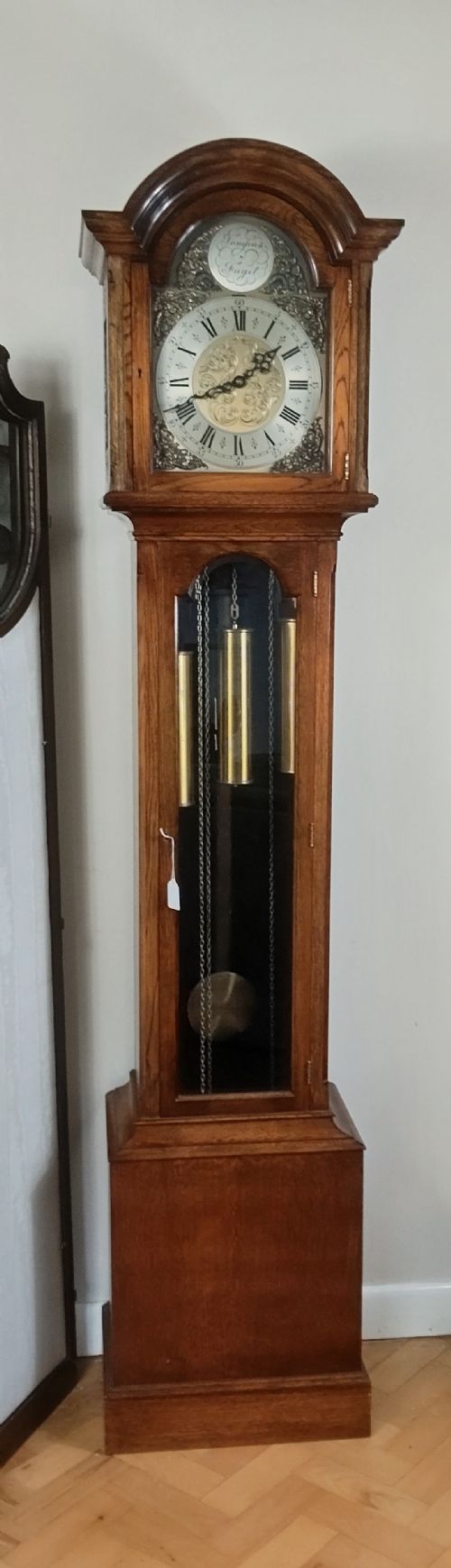
A weight driven floor clock encompasses tall case timepieces known as longcase clocks, grandfather clocks, and smaller grandmother clocks. These vertical instruments stand upright on the floor, utilising suspended weights rather than springs to power the movement.
The pieces appearing here span eras from the Georgian and eighteenth century through the Victorian, Edwardian, and Art Deco periods. Buyers encounter traditional oak and mahogany tall cases alongside specialised regulators and musical models.
Originating across English, Scottish, and continental workshops, these clocks present regional variations in dial design, hood architecture, and timber choice. Oak and mahogany dominate the selection, housing movements ranging from simple time-and-strike to quarter-chiming regulators.
Distinctions in quality
Quality separates mass-produced standard timepieces from precision regulators built for absolute accuracy, often housing complex musical chimes or multiple train movements. The refinement of the cabinetwork, including finely figured mahogany veneers, carved details, and well-proportioned hoods, elevates a piece significantly.
The integrity and original state of the internal brass movement, along with signed dials by notable makers, dictate the standing of the clock. Superior examples maintain crisp engraving, precise gear teeth, and harmonious acoustic properties in their bell or chime assemblies.
Weight Driven Floor Clock Retail Price Guide 2026
Typical asking prices for weight driven floor clock among the pieces listed under this phrase on Sellingantiques today, from the lower quarter to the upper quarter. They describe what is for sale here now, not the wider market.
Many an eighteenth-century household relied on their tall clock's loud tick to keep ghosts at bay during long winter nights.
Lee of Great Marlow·Elliott·Lenzkirch·Enfield·Gillett and Johnston·Francis Perigal·William Wady·Wm Stanford·Benjamin Rogers·Rob Parry Pwllheli·Herbert of Haversham·French Royal Exchange·Aitchison of Glasgow·JJ Elliot
The Weight Driven Floor Clock Glossary
- Longcase clock
- A tall, weight-driven pendulum clock enclosed in a wooden case with a base, trunk, and hood. These instruments are frequently called grandfather clocks by collectors.
- Regulator
- A precision pendulum clock designed for extreme timekeeping accuracy and used as a standard for setting other timepieces. They often feature clean dials with separated hands for hours, minutes, and seconds.
- Grandmother clock
- A scaled-down version of the traditional longcase clock, standing significantly shorter while retaining weight-driven mechanics. They became popular in the twentieth century for smaller domestic spaces.
- Strike silent
- A mechanical feature allowing the user to silence the hourly bell or gong strikes without stopping the clock's timekeeping function. This mechanism is operated via a small lever near the dial.
- Quarter chiming
- A movement complexity that plays a musical melody on bells or gongs every fifteen minutes. These systems typically use multiple weights to power the distinct train.
Weight Driven Floor Clock: Frequently Asked Questions
How do I wind a weight driven floor clock?
Winding involves using a crank or key to pull the suspended weights back up toward the top of the trunk. Care must be taken not to overwind the movement or strain the cords.
Maintaining a regular schedule ensures the weights descend at a predictable rate, keeping the pendulum swinging evenly and the time accurate.
Where should I place a longcase clock?
Position the case against an interior wall away from direct sunlight, heating vents, and damp areas. Temperature fluctuations can affect the wood and the expansion of the pendulum.
The floor must be entirely level to ensure the pendulum swings symmetrically and the escapement ticks with an even beat.
How do I tell an 18th century clock from a later one?
Eighteenth-century examples often feature square brass dials with cast spandrels in the corners, mounted inside simple oak or mahogany architectural hoods. The proportions tend to be robust and hand-finished.
Later Victorian and Edwardian pieces frequently introduce arched painted dials, inlaid mahogany veneers, and taller, more slender proportions influenced by revival styles.
What is the difference between a grandfather and a grandmother clock?
Grandfather clocks are the standard full-sized longcase timepieces, typically standing over six feet tall with generous proportions. They command a strong presence in large hallways and living rooms.
Grandmother clocks are significantly shorter and narrower miniatures, designed during the twentieth century to fit modern ceiling heights and compact domestic spaces.