

Georgian Style Dining Buffet
A georgian style dining buffet brings formal symmetry to a dining room, combining deep mahogany timbers with precise inlaid decoration.
Georgian Style Dining Buffet
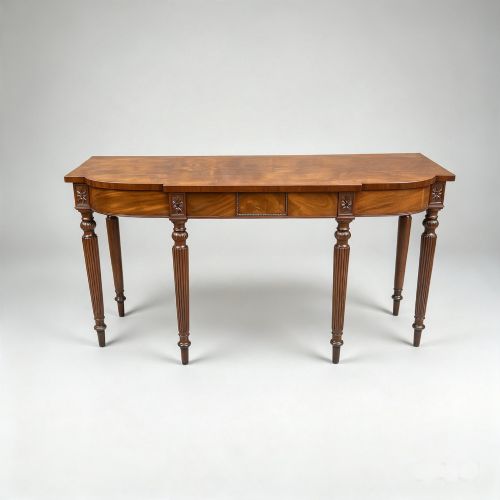
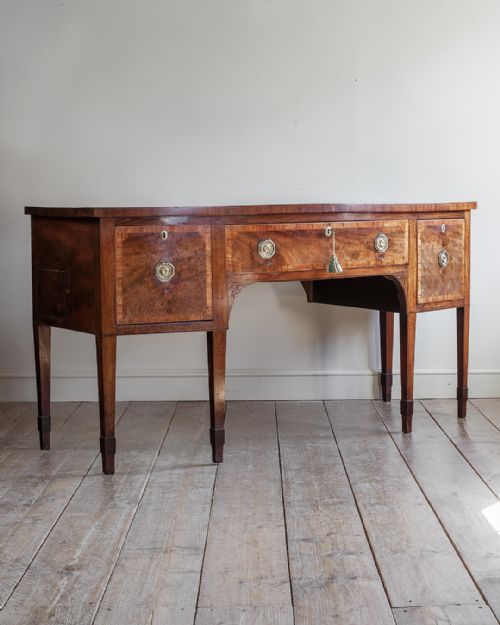
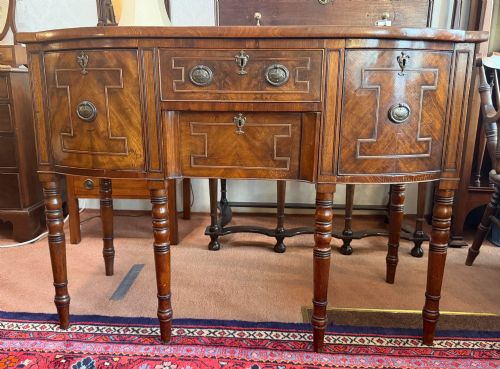
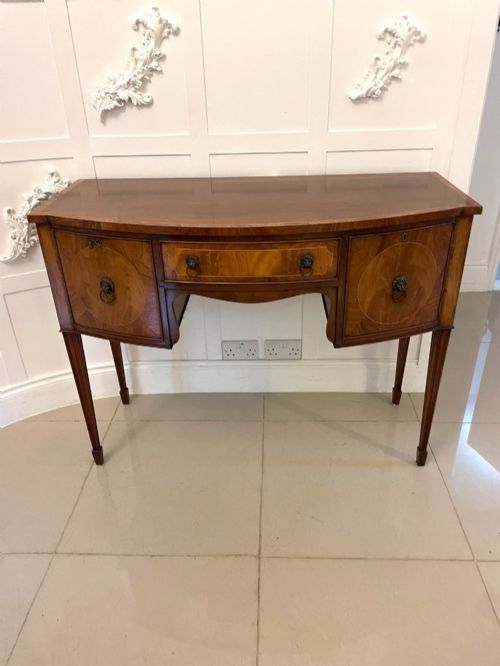
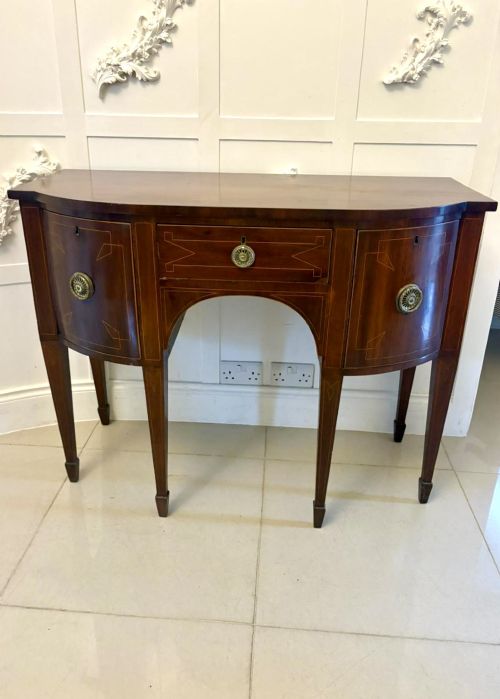
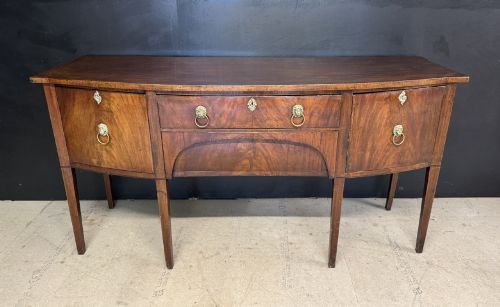
A georgian style dining buffet is a substantial serving and storage piece designed for the dining room. These items appear in formats such as sideboards, servers, and side cabinets.
The pieces on this page span the eighteenth century through to the early twentieth century. Many date from the Georgian, Regency, and Edwardian periods, alongside later revivals.
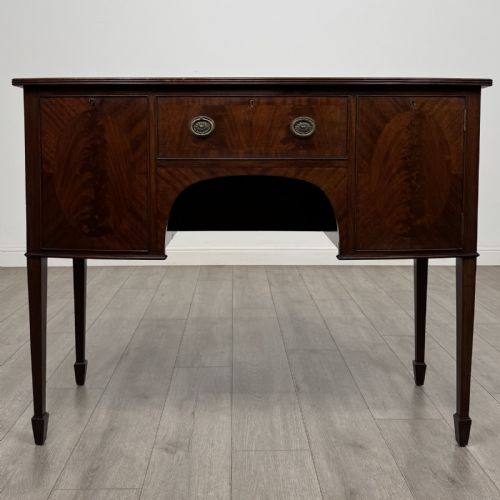
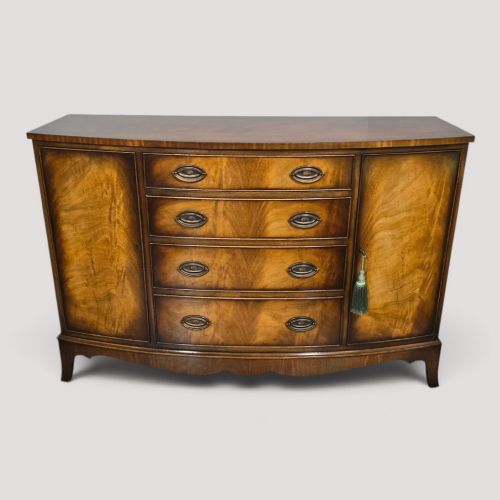
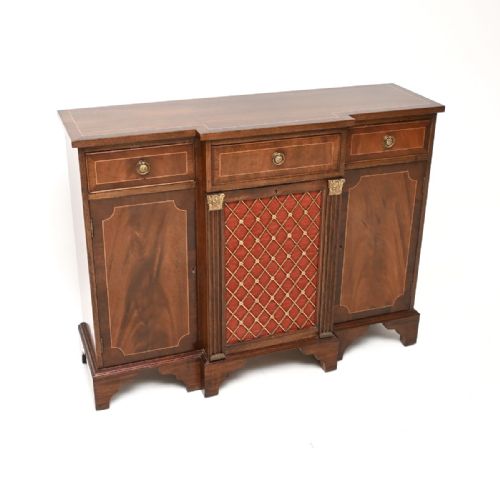
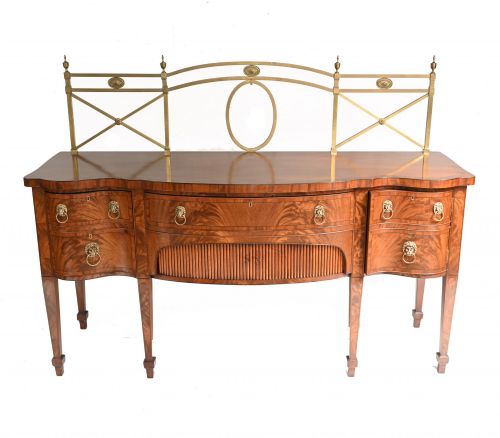
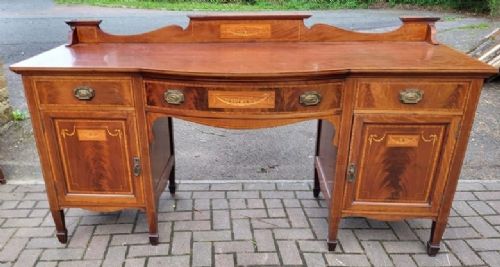
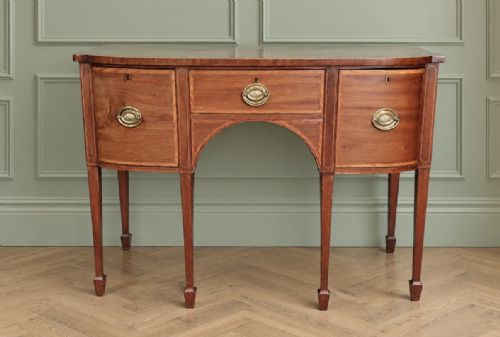
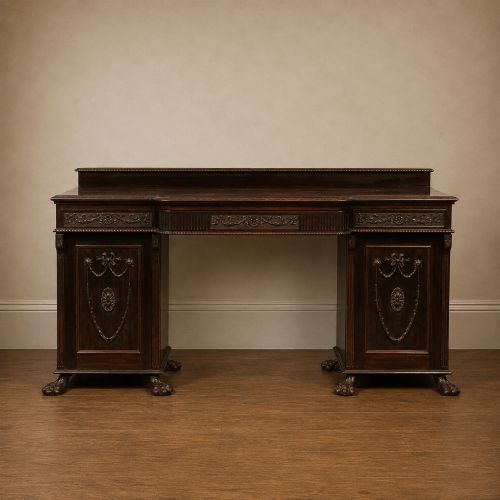
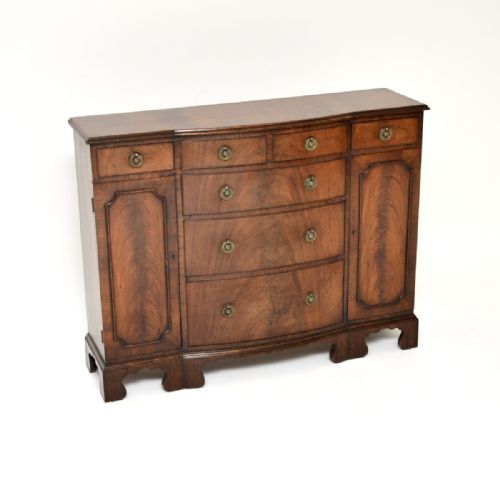
Forms vary from straight-fronted cupboards to breakfront and serpentine shapes. Buyers frequently encounter bow-fronted designs and pedestal configurations.
How they were made
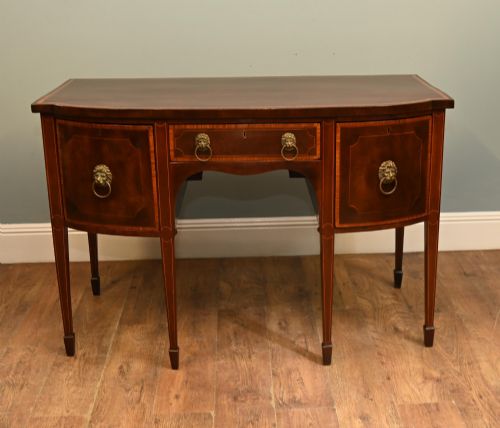
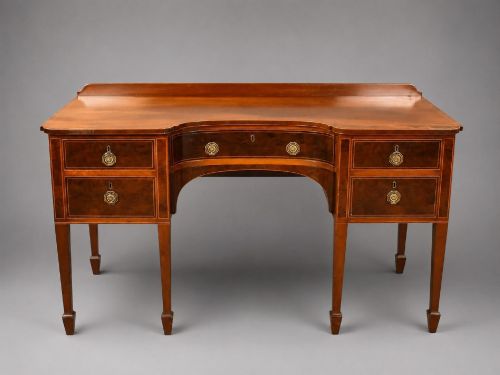
Cabinet makers utilised solid mahogany and flame mahogany veneer over supportive timber carcases. Rich surfaces often incorporate contrasting details in satinwood, boxwood, and rosewood.
Decorative enrichment relies on intricate wood inlay and marquetry inlay techniques. Hardware typically includes cast brass pulls and handles, while certain pieces stand upon distinct paw feet.
Georgian Style Dining Buffet Retail Price Guide 2026
Typical asking prices for georgian style dining buffet among the pieces listed under this phrase on Sellingantiques today, from the lower quarter to the upper quarter. They describe what is for sale here now, not the wider market.
Some Edwardian pieces feature carved paw feet that make the heavy mahogany sideboards look ready to pad across the floor.
What varies in quality
The tier of a piece depends on the choice of timber and the precision of the veneer work. Flame mahogany and well-matched grain patterns elevate the visual impact of the front elevation.
Refinement shows in the execution of the inlay and the crispness of the serpentine or breakfront shaping. Superior examples maintain structural integrity alongside balanced proportions across the entire sideboard.
M. D. Miller & Sons·Gillows
The Georgian Style Dining Buffet Glossary
- Serpentine
- A front contour that curves outward in the centre and inward towards the ends, demanding high skill in cabinet making. This shape creates a fluid movement across the front of the buffet.
- Breakfront
- A cabinet front where the central section projects forward from the flanking side sections. This architectural arrangement adds depth and formal presence to dining furniture.
- Bow-front
- A convex, outwardly curved front profile popular in late eighteenth and nineteenth-century case furniture. It softens the linear angles of a dining room.
- Marquetry inlay
- Decorative patterns formed by fitting contrasting wood veneers into a prepared background. Artisans use this technique to create floral or geometric motifs.
- Satinwood
- A light yellowish timber imported from the tropics, utilised for banding and detailed inlay work. It provides a sharp contrast against darker mahogany.
Georgian Style Dining Buffet: Frequently Asked Questions
What is a georgian style dining buffet?
A georgian style dining buffet is a large storage and serving furniture piece built for the dining room. It incorporates historical design traits like mahogany construction and decorative inlay.
Such items serve to hold dining silver, linen, and serving dishes while anchoring the room's decorative scheme.
How do I identify a revival piece?
Revival pieces are later interpretations, often dating from the Edwardian era or the broader nineteenth and twentieth centuries. They adopt the forms and motifs of earlier Georgian or Sheraton periods.
Examination of the timber backing, interior construction methods, and secondary woods helps distinguish a later revival from an eighteenth-century original.
Where should I place a sideboard?
Sideboards traditionally stand against the dining room wall, positioned to allow easy access during meals. Their long, low profile suits placement beneath large mirrors or artworks.
Sufficient clearance around the piece ensures that drawers and cupboards open fully without obstruction.
What is the difference between a sideboard and a server?
A sideboard typically offers extensive storage through multiple drawers and cupboards enclosed within a single frame. It functions as both a serving surface and a heavy storage unit.
A server is generally a lighter, more compact version intended primarily for food presentation during dining.