
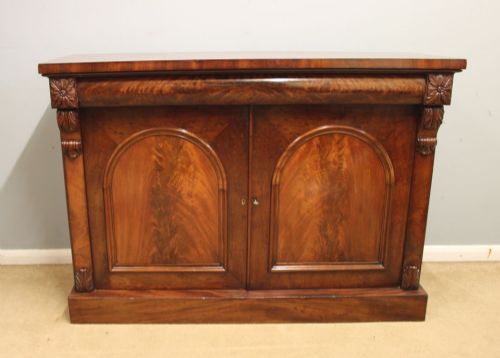
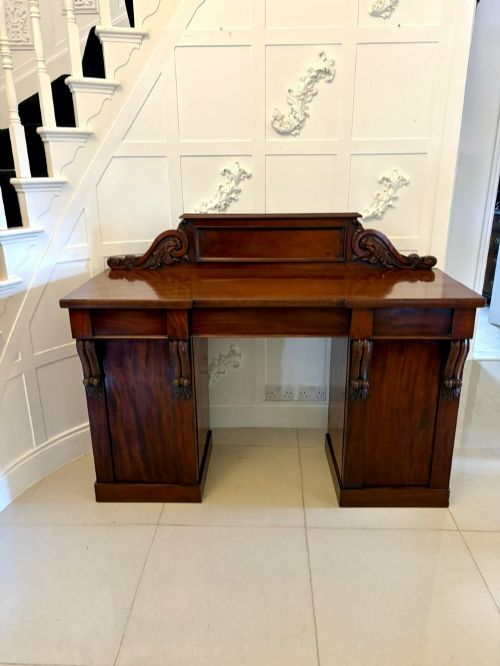
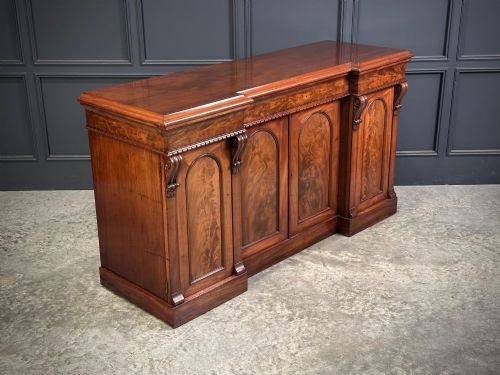
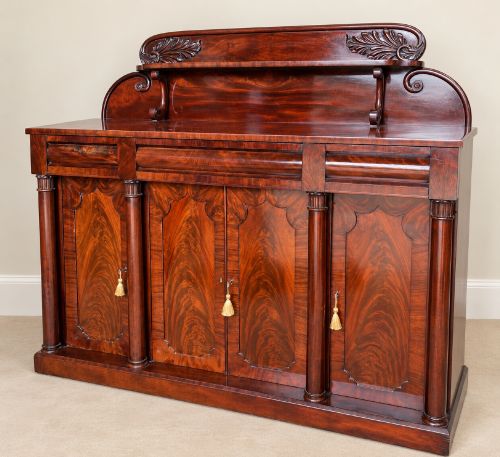
Carved Mahogany Sideboard Cabinet
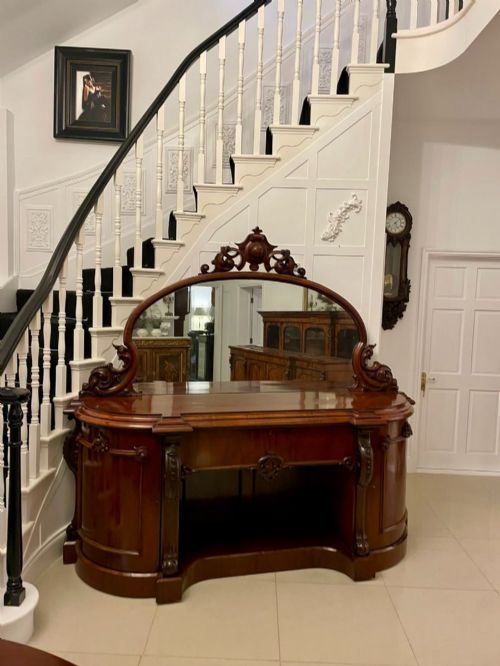
A carved mahogany sideboard cabinet brings deep timber grain and substantial storage into a dining room or hallway.

Carved Mahogany Sideboard Cabinet
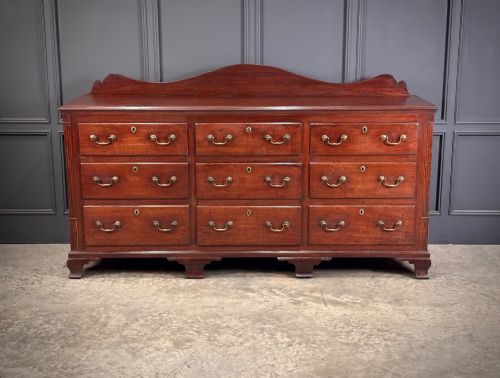
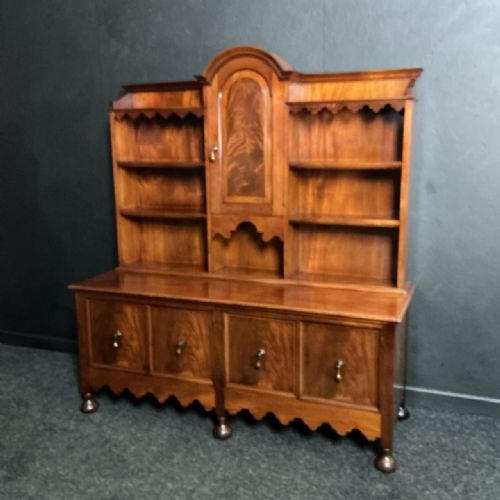
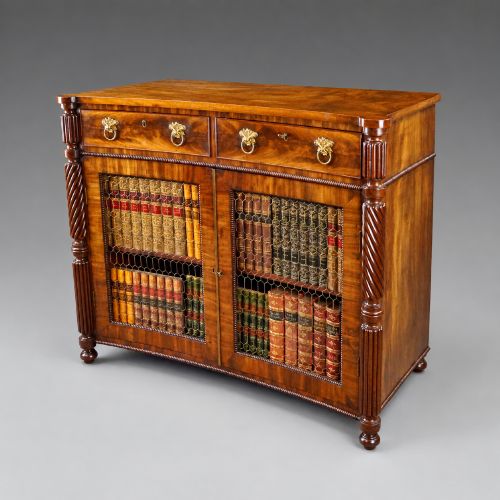
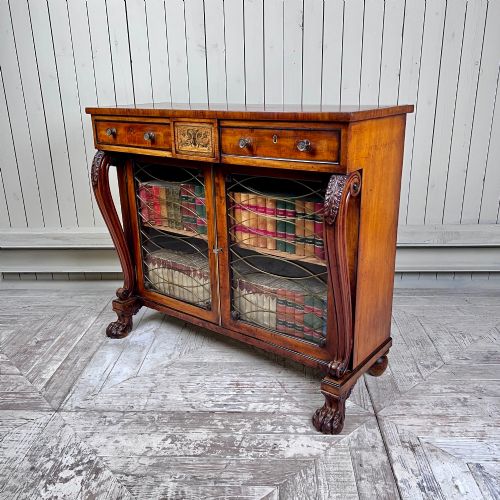
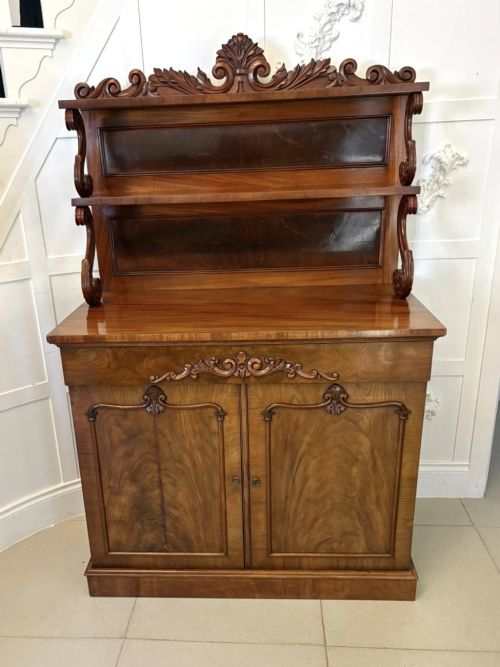
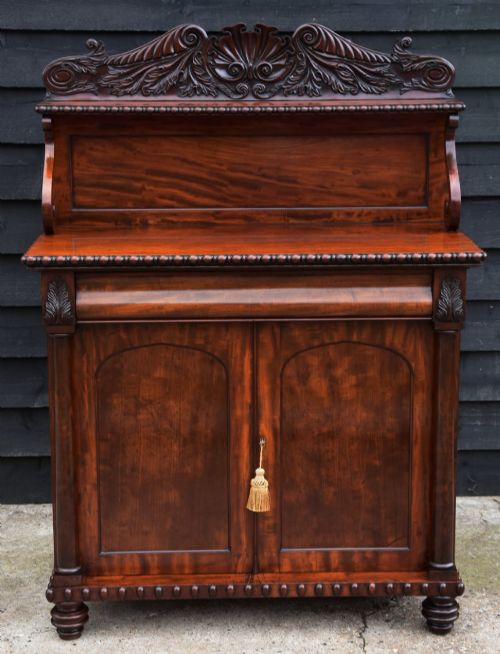
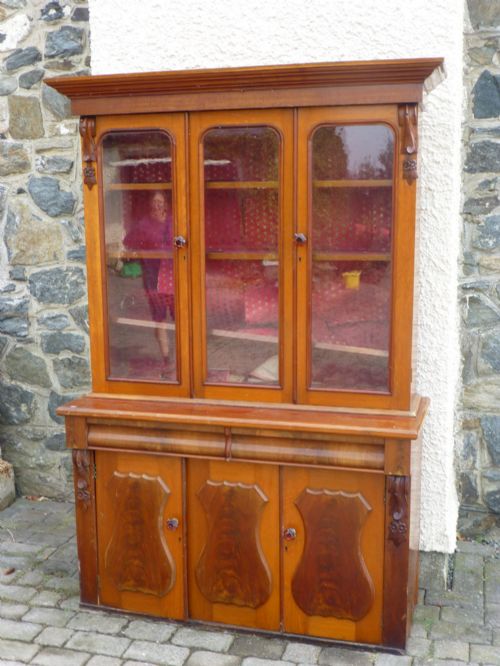
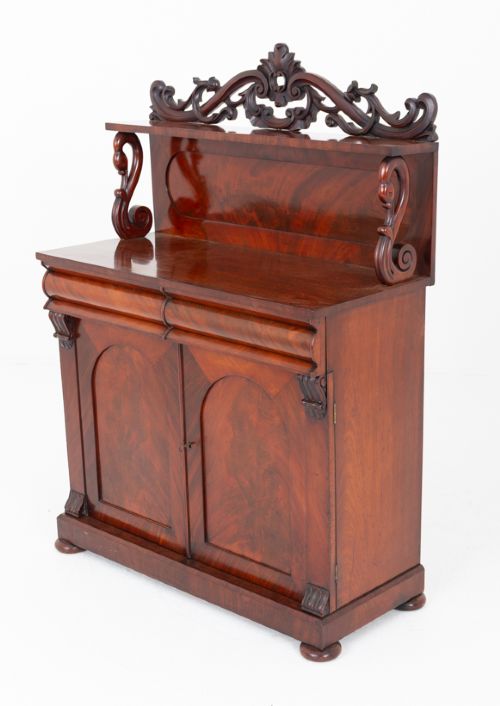
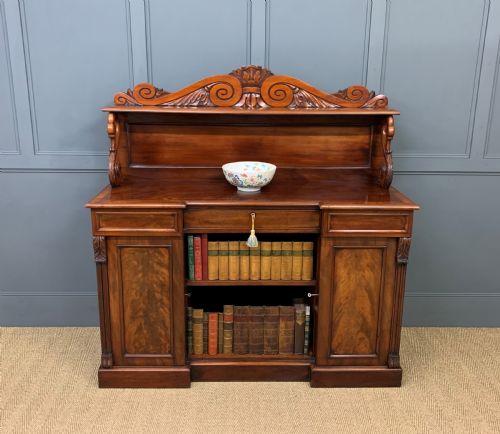
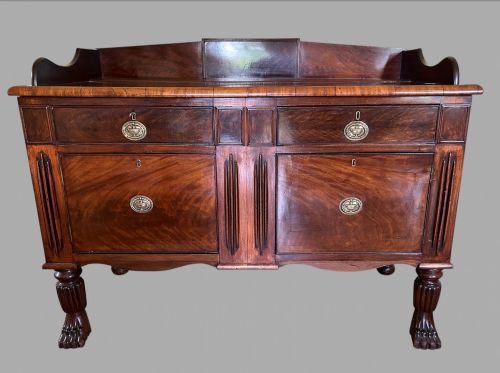
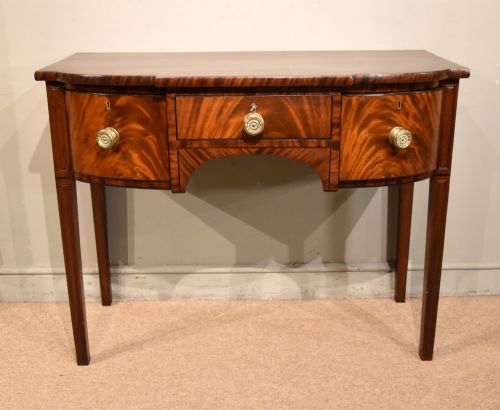
A carved mahogany sideboard cabinet bridges several dining and reception room forms, appearing across this selection as sideboards, chiffoniers, buffets, and cabinets produced during the nineteenth and early twentieth centuries. Pieces span the Regency, William IV, Victorian, Edwardian, and Arts and Crafts periods, reflecting changing domestic requirements for storage and display.
The Victorian examples frequently incorporate mirror backs, carved scrolling details, and multi-door cupboard bases, while earlier Regency and William IV pieces tend to show cleaner architectural lines with brass inlay or ebony details. Edwardian and later variations often feature lighter inlaid decoration or simpler Arts and Crafts styling.
Buyers encounter solid timber construction alongside flame mahogany veneer, often paired with glass doors or mirror glass inserts. These items served as serving surfaces and storage units in formal dining spaces, continuing to function as focal points in contemporary interiors.
Discerning the standard of craftsmanship
The standard of a carved mahogany sideboard cabinet rests on the selection of timber and the precision of its application. Highly figured flame veneer displays a more active, rippled grain pattern than standard stock, while solid carved details show crisp undercutting and deliberate hand-tooling rather than soft, moulded contours.
Structural integrity governs durability, visible in the snug fit of heavy doors, the smooth travel of deep drawers, and the integration of original brass hardware. Finer pieces maintain harmonious proportions between the base storage cupboards and any upper mirror or bookcase superstructure.
Attribution to known workshops or documented makers elevates a piece, as does the survival of original mirror glass, polished finishes, and interior shelving arrangements without later alterations.
Some Victorian chiffoniers hide velvet-lined cutlery drawers behind secret fascia boards designed to outsmart light-fingered staff.
Gillows·Lamb of Manchester·M. D. Miller and Sons
The Carved Mahogany Sideboard Cabinet Glossary
- Flame mahogany
- A veneer cut from the fork of the mahogany tree where the branch meets the trunk. This produces a fiery, feathered grain pattern prized for principal display surfaces.
- Breakfront
- A piece of furniture whose central section projects forward from the flanking wings. This architectural arrangement creates shadow lines and visual depth across large cabinet facades.
- Mirror back
- An upright wooden superstructure holding a mirrored glass plate, attached to the rear of a sideboard surface. It reflects light and decorative objects displayed below.
- Ebony inlay
- Contrasting dark wood inserted into shallow channels cut into the mahogany ground. It outlines panels and structural borders with geometric precision.
Carved Mahogany Sideboard Cabinet: Frequently Asked Questions
How do I tell a Regency sideboard from a Victorian one?
Regency pieces lean towards classical architectural restraint, often displaying brass inlay, reeded legs, and sabre feet. They favour clean mahogany surfaces over heavy carved ornamentation.
Victorian sideboards typically introduce bolder carved details, scrolling brackets, and frequently incorporate mirror backs or raised shelved superstructures above heavier cupboard bases.
What is the difference between a sideboard and a chiffonier?
A sideboard is traditionally a larger, longer piece designed for formal dining rooms to hold serving dishes, cutlery, and glassware. It offers extensive base storage and a wide top surface.
A chiffonier is generally smaller and more compact, often combining lower cupboards with an upper shelf or small bookcase, making it adaptable for smaller reception rooms.
How should I care for a mahogany cabinet surface?
Keep mahogany furniture away from direct sunlight and heat sources to prevent the timber from drying out and the veneer from lifting. Dust regularly with a soft, dry cloth rather than using silicone-based polishes.
Apply a traditional beeswax sparingly once or twice a year to nourish the polished grain and maintain the natural lustre of the wood.
Can these cabinets fit into modern dining spaces?
These cabinets provide generous interior storage for modern tableware, linens, and bottles while anchoring a room with dark timber tones. Their flat top surfaces serve well as server stations during dinner parties.
Their substantial presence pairs effectively with contemporary minimalist furniture, creating a contrasting focal point in an eclectic interior layout.