
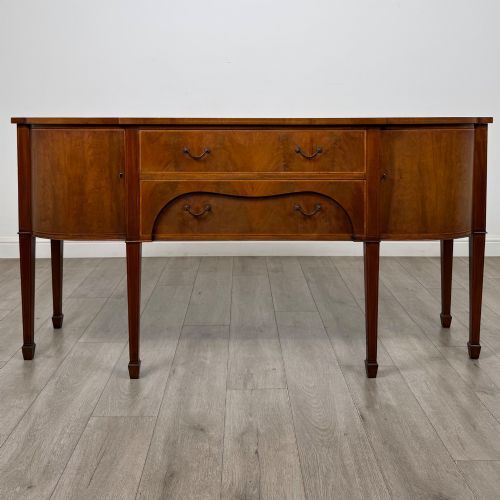
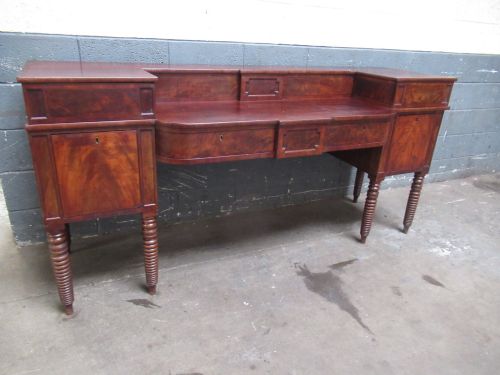
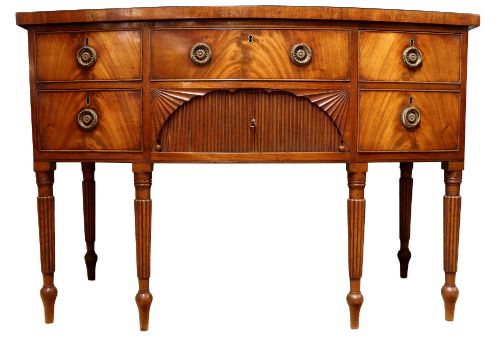
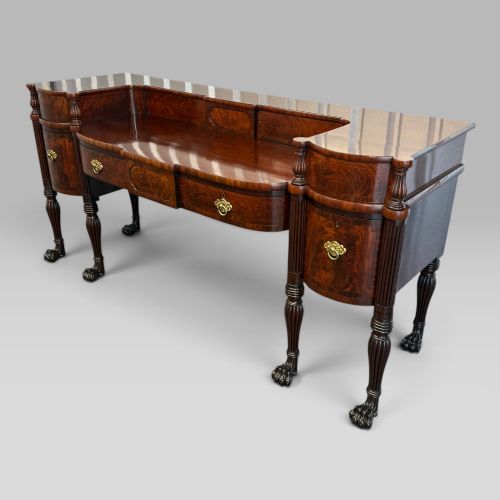
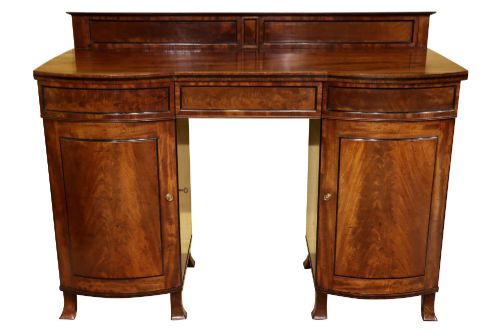
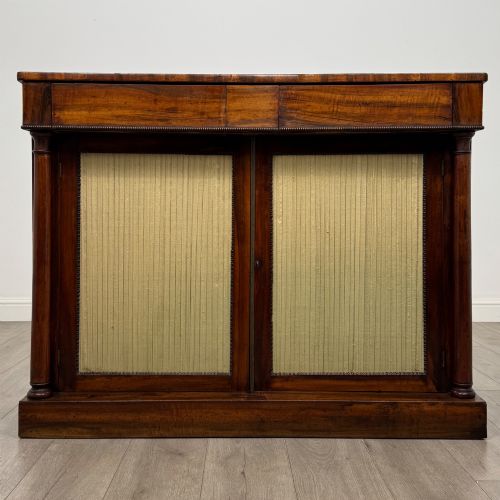
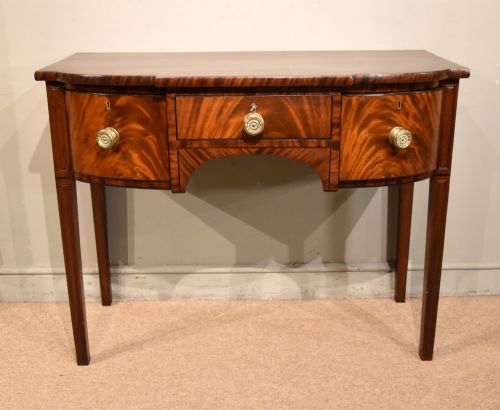
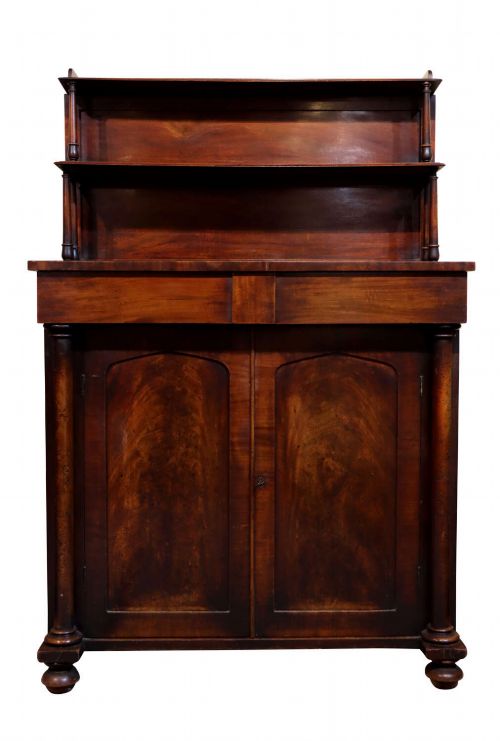


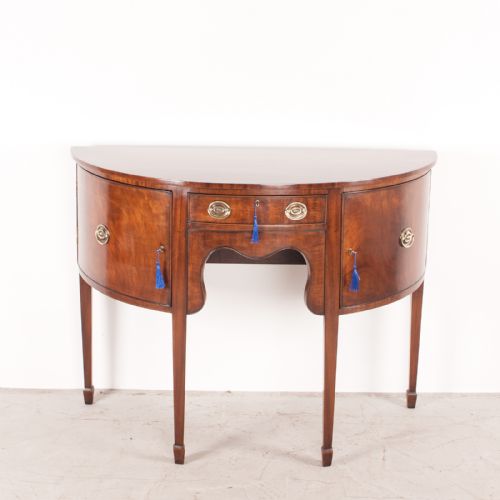
Regency Flame Mahogany Server
A regency flame mahogany server is a substantial dining room piece designed to hold silver and linen, offering striking figured timber that anchors a room.

Regency Flame Mahogany Server
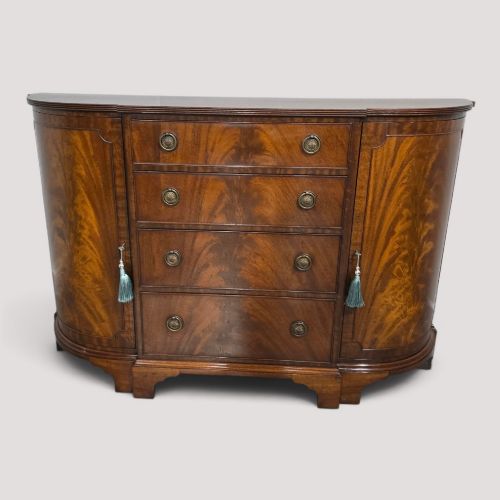
A regency flame mahogany server represents the grand dining furniture of the early nineteenth century, designed to assist with hosting and meal service. These items appear primarily as sideboards, serving tables, and console tables originating from the Regency, Georgian, and William IV periods.
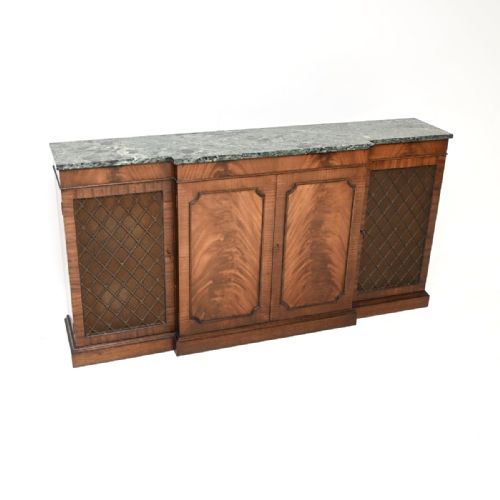
The version most commonly met on this page is the bow front or breakfront sideboard utilising rich wood veneers. Makers of the period constructed these forms to stand against dining room walls, often incorporating pedestals, drawers, and cupboards into the design.
Materials and construction
Cabinet makers utilised solid mahogany and flame mahogany veneer, selecting timber specifically for its dramatic, rolling grain patterns. They applied these thin slices of figured wood over secondary framing timbers to create vibrant optical movement across the front panels.
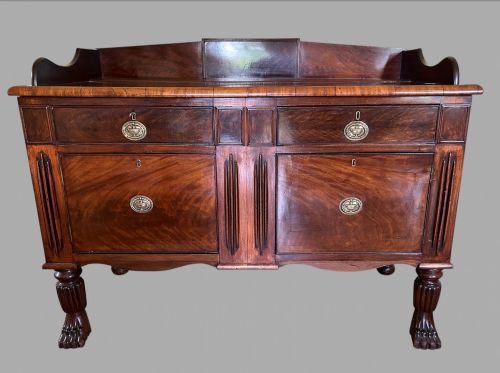
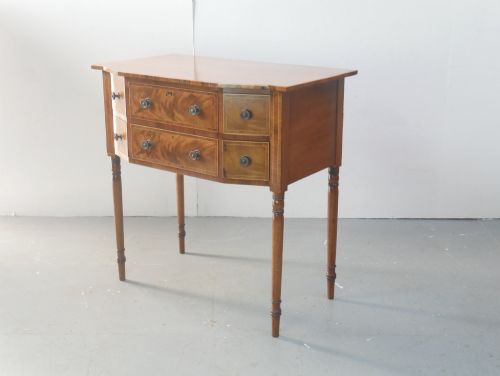
Detailing often included contrasting inlay such as boxwood and ebony stringing, alongside cast brass fittings and handles. Support came from turned legs, bracket feet, or carved lion paw feet, depending on the specific regional workshop and stylistic preference of the maker.
Listings feature items spanning the eighteenth century through to the Victorian era, executed primarily in mahogany with brass and boxwood details.
Qualities of distinction
The distinction between ordinary and superior pieces rests in the selection of the timber and the harmony of its grain. Makers who matched the flame veneer symmetrically across multiple drawers produced a unified visual impact that lesser examples lack.
Construction depth also dictates standing, with finer items incorporating substantial secondary woods, well-fitted dovetailed drawer linings, and crisp, hand-carved mounts rather than mass-produced ornamentation.
Gillows
The Regency Flame Mahogany Server Glossary
- Flame mahogany
- A wood veneer cut from the fork of the mahogany tree where the branch meets the trunk, creating a distinctive flame-like pattern. This material defines the visual character of the best servers.
- Bow front
- A convex curved front profile popular on nineteenth century case furniture. This shape softens the room's geometry while providing interior depth.
- Breakfront
- A piece of furniture whose central section projects forward from the flanking outer sections. This architectural arrangement creates shadow and depth across the facade.
- Chiffonier
- A compact sideboard or cabinet featuring enclosed shelving and sometimes a superstructure with a mirror. These pieces served similar utility to larger servers in more modest spaces.
- Pedestal sideboard
- A large dining room format comprising two distinct pedestals connected by a central board or serving well. They often feature deep cellarette drawers for wine storage.
Regency Flame Mahogany Server: Frequently Asked Questions
What is a regency flame mahogany server?
A regency flame mahogany server is a dining room storage and display piece characterised by highly figured wood veneers and classical nineteenth century proportions.
These items encompass sideboards, console tables, and serving tables built during the Georgian and Regency eras for elite households.
How were these servers used?
Dining rooms utilised these servers to stage dishes, store silverware, and house wine bottles during elaborate banquets.
Servants prepared courses on the surface or accessed the deep pedestal cupboards and drawers to retrieve tableware throughout the meal.
How do I live with a server?
Living with a large server involves placing it against a dining room or hallway wall where its proportions can anchor the space.
The polished wooden surface requires simple dusting and protection from direct heat or moisture to preserve the nineteenth century polish.
How do I tell periods apart?
Differentiating periods relies on examining the leg styles, hardware, and structural silhouette of the furniture.
Regency and late Georgian pieces favour classical restraint and brass inlay, whilst later William IV and Victorian items lean towards heavier carved mahogany details and lion paw feet.