




Red Mahogany Chiffonier
These red mahogany chiffonier pieces are timber low cabinets and sideboards designed for dining rooms and sitting rooms to hold china, glass, and linens.
Red Mahogany Chiffonier
A red mahogany chiffonier is a low timber cabinet or sideboard built for storing dining room accessories and displaying objects on top. Buyers search this phrase to find nineteenth-century storage furniture that fits narrower spaces than a full-size sideboard.
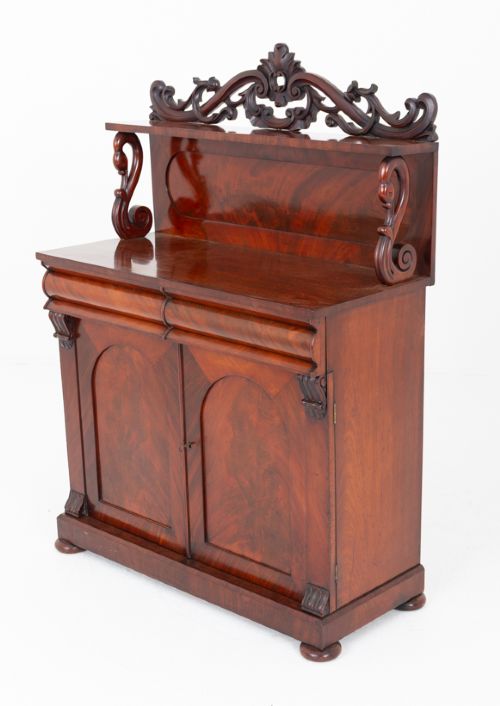
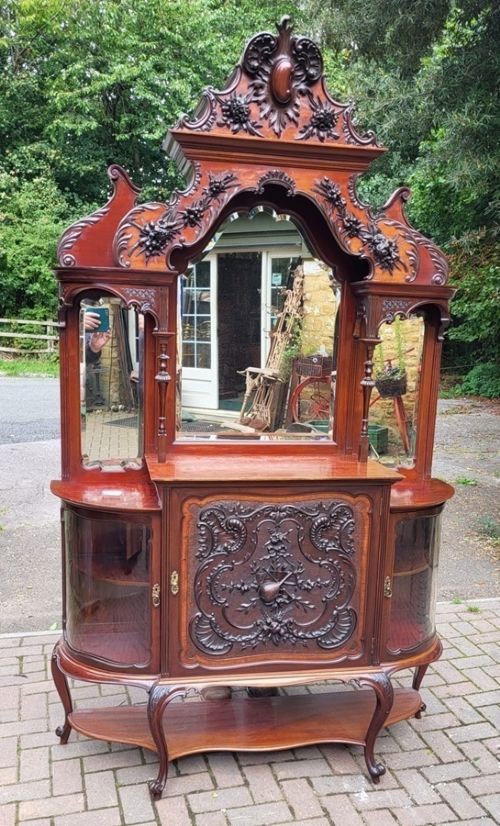
The pieces on this page are predominantly Victorian and Regency examples made from timber including figured mahogany, flame mahogany veneer, and solid mahogany. They appear in forms such as two-tiered cupboards, mirrored back cabinets, and side cabinets.
Originating in the nineteenth century, these low cabinets combine enclosed lower cupboards with upper shelves or mirror backs. They serve as practical serving surfaces and display areas in domestic interiors.
How they were made
Cabinet makers utilised solid mahogany and applied figured mahogany veneers over secondary timbers to create patterned surfaces on doors and drawer fronts. Flame mahogany veneer adds dramatic grain movement across larger flat panels.
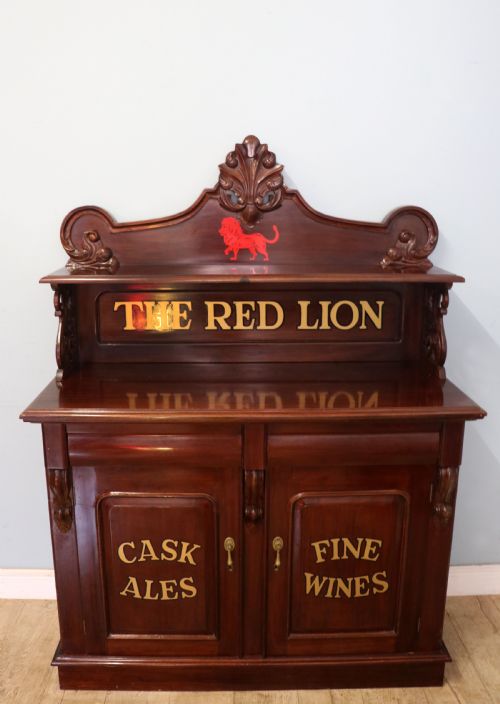
Construction methods involve fitted panel doors, internal shelving, and sometimes mirrored glass backs or brass mounts. Glass and ceramic details appear in select variations, while paint is found on pieces adapted for later commercial use.
Object forms span sideboards, bookcases, and side cabinets, reflecting the flexible domestic roles these low timber pieces occupied.
What varies in quality
Quality rests upon the selection and matching of timber veneers, where highly figured grain patterns and symmetrical flame mahogany create greater visual depth. The proportion of the cabinet also dictates its desirability, with smaller scale and narrow pieces commanding particular attention.
Joinery execution and the crispness of carved wooden details separate standard utility pieces from finer cabinet work. The retention of original brass fittings and glass elements maintains the integrity of each piece.
Gillows
The Red Mahogany Chiffonier Glossary
- Chiffonier
- A low sideboard or cabinet featuring enclosed cupboards below, sometimes surmounted by shelves or a mirror back. It evolved during the nineteenth century as a versatile dining room piece.
- Flame mahogany veneer
- A sliced layer of timber displaying a distinctive flickering or flame-like grain pattern. Cabinet makers applied this to door fronts for decorative effect.
- Regency
- A design period spanning the early nineteenth century defined by classical restraint and polished timber surfaces. Pieces from this era often display clean architectural proportions.
- Victorian
- A nineteenth-century period encompassing diverse revival styles and robust domestic furniture production. Cabinets from this era frequently incorporate carved details and mirrored backs.
- Side cabinet
- A low storage item placed against a wall in reception rooms. These pieces provide surface space and enclosed shelving.
Red Mahogany Chiffonier: Frequently Asked Questions
What is a red mahogany chiffonier used for?
These cabinets served in nineteenth-century dining rooms and living spaces to store glass, ceramics, and tableware. The top surface functioned as a sideboard for serving food or displaying decorative objects.
Today, they provide functional low storage in hallways and living rooms while introducing warm timber tones to an interior.
How do I tell a Regency chiffonier from a Victorian one?
Regency examples date from the early nineteenth century and typically display cleaner classical lines with restrained ornament. Their proportions lean towards architectural simplicity.
Victorian pieces often incorporate heavier carved details, tiered upper shelving, or mirrored backs. The grain presentation on Victorian versions frequently utilises prominent figured mahogany veneers.
What does figured mahogany mean?
Figured mahogany describes timber exhibiting natural patterns and swirls within the grain rather than a plain flat surface. Cabinet makers selected these boards specifically for prominent areas like doors and drawer fronts.
Flame mahogany is a specific type of figure resembling flickering flames across the timber.
Can I use a chiffonier as a sideboard?
Yes, they function effectively as compact sideboards in dining areas or kitchens. Their narrow proportions make them suitable for rooms where a full-scale sideboard would overwhelm the floor space.
The lower cupboards offer concealed storage while the top surface holds everyday items.