
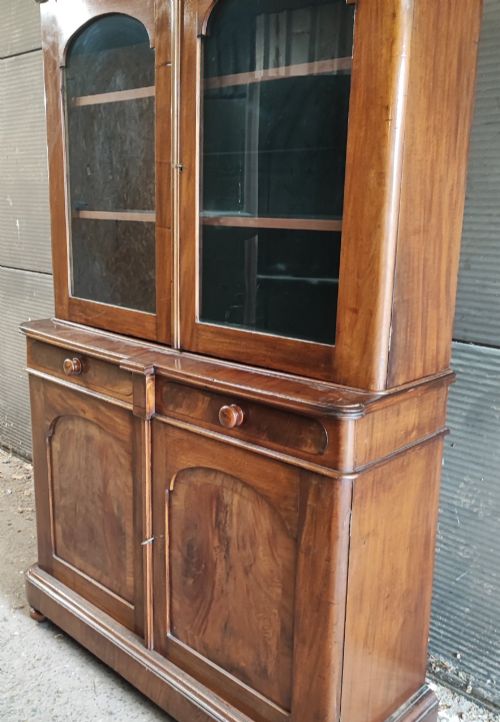
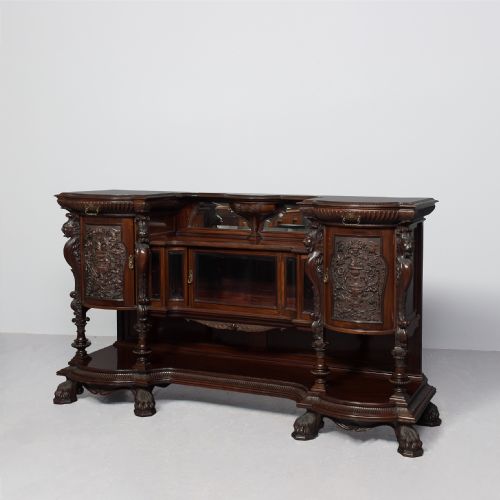
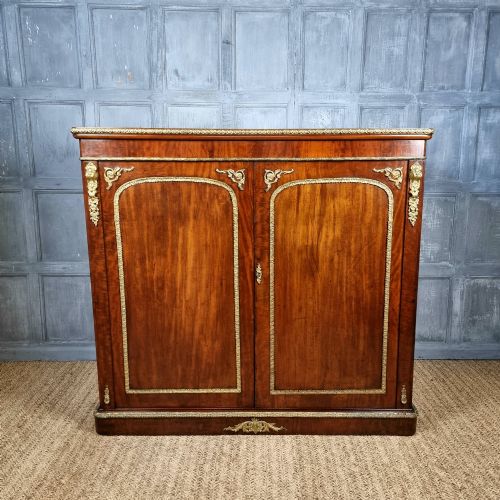
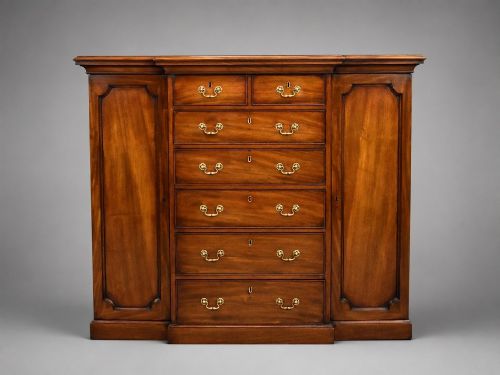
Victorian Mahogany Chiffonier Cabinet
These nineteenth-century pieces combine enclosed storage with display space, offering a practical surface for serving and a focal point for period dining or living rooms.
Victorian Mahogany Chiffonier Cabinet
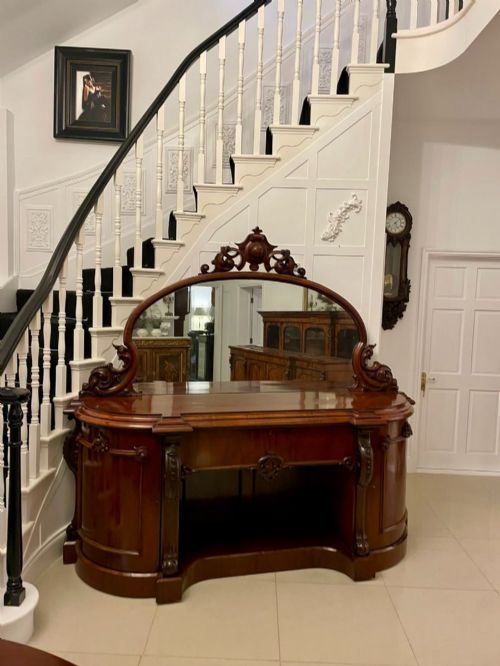
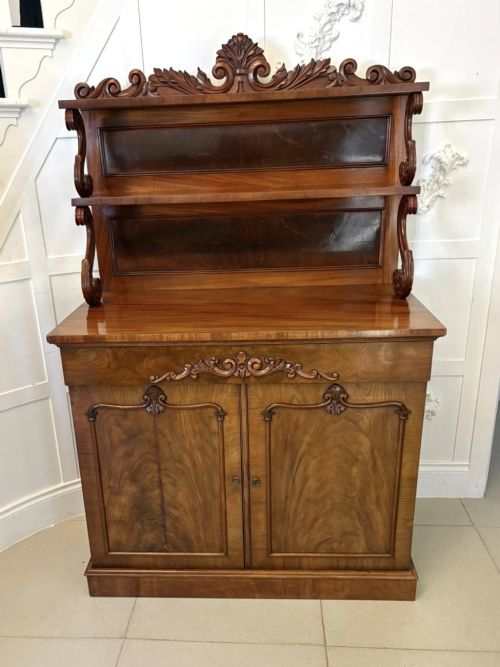
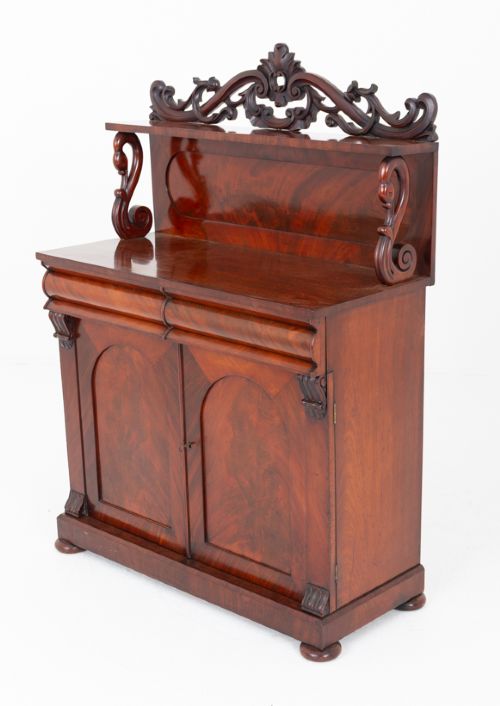
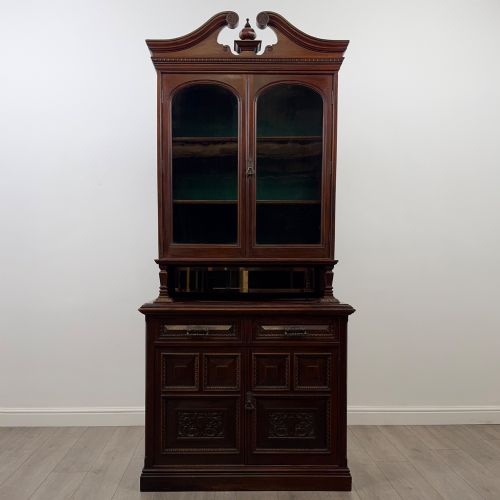
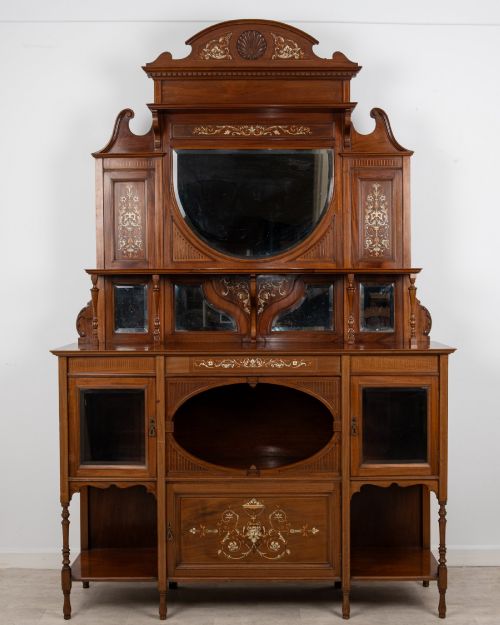
A victorain mahogany chiffonier cabinet is fundamentally a low sideboard or side cabinet, often topped by a raised shelf tier, a mirror back, or an enclosed bookcase superstructure. The form bridges the gap between a grand pedestal sideboard and a compact side cabinet, designed primarily for dining rooms and parlours of the period.
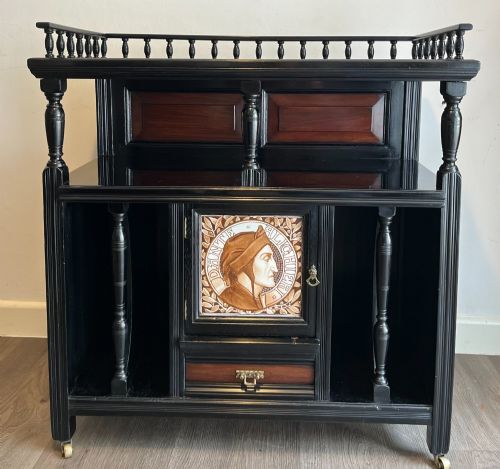
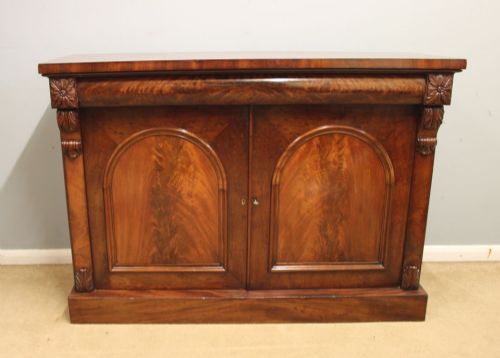
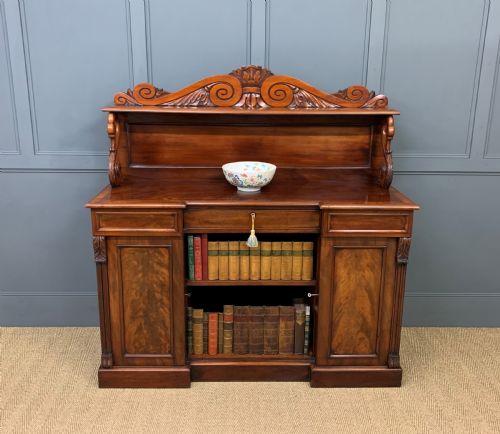
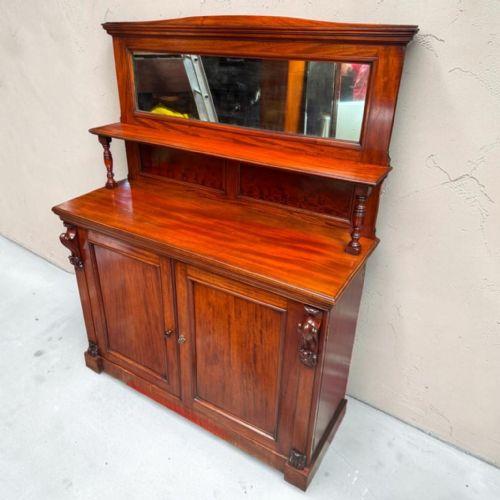
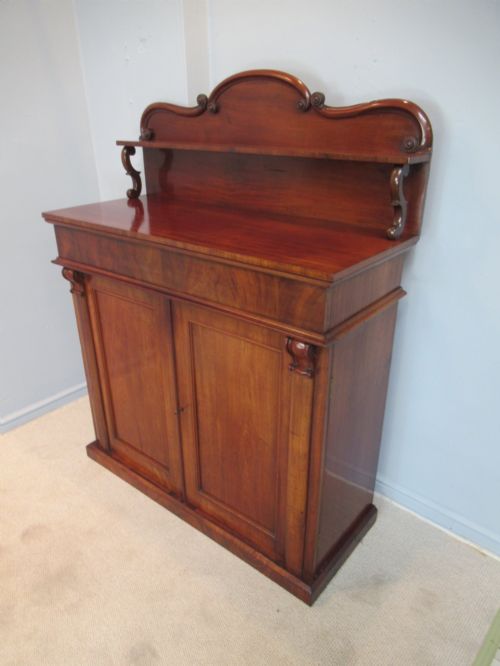
The pieces appearing on this page span the Victorian era alongside related nineteenth-century examples, including Regency precursors and later variants featuring inlaid decoration or Aesthetic Movement details. Most frequently, a buyer encounters a two-door cupboard base surmounted by a low gallery shelf or a carved mirror back, designed to hold glassware and silver.
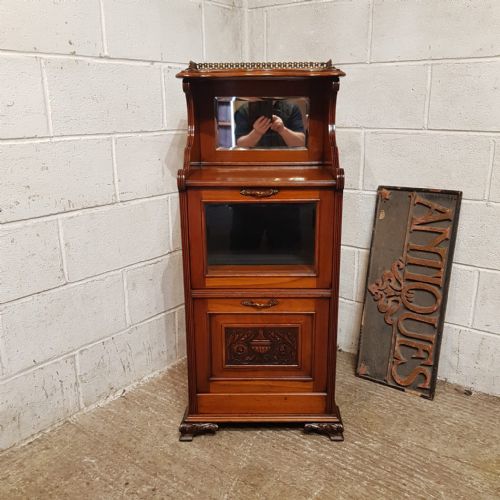
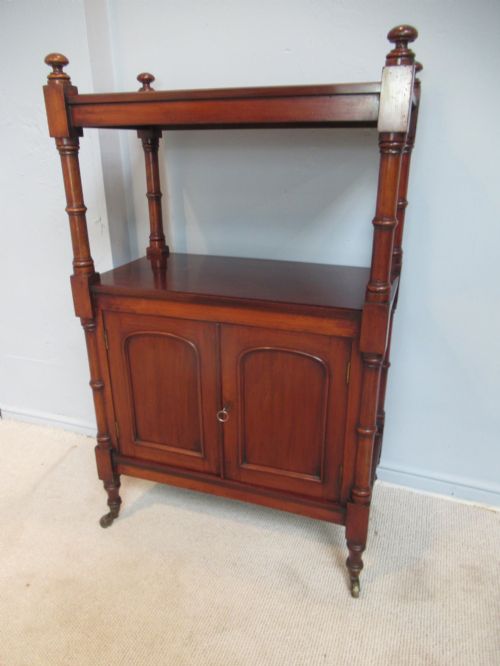
Beyond the standard chiffonier, the selections include allied forms such as waterfall bookcases, pedestal sideboards, and narrow side cabinets. These share the foundational use of mahogany and mirror glass, reflecting the shifting domestic requirements for storage and display across the decades.
Materials and Construction Methods
Cabinetmakers of the nineteenth century relied heavily upon solid mahogany and flame mahogany veneer, selecting timber prized for deep figuring and rich warm tones. Veneers were applied carefully to structural pine or oak carcasses, creating striking grain patterns across large cupboard doors and drawer fronts.
Structural elements frequently incorporated brass castors to ease movement across heavy carpets, alongside mirrored glass inserts mounted within carved wooden frames. Joinery relied on traditional techniques, whilst later nineteenth-century pieces occasionally introduced delicate contrasting string inlay and ebonised highlights.
The recorded object types span varied forms including compact side cabinets, waterfall bookcase combinations, and breakfront chiffonier sideboards.
Factors Determining Quality
The distinction between ordinary and superior pieces rests largely in the choice of timber and the depth of carving. Master cabinetmakers selected highly figured flame mahogany veneers that matched symmetrically across panels, whereas lesser examples utilised plain, unfigured stock.
Refinement in secondary details elevates a piece, such as the crispness of applied scrollwork on mirror backs, the weight of cast brass hardware, and the integrity of internal mahogany shelving. Proportions also dictate desirability, with compact small chiffoniers commanding particular attention for modern room scales.
Gillows·Robert Strahan
The Victorian Mahogany Chiffonier Cabinet Glossary
- Chiffonier
- A low sideboard or cabinet featuring enclosed cupboards below, frequently surmounted by a shelf tier or mirror back. The form evolved during the nineteenth century to serve dining and drawing rooms.
- Flame mahogany
- A highly decorative veneer cut from timber where the branches join the main trunk, yielding a distinctive ripple or flame pattern. Cabinetmakers reserved this timber for prominent surfaces such as doors and drawers.
- Mirror back
- A raised superstructure incorporating a glass mirror plate framed by carved mahogany woodwork. This feature reflects light and displays porcelain or silver placed on the shelf below.
- Pedestal sideboard
- A large dining room furnishing consisting of central serving space flanked by heavy enclosed pedestals. These grand pieces represent the more substantial end of nineteenth-century case furniture.
- Waterfall bookcase
- A set of open shelves diminishing in depth from bottom to top, often integrated into a cabinet base. This style gained popularity during the nineteenth century for displaying books and decorative objects.
Victorian Mahogany Chiffonier Cabinet: Frequently Asked Questions
What is the difference between a chiffonier and a sideboard?
A chiffonier is generally smaller and more compact than a traditional sideboard, typically incorporating a raised shelf tier or mirror back above enclosed lower cupboards. Sideboards were designed for large dining rooms to store heavy service ware.
While both utilise mahogany and share nineteenth-century origins, the chiffonier functions more flexibly as a side cabinet in drawing rooms or parlours.
How can I tell an earlier chiffonier from a late Victorian one?
Earlier pieces from the Regency and early Victorian periods often display restrained architectural lines, flame mahogany veneers, and substantial brass mounts. The timber tends to have a deep, dark patina built over decades.
Later nineteenth-century examples, particularly those from the eighteen-eighties and nineties, frequently introduce lighter inlaid stringing, carved mirror backs, and Aesthetic Movement ebonised details.
Where were chiffoniers used in a Victorian home?
These cabinets served primarily in dining rooms and formal parlours as practical surfaces for serving food and displaying prized glassware, ceramics, or silver. The lower cupboards provided concealed storage for table linen and spirits.
In modern interiors, their modest depth allows them to function effectively as media consoles, hallway storage, or living room display surfaces.
Are mirror-backed chiffoniers original?
Mirror backs integrated securely into the superstructure are entirely period-correct, particularly for mid to late nineteenth-century pieces designed to brighten darker Victorian rooms. The glass plate was usually bevelled and set within carved wooden frames matching the base.
Buyers should examine the mirror framing and backboards to ensure the glass and timber components share consistent age and construction methods.