


Carved Corbel Mahogany Cabinet
These carved corbel mahogany cabinet pieces are robust Victorian storage items built from rich timbers, offering practical organisation and traditional presence.
Carved Corbel Mahogany Cabinet
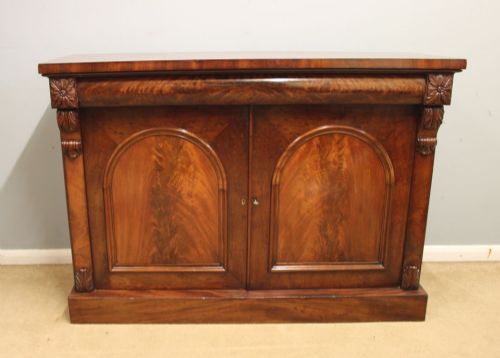
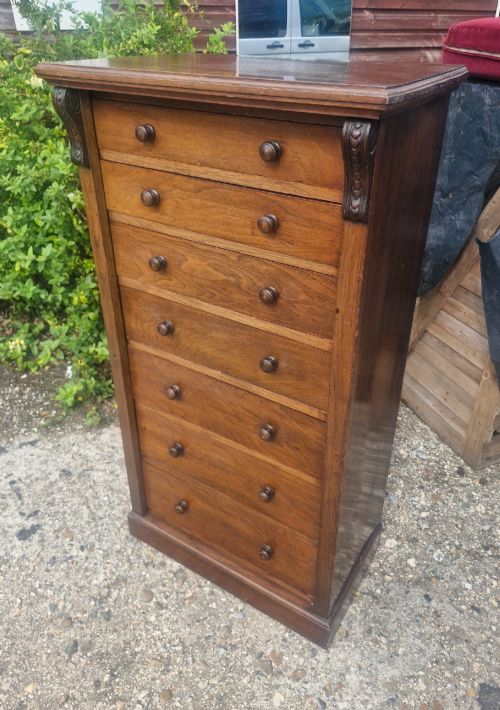
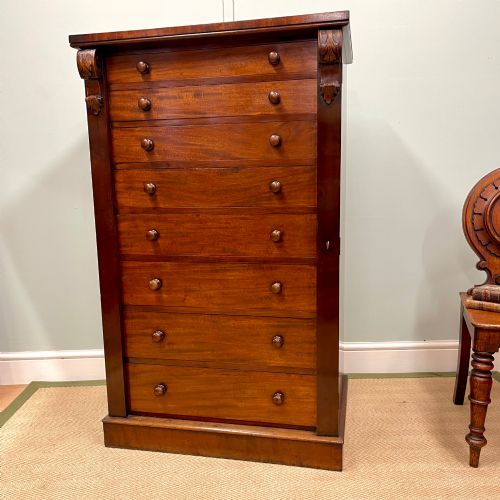
A carved corbel mahogany cabinet encompasses Victorian bookcases, chiffoniers, sideboards, and Wellington chests dating from the nineteenth century around 1850 to 1860. These items serve as functional storage solutions, featuring enclosed cupboards, open shelving, and drawer configurations.
Buyers meet various formats on this page, dominated by tall library bookcases, compact Wellington chests, and low sideboards. Each piece reflects the utility and formal design priorities of the Victorian era.
Originating predominantly from the nineteenth century, these pieces demonstrate the heavy, architectural influence typical of the period. The structural forms rely on solid construction paired with decorative veneers.
How they were made
Cabinet makers utilised solid mahogany and supporting hardwoods as the primary structural foundations for these items. Artisans applied flame mahogany veneer over secondary timbers to create patterned surfaces on drawer fronts and doors.
Makers incorporated brass hardware, such as locks and drawer pulls, alongside glazed panels for bookcase doors. Goncalo Alves appears as an alternative exotic hardwood utilised in select dwarf open bookcases.
Listings span the nineteenth century, specifically featuring Victorian pieces from the 1850 and 1860 decades.
What varies in quality
The choice of timber underpins the visual hierarchy, where well-figured flame mahogany veneer displays superior grain movement compared to plain stock. Selected exotic hardwoods like Goncalo Alves elevate the distinction of specific bookcases.
The precision of architectural joinery and carving defines the upper tier of production. Refined execution in the corbels and drawer construction separates standard utility items from finer examples.
The Carved Corbel Mahogany Cabinet Glossary
- Corbel
- A structural bracket projecting from a wall to support a weight, often carved with scrolls or foliage in Victorian furniture. This decorative architectural element appears frequently beneath the top surface of cabinets.
- Wellington chest
- A tall, narrow chest of drawers secured by a hinged locking stile on one side that fastens with a key. This form originated in the nineteenth century for secure document storage.
- Chiffonier
- A compact sideboard featuring a lower enclosed cupboard surmounted by a shelf with a mirror or backboard. The form developed during the Victorian period for dining room storage and display.
- Flame mahogany veneer
- A thin slice of wood cut from where a branch meets the trunk, producing a distinctive fire-like flame pattern. Cabinet makers laid this over stable secondary timbers to create decorative surfaces.
- Goncalo Alves
- A dense exotic hardwood with striking contrasting grain patterns, utilised for high-status nineteenth-century furniture. This timber provides both rich colour and durability.
Carved Corbel Mahogany Cabinet: Frequently Asked Questions
What is a Wellington chest?
A Wellington chest is a tall, narrow set of drawers distinguished by a locking wooden bar on the vertical edge. This locking stile secures all drawers simultaneously with a single key.
Originally designed for secure storage of papers or linen, these pieces suit bedrooms and studies as compact storage units.
How do I date these cabinets?
Dating relies on stylistic markers, construction methods, and materials associated with the Victorian era and the nineteenth century. Most examples date from the mid-nineteenth century around 1850 to 1860.
Examining secondary timbers, drawer linings, and hardware provides further clues regarding the manufacturing period.
Where should I place a chiffonier?
A chiffonier works effectively in a dining room or living space where surface display and enclosed storage are both required. The lower cupboards conceal dinnerware or books while the top surface holds decorative objects.
Ensure placement avoids direct heat sources to protect the mahogany timbers and polished finish.
Are these pieces solid mahogany?
These items generally combine solid mahogany frames and structural components with mahogany veneer applied to larger flat surfaces. Secondary hardwoods provide internal framing and drawer linings.
This method of construction prevented warping while presenting an exterior of figured timber.