

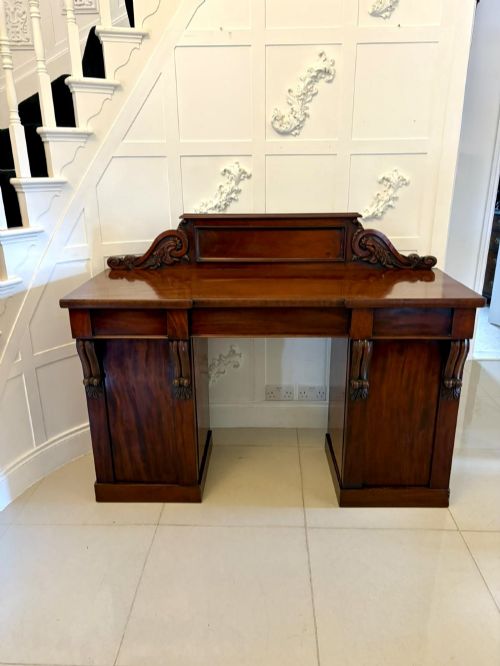
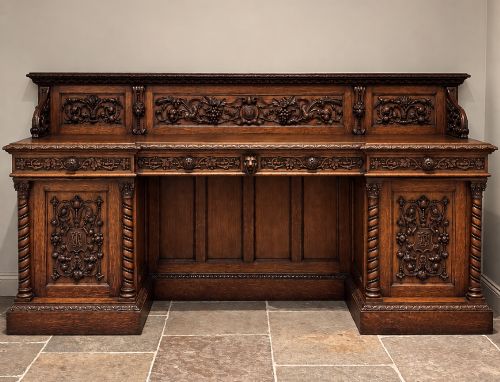
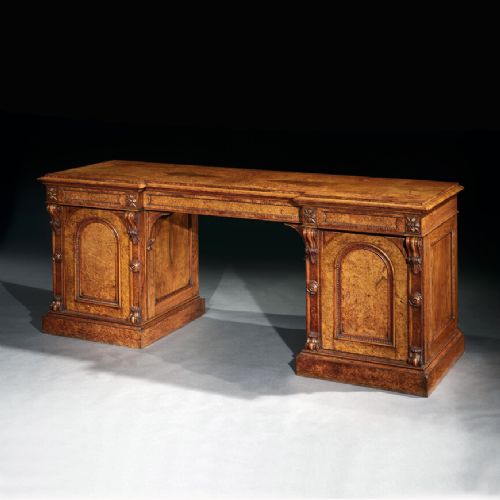
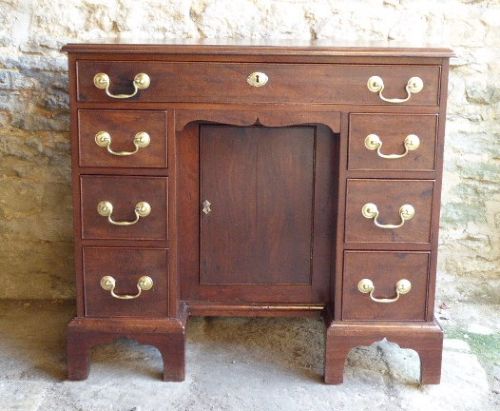
Antique Sideboard with Pedestals
An antique sideboard with pedestals anchors a formal dining room with architectural presence, offering generous storage and stately presence.

Antique Sideboard with Pedestals
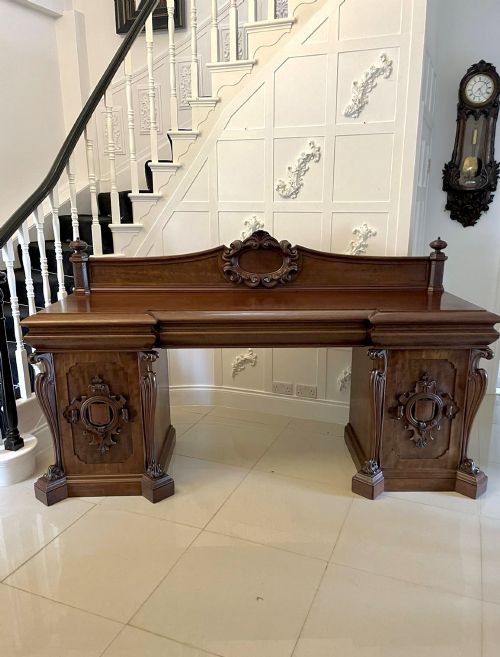
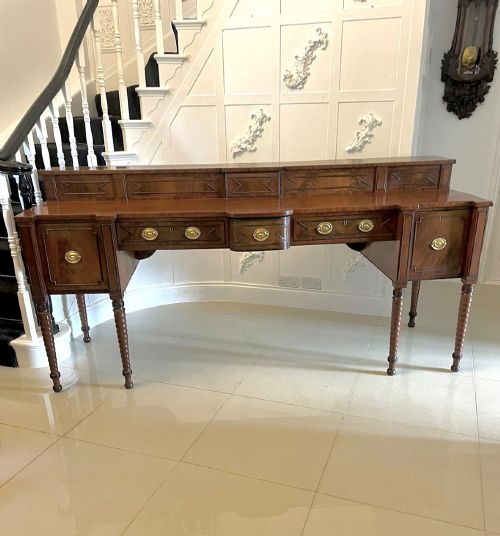
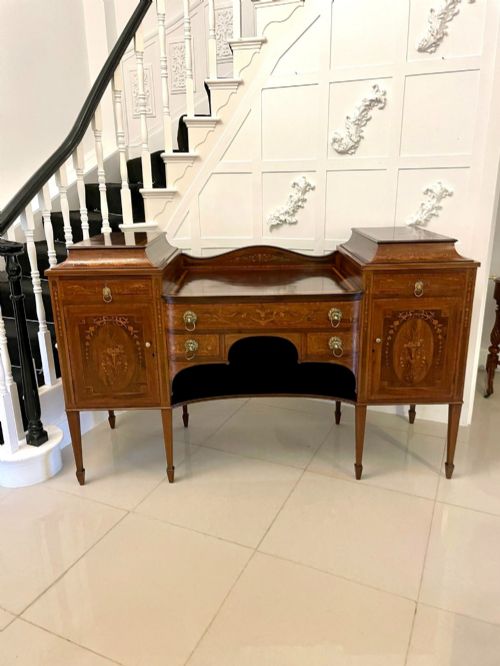
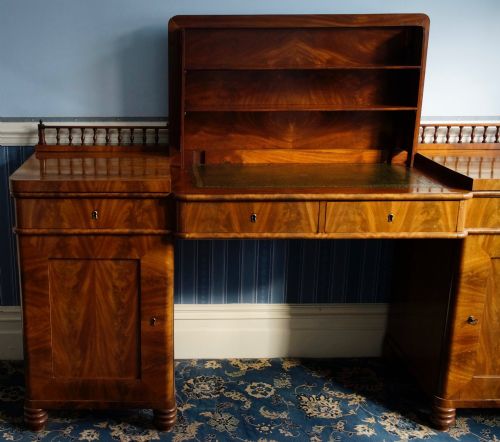
When you search for an antique sideboard with pedestals, you find grand dining room furniture designed to serve food and display silver during large meals. These substantial pieces unite a central console or credenza flanked by distinct pillar or pedestal cupboards at either end.
The versions you are most likely to meet on this page span the Georgian, Regency, and Victorian eras, rendered primarily in rich native and imported timbers. Many examples incorporate classical architectural motifs such as brass galleries, fluted columns, and breakfront layouts.
Cabinetmakers constructed these statement pieces for prosperous homes, ensuring they functioned both as practical servers and as focal points of interior decoration. Their scale demands a spacious room where the flanking pedestals can be fully appreciated from multiple angles.
Construction and materials
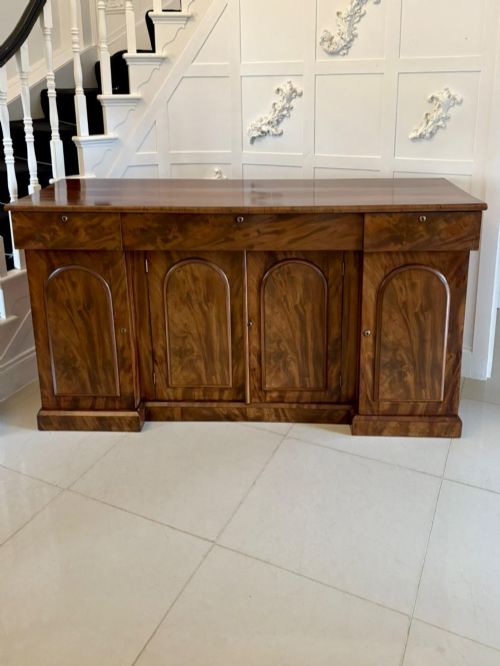
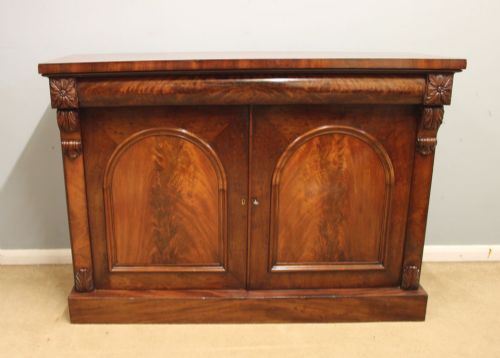
Cabinetmakers built the carcass and pedestals using solid timber frames overlaid with carefully selected veneers like flame mahogany to create striking grain patterns across the large front surfaces. Secondary woods such as oak appeared in drawer linings and internal framing for structural stability.
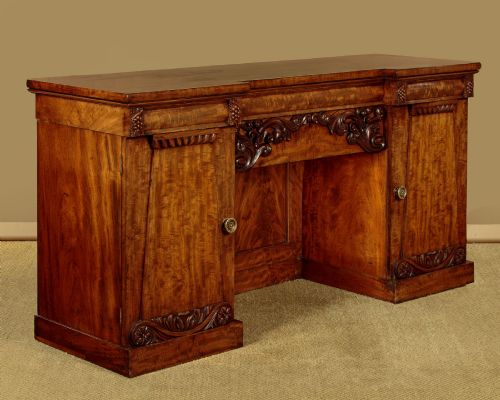
Metalwork played a functional and decorative role, with cast brass galleries mounted to the upper surface and brass drop handles fitted to drawers and cupboard doors. Fine turning and carving shaped the solid mahogany or walnut pedestals, often finishing in scrolled feet or plinth bases.
Antique Sideboard with Pedestals Retail Price Guide 2026
Typical asking prices for sideboard with pedestals among the pieces listed under this phrase on Sellingantiques today, from the lower quarter to the upper quarter. They describe what is for sale here now, not the wider market.
Some pedestals feature hidden cellarette drawers sized specifically for cooling wine bottles with ice.
Assessing quality and craftsmanship
Quality reveals itself in the selection of timber veneers, where superior pieces display mirrored flame mahogany grain carefully matched across doors and drawer fronts. The crispness of hand-carved mouldings and the tight tolerances of drawer dovetailing separate standard production from exceptional workshops.
Hardware integrity also signals grade, as heavy cast brass galleries and original locks indicate a higher initial investment by the original commissioner. Proportion and scale dictate the visual balance between the central section and the heavy pedestals.
Goodall of Manchester
The Antique Sideboard with Pedestals Glossary
- Pedestal
- A structural support column or pillar base flanking the central cabinet of the sideboard, often containing internal shelving or cellarette drawers.
- Brass Gallery
- A decorative metal rail mounted along the upper rear edge of the sideboard top, designed to prevent serving dishes from sliding off.
- Flame Mahogany Veneer
- A thin slice of wood cut from the fork of a mahogany tree, yielding a fiery, patterned grain applied over a stable secondary timber.
- Breakfront
- A furniture facade where the central section projects forward from the flanking pedestal cupboards, creating architectural depth.
- Chiffonier
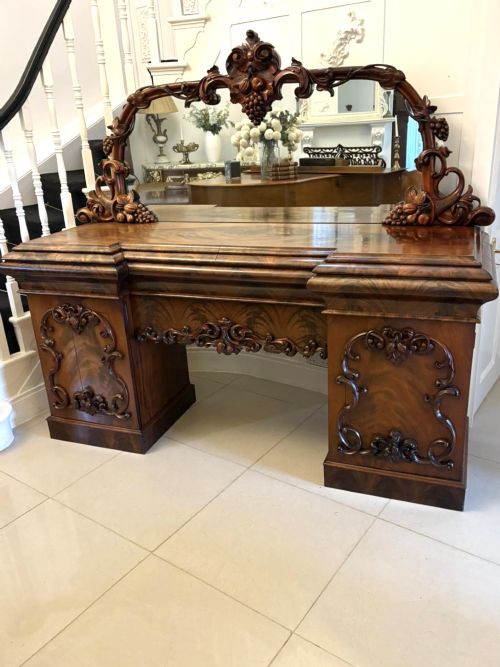
- A low cabinet related to the sideboard family, frequently equipped with an upper mirror or shelf superstructure for display.
Antique Sideboard with Pedestals: Frequently Asked Questions
How were pedestal sideboards used originally?
In large dining rooms, these pieces acted as staging stations for meals before food was brought to the main table. The pedestals often contained specialised storage such as lined cellarettes for chilling wine bottles.
They also provided a surface for displaying silver tea services, lamps, and decorative ceramic platters during formal gatherings.
How do I style a pedestal sideboard today?
Place the piece against a long dining room wall where its deep footprint and flanking pedestals can command the space without blocking doorways. Balance the heavy timber mass by hanging a large mirror or placing tall candlesticks on the top surface.
Use the interior cupboards to store heavy porcelain, table linen, or glassware that benefits from deep, sturdy shelving.
How can I tell the period of a sideboard?
Examine the hardware, secondary timbers, and overall decorative style to determine the era of manufacture. Georgian and Regency examples often lean towards classical architectural lines and brass galleries, while Victorian pieces can incorporate breakfront mirror backs and heavier mouldings.
Inspect the drawer construction and timber choice, as mahogany veneer application and oak secondary linings shifted in technique across the nineteenth century.