
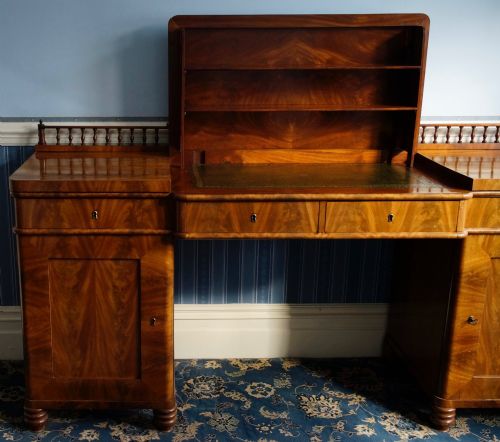
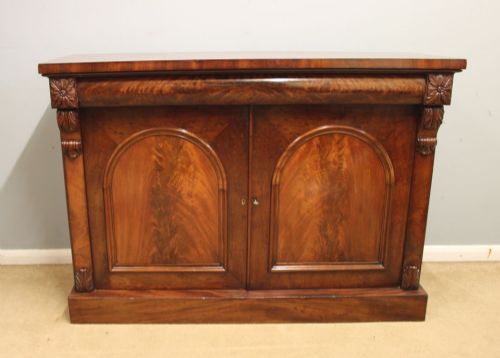
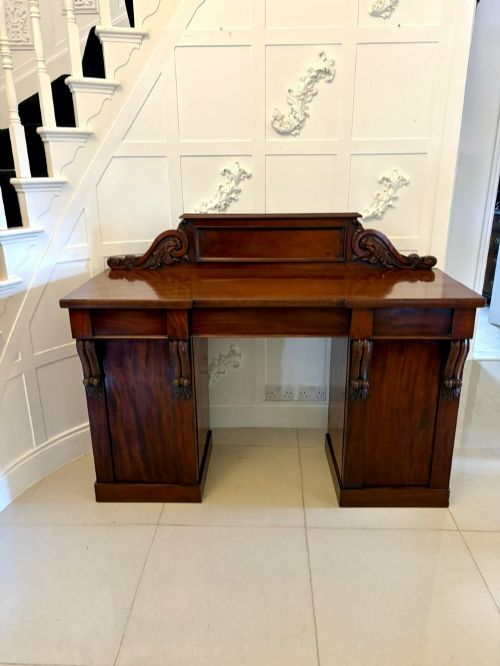
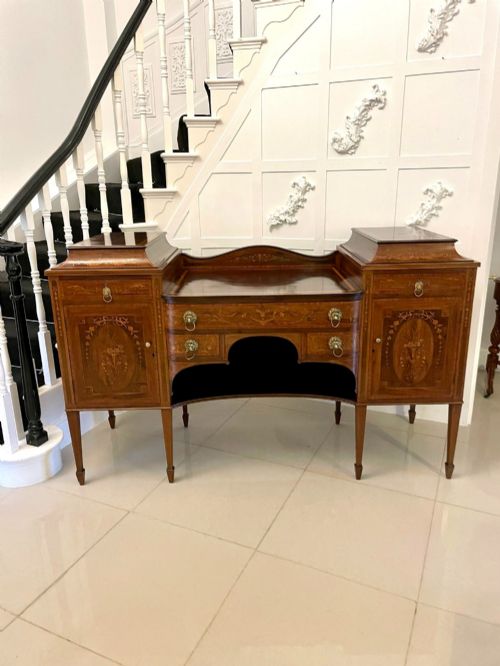


Pedestal Credenza Cabinet
These pedestal credenza cabinet pieces bring substantial storage and strong timber presence to a room, drawing buyers who want period utility.

Pedestal Credenza Cabinet
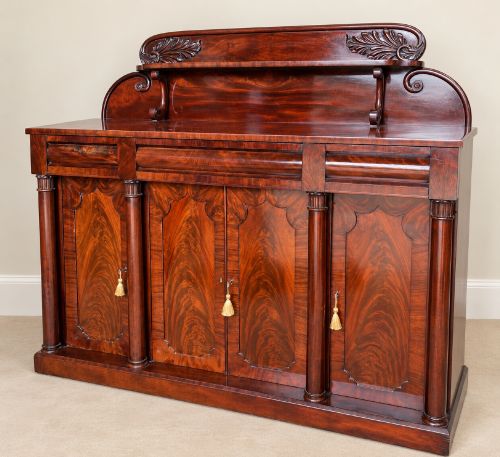
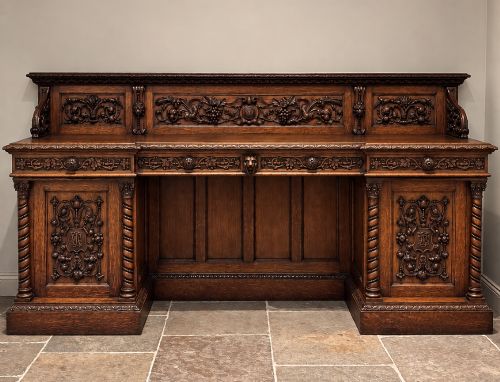
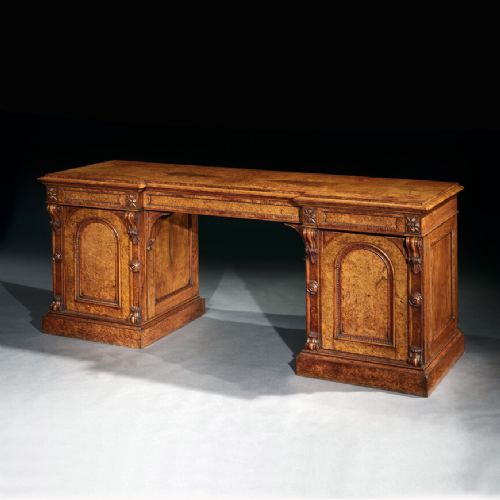
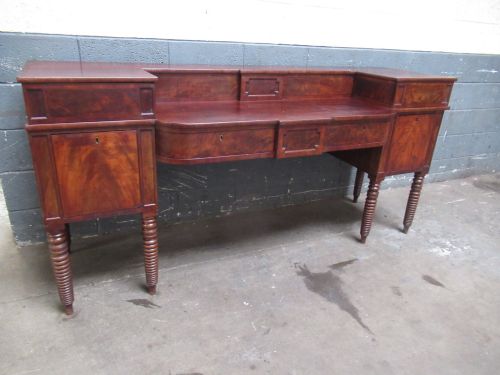
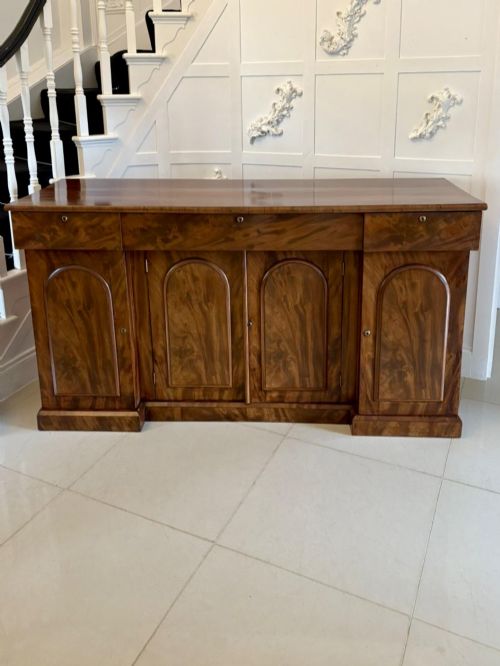
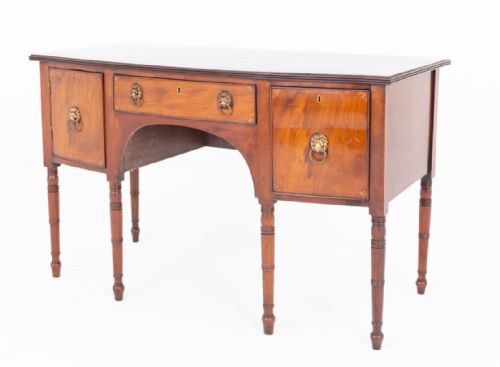
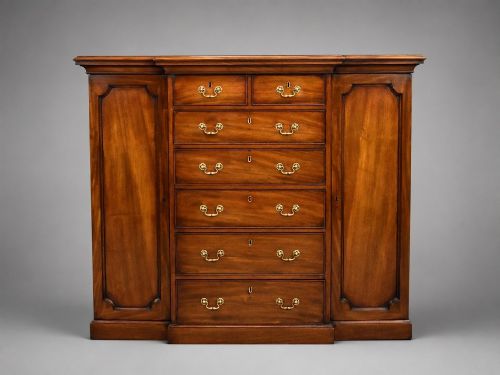
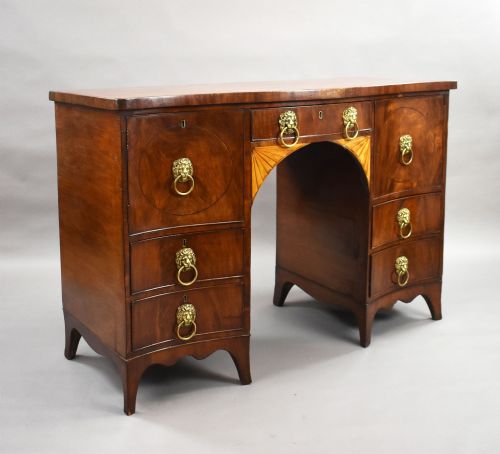
A pedestal credenza cabinet brings together the structural weight of large sideboards and the enclosed storage of side cabinets, frequently appearing in forms from the nineteenth century. Buyers searching for a pedestal credenza cabinet typically find substantial mahogany, oak, and rosewood items spanning Georgian, Regency, and Victorian periods. These pieces serve principally as dining room or reception room storage, offering flanking pedestals joined by a central console or cupboard section.
The selection includes variations such as William IV carved models, flame mahogany pedestal formats, and inverted breakfront designs. Makers from the periods utilised rich veneers and solid timbers to construct substantial architectural forms that anchored formal rooms. Finding the right version depends upon matching the scale and timber grain of the piece to an interior setting.
What varies in quality
The standard of a piece rests in the choice of timber, particularly the selection of figured mahogany or flame mahogany veneer across large unbroken drawer and door surfaces. Superior examples demonstrate continuous grain matching and crisp, deep carving on pilasters and pediments rather than shallow surface moulding.
Construction heft and secondary timber selection also distinguish fine workshops from standard commercial production. Heavier carcases, substantial brass hardware, and original fitted interiors indicate superior origin.
Several pieces include hidden cellaret drawers designed specifically for cooling wine bottles on ice beside the dining table.
Hewetsons London·Epstein
The Pedestal Credenza Cabinet Glossary
- Pedestal credenza cabinet
- A heavy storage form featuring two substantial end pedestals connected by a central recess or cupboard section. These pieces date primarily from the Georgian, Regency, and Victorian eras.
- Flame mahogany veneer
- A sliced wood layer displaying a distinct undulating flame pattern derived from specific sections of the mahogany tree. Cabinet makers applied this to drawer fronts and door panels for decorative impact.
- Breakfront
- A cabinet facade where the central section projects forward from the flanking pedestals or wings. This configuration creates visual depth and architectural interest.
- Chiffonier
- A compact sideboard or cabinet equipped with drawers and enclosed shelving below. The form developed during the nineteenth century for smaller reception rooms.
- Padouk
- A dense tropical hardwood displaying a reddish-brown tone, utilised in Anglo-Indian furniture production. It provides exceptional durability and a deep natural lustre.
Pedestal Credenza Cabinet: Frequently Asked Questions
Where should I place a pedestal credenza cabinet?
These substantial pieces suit large dining rooms, spacious hallways, or expansive living areas where their length and depth can be accommodated without crowding the floor space.
Because they offer deep cupboards and drawer space, they function well for storing dining porcelain, linen, or serving ware while providing a wide top surface for display.
How do I identify a Regency pedestal credenza cabinet?
Regency examples typically display classical architectural restraint, featuring brass inlay, turned columns, and well-figured mahogany veneers without excessive Victorian carving.
Look for balanced proportions, drop well centres, and brass lion paw feet or heavy plinth bases that characterise early nineteenth-century design.
What is the difference between a sideboard and a credenza?
Traditional sideboards generally feature a long surface with drawers and cupboards designed for serving food, while credenzas often incorporate enclosed flanking cabinets with lower clearance.
Many nineteenth-century variations blur these distinctions by combining pedestal storage ends with central staging backs or open recessed shelves.
How do I care for antique mahogany surfaces?
Protect the timber by avoiding direct sunlight and maintaining stable room humidity to prevent the veneer from lifting or cracking over time.
Apply traditional beeswax periodically to nourish the grain and maintain the natural lustre of the polished wood surface.