
Georgian Style Buffet
A georgian style buffet brings timeless dining room utility and refined mahogany timber work into your home.
Georgian Style Buffet
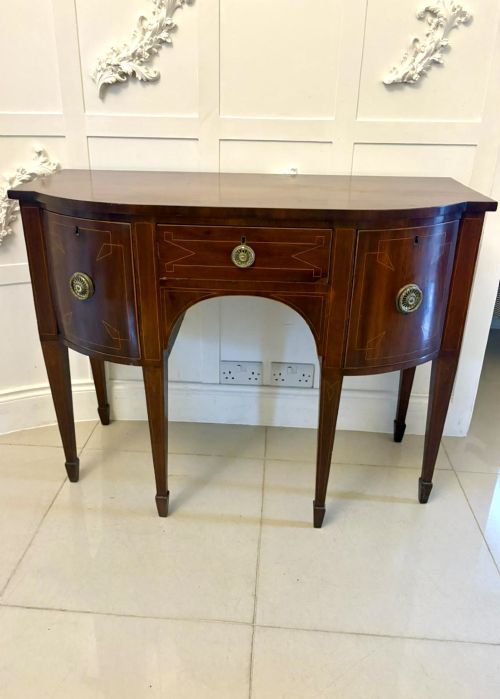
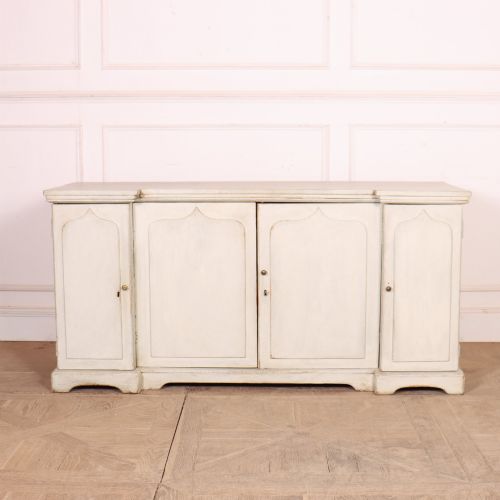
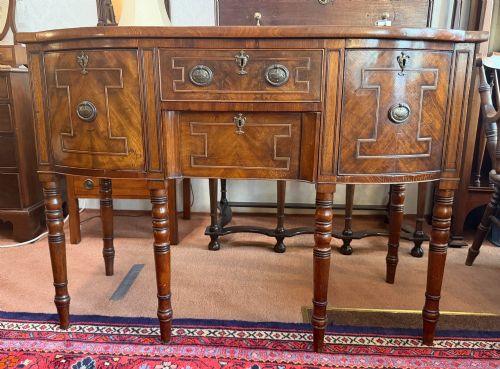
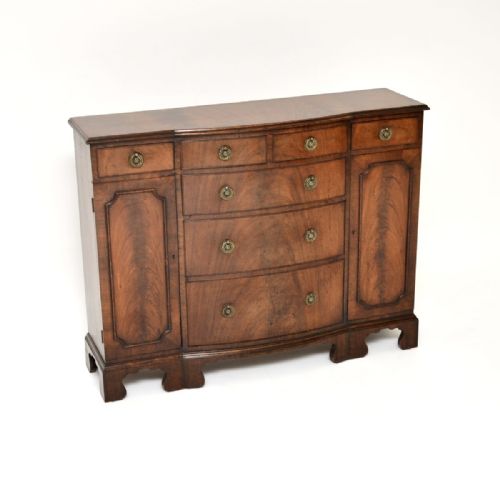
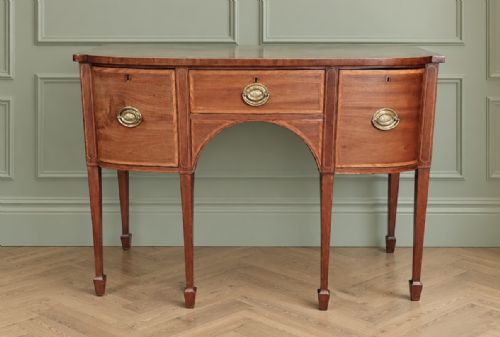
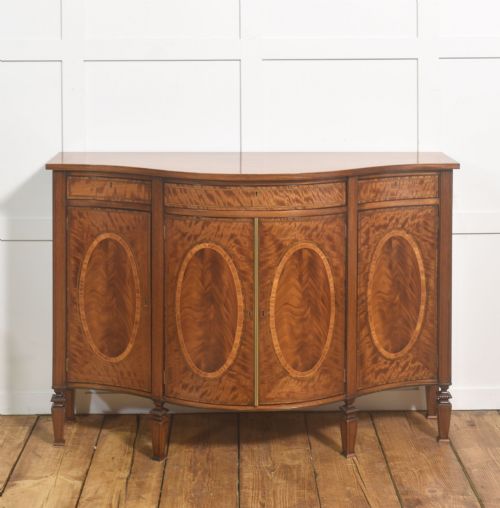
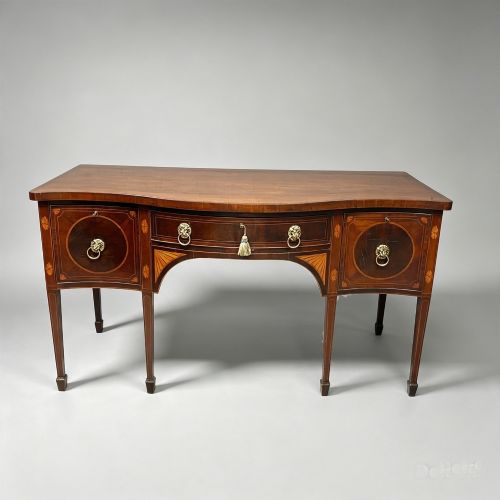
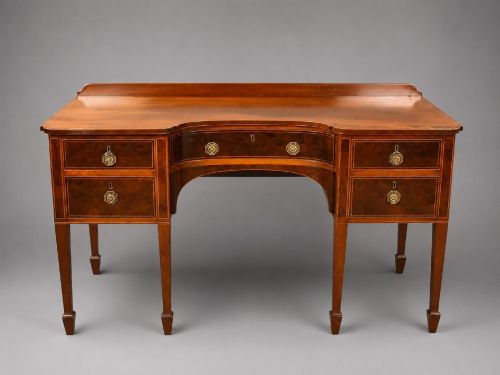
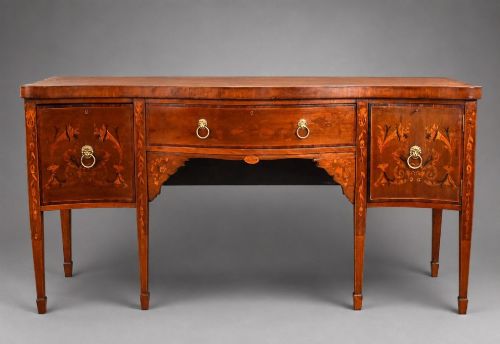
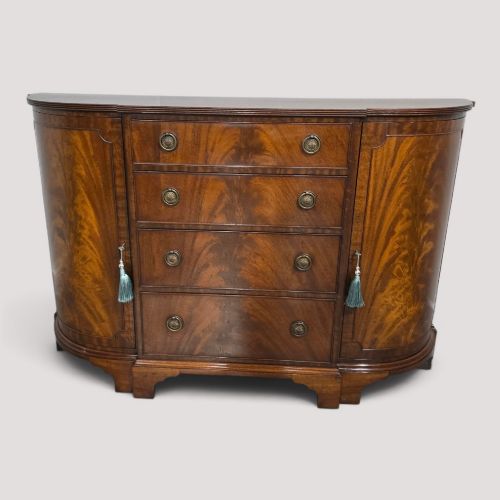
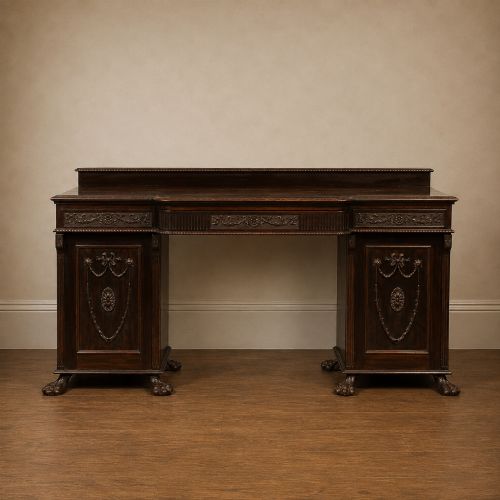
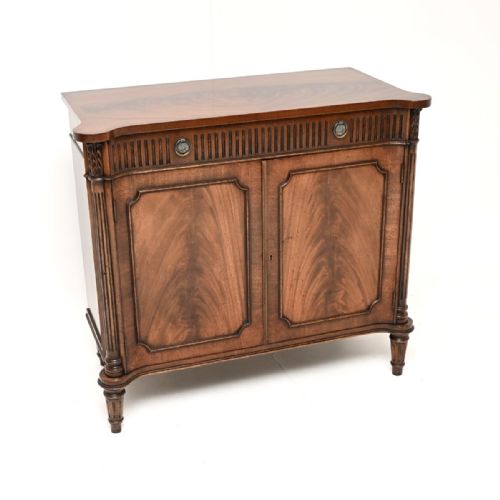
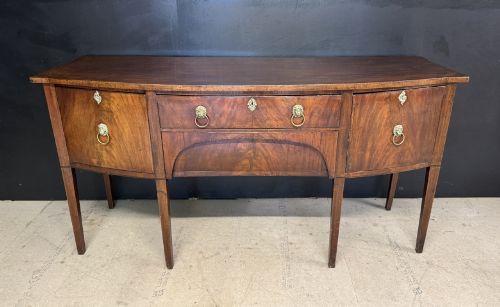
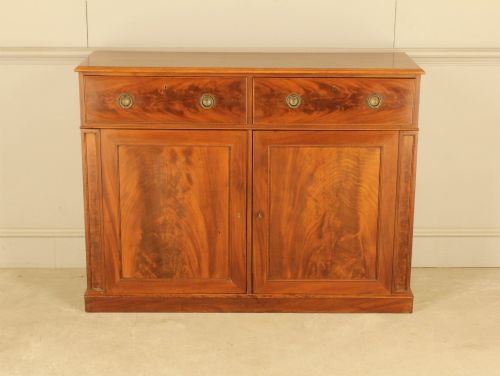
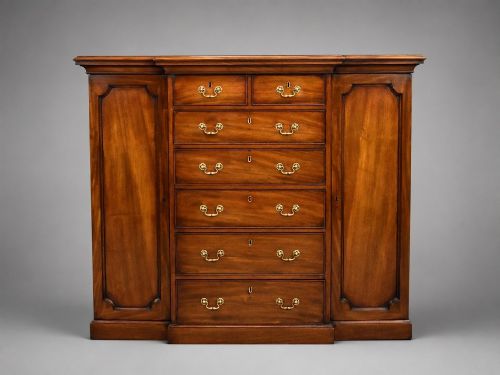
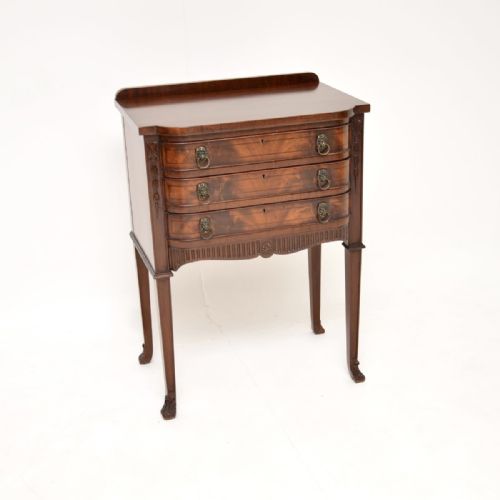
A georgian style buffet encompasses serving furniture designed to assist with dining room storage and display. The pieces span periods from the eighteenth century through to early twentieth-century revivals, including Edwardian interpretations and later revival pieces. Sideboards, side cabinets, and servers form the primary focus of these listings.
Mahogany dominates the material selection, frequently enhanced by satinwood, boxwood, and marquetry details. Forms range from straight-front designs to bow-front and breakfront configurations, alongside serpentine shapes that offer curved elegance. Edwardian and Georgian revival items sit alongside genuine period examples to provide varied proportions.
How they were made
Cabinet makers utilised solid mahogany, pine, and walnut as structural timbers, applying figured mahogany veneers to key exterior surfaces. Inlaid stringing in boxwood and satinwood provides delicate contrast along drawer fronts and borders. Brass handles and mounts complete the hardware assembly.
Techniques relied on traditional joinery combined with decorative marquetry and painted finishes. Artisans shaped timber into serpentine and bow-front profiles using hand tools and specialised wood-bending methods. Paint finishes appear on specific country and painted side cabinets.
Tiered dumb waiters once rescued diners from awkward conversational pauses by holding the pudding out of earshot.
What varies in quality
The selection of timber grain largely determines the visual appeal of each item, with figured mahogany and curl-mahogany commanding attention through rich patterns. Precision in inlay work and marquetry details indicates the level of craftsmanship invested in the construction. Proportion and symmetry across breakfront and serpentine shapes separate standard production from superior pieces.
M. D. Miller & Sons·Gillows
The Georgian Style Buffet Glossary
- Serpentine
- A furniture front curving outward at the centre and inward at the sides in an S-shape. This contour requires expert carpentry to execute smoothly.
- Breakfront
- A cabinet or sideboard whose central section projects forward from the flanking sections. It creates a defined architectural rhythm.
- Bow-front
- A convex, outwardly curved front profile popular in late eighteenth and nineteenth-century case furniture. It softens the room's angles.
- Dumb waiter
- A tiered freestanding serving table with revolving or stationary circular trays. It allowed diners to help themselves without servants present.
Georgian Style Buffet: Frequently Asked Questions
What is a georgian style buffet?
A georgian style buffet refers to dining room storage furniture designed for serving food and displaying silver or porcelain. These items include sideboards, servers, and breakfront cabinets.
They reflect the architectural and decorative principles of the eighteenth century, whether produced during that era or interpreted in later revival periods.
How do I identify a revival piece?
Revival pieces often date from the Edwardian era or the early twentieth century while adopting eighteenth-century design characteristics. Examining the secondary timbers, construction methods, and hardware helps determine the exact manufacturing era.
Makers of the revival period carefully copied earlier serpentine and bow-front proportions using quality mahogany veneers.
Where were these pieces used?
These serving pieces were placed in dining rooms to hold tableware, linens, and serving dishes during meals. Their flat top surfaces served as a station for preparing dishes or presenting food.
Country houses and urban residences alike utilised these cabinets to maintain order and elegance in entertaining spaces.
What woods are commonly found?
Mahogany is the predominant timber, appearing as solid wood and as figured veneer on drawer fronts and cabinet doors. Satinwood, boxwood, walnut, and pine also appear across various styles and periods.
Some pieces feature painted finishes or marquetry details incorporating rosewood and other exotic woods.