




Curved Front Credenza
A curved front credenza is a sophisticated focal point in a dining or living space, offering sculptural presence and generous storage.
Curved Front Credenza
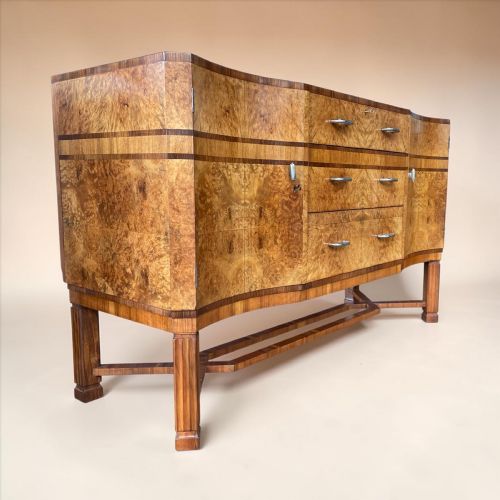
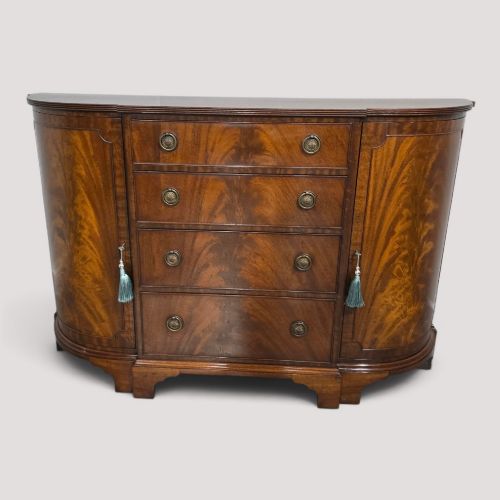
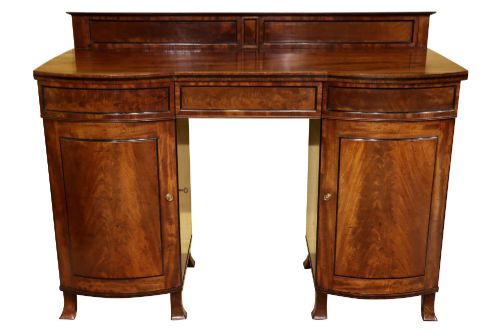
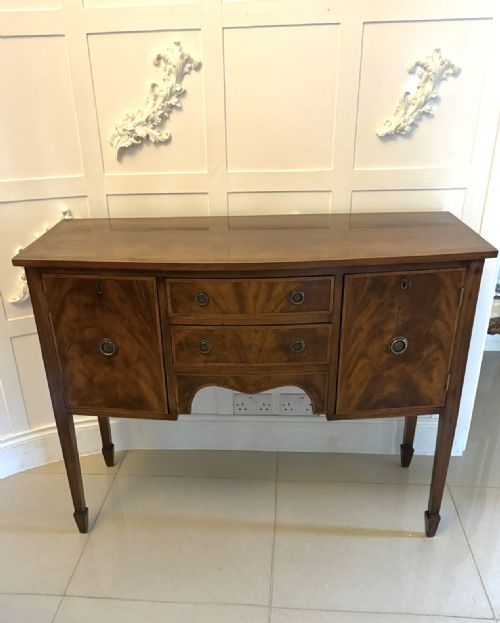
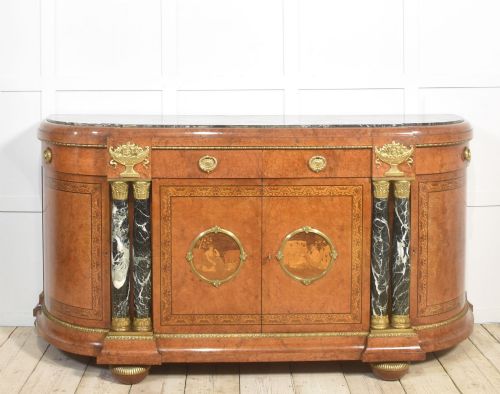
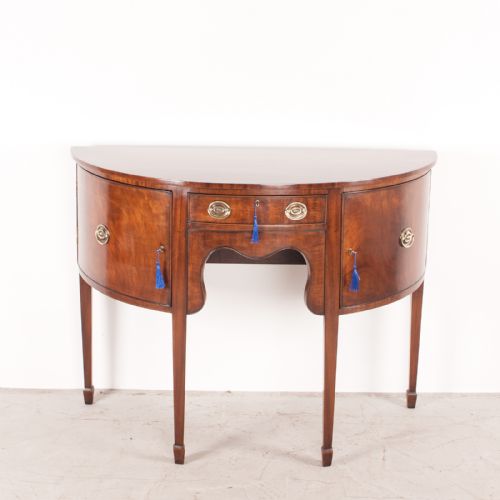
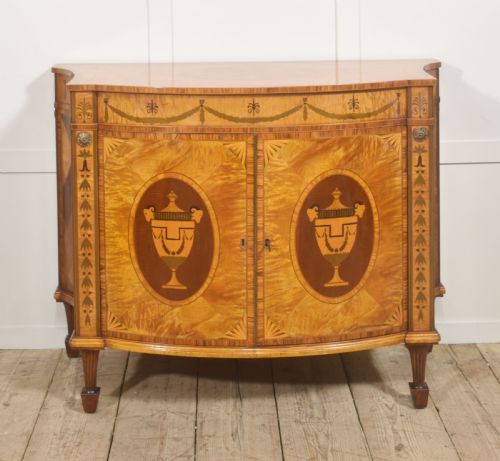
A curved front credenza encompasses a range of low, capacious storage furniture sharing a gently bowed, serpentine, demi-lune, or bombe silhouette.
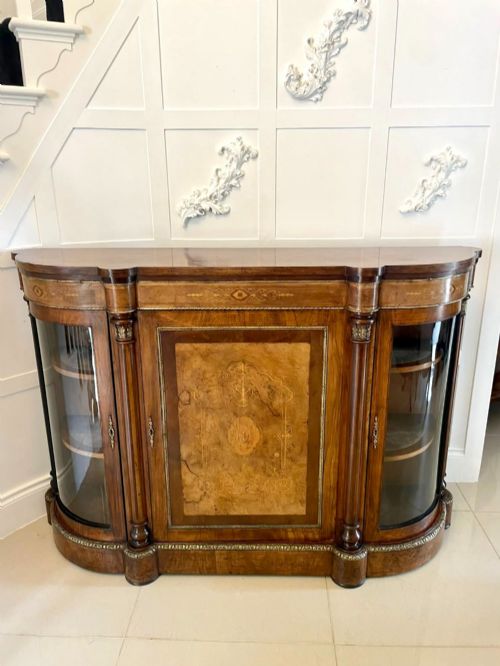
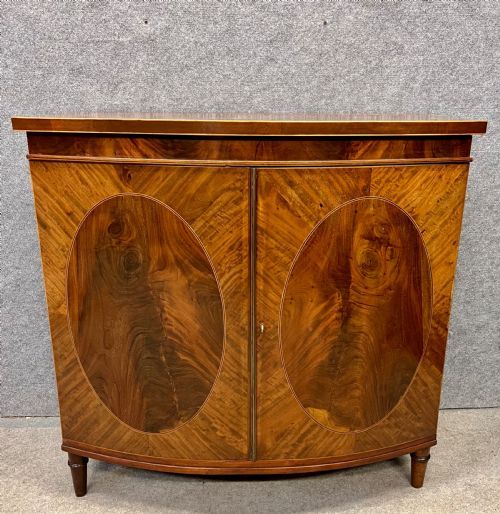
The selections span distinct periods, with Victorian burr walnut models and Georgian or Regency mahogany pieces appearing frequently.
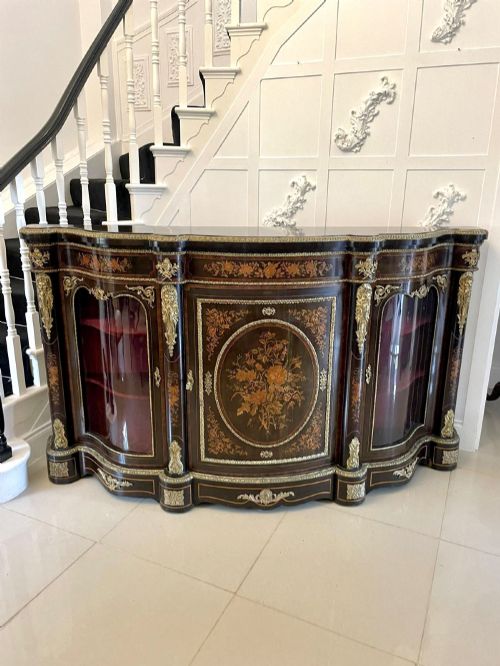
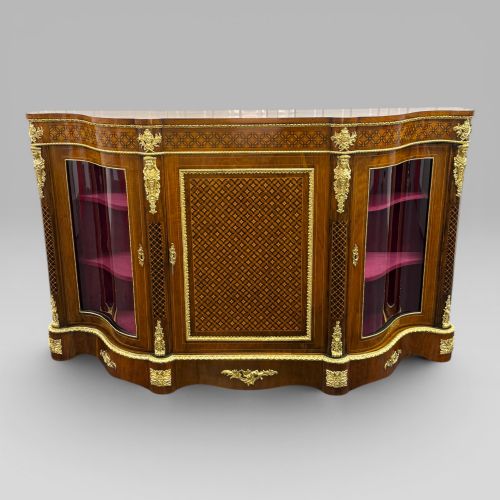
These items serve equally as display cabinets with glazed doors or as enclosed sideboards and commodes fitted with interior shelving.
Materials and Construction
Cabinet makers utilised dense hardwoods such as mahogany and walnut, frequently applying decorative burr walnut, burr yew, or satinwood veneers to the exterior surfaces.
Detailing often incorporates intricate floral marquetry, contrasting stringing, and cast or gilt ormolu mounts to accentuate the sweeping lines.
Structural integrity relies on traditional joinery methods, supporting the complex curved fronts, bow ends, and marble tops seen across the examples.
Materials recorded across the inventory include mahogany, burr walnut, satinwood, marble, glass, and ormolu.
Distinctions in Execution
The degree of refinement is evident in the selection of timbers, where highly figured burr veneers and matching grain patterns elevate the visual impact.
Mastery is also displayed in the precision of the marquetry inlays and the crispness of cast ormolu mounts, separating standard production from exhibition pieces.
The Curved Front Credenza Glossary
- Serpentine
- A shape featuring a central convex curve flanked by concave sections, creating a rolling front line.
- Ormolu
- Gilt bronze mounts applied to furniture for decorative enrichment, common on mid-nineteenth-century pieces.
- Marquetry
- Inlaid patterns of wood veneers forming pictorial or geometric designs on the cabinet surface.
- Demi-lune
- A half-moon shape characteristic of sideboards and cabinets designed to stand flush against a wall.
- Burr Walnut
- Wood cut from the abnormal growth of a walnut tree, prized for its swirling, highly figured grain.
Curved Front Credenza: Frequently Asked Questions
Where should I place a curved front credenza?
These pieces suit principal reception rooms or dining spaces where their sculptural profiles can be appreciated without obstructing movement.
Their substantial storage capacity also makes them practical for holding tableware, linens, or collections.
How do I care for the veneer?
Maintain polished wood surfaces using traditional beeswax and avoid placing furniture in direct sunlight or near heat sources.
Sudden changes in temperature can cause delicate veneers and marquetry to lift over time.
What is the difference between a credenza and a sideboard?
While both provide low storage, credenzas traditionally lean toward decorative display with glass doors and ormolu mounts, whereas sideboards often serve utilitarian dining functions.
Overlapping forms appear frequently in nineteenth-century designs.
How do I identify the period of a curved front piece?
Examine the secondary timbers inside the drawers, the style of the brass hardware, and the specific characteristics of the inlay.
Georgian and Regency items favor solid mahogany and clean lines, while Victorian examples often showcase heavy burr walnut and marquetry.