


Vintage Bowfront Credenza
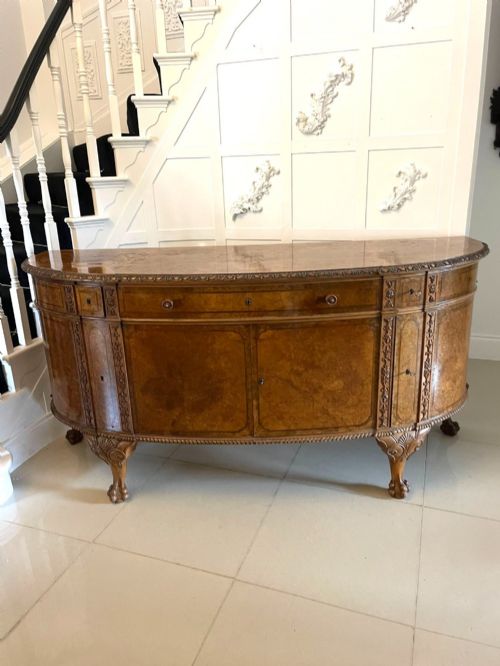
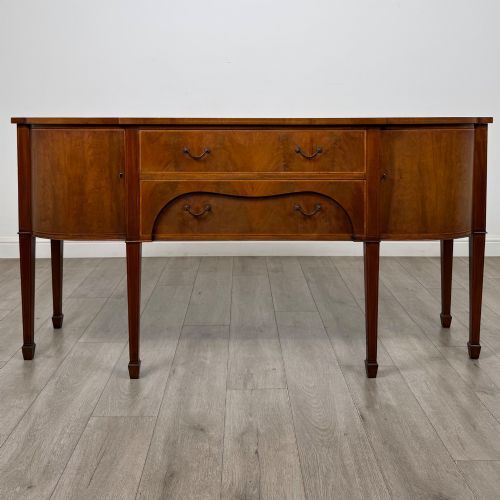
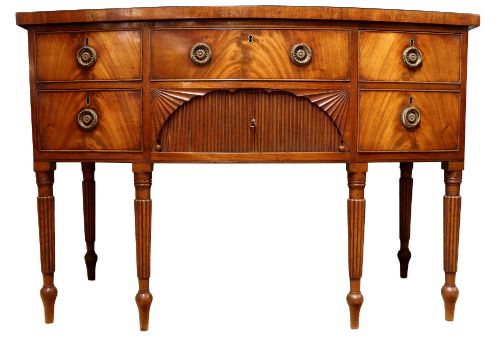
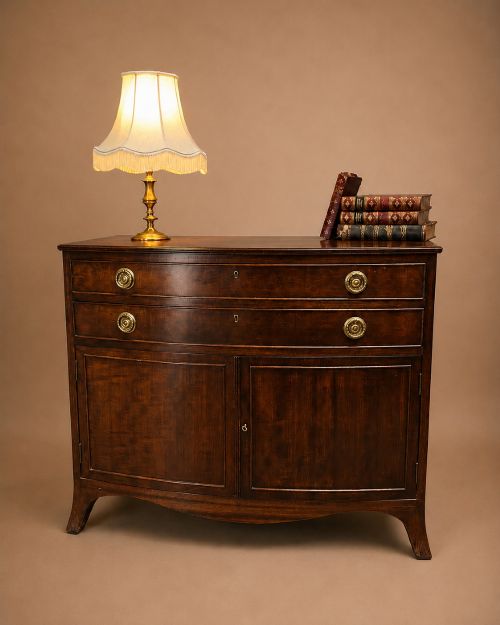
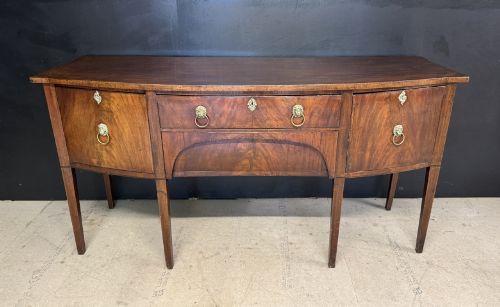
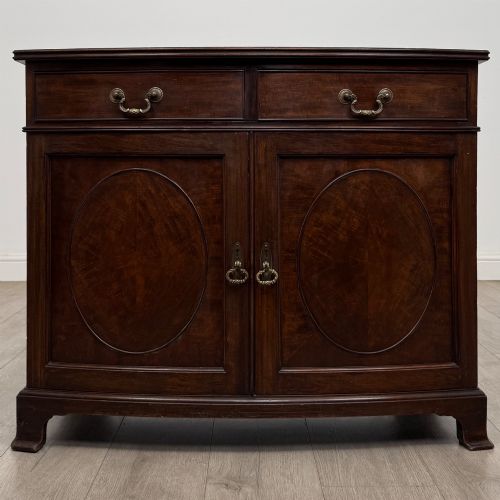
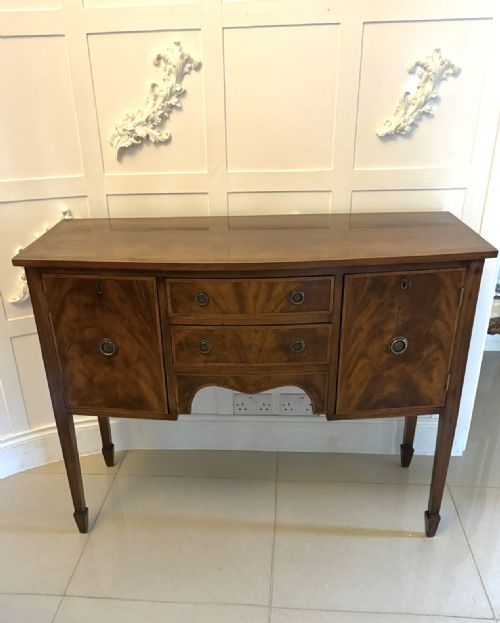
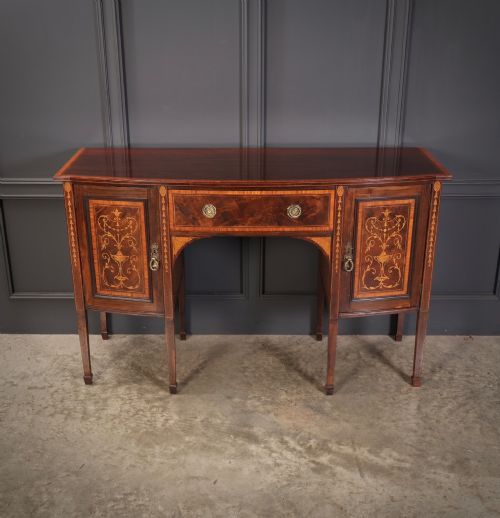
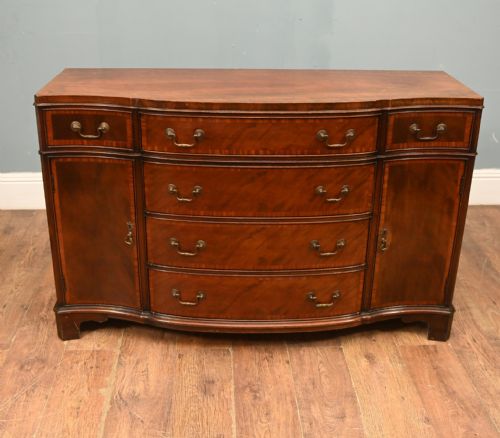
A vintage bowfront credenza brings a curved mahogany silhouette and ample storage to a dining room or hall.
Vintage Bowfront Credenza
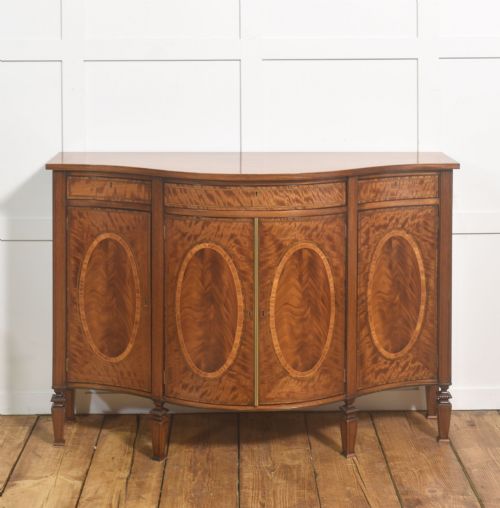
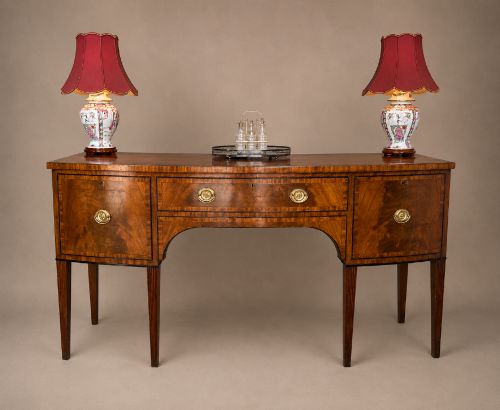
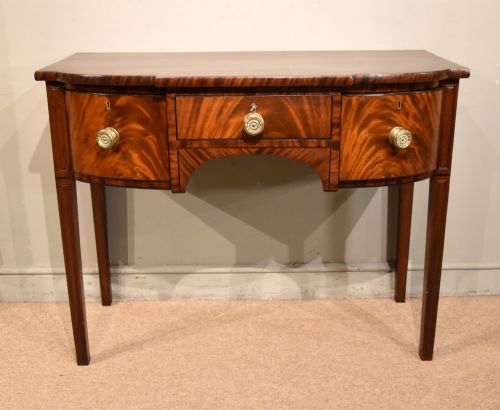
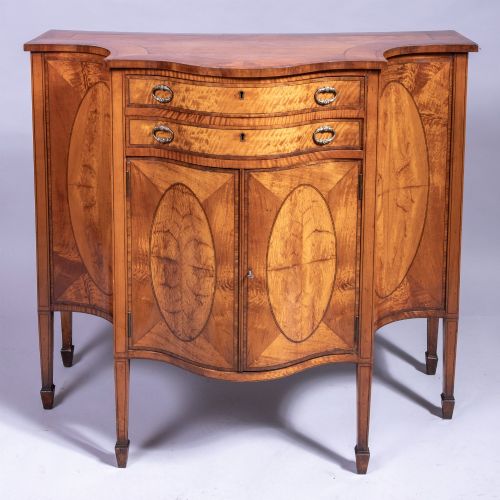
When you search for a vintage bowfront credenza, you encounter substantial dining room storage pieces spanning the Georgian, Regency, and Edwardian periods. Sideboards and side cabinets form the core of these listings, featuring the characteristic curved front that softens the room's geometry.
The pieces on this page lean heavily toward mahogany construction, often enhanced with satinwood, boxwood, and flame mahogany veneers. Makers from the 18th century onward adopted this curved format to project elegance while maintaining deep interior capacity for tableware and linens.
Revival styles such as Sheraton Revival and Queen Anne Revival appear frequently alongside genuine Georgian and Regency originals. Buyers find both antique proportions and early 20th-century interpretations that replicate the classic serpentine lines.
How they were made
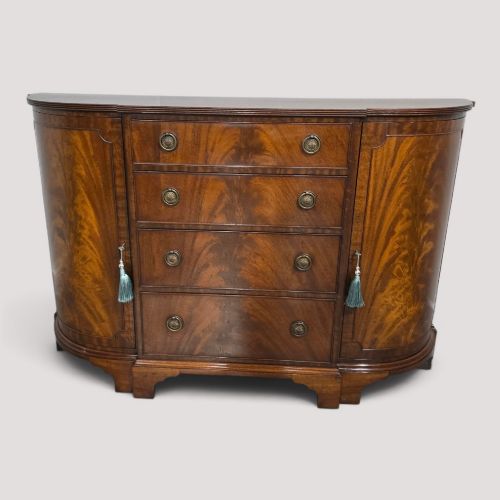
Cabinetmakers constructed these frames primarily in solid mahogany and applied figured veneers like flame mahogany and burr walnut across the curved drawer fronts. Grain selection mattered deeply, as matching the symmetrical figuring dictated the visual rhythm of the piece.
Detailed inlay work in satinwood and boxwood defined the decorative borders, often framing the central cabinet doors and tapering legs. Brass hardware, including handles and escutcheons, completed the construction, fastened securely to house solid timber drawers.
Mahogany is the dominant timber across these sideboards, frequently paired with flame mahogany veneer and boxwood inlay.
What varies in quality
The distinction between standard production and exceptional work rests on timber selection and the precision of the curved joinery. Superior examples display uninterrupted grain patterns across the bow front and crisp, hand-cut stringing rather than printed or hurried inlay.
The integrity of the structural carcass and the smooth operation of deep drawers signal higher workshop standards. Cabinets that retain well-matched veneers and original brass fittings demonstrate a superior level of initial craftsmanship.
The Vintage Bowfront Credenza Glossary
- Bowfront
- A convex curved cabinet front that swells outward in the centre. This shape defines the primary silhouette of these sideboards.
- Credenza
- A sideboard or buffet cabinet used originally for serving food and displaying dishware. It provides enclosed storage beneath a wide top surface.
- Flame mahogany
- A veneer cut from the fork of the mahogany tree where branches join the trunk. It produces a distinctive flickering flame pattern across drawer fronts.
- Inlay
- A technique where contrasting woods like satinwood or boxwood are fitted into recesses in the primary timber. This creates decorative borders and geometric motifs.
- Stringing
- A thin, linear inlay of contrasting wood used to outline panels and drawers. It adds subtle definition to mahogany surfaces.
Vintage Bowfront Credenza: Frequently Asked Questions
What is a bowfront credenza?
A bowfront credenza is a large storage cabinet featuring a convex curved front that projects outward. These pieces serve primarily in dining rooms for storing tableware and serving food.
Cabinetmakers utilised this curved design to soften the rectangular lines of dining furniture while preserving deep internal storage capacity.
How do I date a mahogany sideboard?
Dating relies on observing construction methods, timber choice, and decorative styles like Georgian inlay or Edwardian veneer patterns. Secondary woods inside drawers often provide clues to the period.
Original brass hardware and the crispness of boxwood stringing help distinguish 18th-century originals from later 20th-century revival pieces.
Where should I place a credenza?
These pieces fit naturally against a dining room wall or in a spacious hallway where the curved front can be viewed without obstruction. Their depth requires adequate floor space to allow cabinet doors and drawers to open fully.
Positioning them away from direct heat sources protects the mahogany timbers and delicate satinwood veneers from drying out.
What woods are common?
Mahogany forms the primary structural timber for the vast majority of these cabinets. Cabinetmakers frequently applied figured veneers such as flame mahogany and burr walnut to the exterior surfaces.
Decorative elements often incorporate contrasting light woods like satinwood and boxwood for inlaid borders and geometric stringing.