
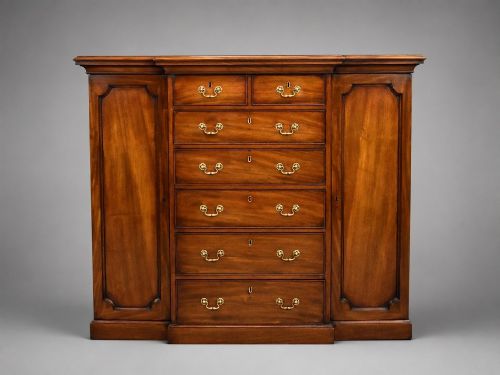
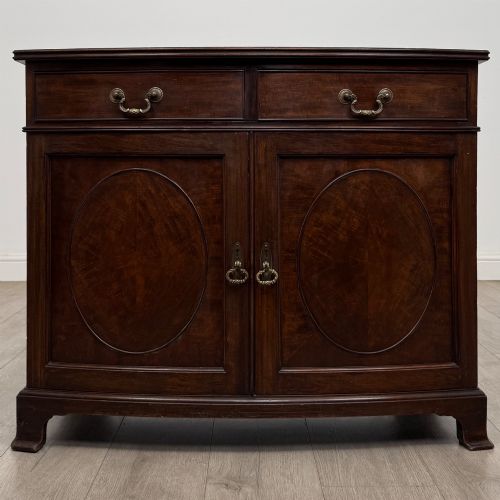
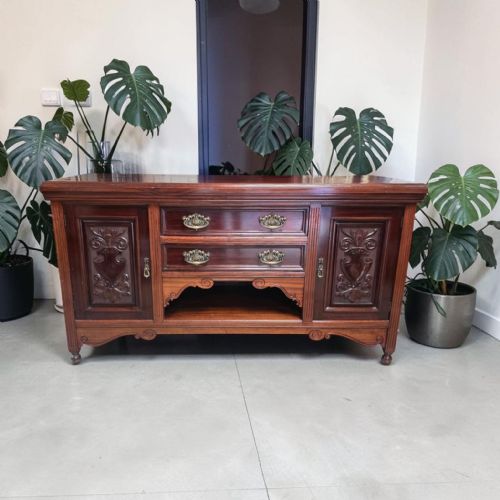
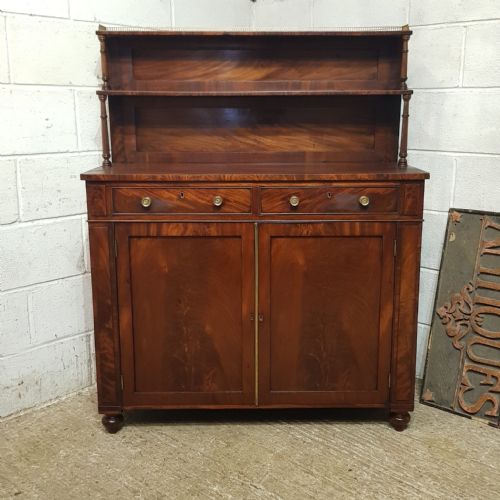

Mahogany Dining Storage
Mahogany dining storage pieces are substantial timber furnishings designed to hold tableware, linen, and wine, bringing practical utility and rich grain to a room.
Mahogany Dining Storage
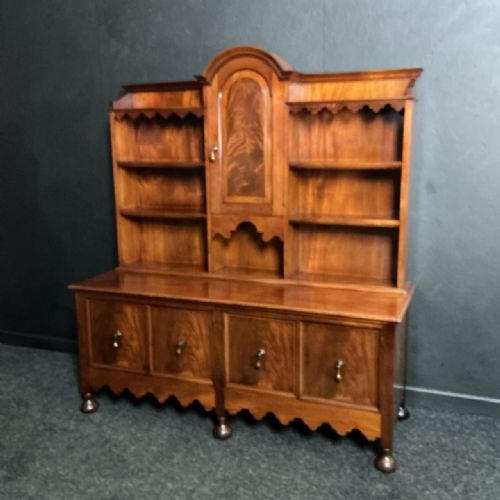
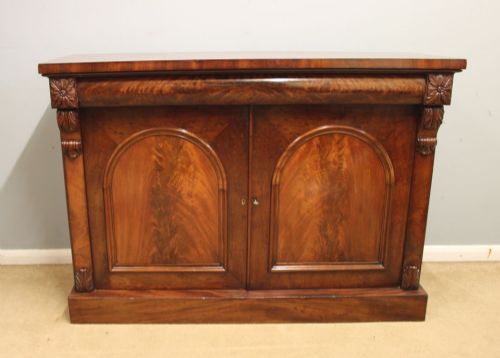
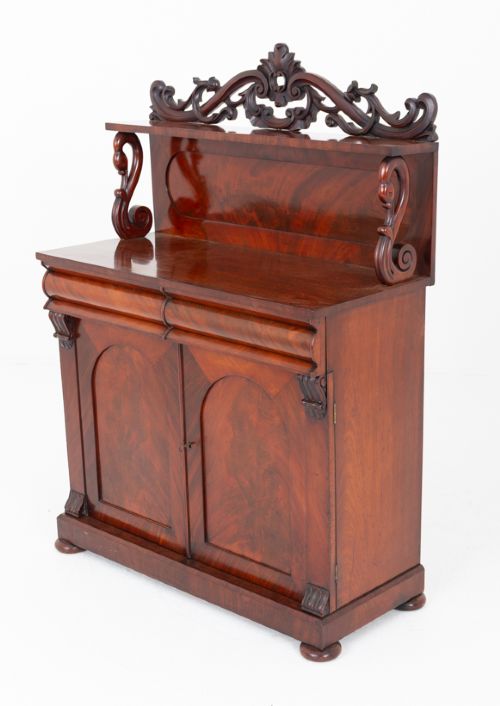
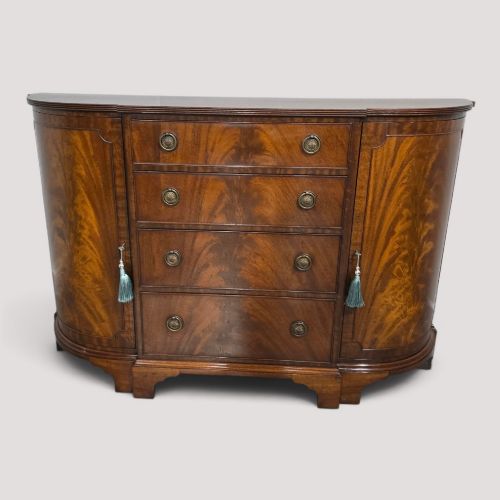
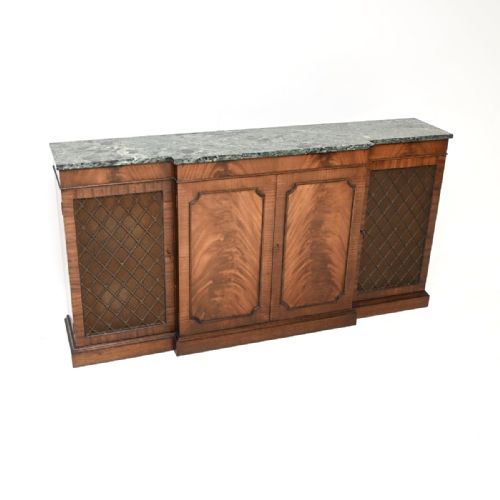
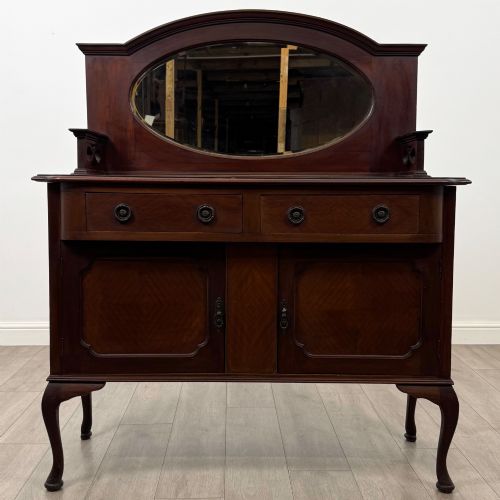
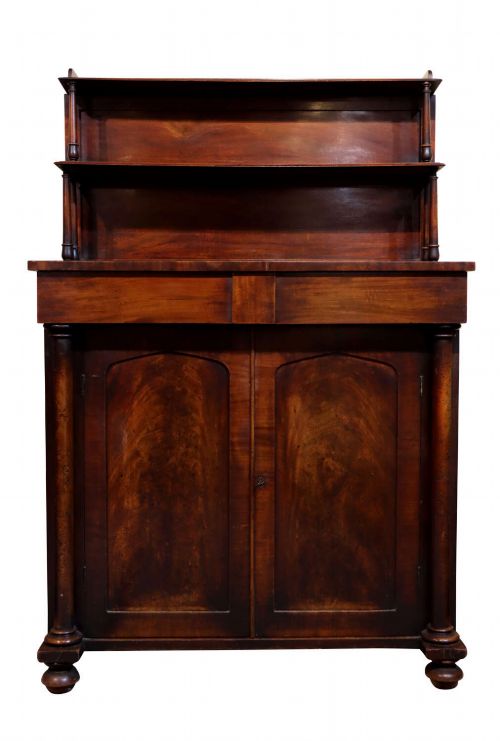
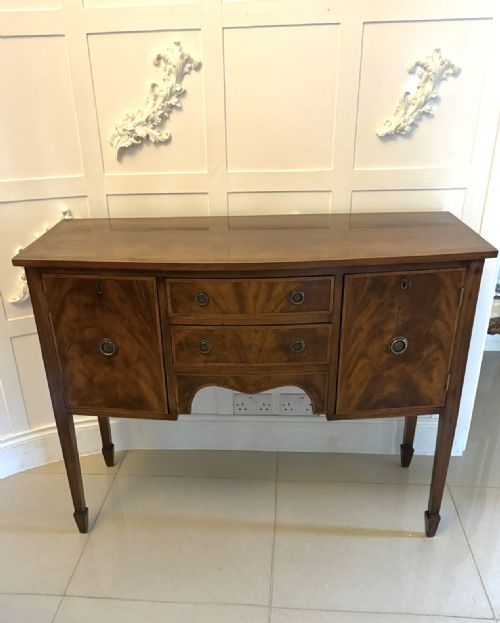
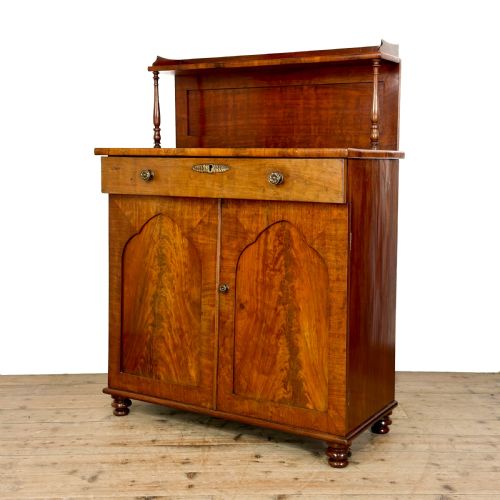
Mahogany dining storage primarily encompasses sideboards, chiffoniers, and cupboards originating across the Georgian, Regency, William IV, and Victorian periods.
Sideboards dominate the selections, appearing alongside smaller chiffoniers, media-adjacent side cabinets, and specialised wine coolers.
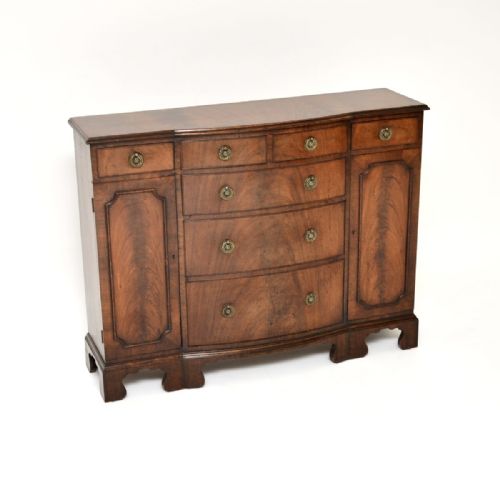
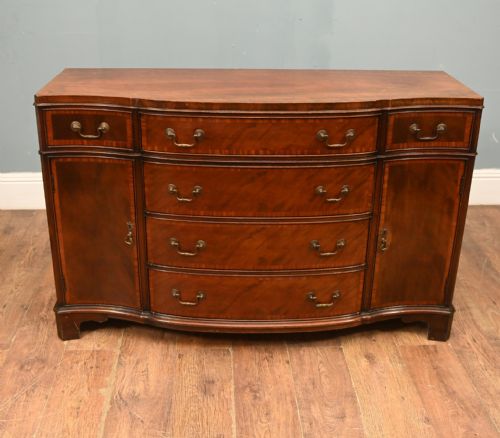
Makers utilise styles ranging from plain geometric lines to bowfront silhouettes and 1920s neo-classical revivals.
Materials and Construction
Workshops construct these pieces predominantly in solid mahogany and flame mahogany veneer, supplemented by decorative boxwood stringing.
Glazing, mirror glass, and brass hardware appear frequently as functional and decorative components on doors and fittings.
Listings feature mahogany dining storage spanning George III, Regency, William IV, Victorian, and Edwardian periods alongside 1920s revivals.
Craftsmanship and Selection
Quality rests upon the selection of timber figures, where striking flame mahogany veneer or boxwood stringing elevates plain structures.
The precision of joinery in bowfront forms and the integration of brass fittings determine the relative distinction of individual pieces.
M. D. Miller and Sons·Edwards and Roberts
The Mahogany Dining Storage Glossary
- Chiffonier
- A low sideboard or cupboard, typically fitted with shelves or drawers, popular in Victorian interiors.
- Bowfront
- A convex curved cabinet front that requires precise woodworking to achieve a smooth continuous line.
- Boxwood strung
- Inlaid with thin lines of pale boxwood to create contrasting geometric borders on darker timber surfaces.
- Cellarette
- A lockable container or cabinet designed specifically to hold bottles of wine near the dining table.
- Flame mahogany
- Timber cut from the fork of a mahogany tree to produce a dramatic, flickering grain pattern.
Mahogany Dining Storage: Frequently Asked Questions
What is a mahogany chiffonier?
A chiffonier is a compact storage piece lower than a traditional sideboard, often featuring enclosed shelving behind doors.
Victorian homes utilised these cabinets in dining rooms to hold glassware and smaller service items.
How do I spot a bowfront sideboard?
The front curves outward in a convex arc rather than sitting flat against the wall.
This design requires advanced cabinetmaking techniques to ensure the drawers and doors operate smoothly along the curve.
What is flame mahogany?
Flame mahogany is a decorative wood veneer harvested from the junction where branches meet the main trunk.
It displays a distinctive, fiery grain pattern that adds visual depth to the surface of Victorian and Georgian furniture.
Where were wine coolers placed?
Wine coolers and cellarettes sat directly beneath or beside the dining storage furniture during meals.
They kept bottles close at hand for service without requiring hosts to leave the dining area.