

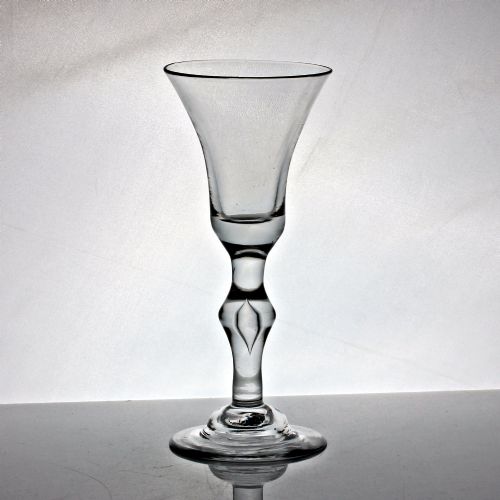
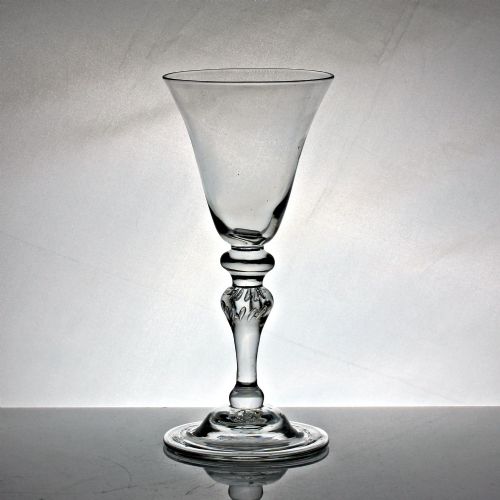
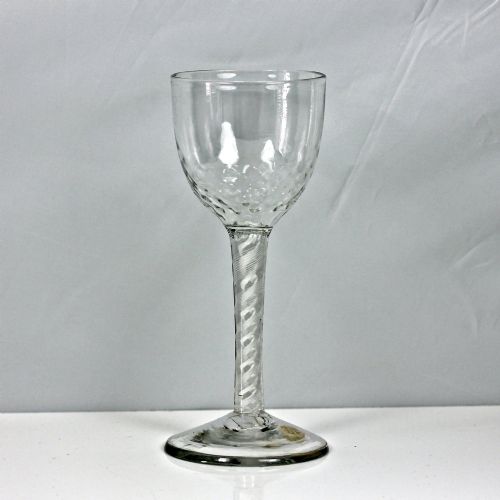
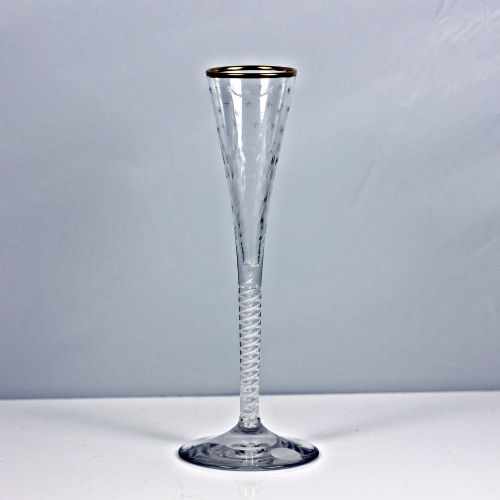
Georgian Stemmed Glassware
Georgian stemmed glassware unites drinking vessels from the eighteenth and nineteenth centuries, offering tactile connection to historical dining tables through heavy lead metal and drawn stems.
Georgian Stemmed Glassware
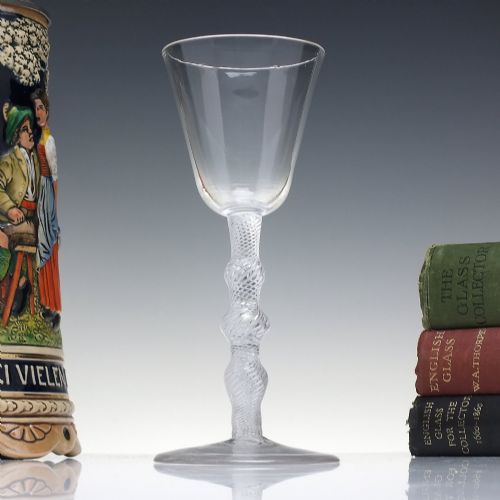
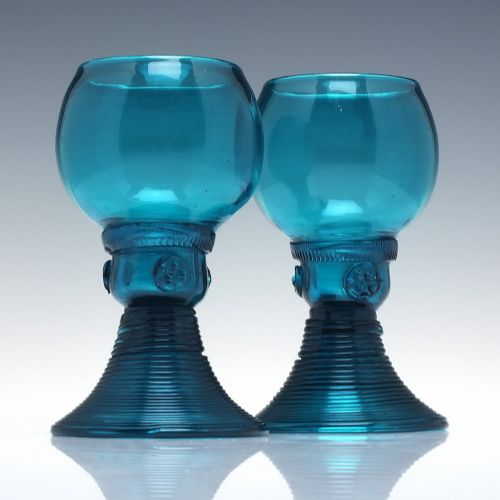
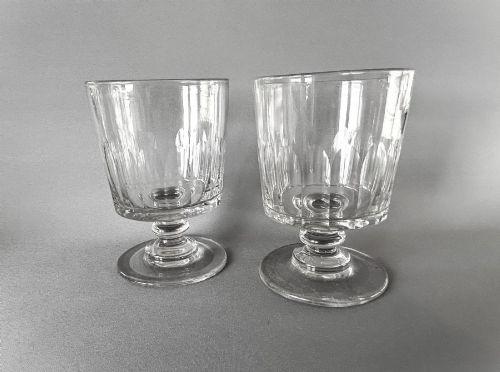
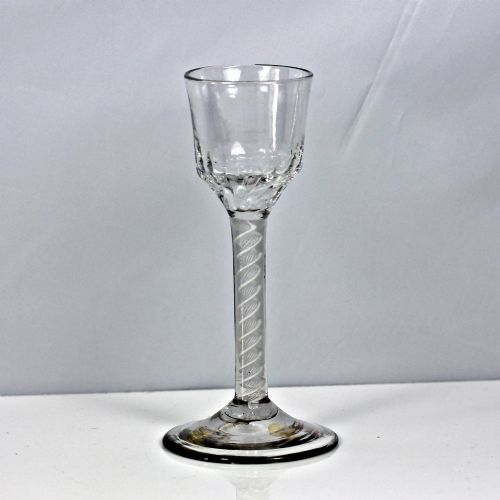
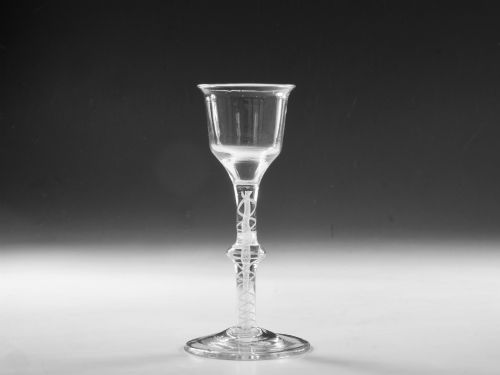
Georgian stemmed glassware encompasses drinking vessels spanning the eighteenth and nineteenth centuries, including wine glasses, dram glasses, ale glasses, goblets, and rummers. These drinking pieces originate predominantly from English workshops, appearing alongside Irish port glasses and occasional continental European examples.
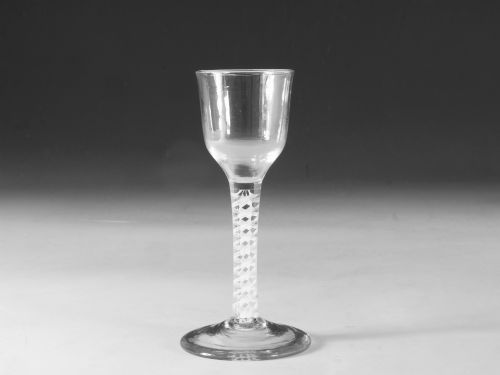
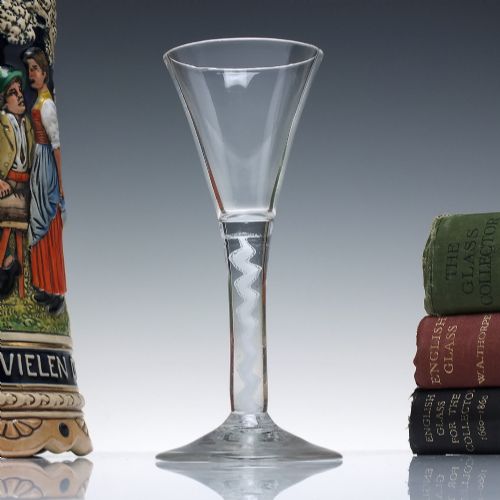
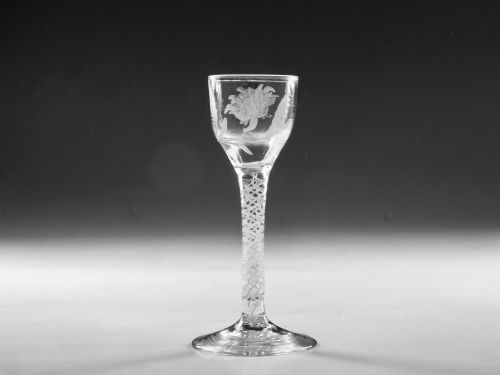
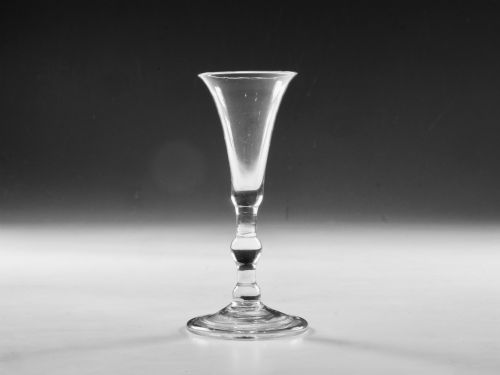
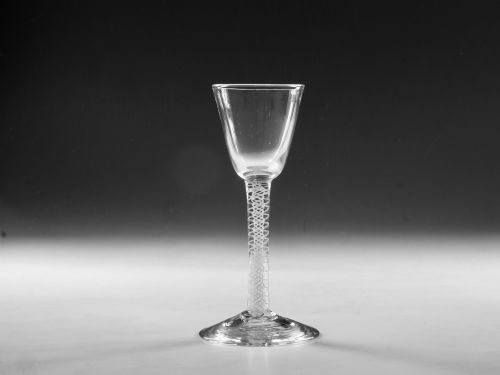
The selection centres heavily on eighteenth-century forms featuring air twists, opaque twists, and plain stems, supplemented by nineteenth-century cut glass rummers and facet-cut variations. Buyers encounter everything from small dram glasses and patch stands to large tazze and heavy drinking vessels.
Materials and construction
Makers utilised lead glass, flint glass, and clear lead crystal to achieve the characteristic heavy weight, deep refraction, and bright clarity seen in these drinking vessels. Enamel pigments and gilding occasionally decorate the bowls and stems.
Hot-working techniques shaped the bowls, balusters, and knops, while air and opaque twists were drawn into the stems during cooling. Feet were frequently folded for extra strength at the rim, and later nineteenth-century pieces introduced wheel cutting and facet-cutting to the stems and bowls.
Georgian Stemmed Glassware Retail Price Guide 2026
Typical asking prices for georgian stemmed glassware among the pieces listed under this phrase on Sellingantiques today, from the lower quarter to the upper quarter. They describe what is for sale here now, not the wider market.
Certain Jacobite wine glasses hid political loyalties inside microscopic air bubbles.
Distinctions in execution
Quality rests on the crispness of the stem formation and the optical purity of the metal, distinguishing masterwork twists from routine production. The regularity of air threads, the absence of heavy clouding in the lead glass, and the balance of the bowl relative to the stem dictate the standard.
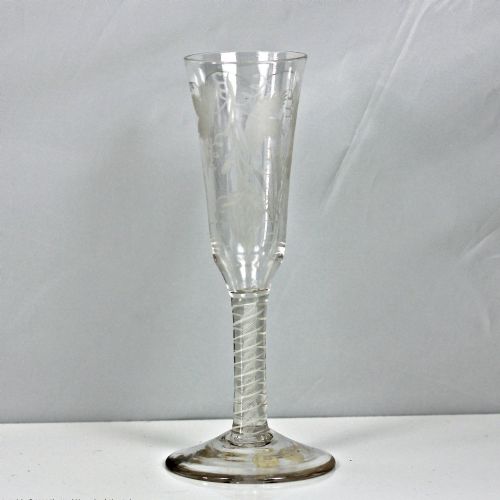
Engraving depth and precision also separate ordinary vessels from superior examples, particularly when delicate floral, hop, or Jacobite motifs are executed by skilled hands. The symmetry of folded feet and the neatness of pontil marks complete the assessment.
James Giles
The Georgian Stemmed Glassware Glossary
- Air twist
- A stem containing elongated internal air bubbles drawn into spirals during manufacture. This technique creates delicate optical patterns within the transparent metal.
- Opaque twist
- A stem enclosing one or more threads of white or coloured enamel glass within the clear lead metal. These threads are typically twisted into single or double series cables.
- Baluster
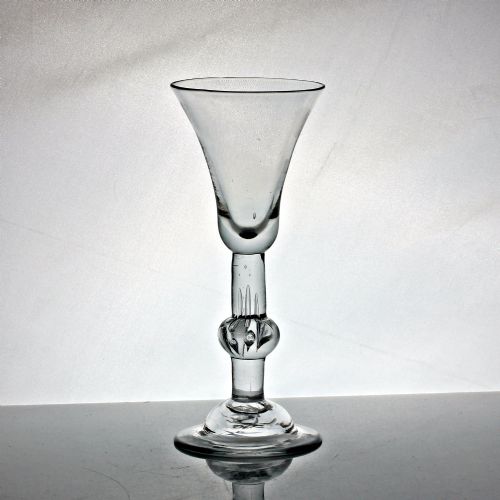
- A heavy, swelling stem form reminiscent of architectural pillars, popular in early eighteenth-century drinking vessels. They often incorporate knops and collars.
- Pontil mark
- A rough scar on the base of a glass where the holding iron was snapped off after blowing. Ground and polished pontils generally indicate finer finishing.
- Folded foot
- A rim turned underneath the base of a drinking vessel during manufacture to create a smooth, thickened edge. This adds structural resilience to the foot.
Georgian Stemmed Glassware: Frequently Asked Questions
Can I use these glasses today?
These drinking vessels remain functional and many collectors enjoy using them for special dinners or tasting sessions. Their sturdy lead construction handles careful handling well.
Take care with eighteenth-century examples due to their age and thinner rims, ensuring guests handle them by the stem rather than the delicate bowl.
How do I date a glass?
Dating relies on combining stem construction, bowl shape, foot formation, and the specific characteristics of the lead metal. Plain stems and balusters generally point to the early and mid-eighteenth century, while facet cutting and heavier rummers suggest the late eighteenth and nineteenth centuries.
Changes in taxation laws and melting recipes throughout the Georgian period also influence the weight and colour of the glass, helping narrow down the decade of manufacture.
What is a rummer?
A rummer is a large, sturdy drinking glass featuring a thick stem and a capacious bowl, designed originally for serving rum, beer, or wine during the late Georgian and Victorian eras. They often sit on a square or round foot.
These versatile vessels frequently display bucket bowls with cut decoration, reflecting the shift toward heavier, more robust tableware in the nineteenth century.