



Georgian Staffordshire Plate
A georgian staffordshire plate brings domestic scenes and distant views to the table through blue and white transfer printing.
Georgian Staffordshire Plate
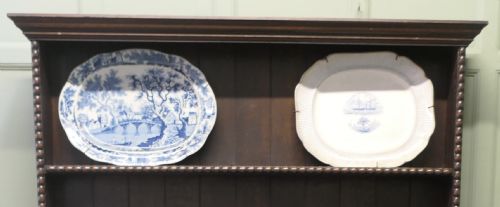
A georgian staffordshire plate represents the earthenware production of English potteries during the late eighteenth and early nineteenth centuries. These pieces appear as plates, meat plates, tea plates, serving plates, chargers, and platters.
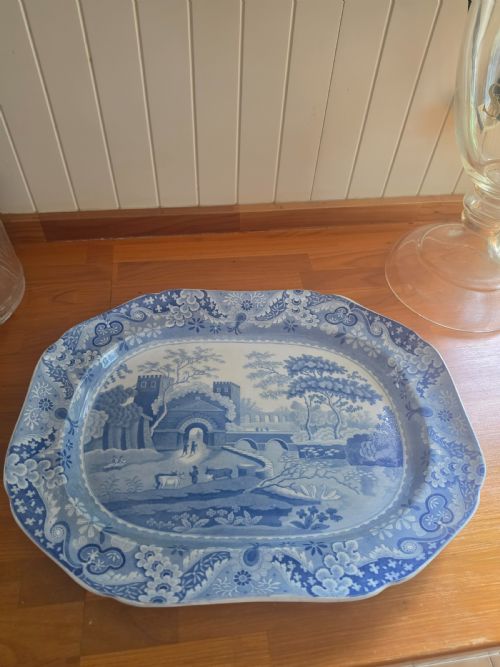
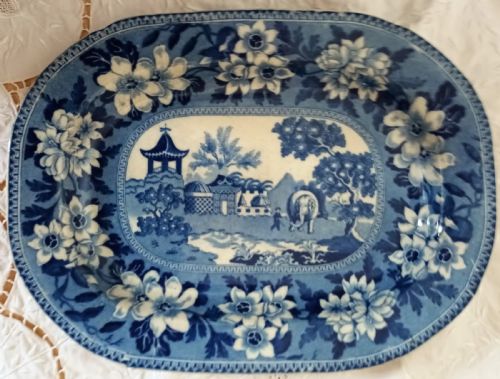
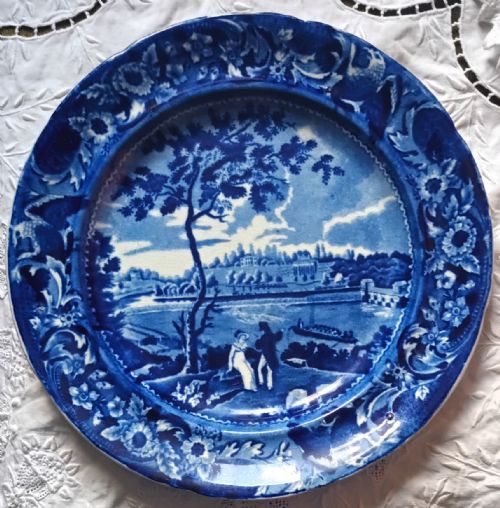
Motive designs range from topographical views such as Fair Mount near Philadelphia and Windsor Castle to figurative subjects like The Beemaster, The Cowman, and The Villagers. Oriental themes appear in Chinoiserie ruins and Chinese pagoda patterns.
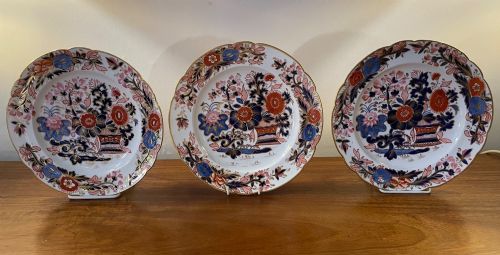
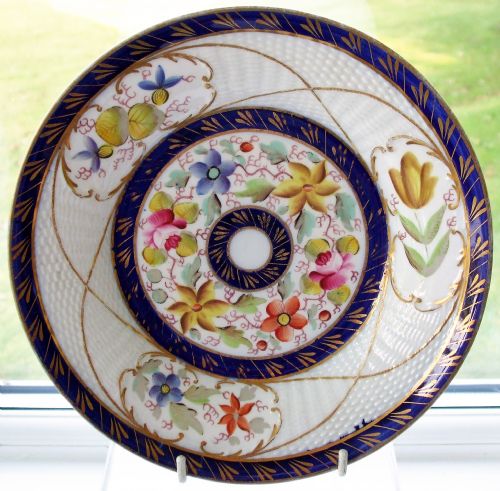
The material surface carries printed blue and white decoration, sometimes enhanced with an Imari palette, enamel, or gilding. Dating spans the eighteenth century through the nineteenth century, including the Regency and Victorian periods.
Materials and production
Potters shaped earthenware and pearlware bodies before applying cobalt glaze for the characteristic blue and white transfer printed scenes. Some wares received additional hand-painted enamel or gilding over the glaze.
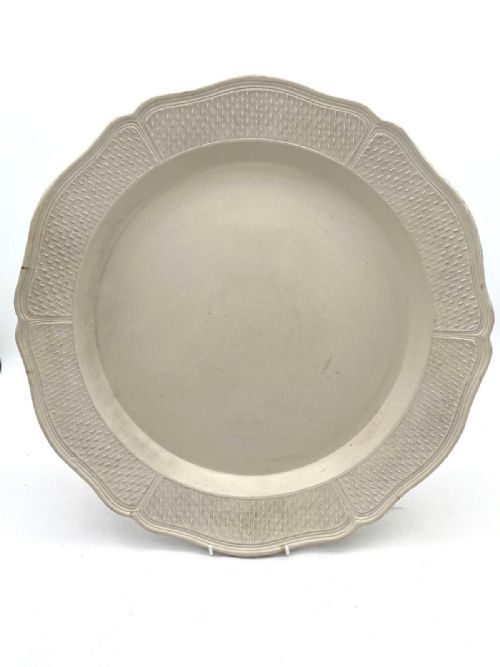
Saltglazed pieces utilised specific firing techniques where salt thrown into the kiln created an orange-peel textured surface. The transfer printing process allowed complex pictorial patterns to transfer cleanly onto curved ceramic surfaces.
The inventory includes platters, chargers, meat drainers, and serving dishes alongside standard plates.
Factors of quality
Quality rests in the clarity of the transfer print and the depth of the cobalt glaze against the white ceramic ground. Crisp lines in complex pictorial patterns separate superior plates from blurred impressions.
The fineness of the earthenware body and the presence of supplementary hand-applied elements like enamel or gilding elevate individual serving platters and plates above standard utility wares.
John Rogers and Son·Stubbs·New Hall·William Adam·John Davenport·Brameld and Co·Davenport·Elkin Knight and Bridgwood
The Georgian Staffordshire Plate Glossary
- Pearlware
- A refined earthenware developed in the late eighteenth century featuring a faint bluish glaze that pooled in crevices. This material formed the base for many transfer printed scenic plates.
- Transferware
- Pottery decorated by applying a printed paper design from an engraved copper plate onto the ceramic surface before glazing. This technique enabled mass production of detailed pictorial scenes.
- Charger
- A large decorative plate or platter used for ceremonial serving or display rather than daily dining. These substantial pieces often feature extensive topographical or narrative scenes.
- Imari palette
- A decorative colour scheme utilising cobalt blue, iron red, and gilding inspired by Japanese export porcelain. Potters applied this palette to enhance certain earthenware plates.
- Meat drainer
- A perforated ceramic insert placed inside a platter to keep meat elevated from accumulated juices. These scarce items match the transfer patterns of the surrounding serving dishes.
Georgian Staffordshire Plate: Frequently Asked Questions
How old are these plates?
Most pieces date from the late eighteenth century through the early nineteenth century during the Georgian and Regency periods. Some examples extend into the Victorian era.
Production periods rely on documentary patterns, named topographical views, and stylistic traits recorded across individual ceramic bodies.
Can I use them for dining?
These antique earthenware items serve primarily as decorative objects or wall plates due to their age and historical value. Modern use might expose fragile glazes to thermal shock and cutlery wear.
Displaying them on plate hangers or stands preserves the transfer printed surfaces and any delicate hand-painted enamel highlights.
What is transfer printing?
Transfer printing is a technique where an engraved copper plate transfers a design onto tissue paper, which is then pressed onto the ceramic body. This allowed potteries to produce intricate pictorial scenes efficiently.
Cobalt blue was the standard colour used before glazing and firing fixed the pattern permanently into the earthenware surface.
Why do some look blue and white?
Blue and white designs became dominant because cobalt oxide withstood high kiln temperatures without losing colour. English potteries adopted this aesthetic from imported Chinese porcelain.
Scenic views, historical buildings, and pastoral subjects formed the most popular pictorial themes for these blue and white earthenwares.