



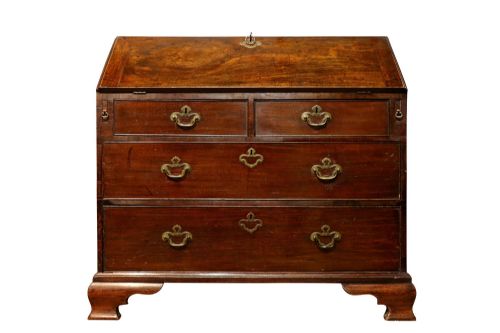
Georgian Slant Top Desk
A Georgian slant top desk is a sturdy writing cabinet with a folding flap, prized for its hidden compartments and timeless timber character.
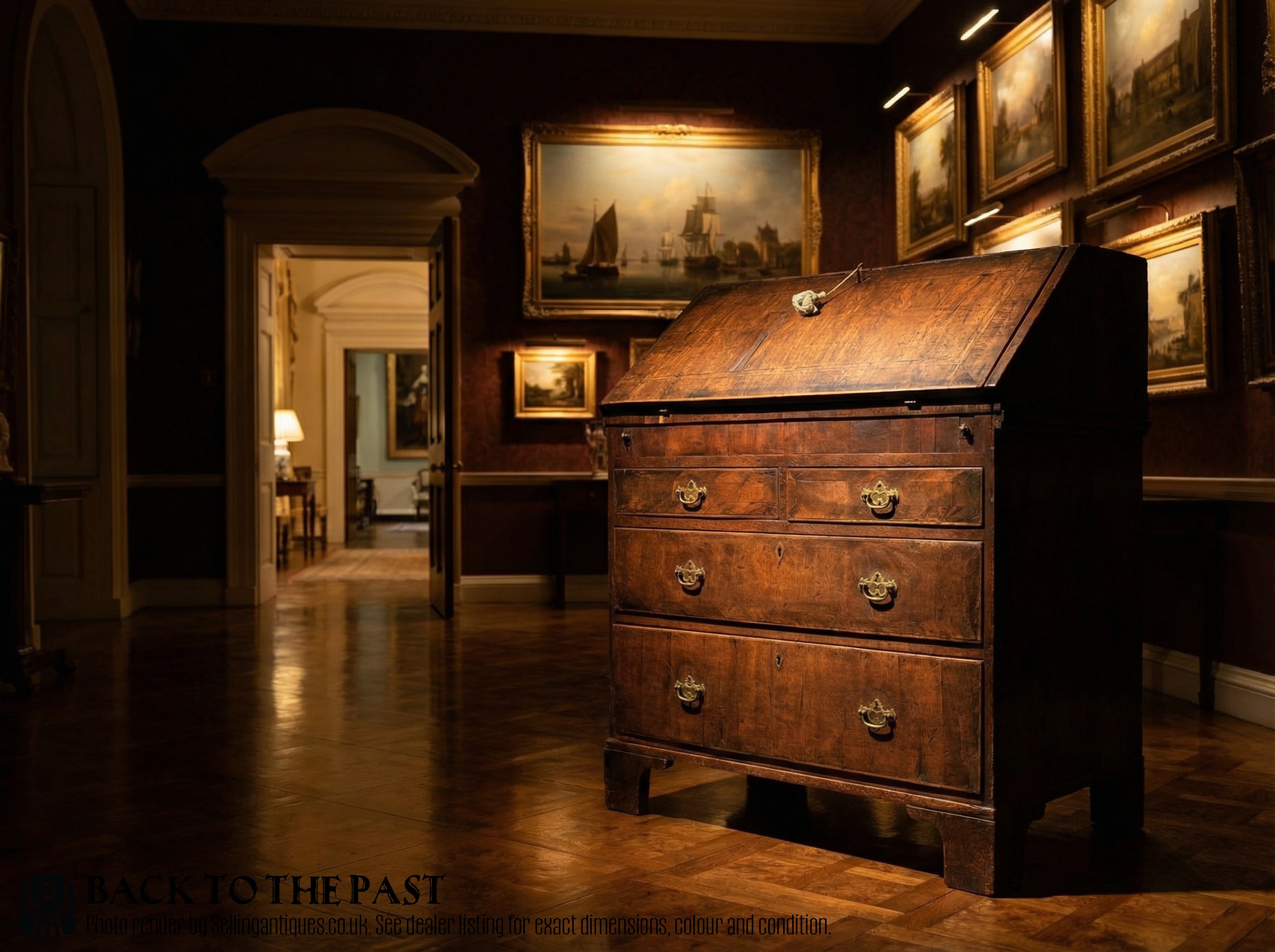
What a Georgian slant top desk is
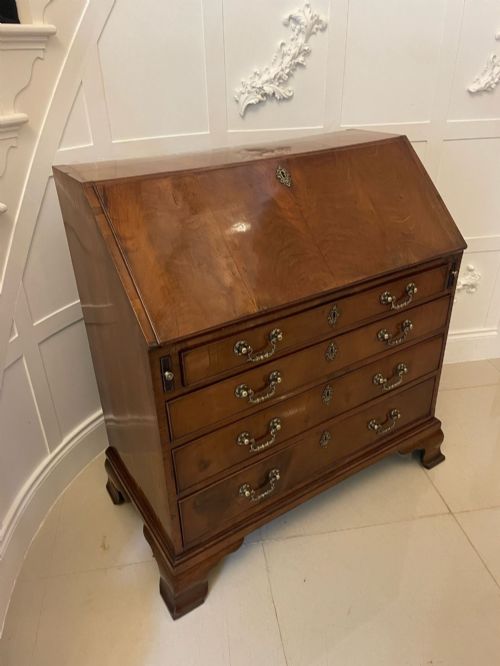
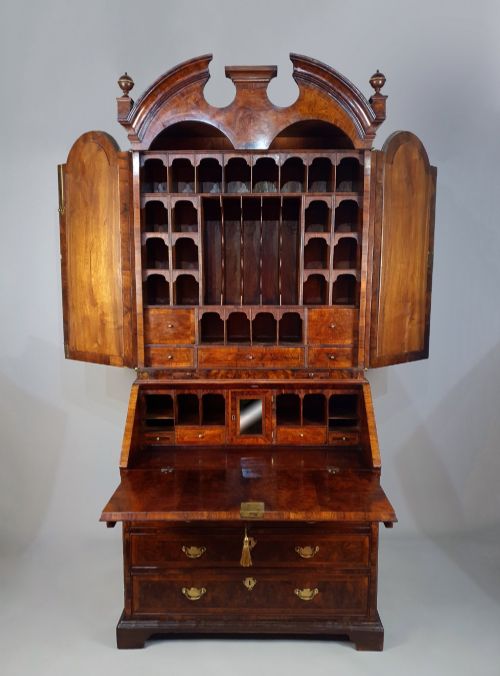
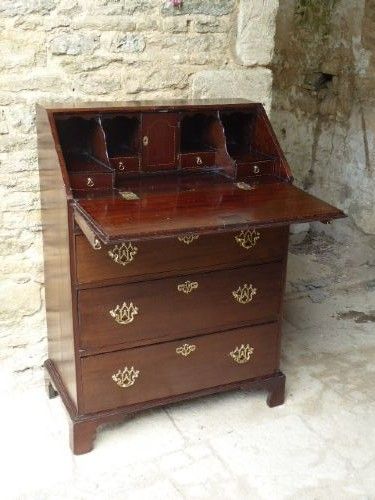
A Georgian slant top desk provides a dedicated writing surface that drops down from a hinged flap to reveal internal pigeonholes and drawers. These pieces date from the eighteenth century, spanning the reigns of the Georges and encompassing early variations in oak, walnut, and mahogany.
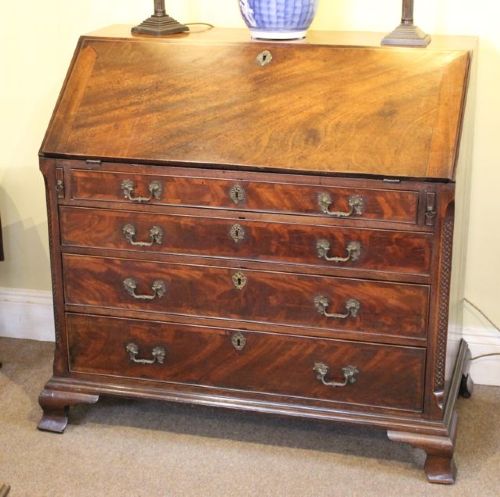
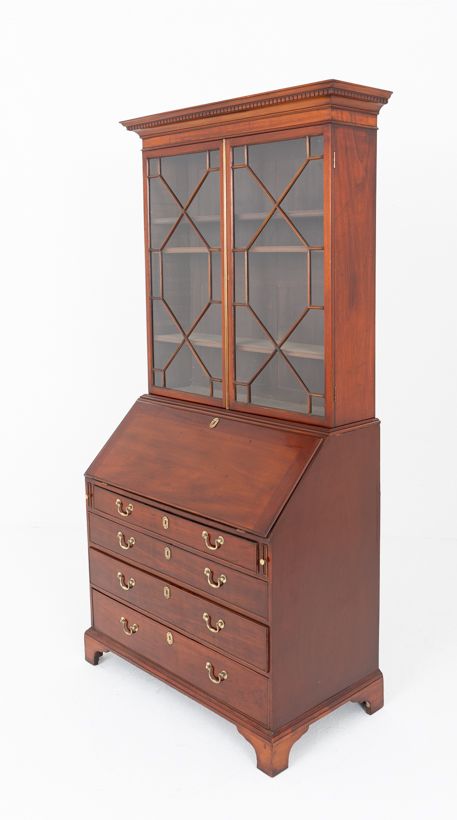
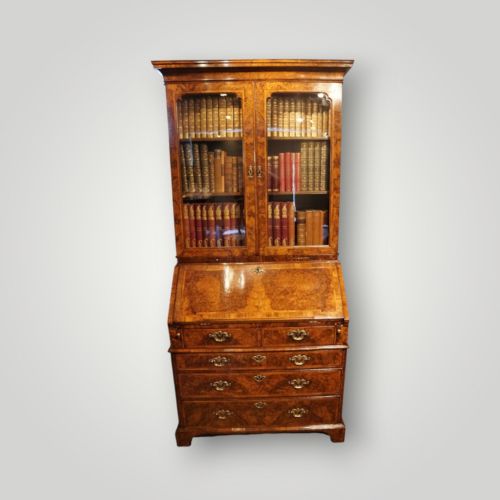
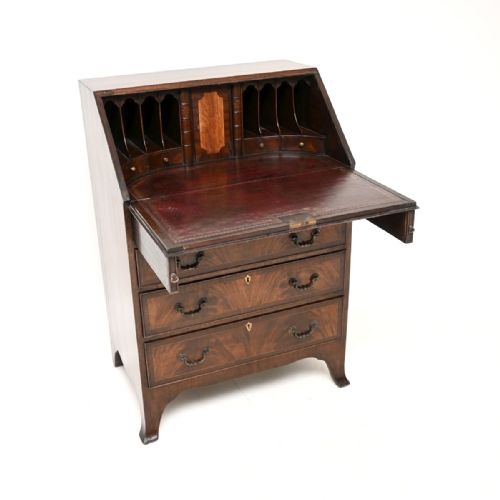
The most common examples encountered on this page are mahogany and walnut bureaus, frequently built with fitted interiors for correspondence. They combine a chest of drawers base with a sloping writing lid, serving as both storage and a practical desk.
How they were made
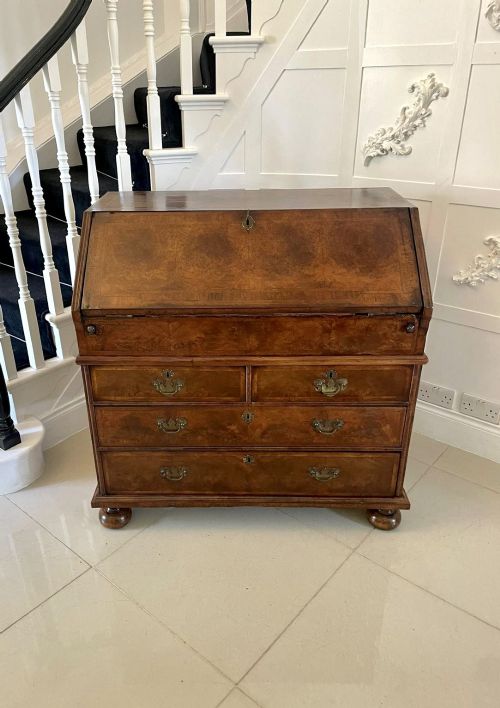
Cabinetmakers constructed these desks using solid timbers like oak, walnut, and mahogany, often applying decorative veneers over secondary woods. Early pieces utilise rich walnut veneers, whilst later examples favour the deep reddish tones of solid or veneered mahogany.
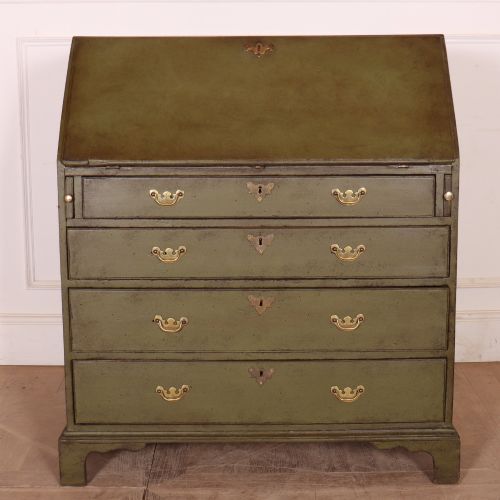
Metalwork played a functional and decorative role, with cast brass drop handles and escutcheons securing the drawers and fall front. Some regional or later items feature painted finishes, adding a distinct surface texture to the traditional timber construction.
Retail Price Guide 2026
Typical UK retail prices for georgian slant top desk, calculated from the Sellingantiques database of over a million retail prices indexed since 2003. This retail price guide relies exclusively on Sellingantiques data; no external sources or auction records are used, so the figures do not describe the wider market.
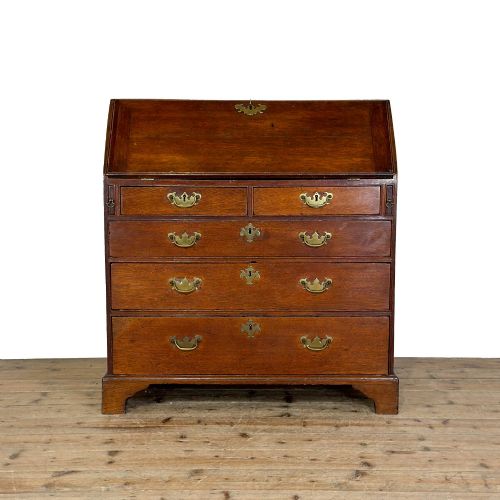
Listings on this site span the eighteenth century, featuring oak, walnut, mahogany, and painted finishes across various bureau forms.
What varies in quality
The choice of timber grain dictates much of the visual appeal, with figured walnut and richly grained mahogany sitting at the upper end of the range. Finer examples display meticulous attention in the internal arrangement of small drawers and secret compartments hidden behind sliding panels.
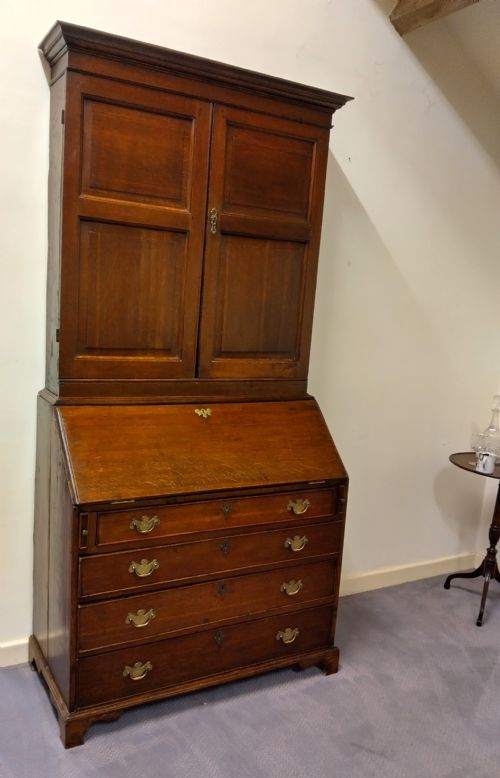
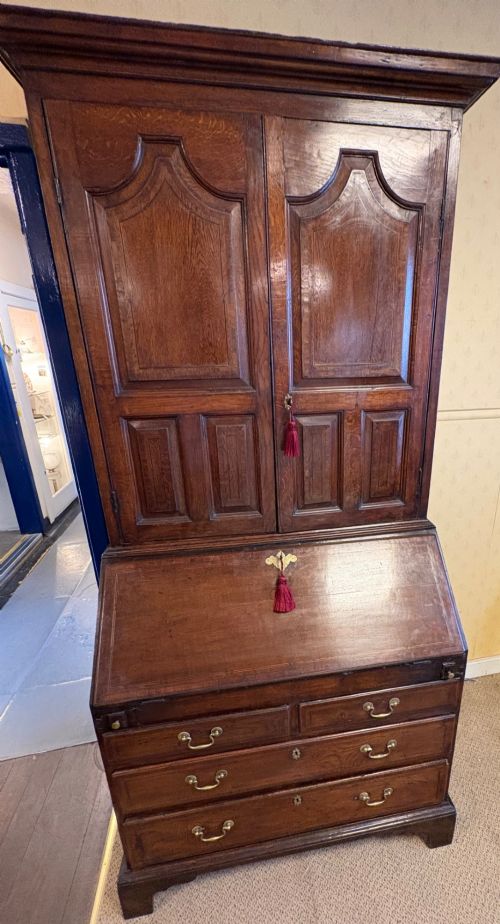
Construction methods also separate standard items from superior pieces, particularly in the dovetailing of the drawers and the crispness of the mouldings. Simpler oak bureaus from the early eighteenth century rely on robust utility rather than exotic veneers, offering a different kind of architectural honesty.
The Georgian Slant Top Desk Glossary
- Bureau
- A writing cabinet featuring a sloping lid that opens to form a desk surface. It usually sits above a chest of drawers.
- Fall front
- The hinged sloping panel that drops down to create the writing surface. When closed, it conceals the interior compartments.
- Veneer
- A thin layer of choice wood glued to a secondary wood base to provide a decorative surface. Walnut and mahogany were frequently applied this way.
- Escutcheon
- A protective brass plate surrounding a keyhole. They prevent the wood from splitting around the lock.
- Pigeonhole
- A small, open compartment inside the desk used for sorting letters and papers. These are often framed by secret drawers.
Frequently Asked Questions
How were these desks used originally?
These desks served as the administrative centre of a Georgian household. Owners used them to write letters, manage accounts, and store important documents securely behind locked doors.
The sloping lid provided a convenient angle for writing while keeping the working papers hidden away when the flap was closed.
How do I live with a bureau?
A bureau fits well into a living room, hallway, or study as a functional workspace that doubles as a set of drawers. Dropping the flap gives you an instant writing area without dominating the room.
Keep the timber conditioned with appropriate wax and avoid placing it in direct sunlight to protect the aged finish and veneers.
How can I tell the different woods apart?
Early pieces often utilise oak or walnut, with walnut showing rich, swirling grain patterns and occasional feather banding. Mahogany became the dominant timber later in the eighteenth century.
Mahogany typically exhibits a deeper, reddish-brown tone and a straight or flame grain. Painted examples offer an alternative surface finish rather than exposed timber.