

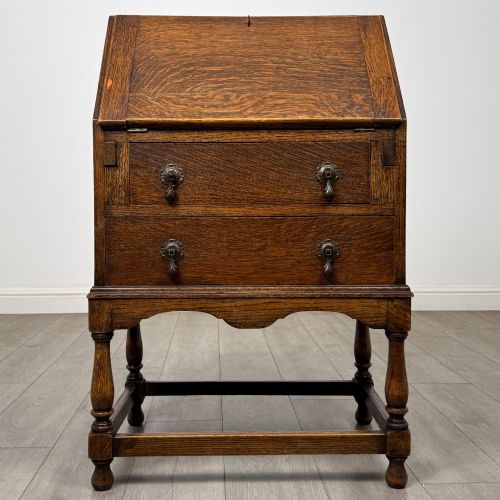
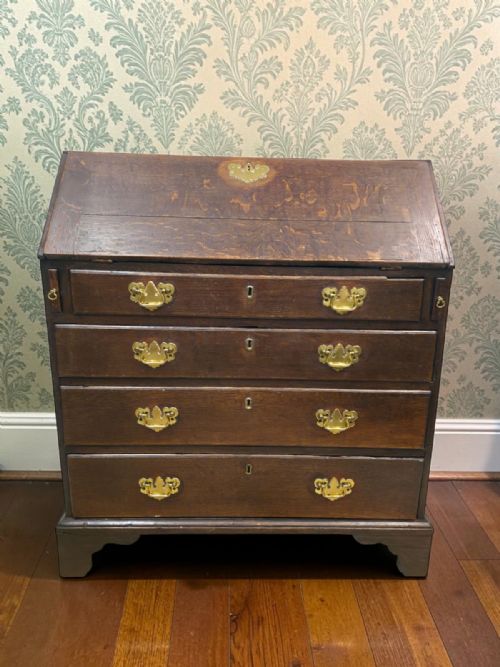
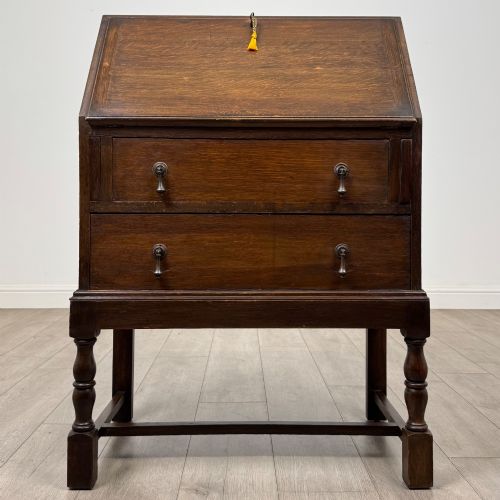
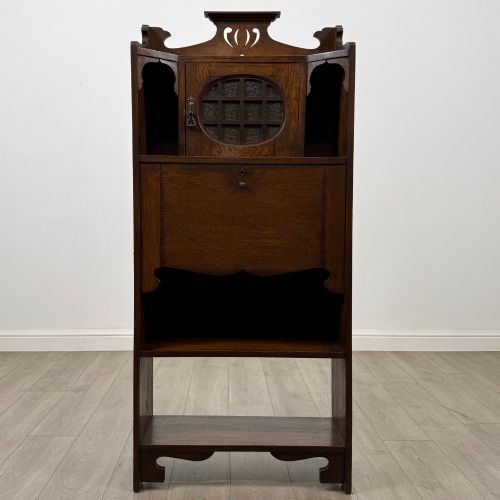
Dark Oak Secretary Desk
These dark oak secretary desk examples are robust writing furniture pieces crafted to keep correspondence private and organised.
What these pieces are
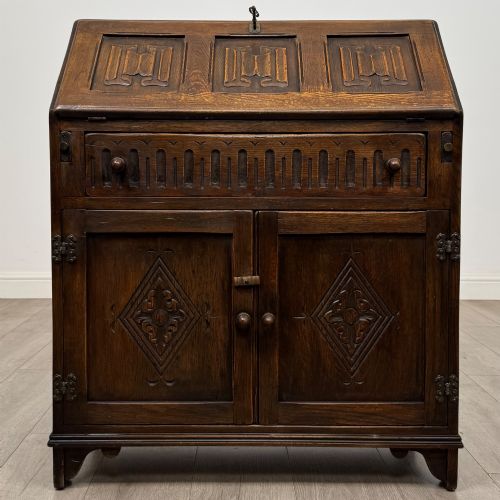
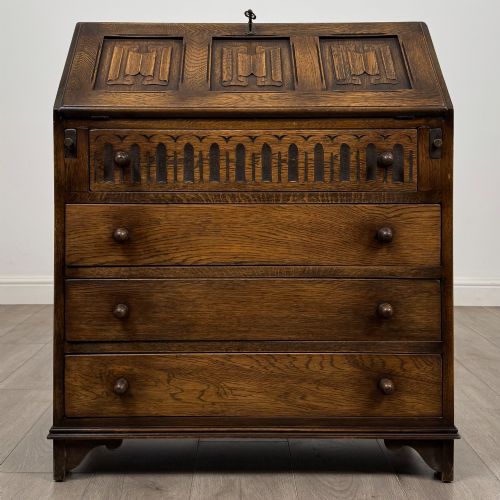
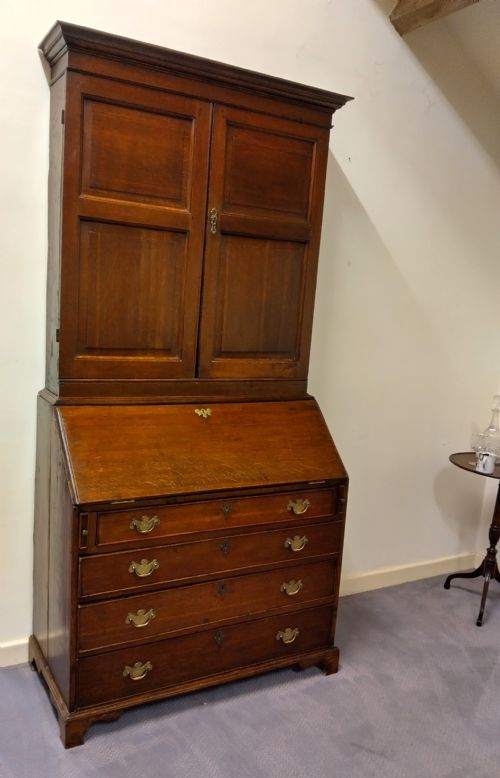
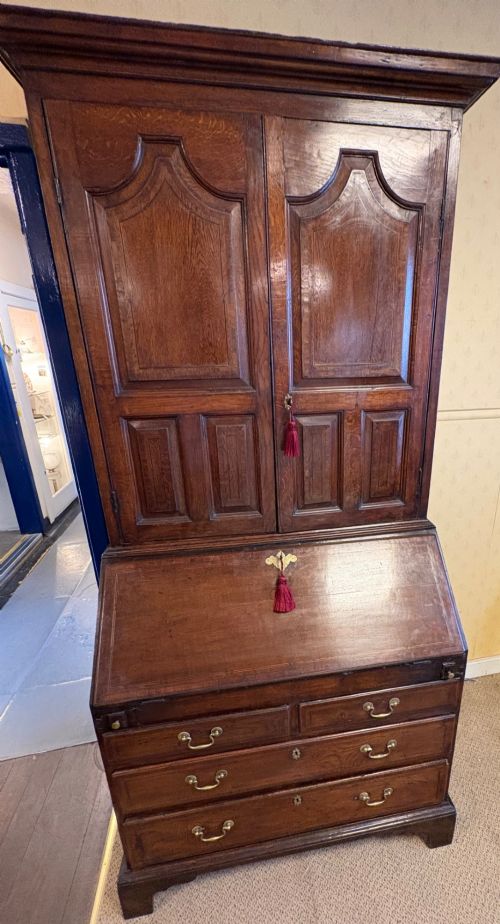
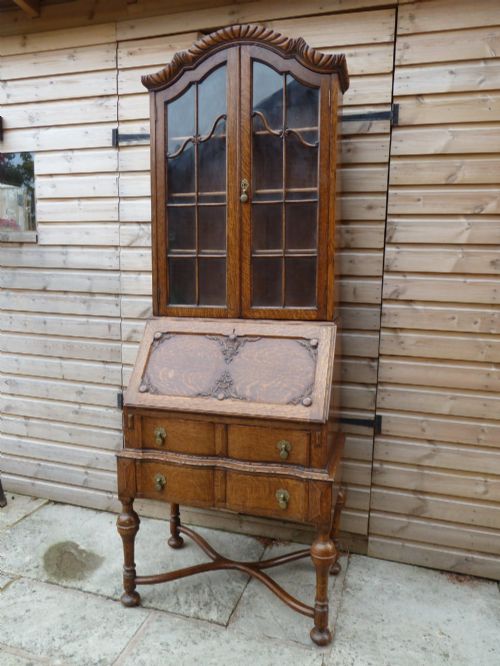
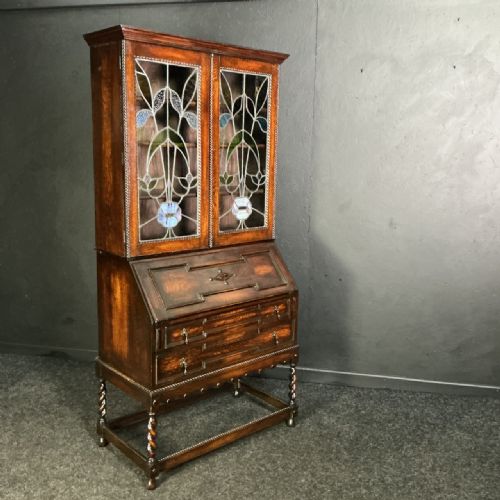
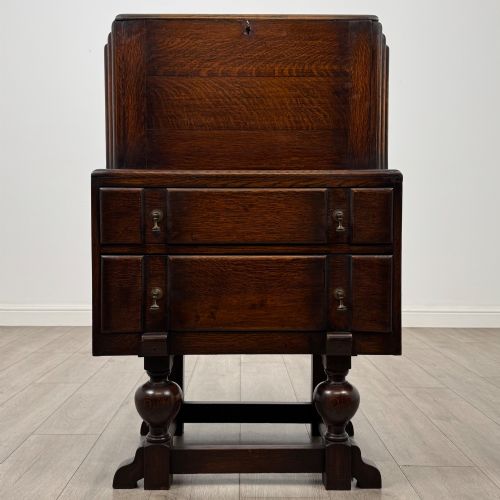
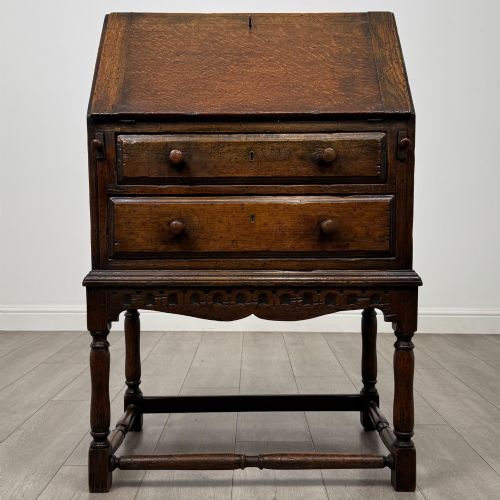
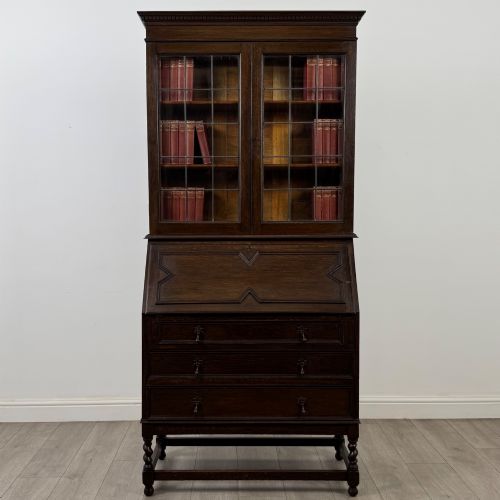
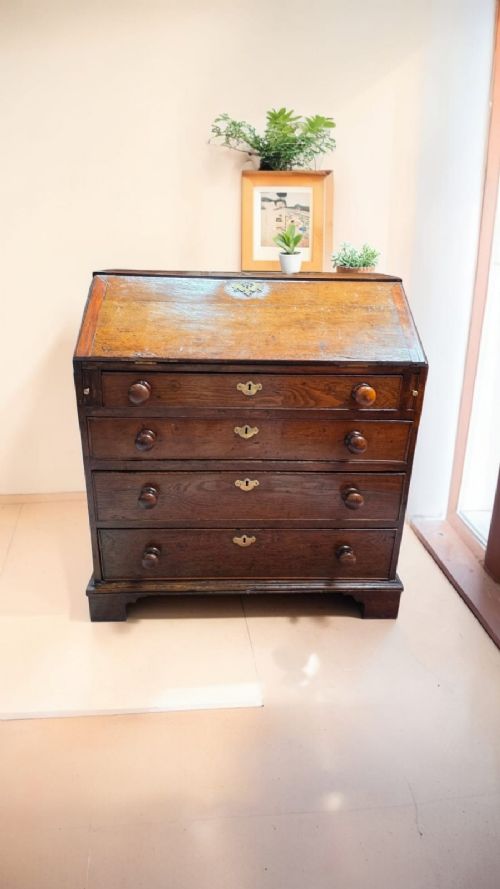
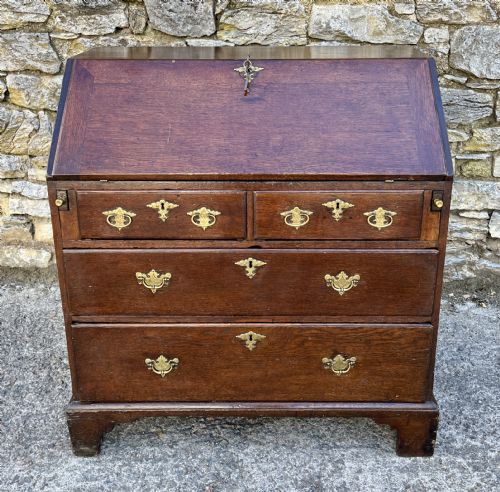
A dark oak secretary desk, appearing here as bureaus and bureau bookcases, serves as a writing cabinet featuring a sloping fall-front that opens to reveal internal compartments. These forms originate from periods including the seventeenth century and the Georgian era, alongside later revival examples.
Buyers will most frequently meet pieces fashioned from solid oak, varying from seventeenth century Jacobean works to eighteenth century Georgian pieces. Some examples incorporate upper bookcase sections with glass doors to house volumes above the writing surface.
The domestic history of these items spans centuries of correspondence and record-keeping, retaining fitted pigeonholes and small drawers behind their drop-down flaps. Their structural formats range from simpler early eighteenth century bureaus to tall cabinet combinations.
How they were made
Cabinet makers utilised solid oak timbers, applying wood inlay and incorporating brass hardware such as drop handles and escutcheons to secure drawers and fall-fronts. Construction techniques rely on traditional joinery methods suited to heavy hardwoods.
Interior compartments feature small drawers, pigeonholes and secret compartments assembled by hand to offer fitted storage within the main writing cavity. Glass panels are integrated into the upper doors of taller bookcase variants.
Retail Price Guide 2026
Typical UK retail prices for dark oak secretary desk, calculated from the Sellingantiques database of over a million retail prices indexed since 2003. This retail price guide relies exclusively on Sellingantiques data; no external sources or auction records are used, so the figures do not describe the wider market.
Secret compartments hidden within the interior pigeonholes offer a place to tuck away private notes out of sight.
What varies in quality
Quality resides in the sophistication of the interior arrangement, where superior examples exhibit exceptional internal layout complexity alongside finely figured timber surfaces. The depth of the colour and the handling of the grain across the solid oak panels distinguish finer workshops.
Structural integrity and the retention of original brass fittings and glass elements separate standard utility pieces from items possessing outstanding interior craftsmanship.
The Dark Oak Secretary Desk Glossary
- Bureau
- A desk featuring a sloping hinged lid that drops down to form a writing surface above a set of drawers. This term describes the core body of these secretary pieces.
- Bureau bookcase
- A combination furniture form stacking a glazed cabinet for books directly on top of a bureau base. It provides both reading storage and a writing station.
- Fall-front
- The hinged writing flap that pulls down into a horizontal position for writing and lifts up to conceal the interior pigeonholes. It forms the primary closure of the desk compartment.
- Jacobean
- A seventeenth century design style associated with dark oak furniture featuring geometric moulding and sturdy proportions. It represents one of the foundational stylistic roots seen in these pieces.
- Wood inlay
- The technique of inserting contrasting pieces of wood into the primary oak surface to create decorative patterns. It adds visual detail to the exterior construction.
Frequently Asked Questions
What is a dark oak secretary desk?
A dark oak secretary desk is a form of writing furniture that combines a sloped falling front with internal storage drawers and pigeonholes.
Such pieces are recorded across the seventeenth century, the Georgian era, and the nineteen twenties.
How were these desks used historically?
These desks functioned as private writing stations for correspondence, ledger keeping, and the storage of important documents.
The enclosed compartments kept papers secure behind locked wooden flaps.
Do these desks include bookcase attachments?
Certain examples incorporate upper bookcase sections fitted with glass doors for the display and storage of books.
These taller bureau bookcase variants combine writing and library functions into a single piece of furniture.
What materials are used in these desks?
The primary material across these pieces is solid oak, supplemented by brass hardware and occasional wood inlay.
Glass is also utilised in the doors of the upper bookcase sections.
How can I identify a seventeenth century piece?
Seventeenth century examples display the specific Jacobean style characteristics and robust construction methods of that period.
They are distinguished from later Georgian and nineteen-twenty revival pieces by their early joinery and proportions.