
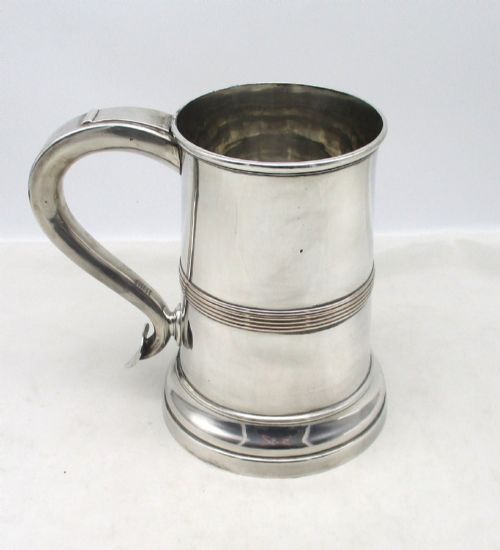
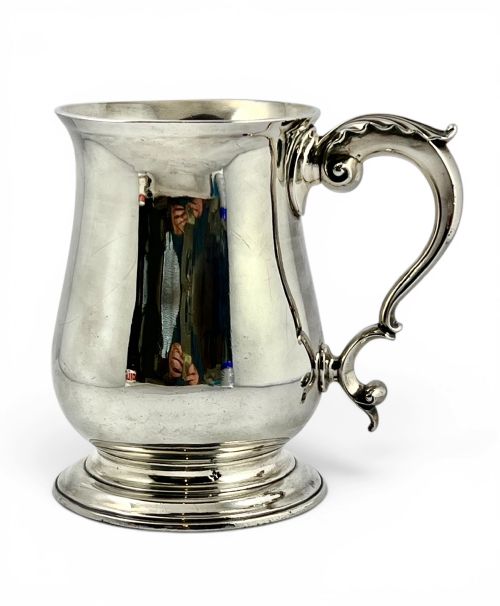


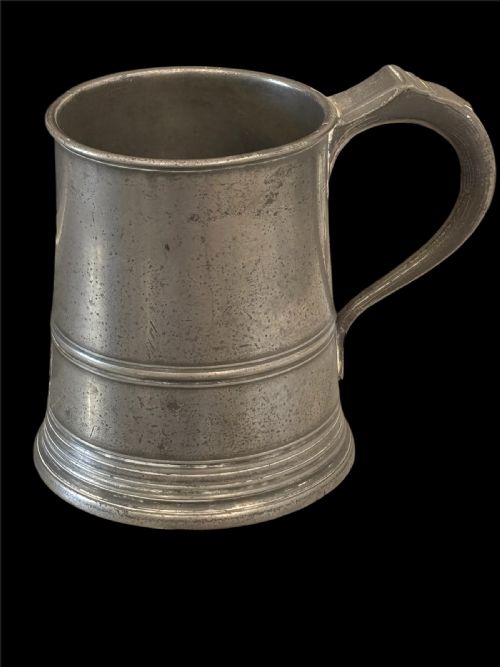

Georgian Pint Mug
These georgian pint mug examples are robust drinking vessels crafted in silver, pewter, and Old Sheffield plate for daily tavern and dining use.
Georgian Pint Mug
When you search for a georgian pint mug, you encounter solid silver, pewter, and Old Sheffield plate vessels designed for holding ale, beer, and other drinks. The forms span straight-sided measures, baluster bodies with scroll handles, and occasionally glass or copper tankards.
You are most likely to meet silver and Old Sheffield plated examples bearing hallmarks or makers' marks from London, Newcastle, and provincial centres. Pewter pint measures also appear frequently, often stamped with tavern or maker details from the eighteenth and nineteenth centuries.
How They Were Made
Silversmiths hammered sterling silver into sturdy sheet forms, raising or spinning the bodies before soldering scroll handles and reinforcing rims. Assay office punches applied town marks, date letters, and sterling standards directly to the metal.
Old Sheffield plate combined a thin layer of silver fused over a heavier copper core, rolled together and formed into tankards with visible copper seams. Pewterers cast metal alloys in moulds, finishing the surfaces by lathe-turning and hammering.
Pewter pint measures carry touchmarks from provincial workshops operating in Birmingham, Bristol, and London.
What Varies in Quality
The weight of the metal dictates the structural integrity of each vessel, separating thin pressed plates from heavy-gauge solid silver or thick pewter castings. Crispness in hallmark impressions and the cleanliness of soldered handle joints reveal the competence of the original silversmith or pewterer.
William Grundy·Richard Morton·Thomas Phillips I·Burgum And Catcott·Emes And Barnard·Villers And Wilkes·Yates And Birch·James Yates·Robert·Frederick Brasted·Gabriel Sleath·Edward Pocock·Shaw And Priest·John Langlands I·George Smith II·Jasper Kelly
The Georgian Pint Mug Glossary
- Baluster
- A curved, vase-shaped body form tapering toward a wider base, commonly found on mid-eighteenth-century silver mugs. This profile provides a comfortable grip and a balanced centre of gravity.
- Old Sheffield Plate
- A fused composite material made by melting a sheet of silver onto a copper ingot before rolling them into sheets. It represents an early predecessor to electroplating.
- Hallmark
- A stamped official mark indicating the metal purity, assay office, and date of manufacture on British silver. These small punches offer reliable historical documentation.
- Pewter
- A malleable metal alloy composed chiefly of tin mixed with copper and lead. It was widely utilised for domestic drinking vessels before ceramic and glass production dominated.
- Reeded Band
- A decorative moulding featuring parallel raised ridges encircling the body or rim of a tankard. This technique adds structural rigidity alongside visual texture.
Georgian Pint Mug: Frequently Asked Questions
How much liquid does a pint mug hold?
These vessels were historically manufactured to hold a standard imperial pint of liquid for tavern and domestic service. Variations exist in smaller fractional sizes such as half pints or three-quarter pints.
Capacity often corresponded to official trade standards, occasionally verified by touchmarks or verification stamps on pewter and metal bodies.
Can I use these tankards for drinking today?
Most surviving metal tankards remain structurally sound and capable of holding beverages. Pewter and silver require careful hand washing without harsh detergents to preserve the metal surface.
Historic pieces containing lead solder or delicate silver plate are often displayed as decorative items rather than utilised for daily refreshments.
How do I identify silver versus plated tankards?
Solid silver examples display official hallmarker punches indicating sterling standard purity. Old Sheffield plate occasionally reveals a thin line of reddish copper where the silver layer has worn away at the edges.
Heavier weight and unblemished metal surfaces typically point toward solid silver construction, whereas plated items show distinct manufacturing seams.
What is the difference between a mug and a tankard?
Tankards traditionally feature hinged lids designed to keep ale covered, whereas mugs remain open at the top rim. Both forms share sturdy vertical bodies and substantial handles for drinking.
Makers frequently applied both terms interchangeably in historic records and modern listings for these drinking vessels.