
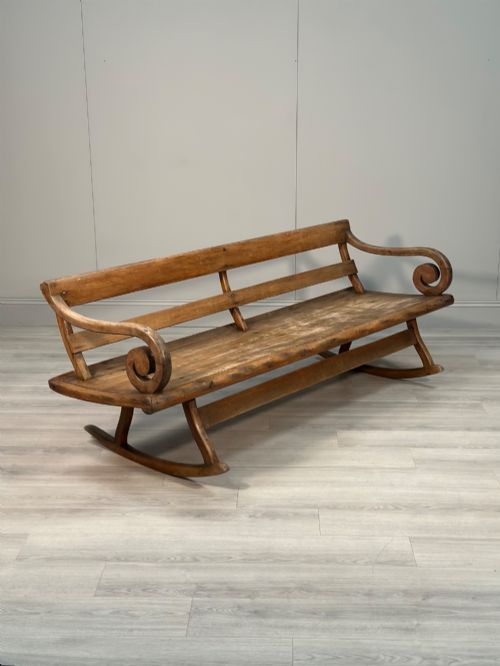
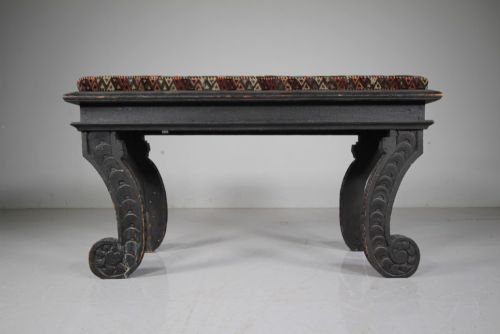
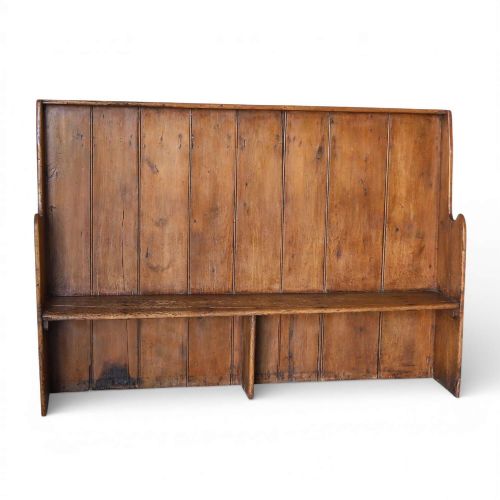
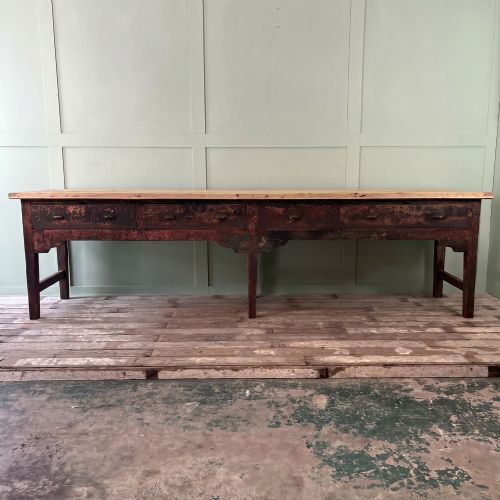
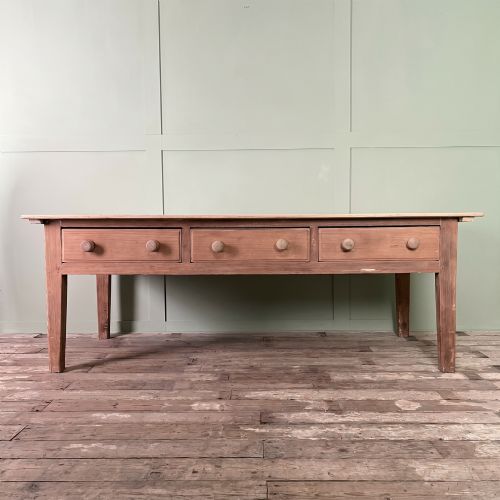



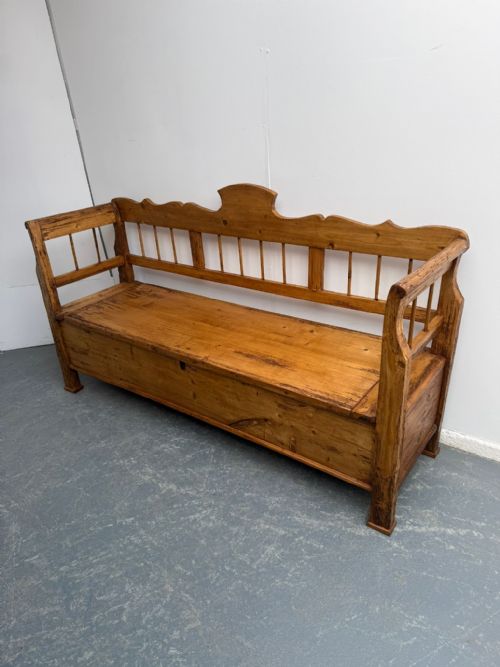


Georgian Pine Bench
A georgian pine bench brings honest timber, sturdy construction, and practical seating into a modern home.
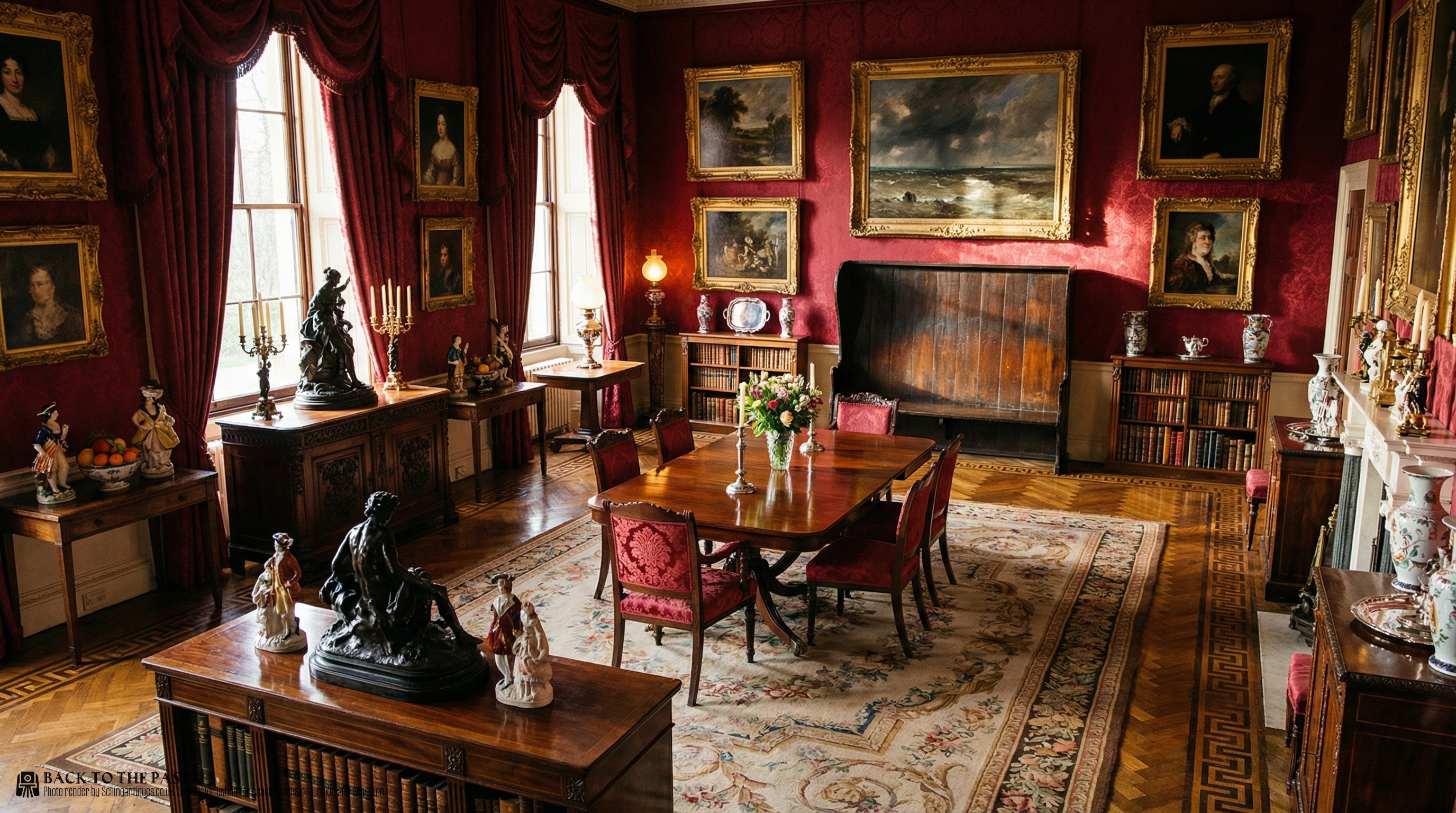
Georgian Pine Bench
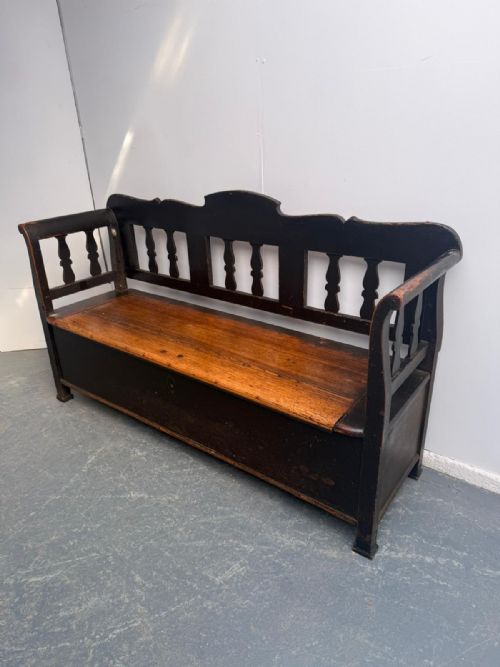
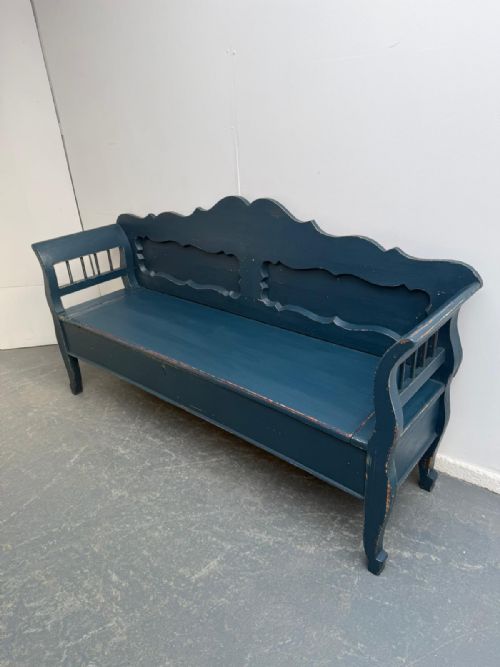
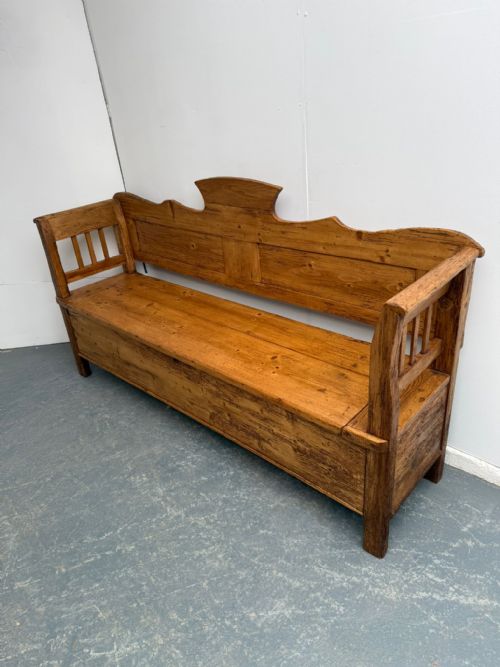
The version most commonly met on this page is the country pine settle or bench, often originating from English or Hungarian workshops. These functional forms range from simple box settles with storage beneath the seat to high-backed barrel forms that shielded occupants from draughts.
Makers utilised native timber, working within vernacular traditions that prioritised structural endurance. Pieces vary from unpainted waxed wood showing rich honey patinas to surviving early painted finishes in blue, black, or scumbled tones.
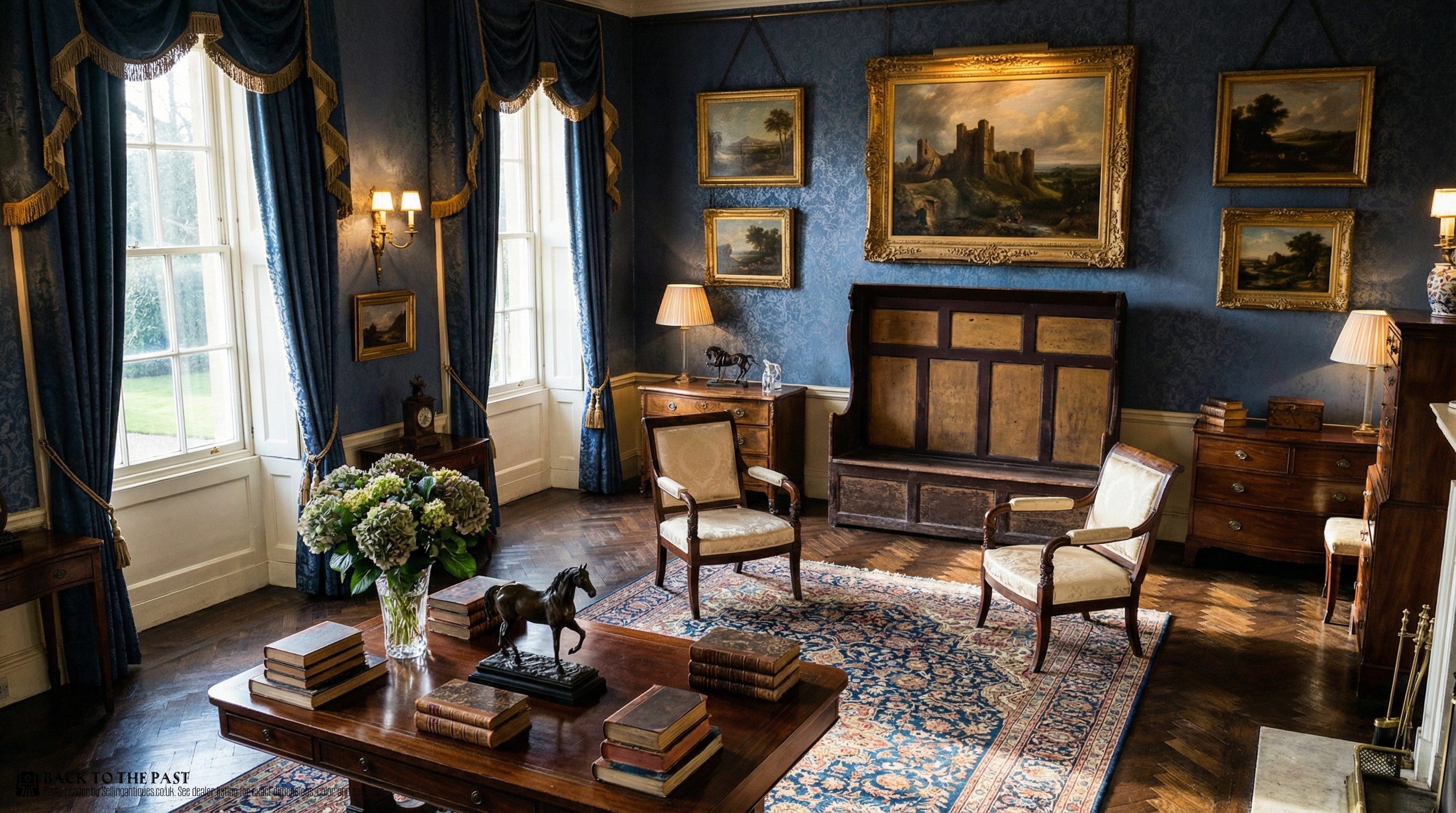
Materials and construction
Construction relies heavily on solid pine and timber planks, frequently joined with pegged mortise and tenon joints to withstand heavy domestic use. Secondary woods such as sycamore occasionally appear in related work surfaces or supporting frames.
Surfaces are finished either through natural waxing that deepens the grain or through applied layers of paint. Iron hardware, including hinges and brackets, frequently reinforces structural stress points on boxes and settles.
Georgian Pine Bench Retail Price Guide 2026
Typical asking prices for georgian pine bench among the pieces listed under this phrase on Sellingantiques today, from the lower quarter to the upper quarter. They describe what is for sale here now, not the wider market.
Several listings include country house dog beds alongside human seating, proving that pampered pets shared the vernacular interior.
Evaluating quality and authenticity
Quality rests upon the integrity of the timber, the survival of original surface treatments, and the balance of proportions. Pieces retaining their early paint or deep waxed patina command greater interest than those stripped down or heavily restored.
Structural honesty separates superior examples from heavily altered pieces. Original panel construction, untouched board seats, and period ironwork indicate a higher degree of vernacular craftsmanship.
The Georgian Pine Bench Glossary
- Settle
- A wooden bench with a high back, solid arms, and frequently a box compartment beneath the seat for storage. This form kept occupants warm by blocking cold air drafts in older rooms.
- Barrel Back
- A seating design featuring a curved, enclosing high back that wraps around the user. It provides enhanced shelter against room draughts.
- Scumble
- A decorative painting technique involving a translucent top layer dragged or combed over a lighter base colour to simulate richer wood grain or texture. It appears on vernacular country furniture.
- Patina
- The surface sheen and colour acquired by timber through age, handling, and wax polishing over generations. A good patina reflects the history of the piece.
- Vernacular
- Furniture made by local craftsmen for everyday use rather than following high-style academic design. These objects reflect regional traditions and available materials.
Georgian Pine Bench: Frequently Asked Questions
What is a georgian pine bench?
A georgian pine bench is a utilitarian wooden seat produced during the eighteenth and nineteenth centuries. These items served practical purposes in farmhouses, cottages, and public taverns.
They appear in various forms, including high-backed settles with storage boxes, long tavern benches, and simpler window seats.
How were settle benches used?
Settles provided communal seating near hearths, where their high backs shielded occupants from cold drafts. The enclosed base often served as storage for household blankets or boots.
In public houses, they created private partitioned seating areas for patrons.
Are painted finishes original?
Many pieces survive with early or original painted finishes, ranging from blue and black pigments to scumbled wood effects. These coatings protect the soft pine underneath and show authentic wear over time.
Distinguishing between original paint and later decoration involves examining surface crackle, wear patterns, and underlying timber age.
How do I care for antique pine?
Maintain waxed pine surfaces by applying natural beeswax sparingly to nourish the timber and preserve the patina. Avoid placing pieces near direct heat sources to prevent wood splitting.
Clean painted surfaces gently with a dry or slightly damp cloth without harsh chemical cleaning agents.