




Georgian Pepper Caster
A georgian pepper caster brings refined proportion and functional elegance to the dining table, taking many forms from early octagonal silver to later ceramic examples.
Georgian Pepper Caster
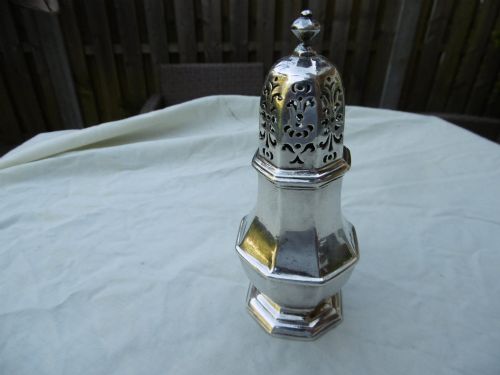
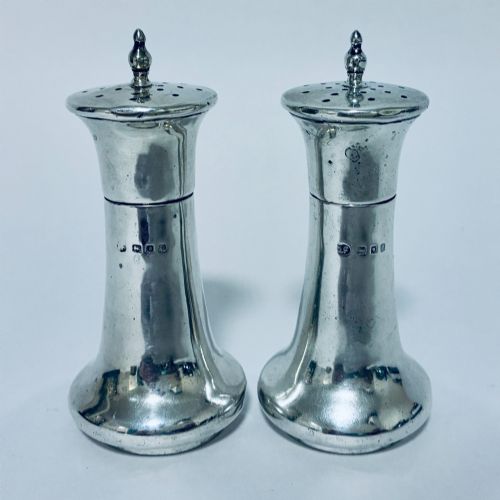
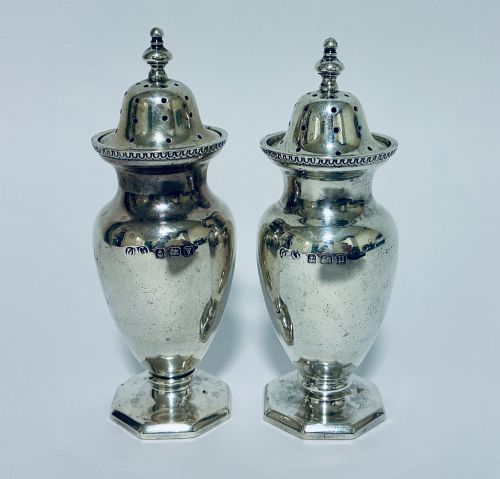
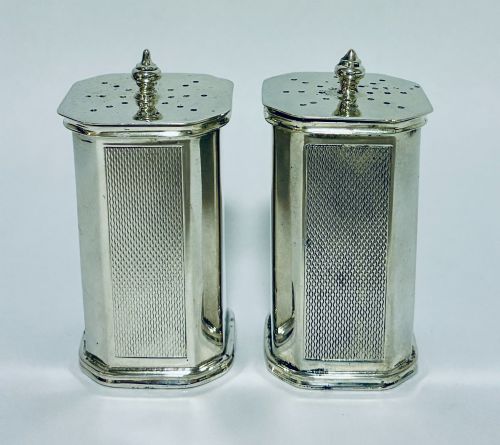
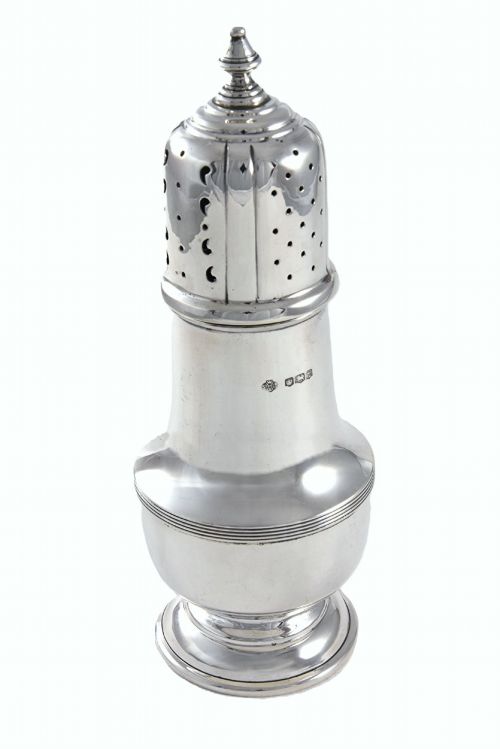
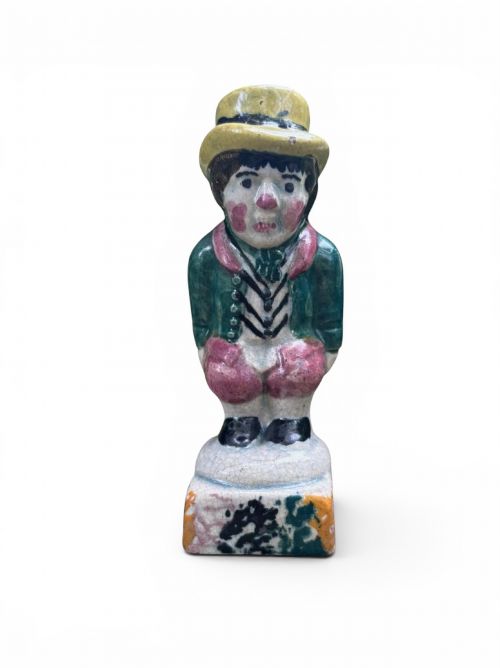
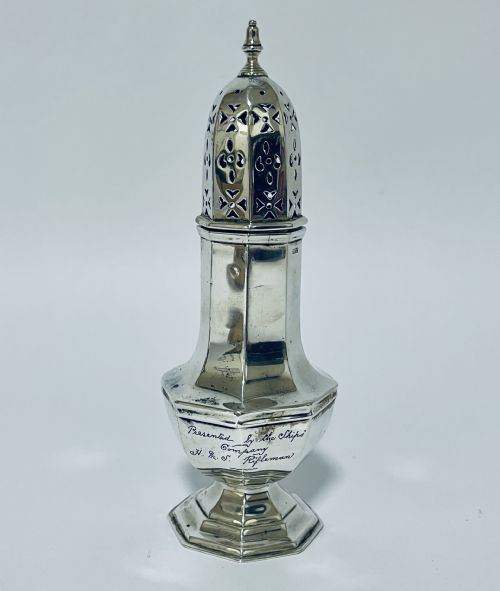
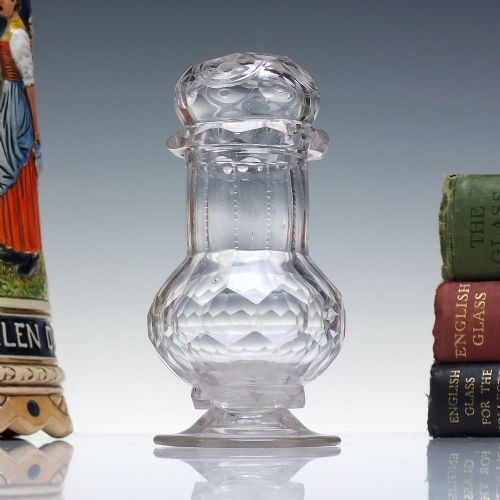
When searching for a georgian pepper caster, you encounter small table vessels designed for dispensing seasoning, often grouped alongside sugar shakers, pounce pots, and spice dredgers. The selection ranges from early eighteenth-century silver vessels to later revival pieces, ceramic pots, and cut glass containers.
The objects take various physical forms, including octagonal, pear-shaped, and cylindrical profiles. Many appear individually, whilst others form part of larger cruet sets or matched condiment groupings alongside salt cellars and mustard pots.
Origin dates span from the early eighteenth century through the nineteenth century, alongside later revival pieces produced in the twentieth century. The materials vary widely, incorporating sterling silver, silver plate, cut glass, lead crystal, pearlware, ceramic, brass, and bronze.
Materials and methods of construction
Silversmiths shaped sterling silver and silver plate through techniques of raising, casting, and piercing, creating intricate scrollwork and perforated lids secured by slip-fit or threaded collars. Huguenot makers utilised sophisticated casting methods to achieve heavy gauge walls and crisp armorial engraving.
Glass cutters produced lead crystal and cut glass vessels using wheel-cutting techniques to form vertical flutes and geometric patterns, fitted with screw feet or mounted silver collars. Ceramic and pearlware examples relied on factory moulding and hand-painting underglaze colours.
Foundries cast brass and bronze variants to create robust spice shakers and pounce pots with heavy bases and secure lids. Hallmarks stamped into silver pieces recorded the year of assay, the maker's mark, and the town of origin.
The documented periods span from the early eighteenth century through the Georgian era, Victorian times, Edwardian years, and twentieth-century revivals.
Distinctions in craftsmanship and design
The calibre of a piece rests upon the weight of the metal, the crispness of the piercing on the lid, and the precision with which the cover fits the body. Heavy gauge silver maintains its structural integrity and sharp definition, whereas thinner examples lose form over centuries of handling.
Maker attribution elevates the standing of a piece, particularly when bearing the marks of notable silversmiths or Huguenot craftsmen renowned for superior casting and engraving. The complexity of the design, such as octagonal faceted bodies or complete armorial crests, separates standard domestic items from high-status commissions.
In composite items like cruet sets, the harmony between the silver frame, the original matching bottles, and the individual casters determines the integrity of the ensemble.
Charles Thomas Fox·Stephen Adams·James Goodwin·Simon Pantin·Thomas Ross·Charles Alchorne·Thomas Pritchard·Robert Palmer I·Viners
The Georgian Pepper Caster Glossary
- Muffineer
- A large silver shaker originally used for sprinkling sugar upon muffins or toast. These vessels share a similar perforated domed top with pepper casters.
- Pounce pot
- A small container used to sprinkle sand or pounce powder over freshly written ink to absorb excess moisture. They feature similar pierced lids to pepper pots.
- Cruet set
- A matched frame holding multiple bottles, cruets, and casters for oil, vinegar, and seasonings at the dining table. These frames frequently incorporate silver stands with fitted glass vessels.
- Pearlware
- An earthenware body developed in the late eighteenth century featuring a faint bluish glaze that pooled in recesses. It provided a pale ground for underglaze painted decoration.
- Huguenot maker
- A refugee craftsman of French Protestant descent who brought advanced casting and decorative techniques to British silversmithing. Their work is distinguished by heavy construction and classical ornamentation.
Georgian Pepper Caster: Frequently Asked Questions
How do I tell a pepper caster from a sugar shaker?
Sugar shakers and muffineers generally stand taller and possess larger proportions to accommodate sweeter condiments, whereas pepper casters are more compact.
The piercing on the lid also provides a guide, as sugar shakers often feature larger or more decorative perforations for free-flowing granules, while pepper pots utilise smaller holes.
Were these used exclusively for pepper?
Historic table wares held a variety of dry seasonings and powders beyond ground black pepper, including fine spices, sugar, and pounce.
Individual households adapted vessels according to dining customs, meaning a single form might serve multiple dry condiments over its lifespan.
How do I date an unmarked silver caster?
Dating relies upon the stylistic profile, manufacturing technique, and material composition of the vessel rather than hallmarks alone.
Octagonal forms often point to early eighteenth-century production, whilst pear-shaped silhouettes and neoclassical urn designs indicate mid-to-late Georgian periods.
Can I use antique silver casters daily?
Sterling silver vessels withstand regular handling provided they receive gentle cleaning with appropriate silver care products rather than abrasive agents.
Glass and ceramic variants require careful washing by hand to protect glued components, threaded collars, and delicate hand-painted surfaces.