
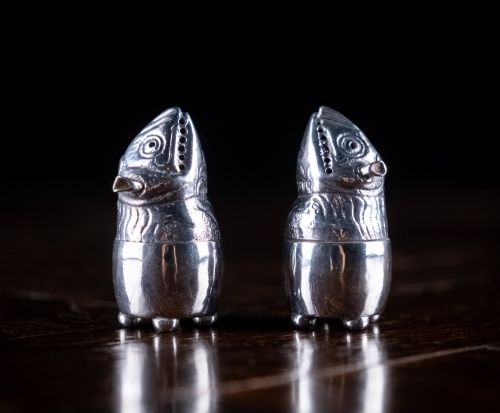


Sterling Silver Pepperette
A sterling silver pepperette brings weight and polish to the table, and you will find these compact shakers spanning the Georgian, Victorian and Edwardian eras.
Sterling Silver Pepperette
A sterling silver pepperette is a small tabletop container designed for dispensing ground pepper, appearing on this page across traditional vase shapes and lively animal forms. When you search for this phrase, you encounter everything from plain Georgian casters to Victorian novelty pieces shaped like owls, bears and cockatoos.
The pieces on this page span several centuries of British silversmithing, moving from early eighteenth-century casters through the ornate Victorian period to Edwardian designs. You are most likely to meet Victorian and Edwardian novelty pepperettes alongside standard pairs of matching shakers intended for formal dining.
Materials and construction
These items rely primarily on solid sterling silver, occasionally paired with clear glass liners to protect the metal from the corrosive nature of condiments. Makers also incorporated steel mechanisms within the rotating components of pepper grinders.
Silversmiths shaped the metal through casting, piercing and hammering, piercing the lids with fine patterns of holes to allow the pepper to shake through evenly. Animal novelty pepperettes often feature hinged heads or base caps to allow refilling.
Dinners in the past involved shaking pepper from miniature owls, bears, cockatoos, and grotesque figures.
Judging quality and craftsmanship
Quality in a sterling silver pepperette rests on the crispness of the chasing and the fidelity of the form, particularly in animal novelty pieces where feather and fur texture must look convincing. Heavier gauge silver provides a reassuring balance in the hand.
Frederick Brasted·Simon Pantin·Docker and Burn·Carrington and Co·Elkington and Co·Mappin and Webb
The Sterling Silver Pepperette Glossary
- Pepperette
- A small tabletop vessel used for holding and sprinkling ground pepper. These often take the form of miniature casters or novelty animals.
- Caster
- A tall, footed shaker with a pierced domed lid, historically used for sugar or spices. George I and George III examples appear frequently in this form.
- Novelty
- A piece designed in a whimsical shape, such as an animal, bird or grotesque figure. Victorian and Edwardian makers excelled at these imaginative tabletop items.
- Sterling silver
- An alloy consisting of pure silver and other metals, usually copper, to add strength. British pieces carry hallmarks certifying this standard.
- Glass liner
- A removable insert placed inside the silver body of a shaker. This protects the precious metal from direct contact with the contents.
Sterling Silver Pepperette: Frequently Asked Questions
How do I clean a sterling silver pepperette?
Wash the silver gently in warm soapy water using a soft cloth, avoiding abrasive dips that can strip away the aged patina. Ensure the piece is dried thoroughly before storage.
If the pepperette contains a glass liner or steel grinding parts, remove them first to protect those materials from prolonged moisture.
Can I still use these for daily dining?
Many collectors use their silver shakers daily, provided the interior is clean and dry. Solid sterling silver handles regular handling well.
Take care with novelty items featuring hinged parts, ensuring you open them gently by the designated clasp rather than forcing the metal.
How do I read the hallmarks?
British hallmarks typically include a maker's mark, a standard mark such as the lion passant for sterling, a city mark indicating the assay office, and a date letter. These stamps reveal exactly where and when the piece was tested.
Consult a standard silver reference book to match the date letter shape to the correct year of production.
Why do some pepperettes have glass inserts?
Glass liners were introduced to prevent acidic spices from tarnishing or corroding the interior of the silver vessel over time. They make emptying and washing out leftover pepper straightforward.
Original glass liners add to the completeness and collectability of the item.