


Novelty Silver Pepper Shaker
A novelty silver pepper shaker brings animal and figural forms to the dining table, combining practical function with whimsical Victorian and Edwardian design.
Novelty Silver Pepper Shaker
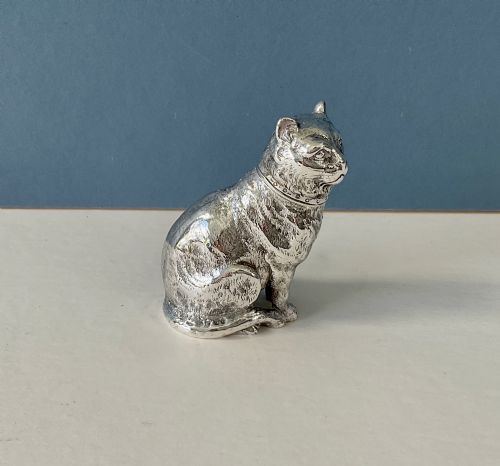
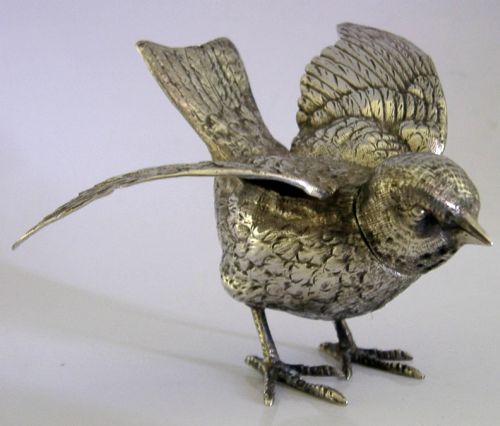
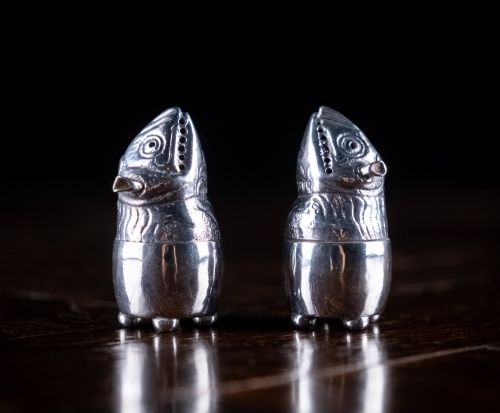
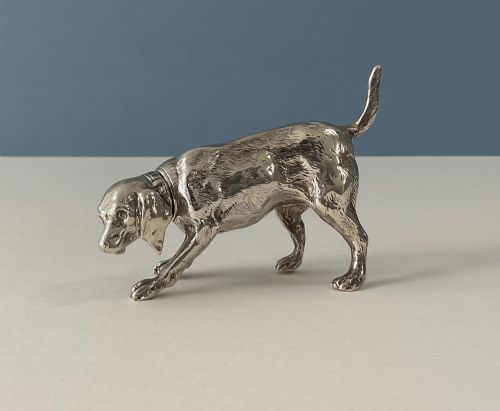
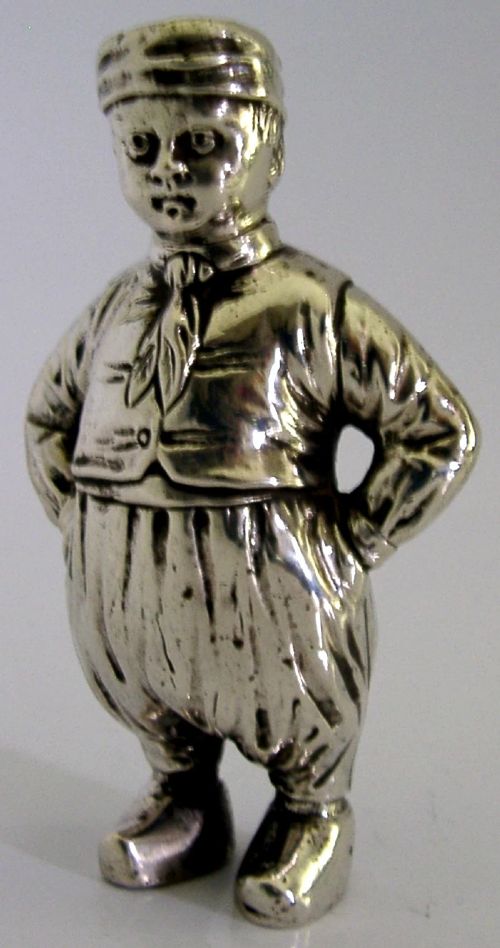
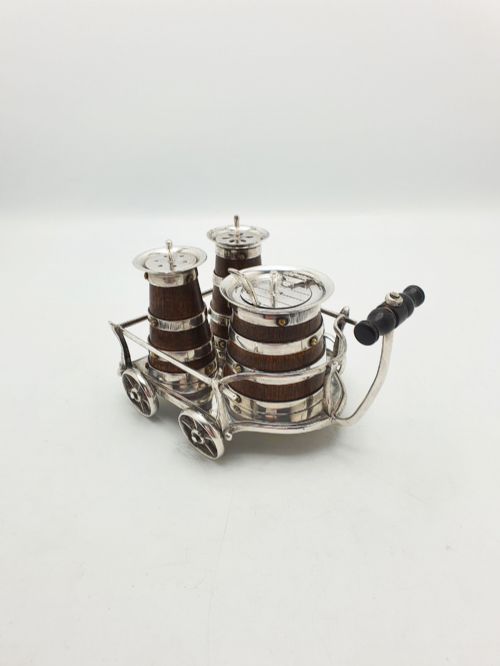
A novelty silver pepper shaker is a small container designed to dispense seasoning while taking the form of an animal, human figure, or object. When you search for this phrase, you encounter pieces shaped as cats, dogs, owls, chicks, birds, foxes, and even barrels or carriages.
The pieces appearing here span the Victorian, Edwardian, George V, and mid-century periods, with a strong representation of Victorian animal forms. You will find single pepper pots, matched pairs, and components of larger condiment or cruet sets.
Most examples function as pepperettes or salt and pepper shakers, often featuring removable heads or threaded bases for refilling. The subjects range from realistic farmyard animals and game birds to grotesque figures and characters like Mr Punch's dog Toby.
Materials and methods of construction
Makers utilised sterling silver, solid silver, and silver plate, frequently combining metal bodies with glass liners or incorporating cut glass elements into cruet sets. Oak and pewter also appear in specific utilitarian forms such as barrel condiments and nineteenth-century pieces.
Techniques relied heavily on casting and detailed hand-chasing to render feathers, fur, and facial expressions with precision. Many items utilise hinged components or screw-fit bases to secure the contents while allowing access for replenishment.
Victorians apparently needed their pepper dispensed from the watchful eyes of silver owls, barking dogs, and Mr Punch's dog Toby.
Separating everyday utility from fine execution
The integrity of the fittings also dictates standard; tight closures, well-preserved original hallmarks, and balanced proportions distinguish superior examples from heavily worn or later repaired pieces.
Frederick Brasted·Sampson Mordan·Thomas Johnson·Berthold Muller·Mappin & Webb·Wilfred Chidlaw Griffiths
The Novelty Silver Pepper Shaker Glossary
- Pepperette
- A small container specifically designed for holding and dispensing ground pepper. These often take slender tubular or figural shapes.
- Cruet set
- A matched assembly of small bottles or pots for holding condiments such as salt, pepper, mustard, and vinegar, frequently housed in a shared stand.
- Chasing
- A metalsmithing technique where designs are hammered into the front surface of the metal from the exterior to create relief detail.
- Hallmark
- An official stamp applied to precious metals indicating purity, the assay office, and the year of manufacture.
- Solid silver
- An object made throughout from silver rather than plated over a base metal core.
Novelty Silver Pepper Shaker: Frequently Asked Questions
How do you fill a novelty pepper shaker?
Most figural pieces feature a removable head, a threaded base plug, or a hinged flap underneath the body for inserting ground pepper.
Care should be taken with older threaded fittings to avoid cross-threading the soft silver components during replacement.
Are these shakers safe for daily dining use?
While these pieces were made for table use, many collectors prefer to display antique silver rather than expose it to daily wear and culinary acids.
If used, they require gentle hand washing and immediate drying to prevent tarnishing or corrosion of the interior surfaces.
How do you identify a Victorian piece?
Victorian examples typically carry clear hallmarks indicating the assay office and date letter corresponding to the nineteenth century.
Stylistically, they often favour detailed naturalistic animal forms such as owls, dogs, and chicks with heavy hand-chased texturing.
Why are some pieces marked with foreign silver standards?
Import marks and continental silver standards, such as 800 silver, appear frequently on novelty shakers imported into Britain during the late nineteenth and early twentieth centuries.
Specialist foreign silversmiths, particularly in the Netherlands and Germany, produced large quantities of figural animals for the British market.