


Solid Silver Pepper Shaker
A solid silver pepper shaker brings weight and gleam to the table, and these pieces span centuries of domestic silver-working.
Solid Silver Pepper Shaker
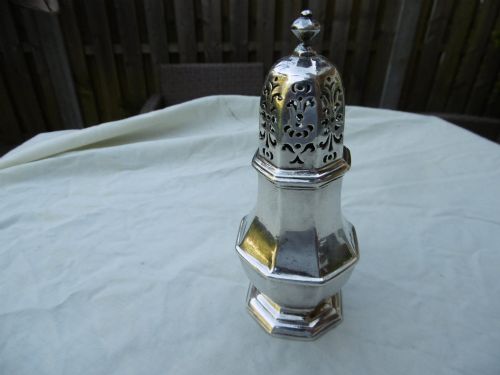
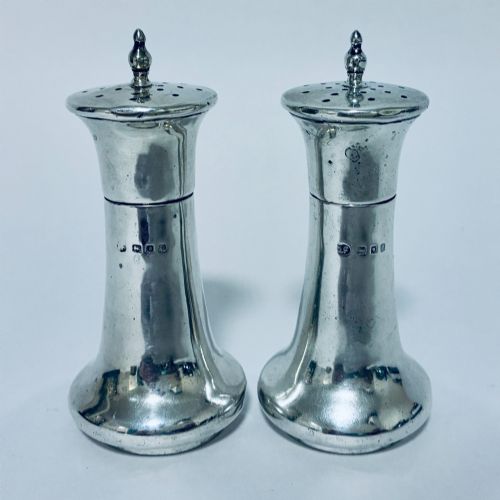
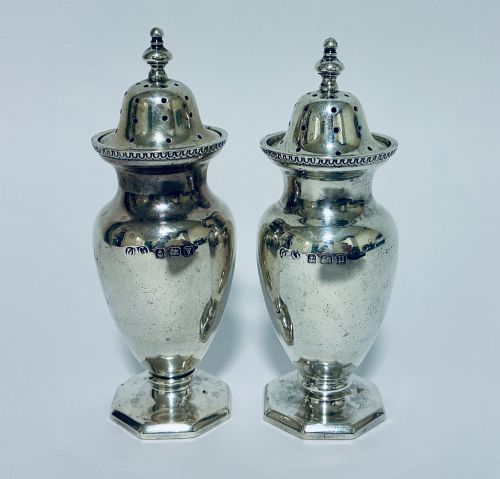
A solid silver pepper shaker is a functional tabletop vessel designed to dispense ground pepper, appearing across domestic settings from the eighteenth century to the mid-twentieth century. Buyers searching for a solid silver pepper shaker will find standard baluster pots, pedestal casters, and playful figural designs.
The selection ranges from early Georgian muffineers and heavy Victorian pairs to Edwardian novelties and Art Deco glass-mounted forms. Standard pepperettes and larger sugar shakers share the category, reflecting changing dining fashions and table layouts across multiple eras.
How They Were Made
Silversmiths formed these vessels primarily using sterling silver or solid silver standards, often combining the metal with cut glass bodies for lighthouse-style shakers. Pierced covers were hand-punched or drilled to create the sprinkler holes, screwed or pushed onto the main body.
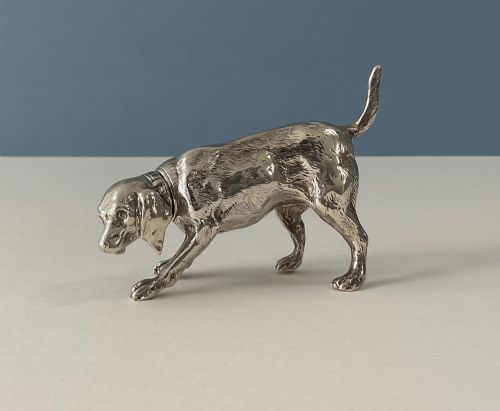
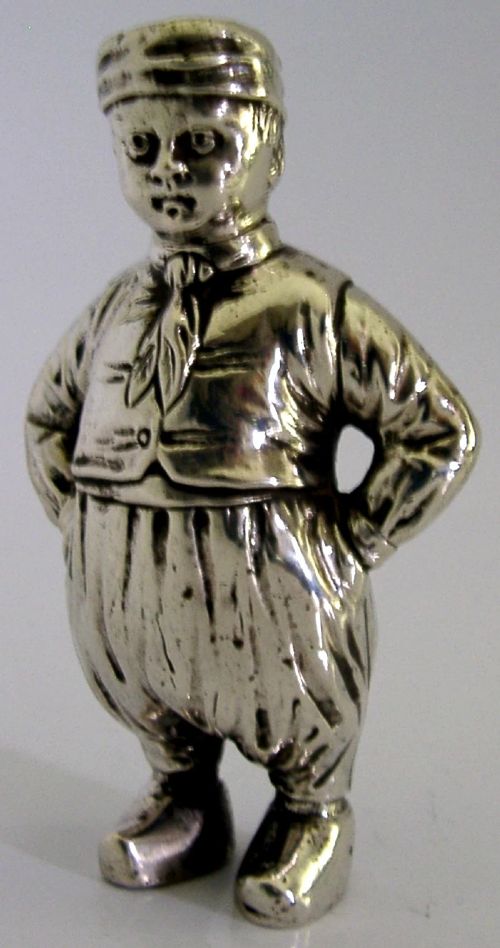
Many items bear hallmarks indicating assay offices in London, Birmingham, and Sheffield, recording the year of manufacture and the silver standard. Novelty animal pieces, such as owls, dogs, and pheasants, required detailed casting and chasing work to render feathers and fur.
Materials represented across the selection include sterling silver, solid silver, cut glass, velvet, gold plate, and silk linings.
What Varies in Quality
Quality rests upon the crispness of the chasing, the thickness of the silver gauge, and the integrity of the original pierced top. Heavier pieces with clear, legible hallmarks and well-preserved maker marks command greater regard than thinner, worn examples.
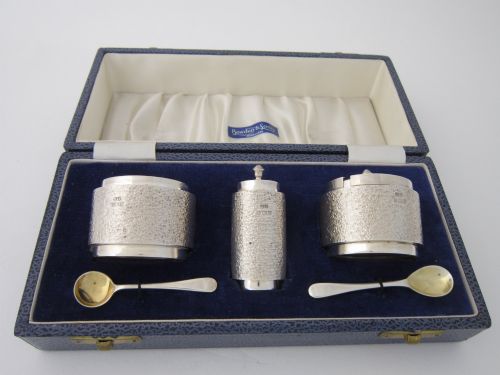
Novelty pieces depend heavily on sculptural detail and proportion, where realistic rendering of subjects like birds or mammals separates fine model-making from simpler production. The survival of matching pairs or complete condiment sets also elevates the standing of the pieces.
Stephen Adams·The Barker Brothers·Thomas Ross·Thomas Johnson·Charles Alchorne·Viners·Emile Viner
The Solid Silver Pepper Shaker Glossary
- Pepperette
- A small individual shaker for ground pepper, often matching salt cellars in a set. These containers became common on dining tables during the Victorian period.
- Muffineer
- A tall caster traditionally used for sprinkling sugar or salt over muffins or toast. These eighteenth-century forms often share identical proportions with early pepper shakers.
- Caster
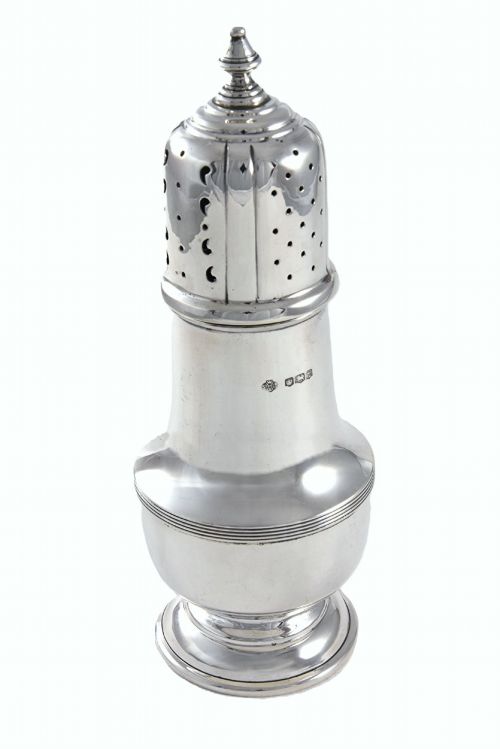
- A cylindrical or baluster-shaped vessel with a pierced dome cover used for dispensing dry condiments. Examples range from small pepper pots to monumental sugar castors.
- Pounce pot
- A small container with a perforated top used for dusting gum sandarac powder over paper to prepare it for ink. These pre-date modern blotting paper and resemble small pepper shakers.
- Hallmark
- A stamped official mark guaranteeing the purity of the silver metal, alongside marks for the maker and year. British items typically display a lion passant and assay office town mark.
Solid Silver Pepper Shaker: Frequently Asked Questions
How do I clean antique silver?
Clean silver gently with a soft microfibre cloth and a specialist silver polish formulated to preserve old patination. Avoid harsh abrasive dips that strip the character from engraved details and hallmarks.
Store pieces in dry conditions away from direct sunlight to minimise tarnishing. Regular, light dusting keeps the metal bright without requiring aggressive scrubbing.
How do I date a silver pepper pot?
Examine the stamped hallmarks on the base or piercing cover to find the date letter assigned by the specific assay office. Reference tables match these letters to exact years of manufacture.
Stylistic cues such as Georgian baluster curves, Victorian chased foliage, or Art Deco geometric lines also indicate the likely era.
What is the difference between a pepperette and a caster?
A pepperette is typically smaller, designed specifically for individual or shared table placement to hold ground pepper. Casters are usually larger vessels originally intended for sugar, though many eighteenth-century forms served multiple dry condiments.
Both feature pierced lids, but the scale and internal capacity generally separate the small table shaker from the grander caster.