






Georgian Painted Snuff Box
A georgian painted snuff box is a pocket-sized vessel of enamel or papier-mâche, collected for its miniature artistry and tactile history.
Georgian Painted Snuff Box
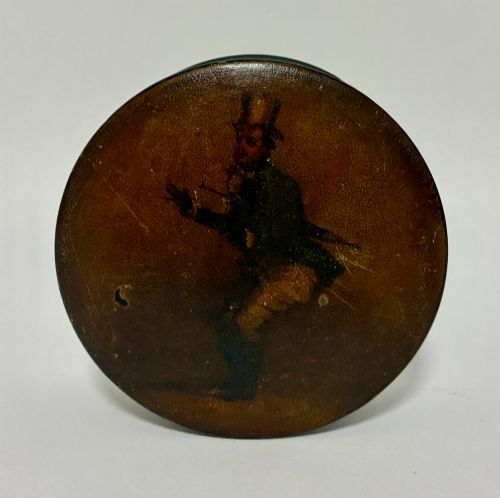
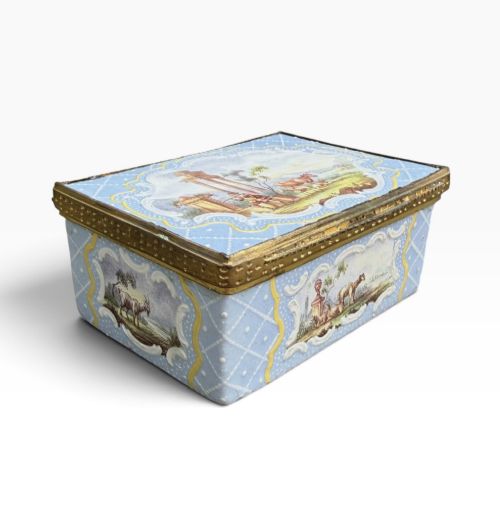
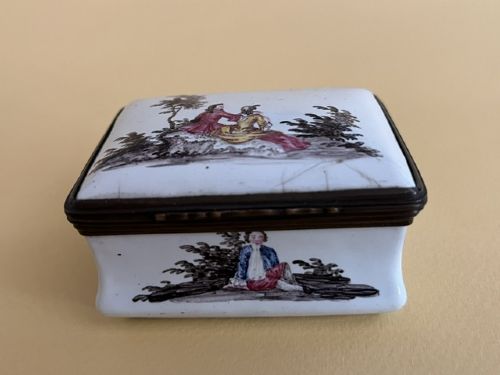
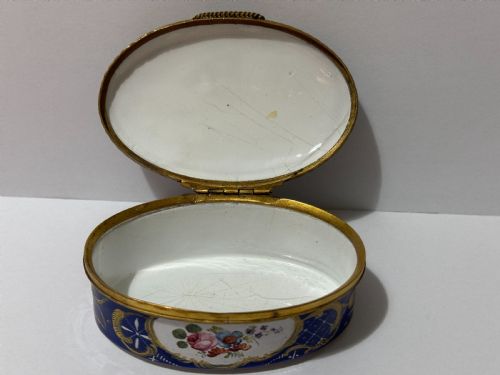
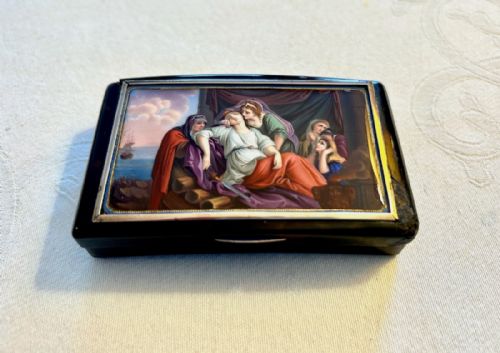
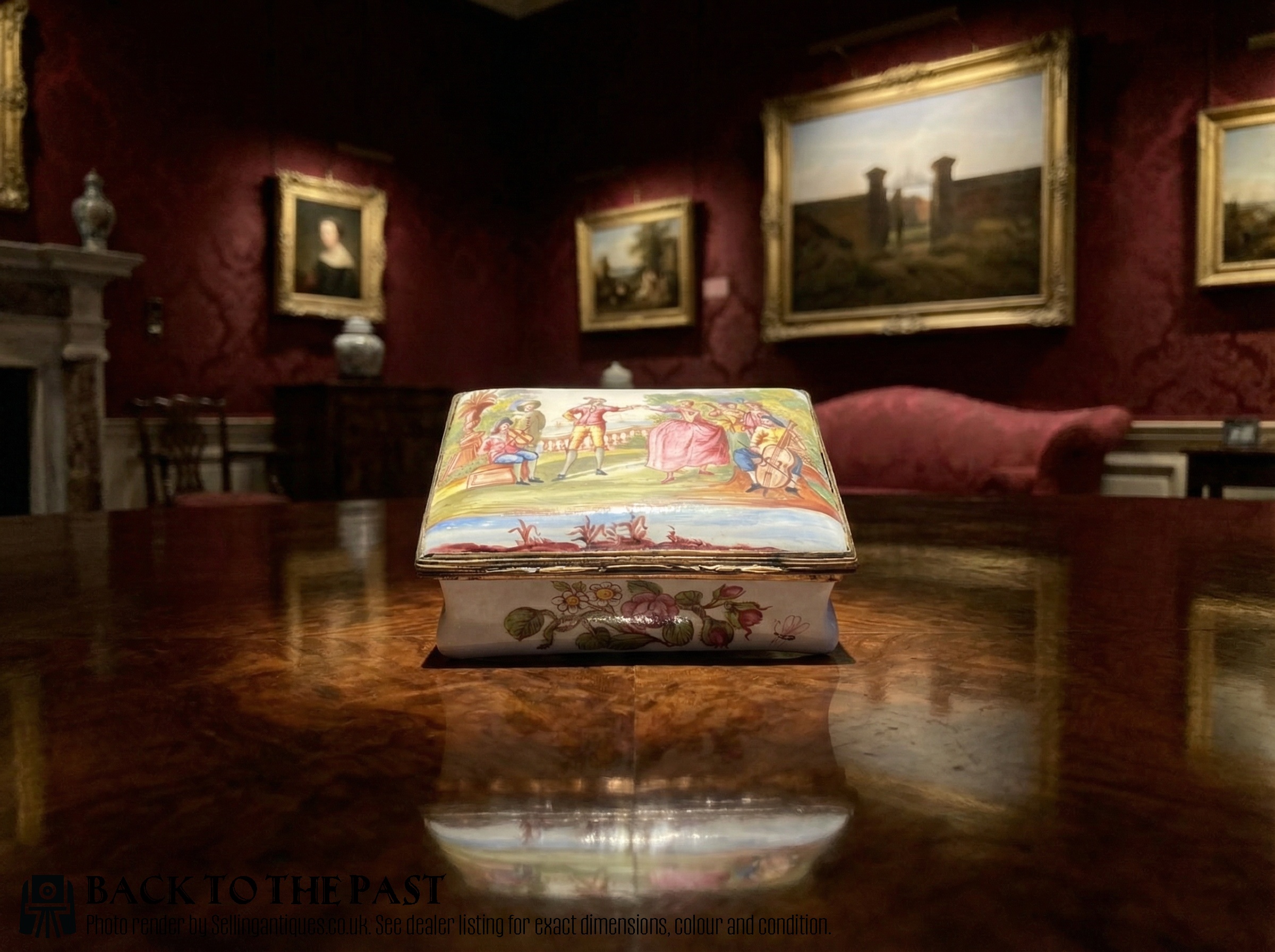
A georgian painted snuff box typically takes the form of a small enamel, papier-mâche or tortoiseshell container designed to hold ground tobacco. Examples span the eighteenth and nineteenth centuries, originating from English centres such as Bilston and South Staffordshire, alongside continental workshops.
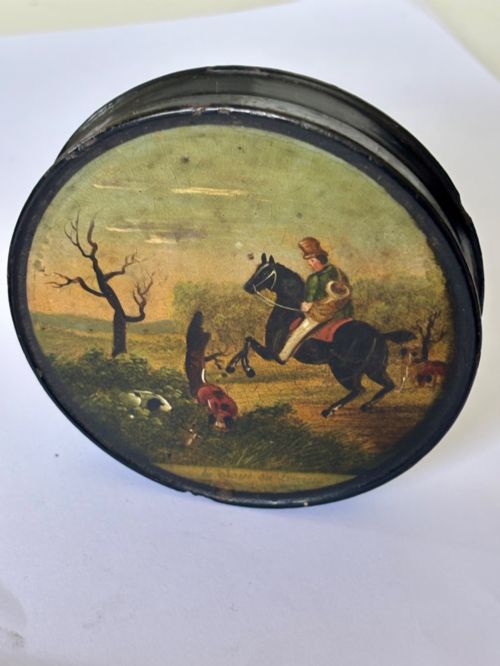
Buyers encounter rectangular, oval and round formats decorated with hand-painted scenes, including parkland musicians and hunting motifs. These pieces function equally as patch boxes, trinket boxes or pocket accessories reflecting the social habits of the period.
Materials and Construction
Enamel boxes fuse vitreous glass paste onto copper bases through kiln firing, often finished with gilt metal mounts. This technique permits fine polychrome painting directly onto the smooth white or coloured ground.
Papier-mâche pieces utilise compressed paper pulp layered and dried into rigid forms, then coated with dark lacquers and paints. Artisans sometimes incorporate inlaid elements or tortoiseshell veneers to complete the exterior decoration.
Listings feature 18th century and 19th century pieces, constructed from enamel, copper, lacquer, paint, papier-mâche, gilt metal, brass and gilded metal.
Assessing Quality and Execution
The fineness of the hand-painted miniature work dictates visual distinction, separating rushed decorative output from detailed portraiture or landscape painting. Brushwork precision on enamel surfaces requires careful control during the firing stages.
The integrity of the metal mounts, hinges and clasps indicates the original workshop standard. Solid construction in the copper bases or papier-mâche body preserves the crispness of the moulded shape over centuries of handling.
The Georgian Painted Snuff Box Glossary
- Bilston enamel
- A type of vitreous enamel product made in the Staffordshire town renowned for eighteenth-century box production. These items frequently feature copper bodies with hinged lids.
- Patch box
- A small container originally used to hold cosmetic fabric patches worn on the face during the Georgian era. They share construction methods and sizes with standard snuff boxes.
- Papier-mâche
- A composite material formed from paper pulp or sheets mixed with glue and pressed into moulds. It provides a lightweight yet durable base for lacquered and painted finishes.
- South Staffordshire
- A regional attribution for eighteenth-century enamel boxes produced across a cluster of English manufacturing towns. Pieces from this area often display characteristic floral or figural transfer prints with hand-coloured details.
- Bonbonniere
- A small ornamental container intended for holding sweets or sugarplums. These boxes often take whimsical or novelty shapes executed in enamel.
Georgian Painted Snuff Box: Frequently Asked Questions
How do I clean an enamel snuff box?
Enamel surfaces require gentle cleaning with a soft, dry cloth to remove dust and oils from handling. Moisture can seep into tiny hairline fractures in the glaze or corrode internal metal hinges.
Avoid chemical cleaning agents, abrasives or submersion in water. Professional conservation advice should be sought for pieces with structural damage or fragile painted details.
Were these boxes used for snuff only?
While intended for snuff, many examples served alternative domestic purposes on dressing tables and in pocket use. Smaller variants functioned as patch boxes for cosmetic beauty spots.
Others held trinkets, sewing pins or small sweets. Their multipurpose nature means surviving interiors often show traces of different historical powders and cosmetics.
How can I tell Bilston enamel from other pieces?
Bilston enamel pieces typically feature a copper core coated in opaque white or coloured enamel, finished with delicate hand-painted or transferred designs. Mounts are generally made of gilt metal or brass.
Specific attribution relies on stylistic comparisons with documented pieces from the Staffordshire region. Many eighteenth-century workshops produced similar domestic wares without maker signatures.
How should I display my snuff boxes?
Snuff boxes store best in controlled display cabinets away from direct sunlight, which can fade delicate painted pigments over time. Stable indoor humidity prevents warping in papier-mâche pieces and protects metal mounts.
Using small acrylic stands allows the boxes to be viewed at an angle without risking damage from frequent handling. Keeping them secure ensures the delicate hinges remain unstressed.