
Georgian Old Sheffield Plate
Georgian old sheffield plate brings together fused copper and silver tableware from the eighteenth and nineteenth centuries, valued for its warmth and historical technique.
Georgian Old Sheffield Plate
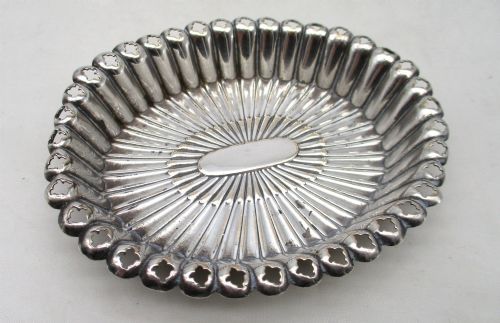
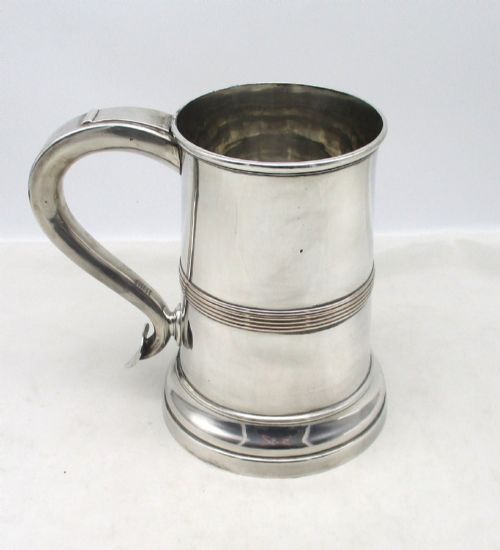
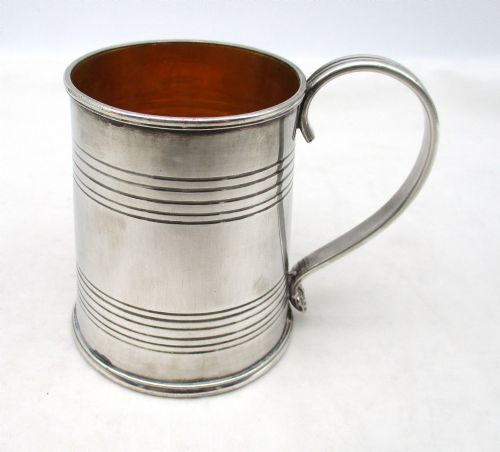
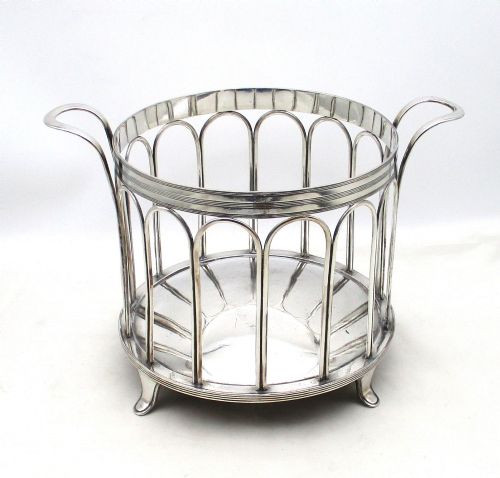
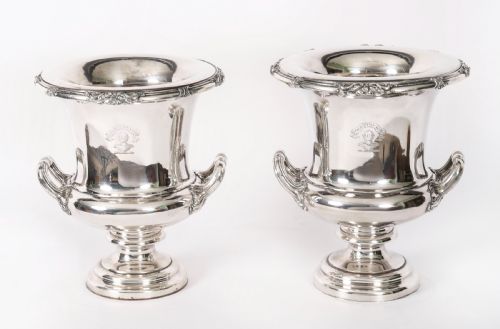
When searching for georgian old sheffield plate, buyers encounter domestic table items produced primarily during the eighteenth and nineteenth centuries. The selection ranges from functional vessels for dining and drinking to decorative centrepieces and lighting accessories.
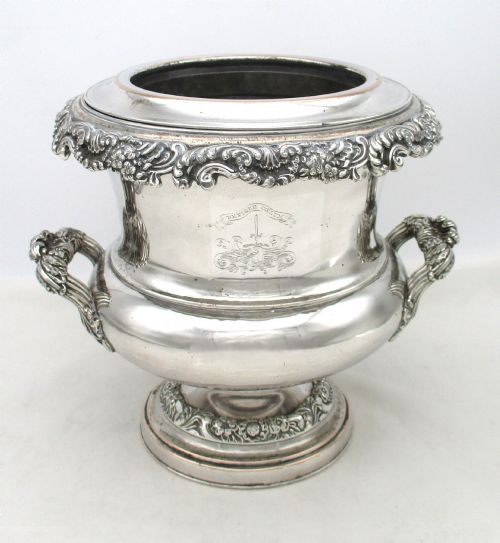
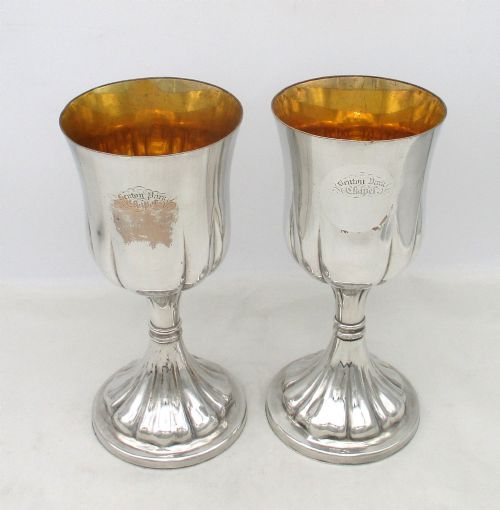
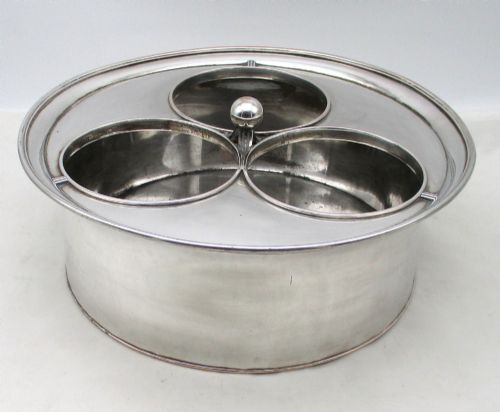
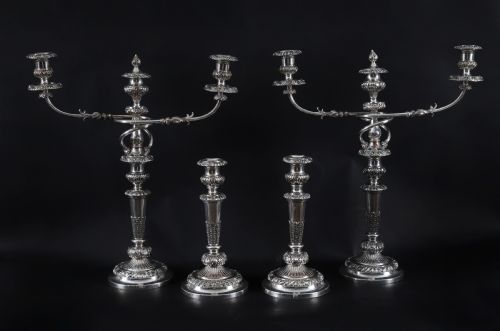
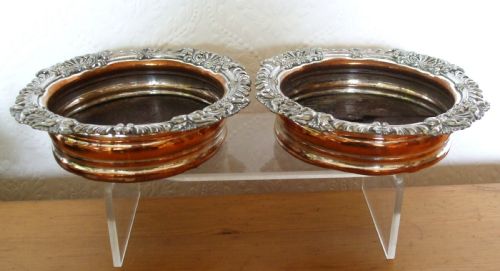
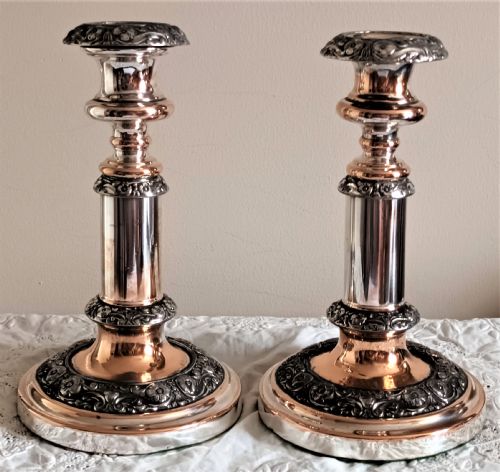
Wine coasters, candlesticks, coffee pots, and baskets appear frequently across the current and archived items. These utilitarian objects reflect the dining habits of the Georgian and Regency periods.
Origins trace directly to English workshops utilising the fused plate method rather than standard electroplating. Surviving examples demonstrate the versatility of the material across diverse domestic forms.
Materials and technique
Old Sheffield plate was created by fusing a sheet of silver to a thicker copper ingot under heat, then rolling the combined metals into thin sheets. This innovative technique allowed manufacturers to produce durable tableware with the appearance of solid silver at a lower cost.
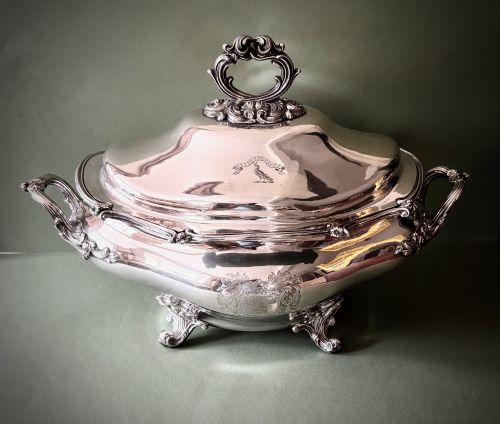
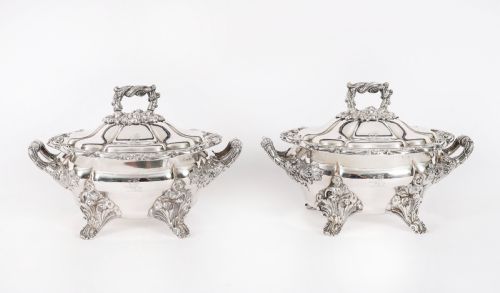
Craftsmen applied sterling silver wire or thin plates to conceal exposed copper edges around rims and joints. Additional ornamentation, such as crests, handles, and mounts, was often cast in silver and soldered onto the finished body.
Materials documented across the inventory include copper, silver plate, old sheffield plate, wood, and gold gilt.
Quality factors
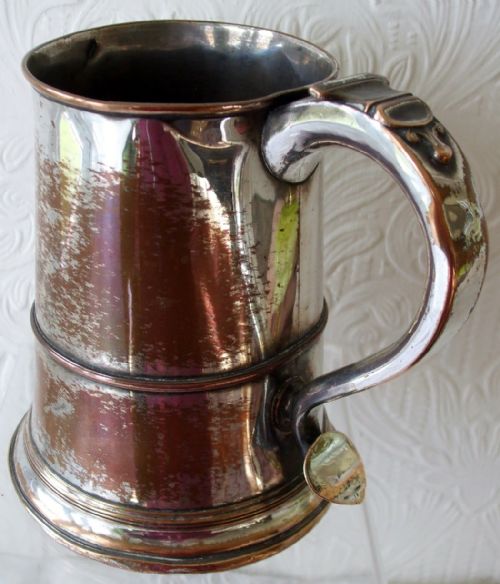
The balance of the fused metals dictates the integrity of a piece, as excessive wear reveals the underlying copper base beneath the silver layer. Pieces with minimal copper bleed through heavy polishing demonstrate superior initial plating thickness.
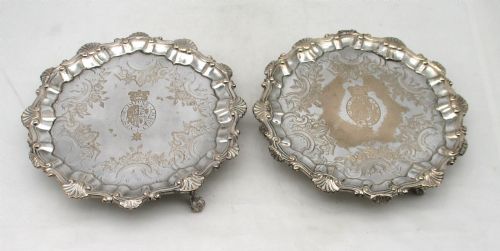
The crispness of chased or engraved armorial crests and decorative mounts separates standard production from finer workshop output. Hand-applied silver edging and well-executed soldered joints indicate higher craftsmanship.
Roberts Cadman·Henry Wilkinson·Creswick·Richard Morton·Matthew Boulton·John Hoyland
The Georgian Old Sheffield Plate Glossary
- Old Sheffield Plate
- A composite material made by fusing silver and copper together through heat and rolling, invented in the eighteenth century. This method preceded modern electroplating.
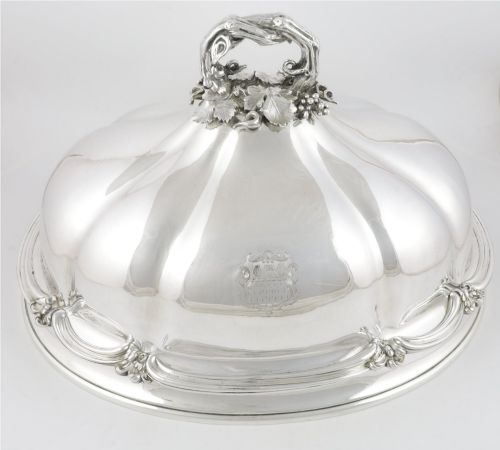
- Meat Dome
- A large domed cover designed to keep roasted joints warm on the dining table. These pieces often feature engraved family crests.
- Chamberstick
- A low portable candlestick fitted with a handle and a shallow drip pan. They were used for lighting individuals to bed.
- Wirework
- An openwork technique utilising interwoven metal wires to create decorative baskets and trays. This style is characteristic of late eighteenth-century items.
Georgian Old Sheffield Plate: Frequently Asked Questions
How can I tell old sheffield plate from electroplate?
Old Sheffield plate often reveals a thin line of yellowish copper along exposed edges or seams where the silver sheet has worn thin through centuries of polishing. Electroplated items, introduced later in the nineteenth century, display a uniform silver coating that wears down to a dull grey nickel or brass base rather than warm copper.
Makers of fused plate also utilised distinct early marks or lacked standard hallmarking entirely due to regulations governing silver weight. Examining the construction details around handles and rims usually clarifies the manufacturing era.
How were wine coasters used on the dining table?
Wine coasters protected polished mahogany dining tables from moisture rings and spills during dessert courses. Diners passed the bottles around the table by sliding the weighted wooden bases of the coasters across the surface.
Many examples feature green baize on the underside to facilitate smooth movement and prevent scratching. Multiple coasters were often arranged on wheeled trolleys for larger dinner parties.
How do I care for old sheffield plate?
Cleaning requires non-abrasive silver polishes and soft cloths to avoid wearing through the thin silver layer to the copper beneath. Gentle maintenance preserves the accumulated patina of the piece without damaging engraved crests or applied borders.
Storage in dry environments prevents tarnishing and protects any original wooden bases or green baize linings from moisture damage. Regular handling helps maintain a natural, glowing finish.
What is the difference between George III and Regency styles?
George III designs generally favour classical symmetry, delicate wirework, and neoclassical motifs influenced by Robert Adam. Pieces from this era often incorporate restrained proportions and subtle engraving.
Regency and Grand Regency styles introduce bolder, heavier forms inspired by Roman and Greek antiquity. These later items frequently feature robust paw feet, rich acanthus leaf decoration, and prominent cast mounts.