

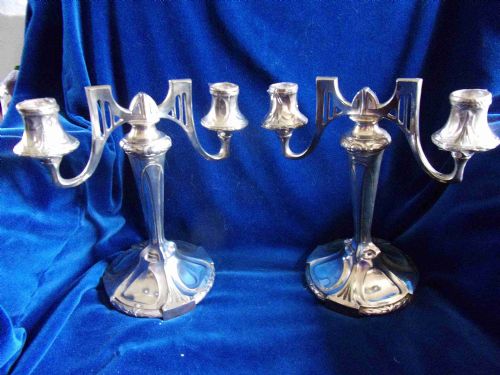

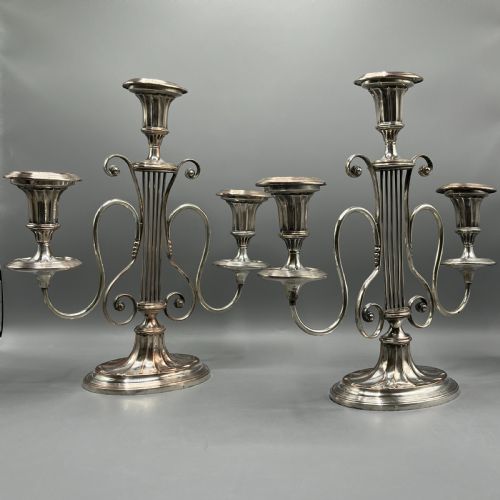

Silver Plate Branch Candelabra
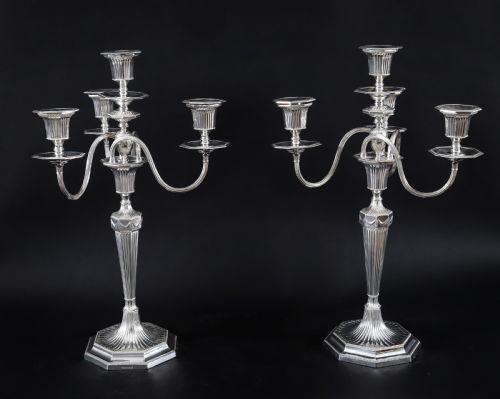
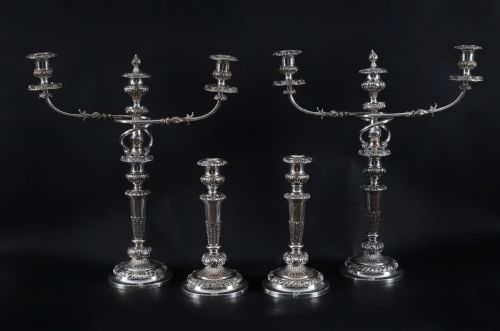
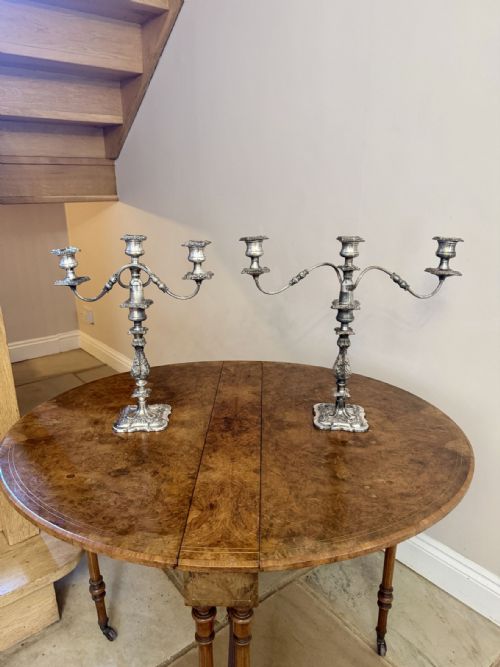
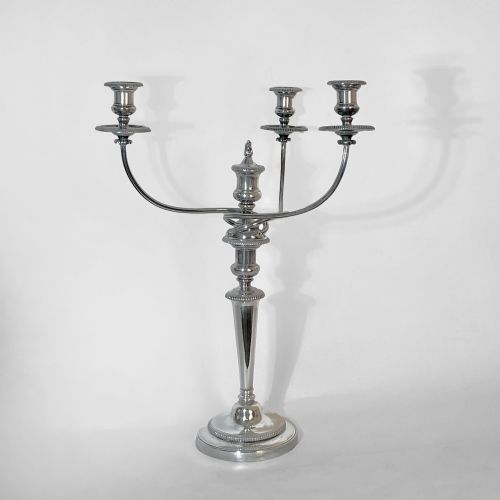
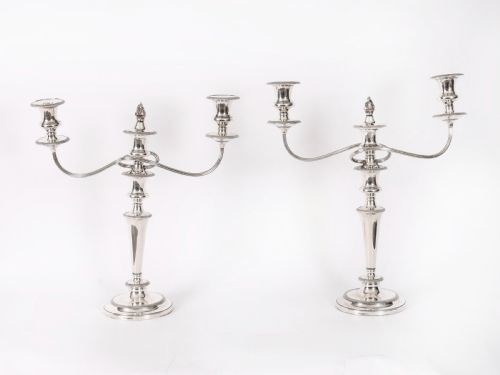
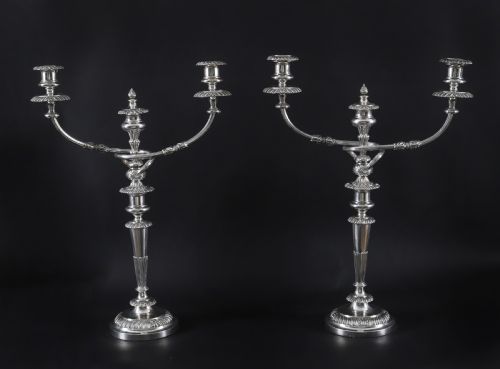
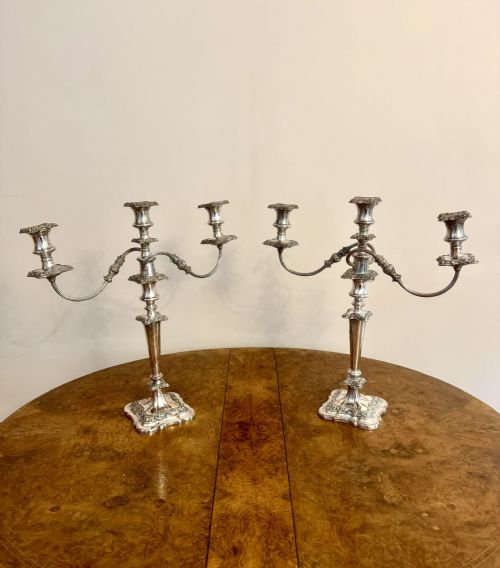
Silver plate branch candelabra bring undeniable presence to a dining table, offering multiple branched lights for a warm glow.
Silver Plate Branch Candelabra
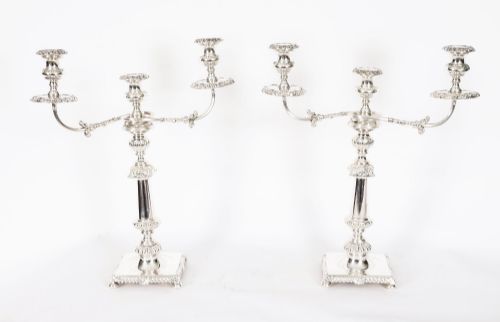
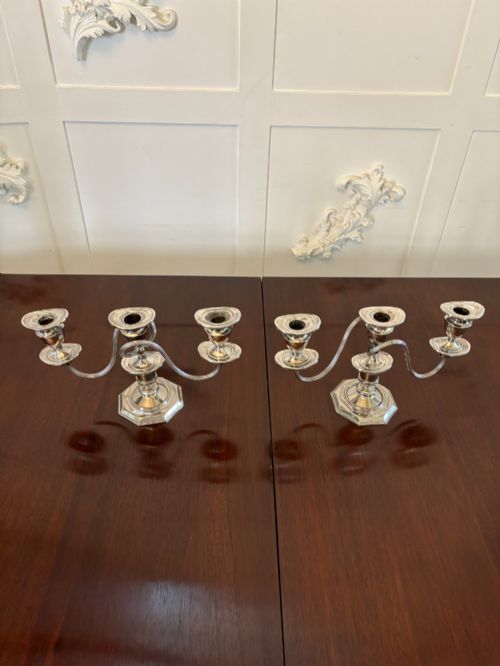
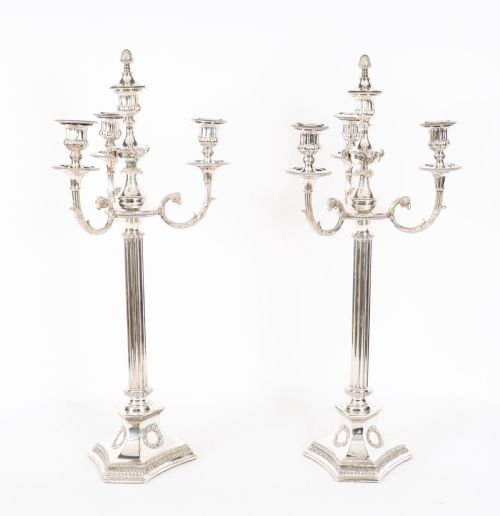
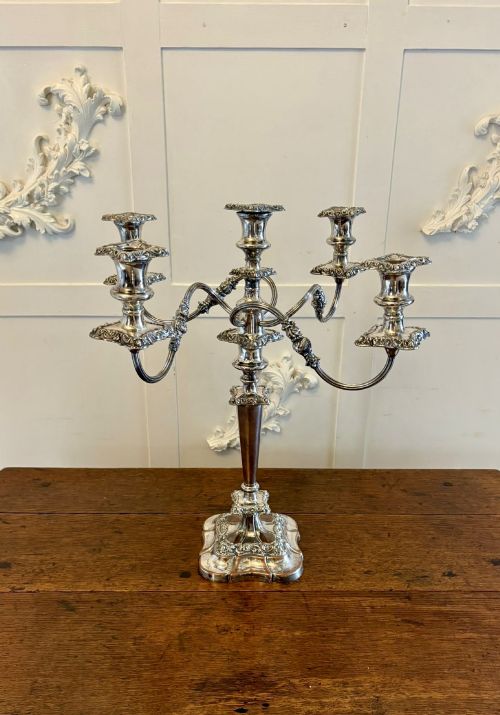
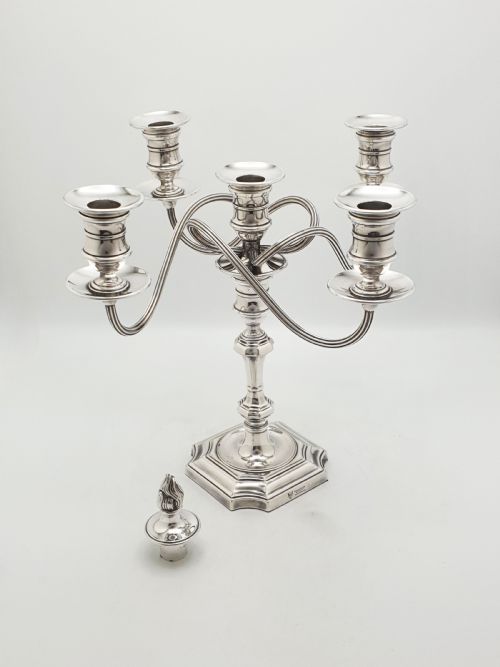
Silver plate branch candelabra are multi-light lighting fixtures designed to hold three, four, five, or six candles on branched arms. When searching for silver plate branch candelabra, buyers encounter forms ranging from Georgian and Regency Old Sheffield Plate to Victorian and Edwardian electroplated iterations.
The pieces on this page heavily feature Victorian and George III periods alongside Edwardian and Regency examples. Buyers frequently find pairs, large dining table centrepieces, and occasional suites with detachable sconces or figural cherub and lyre details.
How they were made
Earlier pieces utilise Old Sheffield Plate, a technique fusing a thin sheet of silver onto a thicker copper base. Later pieces rely on base metals like copper or nickel silver coated via electroplating, known as EPNS or electroplated nickel silver.
Manufacturers formed the branched arms, columns, and circular or square bases through casting and smithing techniques, incorporating detachable sconces and ornate decorative motifs into the metal.
Silver Plate Branch Candelabra Retail Price Guide 2026
Typical asking prices for silver plate branch candelabra among the pieces listed under this phrase on Sellingantiques today, from the lower quarter to the upper quarter. They describe what is for sale here now, not the wider market.
Several Victorian candelabra feature cheeky cherubs holding aloft candle branches, ensuring your dining table comes populated with industrious winged infants.
What varies in quality
Quality rests in the weight of the metal, the crispness of chased or cast ornamentation such as cherubs and Rococo scrolls, and the survival of the underlying copper or base metal beneath the silver layer. Substantial pairs by recognised makers demonstrate superior proportions and secure joint construction.
The integrity of the original plating and the structural balance of the branched arms distinguish standard production items from important dining table centrepieces and matched suites.
Hawksworth Eyre·Garrard and Co·Matthew Boulton·Blagden Hodgson and Co·Barker Ellis·Elkington
The Silver Plate Branch Candelabra Glossary
- Old Sheffield Plate
- An early method of fusing silver to a copper core before electroplating was invented. Pieces made this way often show subtle hints of copper showing through high points.
- Electroplated Nickel Silver
- A base metal alloy of copper, nickel, and zinc coated with a layer of silver using an electrical current. This process became standard in the nineteenth century.
- Sconce
- The small removable pan or nozzle at the top of a candelabrum arm that catches melting wax. These pieces are often detachable for easier cleaning.
- Centrepiece
- A large decorative object placed in the middle of a dining table, frequently combining a candelabrum with a dish or multiple branched lights.
Silver Plate Branch Candelabra: Frequently Asked Questions
How do I clean silver plate branch candelabra?
Use a soft cloth and a gentle silver polish formulated specifically for plated items to preserve the thin silver layer. Avoid harsh dipping solutions that strip the protective coating.
Take care around raised chased details and joints where aggressive rubbing can wear through to the base metal beneath.
What is Old Sheffield Plate?
Old Sheffield Plate is a material created by sandwiching a thin sheet of sterling silver over a copper ingot and heating them until they fused. Artisans then rolled the combined metal into sheets to craft candelabra.
This technique predates nineteenth-century electroplating and is identified by subtle lines of exposed copper at the edges.
Are these candelabra suitable for dining tables?
These pieces function as striking dining table centrepieces, providing elevated illumination across multiple branches. Many designs include detachable sconces to manage wax drips during meals.
Ensure the height allows guests to converse across the table without obstruction from the branched arms.
How can I tell Victorian pieces from Georgian ones?
Georgian and Regency examples often utilise Old Sheffield Plate construction with classical proportions, lyre motifs, or restrained Sheffield styling. Victorian pieces lean towards heavier cast ornamentation, ornate Rococo Revival scrolls, and electroplated finishes.
Examining the manufacturing marks and base metal composition helps clarify the period of production.