
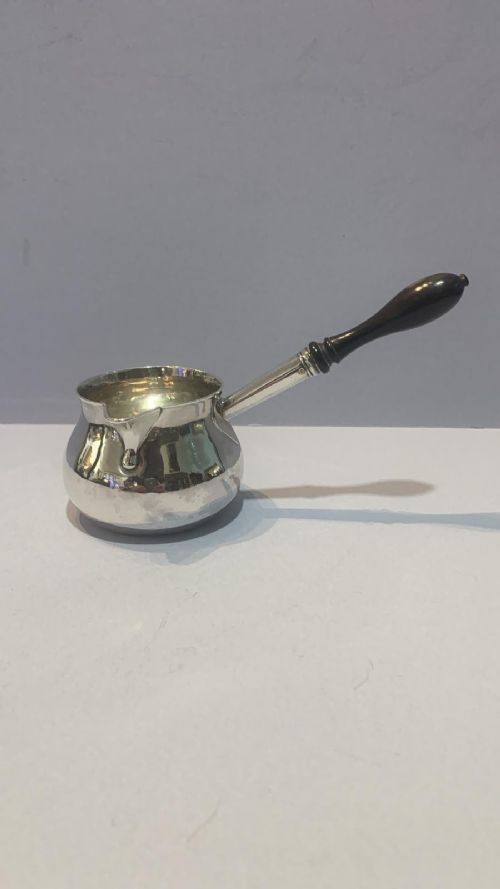


Silver Sauce Warmer
These silver sauce warmer pieces bring warmth and refined service to the table, combining period form with practical dining history.
Silver Sauce Warmer
A silver sauce warmer serves to keep rich gravies, brandies, and sauces at the ideal temperature throughout a meal. When you search for a silver sauce warmer, you encounter sophisticated table service items spanning the eighteenth and nineteenth centuries.
The pieces listed here appear in various forms, including traditional gravy warmers, argyle designs, brandy warmers, and saucer combinations. Georgian and Victorian examples dominate the selection, showing distinct regional and stylistic developments across periods.
Many items feature fitted wooden or ebony handles alongside silver and silver plate constructions. The selection includes both sterling silver and old Sheffield plate variants, reflecting how dining practices evolved from provincial pan designs to elaborate urn shapes.
Materials and construction methods
Silversmiths utilised sterling silver and old Sheffield plate alongside substantial metal foundations to build these sturdy vessels. Construction frequently incorporates turned wood or ebony components for insulating handles against heat during service.
Earlier pieces from the eighteenth century display provincial hand-hammered sterling techniques, while later nineteenth-century examples utilise silver plating methods over base metals. Artisans shaped bodies into plain urns, gravy boats, and handled saucepans with fitted lids.
Victorian diners required specialist water-filled vessels simply to ensure their spoons were pleasantly warm to the touch.
Distinctions in quality and execution
Quality rests in the integrity of the original plating, the crispness of crests, and the retention of matching wooden handles. Pieces maintaining their original interior compartments and lids command greater attention from collectors of period tableware.
Early eighteenth-century sterling pans exhibit fine provincial hand craftsmanship, whereas Victorian argyle pieces show precision in mechanical double-walled heat retention designs. The balance between the metal body and insulated handle dictates the success of each piece.
Samuel Blatchford·Padley Parkin and Staniforth·Gorham
The Silver Sauce Warmer Glossary
- Argyle
- A vessel designed to keep gravy warm at the table by means of a central compartment filled with hot water. This prevents the fat in meat sauces from congealing during long meals.
- Brandy Warmer
- A small handled pan used to heat spirits or sauces over a flame. These portable vessels often feature spouts and wooden grip handles.
- Old Sheffield Plate
- A composite material made by fusing a thin sheet of silver to a thicker copper base. This technique preceded modern electroplating and creates distinctive edge lines on period pieces.
- Spoon Warmer
- A table receptacle filled with hot water to warm table spoons prior to serving course dishes. They frequently take novel shapes like shells or sauce boats.
Silver Sauce Warmer: Frequently Asked Questions
What is an argyle gravy warmer?
An argyle is a specialised vessel featuring an internal jacket or tube designed to hold hot water. This system keeps sauces warm without burning the contents.
Such items became essential dining table accessories during the Georgian and Victorian periods when meals involved multiple courses.
How do I identify old Sheffield plate?
Old Sheffield plate involves a fused layer of silver over a copper base rather than an electrical deposit. Closer inspection often reveals subtle copper lines where the edge meets.
This technique was standard for high-quality domestic metalware before mid-nineteenth-century electroplating methods took over.
What is a brandy warmer used for?
A brandy warmer or pan serves to heat small quantities of spirits for culinary additions or direct consumption at table. The long wooden handle protects the hand from the heat source.
These compact vessels appear in both sterling silver and early silver plate across eighteenth-century records.
How were spoon warmers utilised?
Spoon warmers held hot water to warm silver spoons before guests used them for cold or rich foods. This practice ensured that cold utensils did not lower the temperature of warm dishes.
Victorian makers shaped these vessels into decorative forms including shells and small sauce boats.