


Mid 19th Century Silver
Mid 19th century silver brings together heavy Victorian plate, solid sterling, and intricate foreign metalwork that defined a rapidly industrialising era.
Mid 19th Century Silver
When you search for mid 19th century silver, you encounter a diverse array of items spanning decorative tableware, personal accessories, and practical household items from the 1850s and 1860s. These pieces reflect the exuberant design revivals of the Victorian period, including Rococo and Gothic influences, alongside French Second Empire and regional styles.
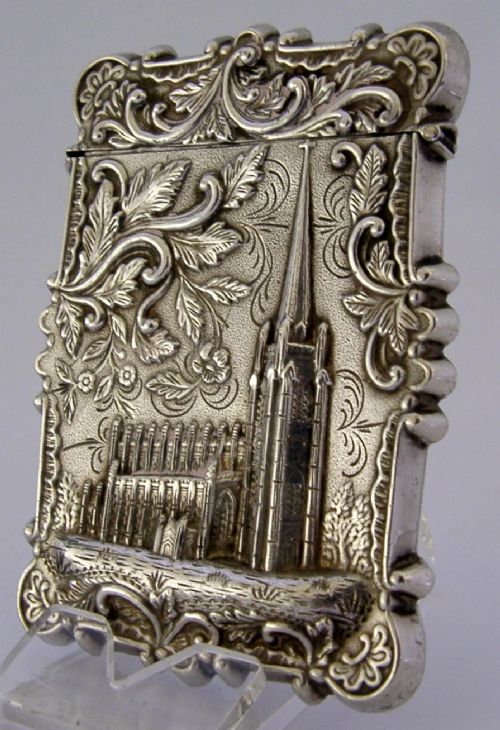
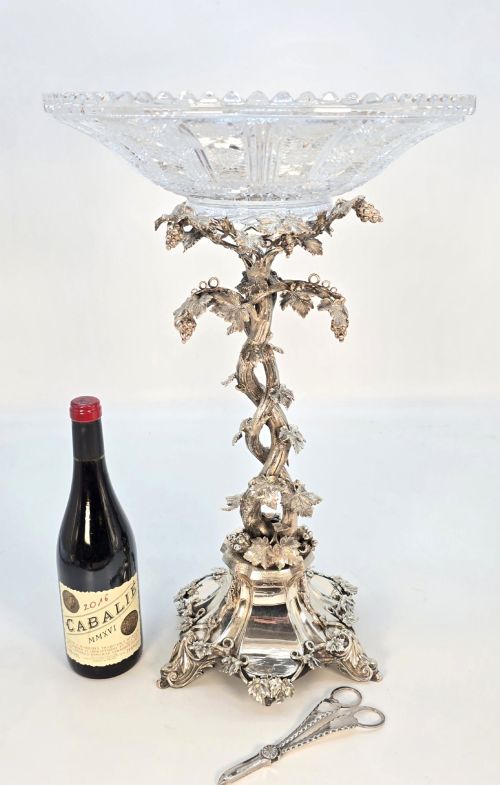
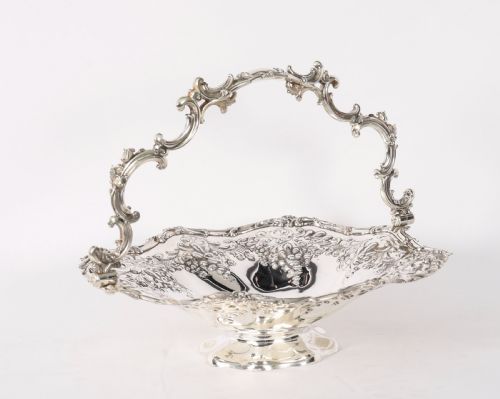
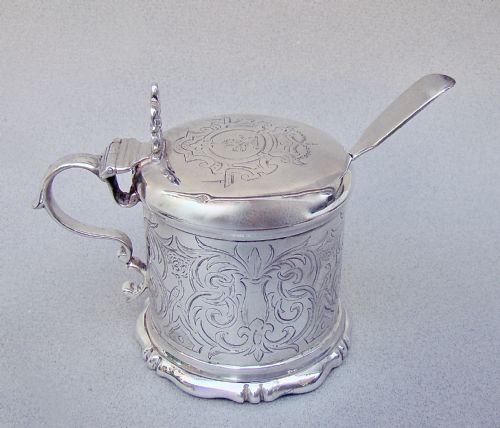
The objects on this page range from grand table centrepieces, wine flagons, and fruit baskets to intimate items such as card cases, mustard pots, scent bottles, and snuff boxes. Many items utilise silver plating or mixed media like cut glass, wood, and brass, demonstrating the period's capacity for varied manufacturing techniques.
Alongside British items bearing clear London hallmarks, the selection includes continental European works from France, the Netherlands, and Russia, as well as Islamic and Southeast Asian pieces featuring metal inlay. This variety ensures that both functional dining wares and cabinet pieces are well represented.
Materials and construction methods
Makers of mid 19th century silver relied heavily on silver plating over base metal substrates, a technique that allowed for large, ornate domestic objects like tea sets, entree dishes, and wine coolers to be produced with great visual impact. Solid sterling silver was reserved for smaller, highly detailed items such as card cases, pill boxes, and flatware.
Craftsmen frequently combined metalwork with other tactile materials, mounting silver and silver plate onto cut glass, carved wood, tortoiseshell, and rosewood. Inlay work was also prominent, utilising bronze and brass bases embellished with silver thread or sheet.
Surface decoration was achieved through extensive hand engraving, repoussé, and chasing, creating high-relief floral patterns, crests, and architectural motifs. Cast components, such as handles and feet, were soldered onto bodies formed by spinning or hammering.
Among the formal tableware and writing boxes, you might stumble upon a violin bow and a delicate goose-feather tooth.
Assessing quality in the range
The distinction between standard commercial output and the finest tier lies in the crispness of the chasing and the weight of the metal utilised in the construction. Superior pieces display deep, hand-worked relief rather than shallow, machine-pressed patterning, ensuring that decorative motifs remain sharp and defined.
Integration of secondary materials also dictates standing, where flawless cut glass, unwarped exotic woods, and securely fitted tortoiseshell demonstrate superior initial fabrication. In silver-plated items, the durability of the original plating layer and the subtlety of the base metal manipulation separate basic utility wares from exhibition-grade showpieces.
Charles & George Fox·Padley Parkin & Staniforth·Franchini & Bigaglia·Dominique Peccatte·Pearson & Price·Mappin Bros·Philippe Berthier·Smith Sissons·Hunt & Roskell·J.E. Sallman·Ernest Compere
The Mid 19th Century Silver Glossary
- Silver plate
- A layer of silver bonded to a base metal core such as copper or brass. This method permitted broader ownership of large dining table centrepieces and service dishes during the Victorian period.
- Repoussé
- A metalworking technique where the metal is hammered from the reverse side to form a raised design in relief. It is frequently seen on boxes, bowls, and decorative plaques from this era.
- Chasing
- The complementary process to repoussé, executed from the front by sinking the metal with punches to refine details and textures. This adds depth to floral sprays and heraldic crests.
- Sterling silver
- An alloy consisting of pure silver and other metals, traditionally copper, standardised for purity. British pieces from this era typically bear a series of punch marks indicating the assay office, standard, and date.
- Silver gilt
- Silver that has been coated with a thin layer of gold on its surface, often referred to as vermeil. This treatment protected the underlying metal and provided a rich, two-tone appearance on ceremonial or luxury items.
Mid 19th Century Silver: Frequently Asked Questions
How do I clean mid 19th century silver?
Use a soft microfibre cloth and a specialist non-abrasive silver polish to gently lift tarnish without removing the remaining plating or fine engraving details. Avoid harsh chemical dips, which can strip away historic patination and damage vulnerable secondary materials like tortoiseshell or glass.
Store pieces in a dry environment away from direct sunlight and humidity to minimise future oxidation. Acid-free tissue paper is ideal for wrapping items kept in storage for extended periods.
Were these items used daily?
Many items on this page, such as gravy warmers, coffee pots, and entree dishes, were designed for active use in middle and upper-class Victorian dining rooms. Wealthier households deployed them for formal entertaining, multi-course meals, and tea ceremonies.
Other objects, including card cases, scent bottles, and snuff boxes, served as personal accessories carried during social calls or kept on writing desks. Their survival in varied states of wear reflects both practical service and careful preservation.
How can I tell solid silver from silver plate?
Solid sterling silver items generally bear a series of hallmarks indicating the maker, assay office, and year of production, alongside a standard mark like a lion passant. Silver-plated items usually feature manufacturer marks that denote plating techniques rather than government assay stamps.
Examining high-wear areas can also reveal the base metal underneath worn plate, whereas solid silver maintains a consistent colour throughout. Weight and temperature can provide additional clues, though hallmarks remain the primary indicator.