




Vintage Sauce Vessel
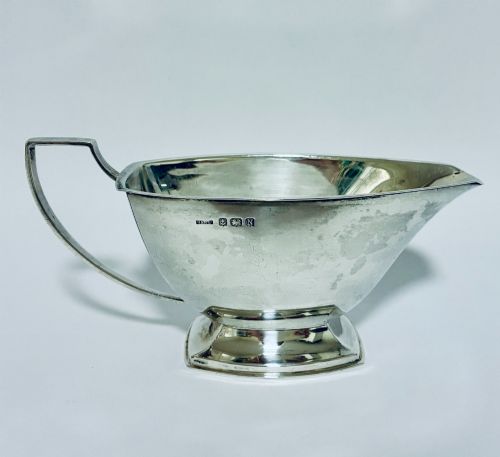
A vintage sauce vessel brings formal dining history straight to the table, offering practical pouring style across periods from George II silver to Art Deco porcelain.
Vintage Sauce Vessel
When you search for a vintage sauce vessel, you encounter silver, earthenware, and porcelain tableware designed for serving gravies and sauces with traditional elegance.
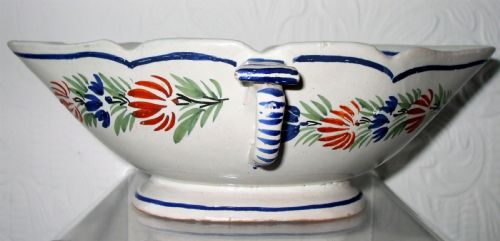
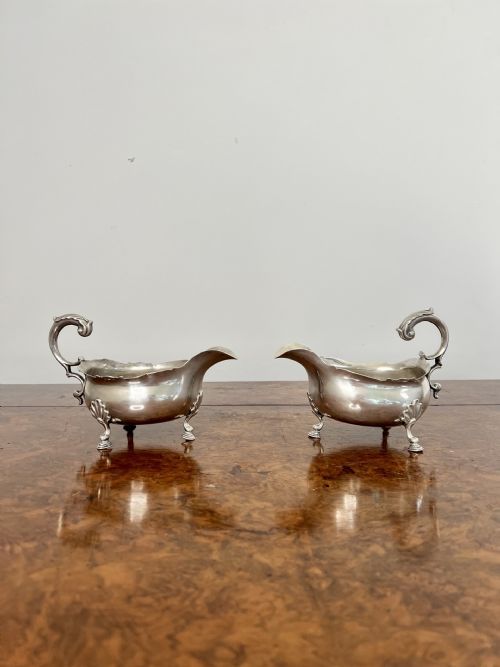
The selections available here span from eighteenth-century George II and George III sterling silver sauce boats to nineteenth-century French faience double sauceboats and Art Deco designs.
How they were made
Metal vessels utilise sterling silver, silver plate, and Old Sheffield plate, often shaped with embossed decoration or plain bodies bearing family crests.
Ceramic examples employ soft-paste porcelain, earthenware, and faience, frequently finished with cobalt glaze or hand-painted details such as the Quimper style.
What varies in quality
Quality rests in the precision of the metalsmithing or the clarity of the ceramic glaze, distinguishing mass-produced tableware from master silversmith work.
The crispness of embossing on sterling silver and the delicate execution of hand-painted porcelain motifs dictate the standing of each piece.
Padley Parkin and Staniforth·Meissen
The Vintage Sauce Vessel Glossary
- Argyll
- A specialised gravy warmer featuring an internal compartment for hot water to keep sauces warm during the meal. These date from the eighteenth and nineteenth centuries.
- Faience
- Tin-glazed earthenware produced widely in France and other European regions. It often displays colourful hand-painted botanical or figural scenes.
- Soft-paste porcelain
- A ceramic material composed of clay and glass frit, fired at lower temperatures than hard-paste porcelain. First Period Worcester utilised this medium.
- Silver plate
- A base metal coated with a thin layer of silver through electroplating or older fusing techniques like Old Sheffield plate.
Vintage Sauce Vessel: Frequently Asked Questions
What is an Argyll used for?
An Argyll is a specific type of gravy warmer designed to keep sauces from cooling during long meals. It uses an internal cylinder filled with hot water to maintain temperature.
These pieces appear in both silver plate and Old Sheffield plate from the Georgian and Victorian eras.
How do I identify a Georgian sauce boat?
Georgian sauce boats usually feature substantial sterling silver construction with classical styling like embossed rococo motifs. They often stand on three cast feet.
Examining the weight and hallmarks helps confirm the eighteenth-century period of manufacture.
What is Quimper faience?
Quimper faience is tin-glazed earthenware originating from the French town of Quimper, known for distinctive hand-painted regional figures. These double sauceboats display traditional blue and yellow tones.
Pieces frequently carry the 'HB' mark from the historic French potteries.
Can I use these vessels daily?
Most antique metal and ceramic vessels remain sturdy enough for occasional dining use if handled with proper care. Silver requires gentle polishing while ceramic pieces need hand washing.
Many collectors prefer to display them as part of a traditional tableware collection.