


Georgian Meat Plate
A georgian meat plate brings heavy earthenware and polished Old Sheffield plate to the dining table, serving joints of meat with sturdy historical presence.
Georgian Meat Plate
A georgian meat plate or related platter sits at the centre of the dining table, designed to carry large joints and fowl. These pieces span the eighteenth century, the Regency era, and early Victorian periods, capturing the transition from simple earthenware to elaborate serving sets.
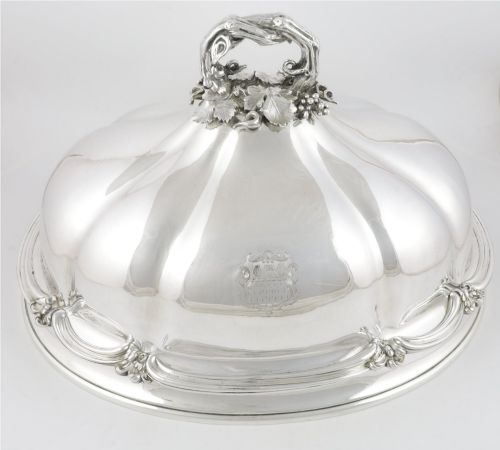
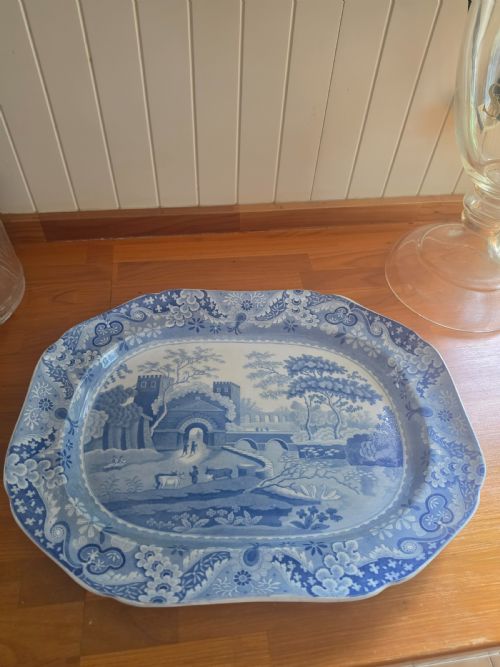
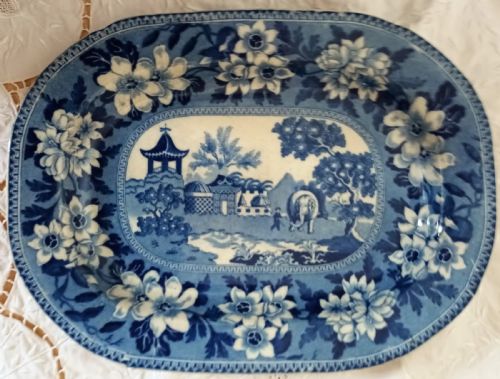
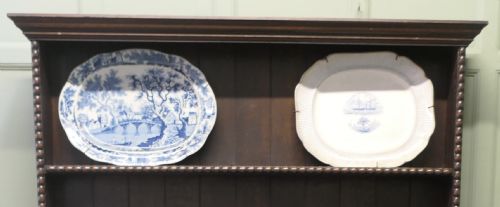
Buyers meet large blue and white transferware platters alongside metal warming dishes and domed covers. Ceramic examples often feature pastoral scenes or classical ruins, while metal pieces provide heat retention for the dining room.
Makers utilised ironstone, porcelain, and earthenware alongside copper-fused Old Sheffield plate. These servers often incorporate draining inserts or wells to catch juices during carving.
Materials and Techniques
Potters shaped earthenware and ironstone on wheels or in moulds before applying cobalt blue transfer prints in patterns such as Tower or Chinoiserie ruins. These ceramic pieces received glossy glazes and high-temperature firings to withstand heavy daily use.
Metal smiths constructed meat domes and warming dishes from Old Sheffield plate, fusing thin layers of silver to copper bases. This technique required precise temperature control to bond the metals without melting the silver layer.
Makers added cast handles, engraved coats of arms, and pierced draining inserts known as mazarines. These fitted plates allowed juices to drain neatly into the lower well of the serving dish.
Listings feature earthenware, ironstone, and Old Sheffield plate spanning the eighteenth century through the early Victorian period.
Distinctions in Execution
Quality rests in the crispness of the transfer print and the depth of the glaze on ceramic platters. Finer earthenware pieces display even cobalt colour without smudging, while lesser examples show blurred lines and pooling glaze.
In metalwork, the preservation of the silver layer over the copper base dictates value. Superior Old Sheffield pieces retain their applied silver borders and heavy gauge metal without excessive base metal showing through wear.
The presence of matching elements, such as original draining inserts or engraved armorial crests, elevates certain platters above standard utilitarian service ware.
Roberts Cadman·Henry Wilkinson·John Rogers Son·Thomas Lakin·Don Pottery·Elkin Knight Bridgwood
The Georgian Meat Plate Glossary
- Mazarine
- A pierced ceramic or metal insert placed inside a serving dish to drain juices away from the meat.
- Old Sheffield Plate
- A composite material made by fusing a sheet of silver to a thicker copper base, common in dining domes and warmers.
- Transferware
- Pottery decorated by applying a printed design from an engraved copper plate through tissue paper onto the clay body.
- Ironstone
- A dense, durable type of earthenware patented in the nineteenth century to rival true porcelain.
- Meat Dome
- A large metal cover used to keep roasted joints warm at the table before carving.
Georgian Meat Plate: Frequently Asked Questions
What was a meat plate used for?
These large platters carried roasted joints, game, and fowl to the dining table for formal meals.
Many included draining wells or separate inserts to keep the meat clear of accumulated juices during service.
How do I care for Old Sheffield plate?
Old Sheffield plate requires gentle cleaning with non-abrasive silver polishes to protect the thin layer of silver over the copper core.
Avoid harsh chemical dips that strip the natural dark patination from recessed areas and engraved details.
What is blue and white transferware?
Transferware is pottery decorated by pressing a paper design, inked from an engraved copper plate, onto the unglazed clay body.
This technique allowed potteries to produce complex pastoral and architectural scenes consistently across large services.
How do warming dishes work?
Warming dishes featured hollow compartments beneath the main plate where hot water or heated metal inserts could be placed.
This kept food warm through long courses before the widespread use of heated dining rooms.