
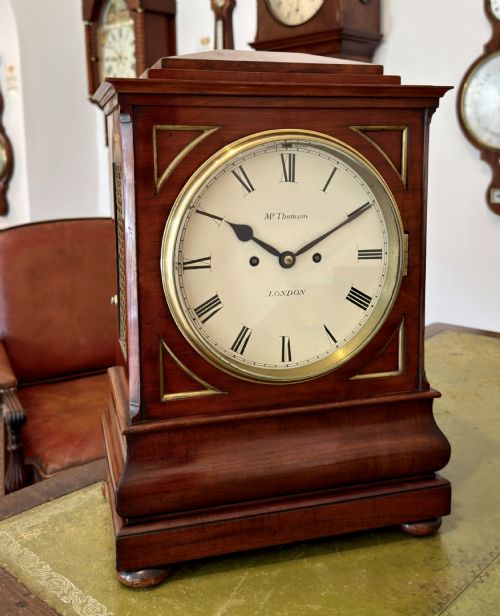
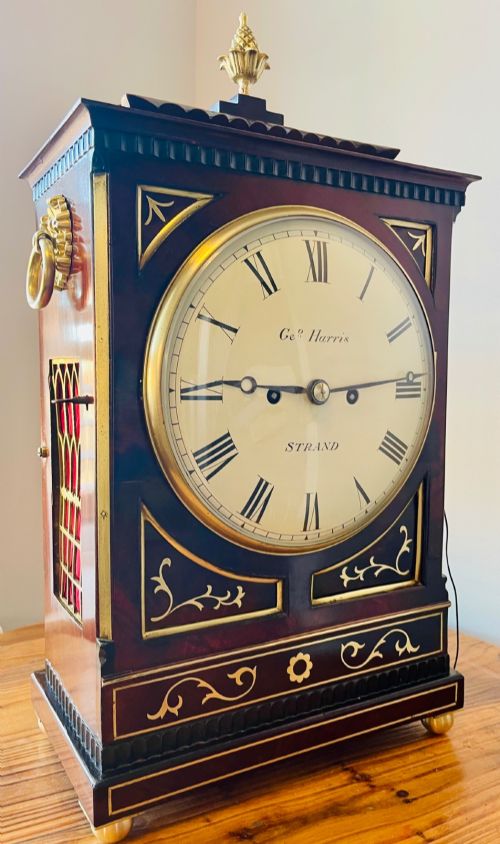
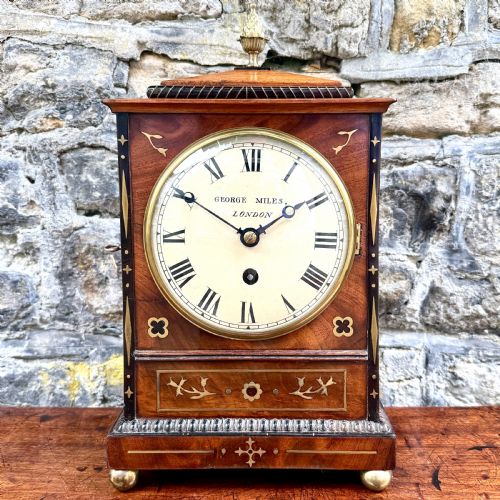
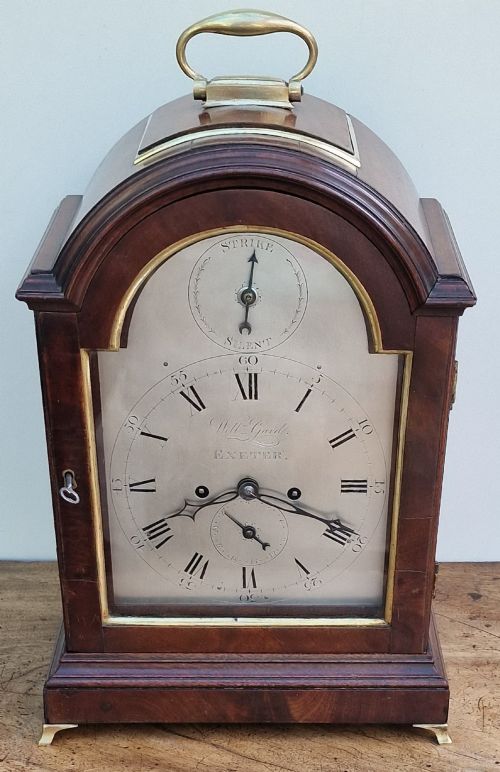
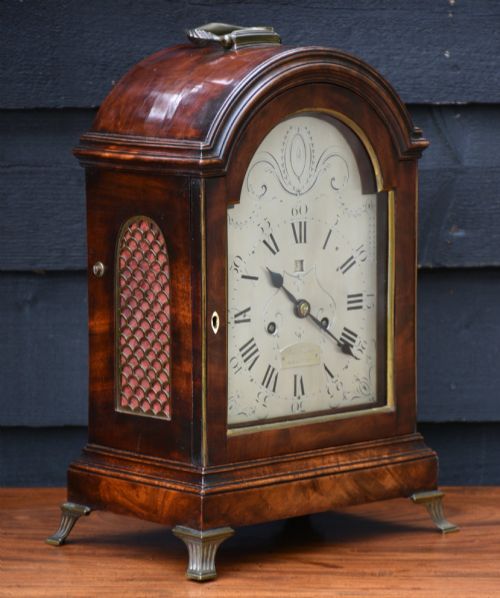
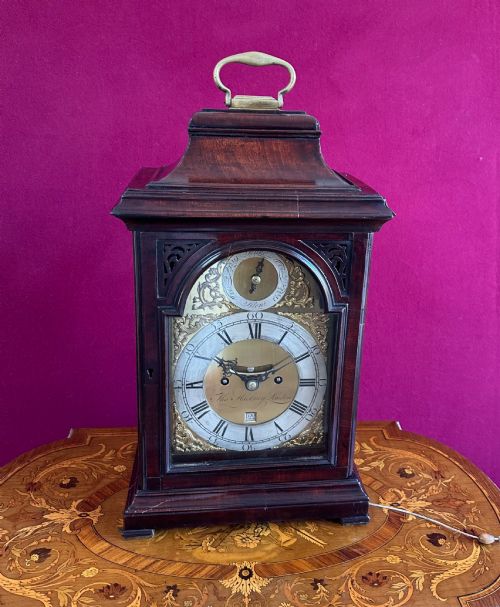
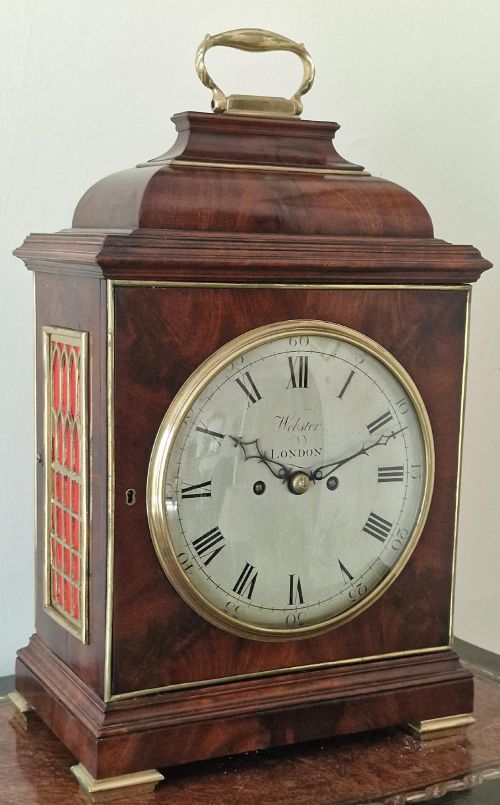

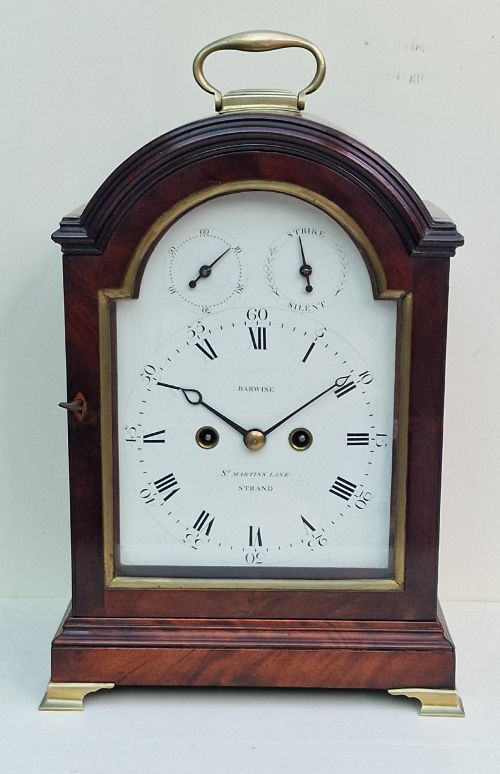



Georgian Mahogany Table Clock
A georgian mahogany table clock brings the precision of centuries past into a room, framed in rich timber and brass.
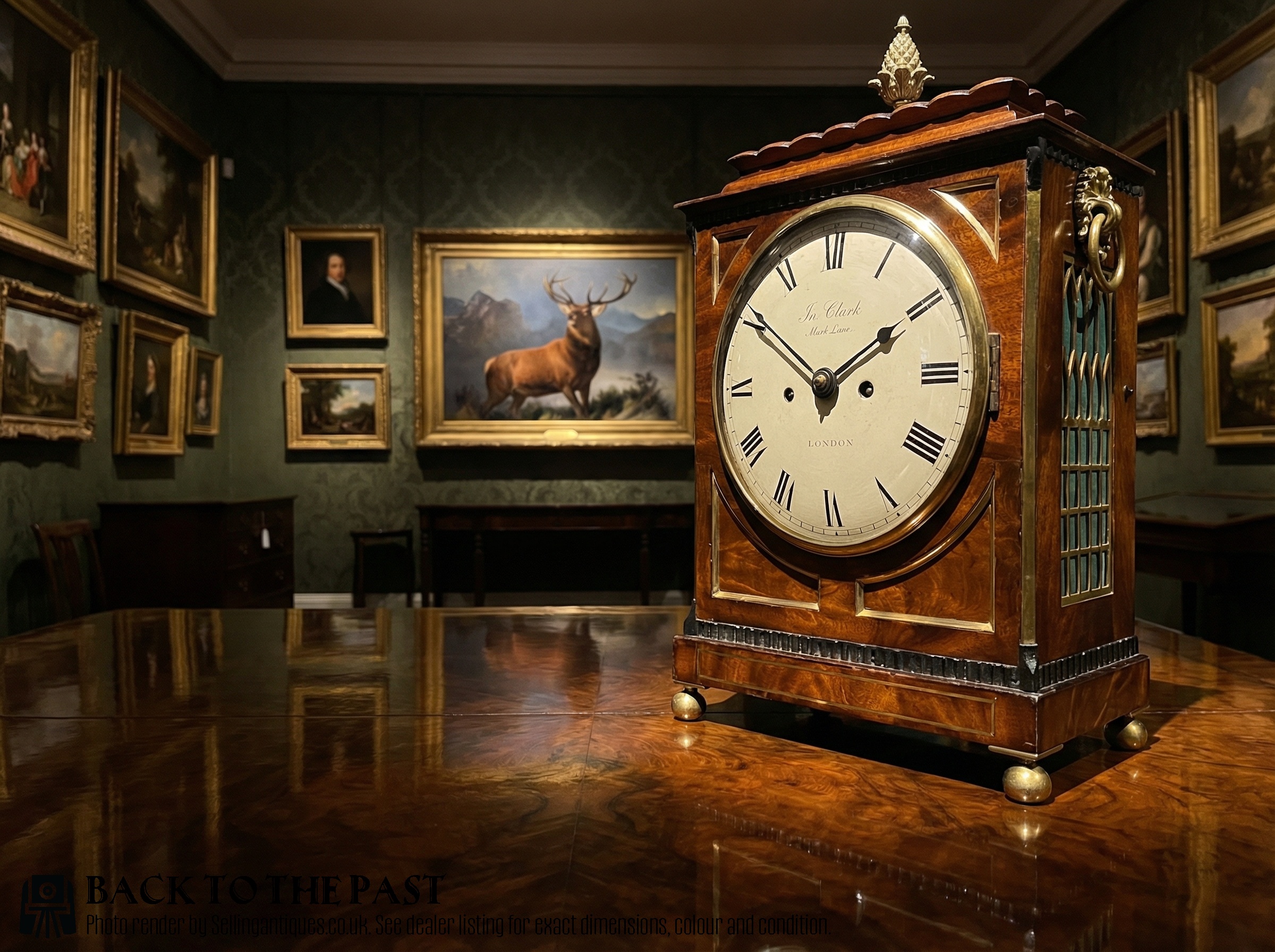
Georgian Mahogany Table Clock
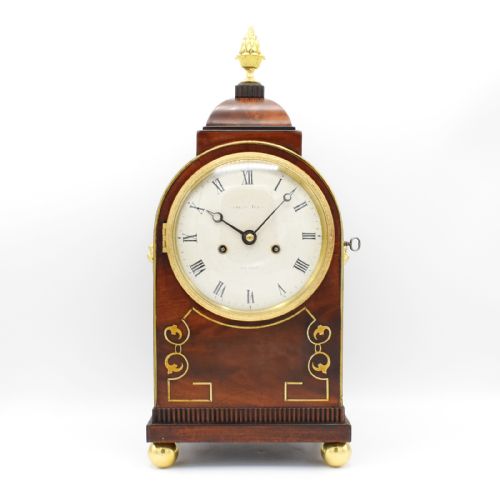
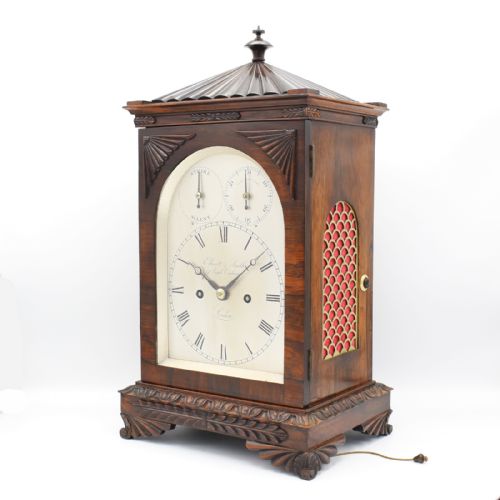
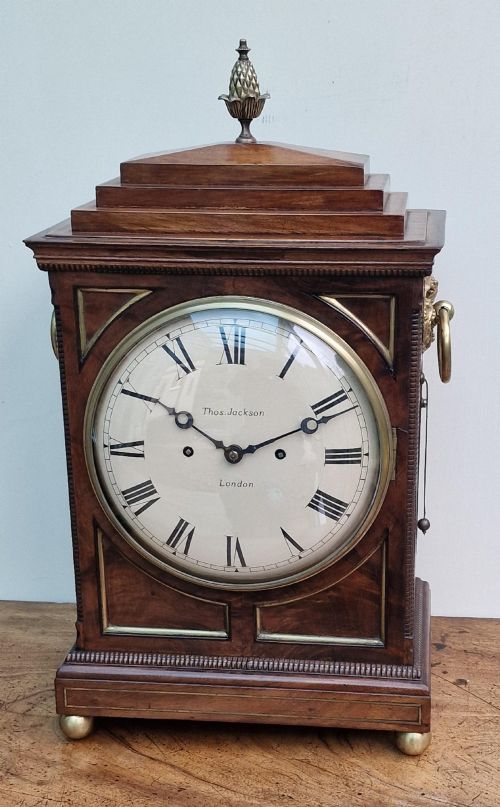
A georgian mahogany table clock is typically encountered as a bracket clock or mantel clock, originating from the Georgian, Regency, and 18th century periods. These pieces range from simple timepiece movements to complex striking or musical mechanisms housed in architectural wooden cases.
Most examples found on this page display the warm grain of mahogany, frequently complemented by brass mounts, silvered metal dials, and glass panels. They sit comfortably on shelves, brackets, or tables, reflecting the domestic habits of their original owners.
Materials and Movements
Cases are constructed primarily from mahogany, sometimes accented with ebony stringing, brass inlay, or gilt brass fittings. The dial faces combine silvered metal, brass, and enamel, protected behind glazed doors.
Internal mechanics rely on brass wheels, steel pivots, and fusee movements driven by cords or chains. Silk suspension threads and verge or anchor escapements regulate the time, often paired with striking mechanisms.
Some clocks feature tiny locking hooks to secure the brass bezel, preventing the dial door from swinging open when carried.
Case Work and Mechanics
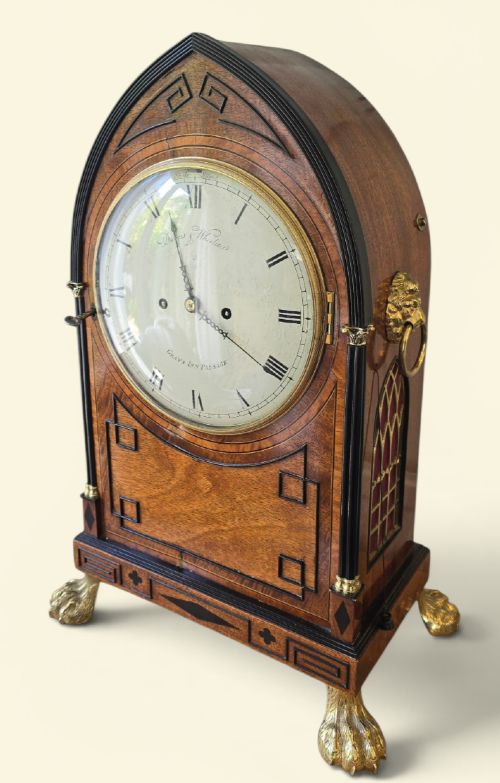
Quality rests in the crispness of the mahogany carving, the proportion of the case - whether lancet, pad top, or balloon - and the integrity of any brass inlay. Finer pieces retain original movement parts and clean dial engraving without heavy restoration.
The reputation of the maker inscribed on the dial or movement plate heavily influences standing. Signed London work often displays more intricate movement engineering and refined timber selection compared to provincial pieces.
Thomson of London·William Gard·Webster London·Mappin And Webb·Charles Pratt London·Ellicott And Smith·Thomas Jackson·Bush of London·Desbois And Wheeler·L Vick of Stroud·Webster Cornhill London·Francis Perigal London·Thomas Moss·Cording of London·Paul Philip Barraud·Hyde of Salisbury·Hampson And Son·Henry Harris of London
The Georgian Mahogany Table Clock Glossary
- Fusee
- A conical pulley used in mechanical clocks to maintain an even pull on the movement as the mainspring unwinds. This device ensures more consistent timekeeping.
- Bracket clock
- A portable clock designed to sit on a table, shelf, or dedicated wall bracket. They often feature carrying handles on top.
- Verge escapement
- An early type of clock escapement mechanism using a crown wheel and a rod with pallets. It produces a distinctive rapid ticking beat.
- Silvered dial
- A brass clock face treated with a silver solution and engraved with numerals and maker details. This treatment provides high contrast against dark hands.
- Lancet top
- A clock case shape featuring a pointed, gothic arch silhouette at the summit. It is characteristic of the Regency period.
Georgian Mahogany Table Clock: Frequently Asked Questions
How do I wind a fusee clock?
Use the appropriate winding key inserted into the dial hole, turning it gently until resistance is met. Avoid over-winding to protect the historical spring.
Ensure you support the clock case firmly during the process, keeping the mechanism level on its surface.
Where should I place a table clock?
Position the clock on a stable, level surface away from direct sunlight, draughts, and damp walls. A sturdy mantelpiece or dedicated shelf works best.
Keep the piece away from heavy vibrations, such as slamming doors, which can disrupt the delicate pendulum or balance wheel.
How do I identify a Regency clock?
Look for specific design cues like brass inlay, pad tops, or lancet silhouettes characteristic of the early nineteenth century. Mahogany cases from this era often feature rich, dark patination.
Check the dial and movement for maker signatures, as many London workshops operated actively during the Regency period.
What is a striking mechanism?
A striking mechanism sounds the hours or quarters using a small hammer hitting a bell or gong inside the case. It operates independently of the timekeeping train.
Many period examples use a rack striking system or a countwheel to govern the correct number of strikes per hour.