




Late 18th Century Clock
A late 18th century clock brings traditional horology into a room, offering mechanical presence and period cabinetry.
Late 18th Century Clock
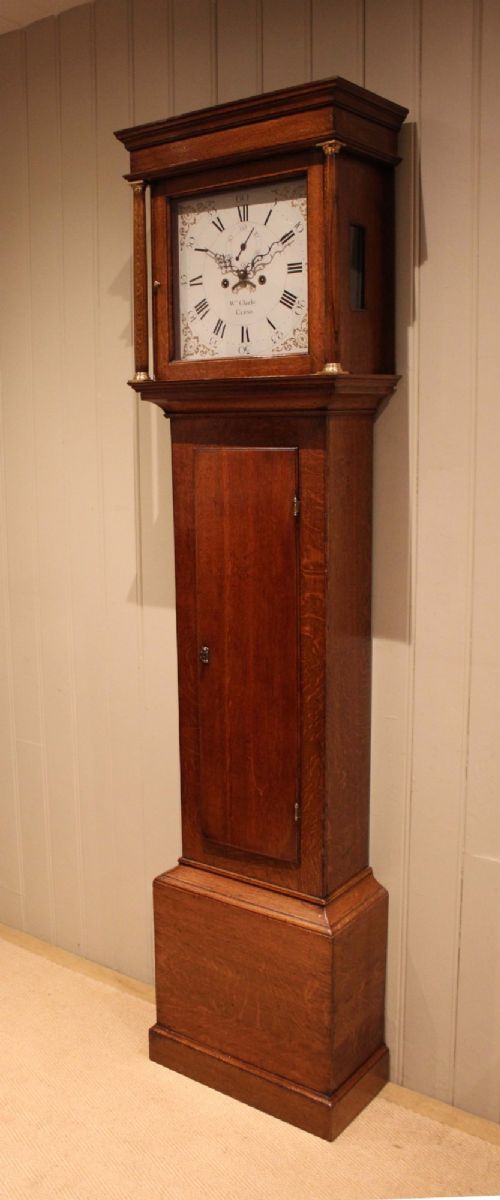
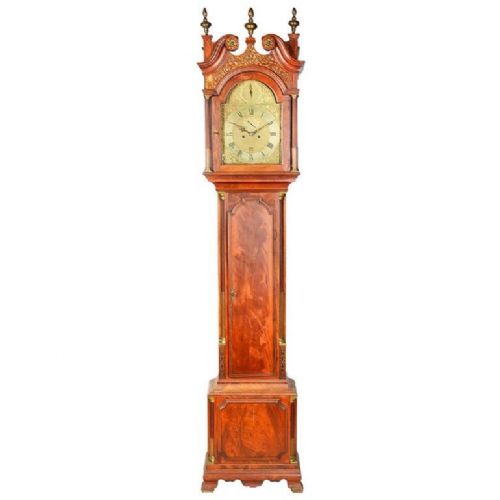
A late 18th century clock encompasses tall case pieces alongside smaller table or bracket designs intended for domestic interiors. Longcase examples dominate the selection, often housed in oak or mahogany with regional English, Welsh, Scottish or provincial makers named on the dials.
Shorter mantel or bracket clocks appear with bell-top forms, silvered dials and glass panels revealing the movement inside. French and Swiss variants also feature, introducing gilt bronze, ormolu mounts and carriage formats to the broader selection.
Grandfather and grandmother clocks provide the vertical presence typical of the period, whilst wall-hanging hooded versions and lantern formats offer alternative ways to display mechanical timekeeping.
Materials and construction
Cabinet makers utilised native timbers including oak, mahogany, pine and walnut, frequently constructing long cases with banded inlays or painted finishes. Brass and iron formed the internal gear trains, escapements and dial plates.
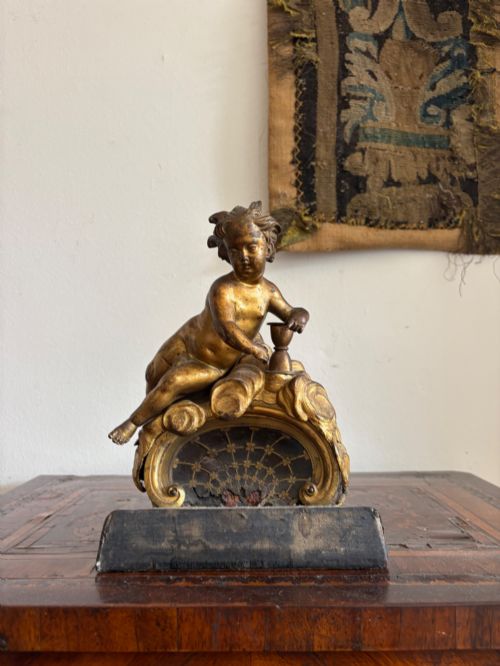
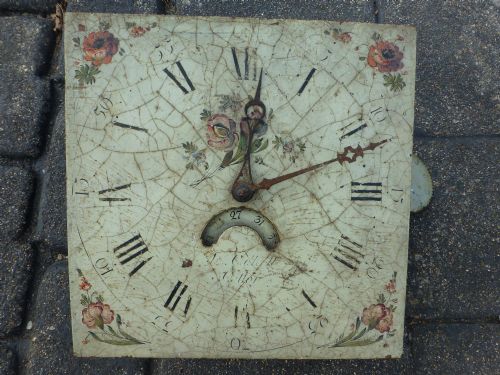
Dials combined brass, silvered metal, enamel and painted iron surfaces, often signed by the maker in black script. Decorative elements incorporated glass viewing panels, cast gilt bronze or ormolu mounts and brass finials.
Listings feature oak, mahogany, pine and walnut cabinetry paired with brass dials, iron movements and gilt bronze or ormolu mounts.
Assessing craftsmanship and survival
The refinement of the movement and the crispness of dial engraving distinguish finer examples from standard production. Verge escapements and quarter-striking mechanisms represent higher complexity in bracket clocks compared to simpler 30-hour longcase movements.
The degree of original surface preservation in the timber case and dial components dictates the desirability of a piece. Replacement parts, altered hoods or modern finish applications differentiate untouched examples from heavily restored ones.
Thomas Webbe of New Quay·David Morice of Auchtermuchty·Agar Of Malton·Chater and Son London·John Welsh LUTON Bedfordshire·Kenneth Maclennan·John Birtles of Market Harborough·John Reynolds
The Late 18th Century Clock Glossary
- Verge escapement
- An early type of escapement mechanism utilising a crown wheel and pallet impulses. It governs the speed of the clock by swinging a pendulum or balance wheel.
- Bracket clock
- A portable table clock designed to sit on a bracket or mantel. These pieces usually feature wooden cases with carrying handles and glass side panels.
- Longcase clock
- A tall pendulum clock enclosed in a wooden case standing directly on the floor. They are also frequently referred to as grandfather or grandmother clocks.
- Ormolu
- Gilt bronze produced by applying a mercury and gold amalgam to cast bronze. It provides a bright golden decorative finish on French and English clock mounts.
- Silvered dial
- A brass dial plate treated with a silver solution to create a matte white metallic finish. Black numerals and maker signatures are engraved into this surface.
Late 18th Century Clock: Frequently Asked Questions
What is a bracket clock?
A bracket clock is a portable timepiece designed to sit on a flat surface or a wall bracket. They typically feature wooden cases made from mahogany or walnut with glazed panels.
These clocks often include striking mechanisms and carrying handles on top. They were intended for principal rooms rather than hallways.
How do longcase clocks work?
Longcase clocks rely on weights suspended by lines or chains that drive the gear train as they descend. A pendulum regulates the release of the gears to maintain accurate time.
Thirty-hour movements require winding daily or slightly more than once a day, while eight-day movements need attention much less frequently.
Where were these clocks made?
The pieces originate from various workshops across England, Scotland, Wales and continental Europe. Provincial makers signed dials in regional towns, while London workshops produced high-end bracket and longcase clocks.
Swiss and French makers also contributed distinct styles like Neuchatel and carriage clocks to the period.
How do I care for a mechanical clock?
Mechanical clocks require a stable environment away from direct sunlight, dampness and rapid temperature fluctuations. Winding should be performed steadily using the correct key without over-tensioning the spring or pulling the weight cord too hard.
Professional cleaning and oiling are necessary every few years to prevent wear on the brass gear teeth and pivots.