
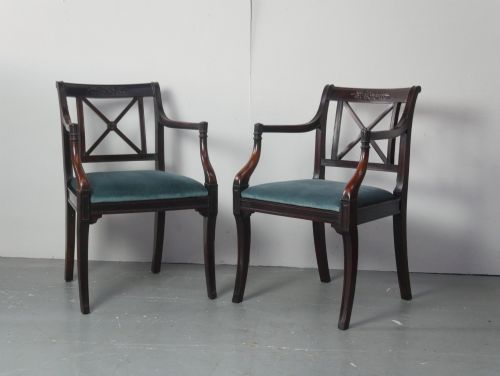
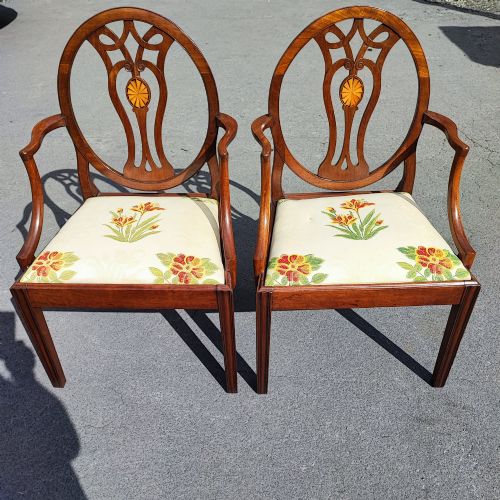
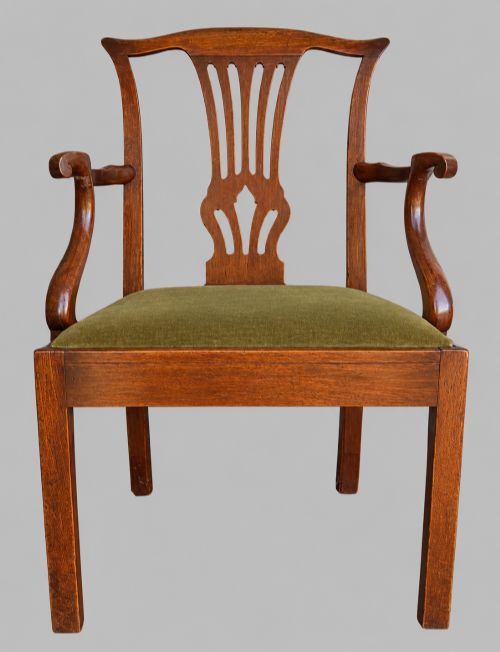
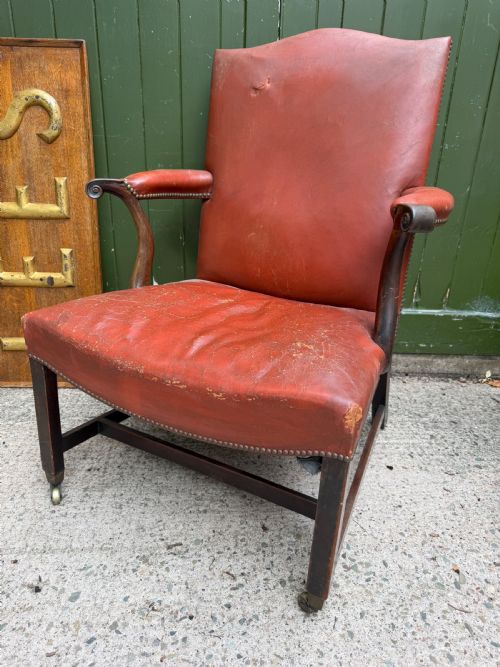
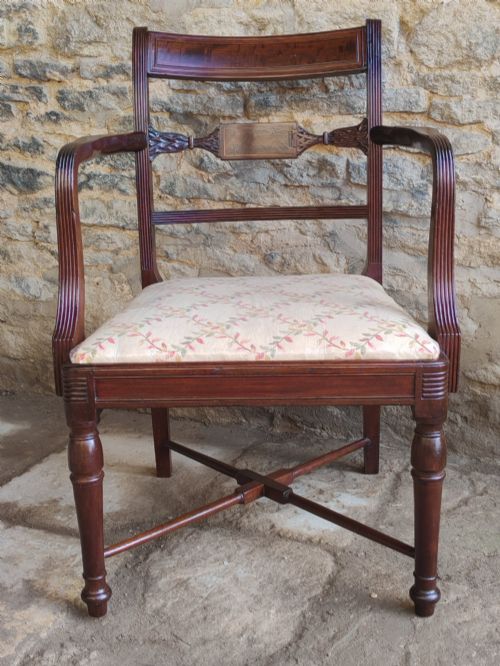
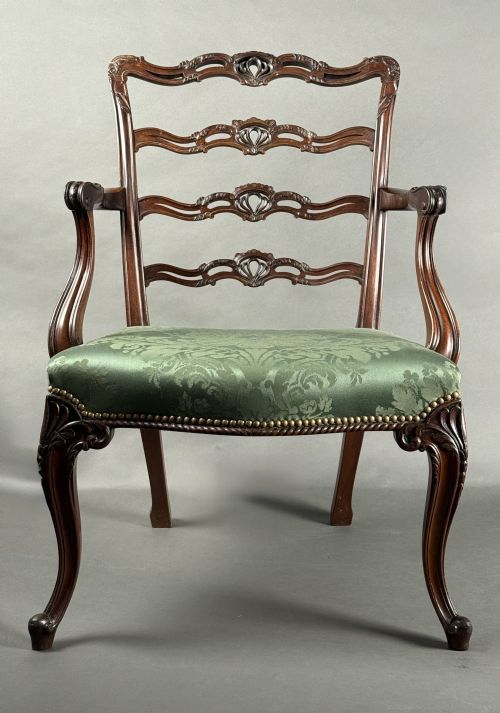
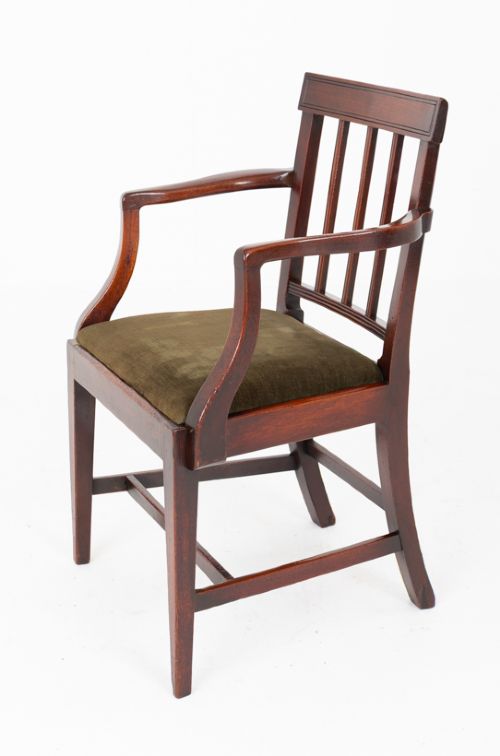
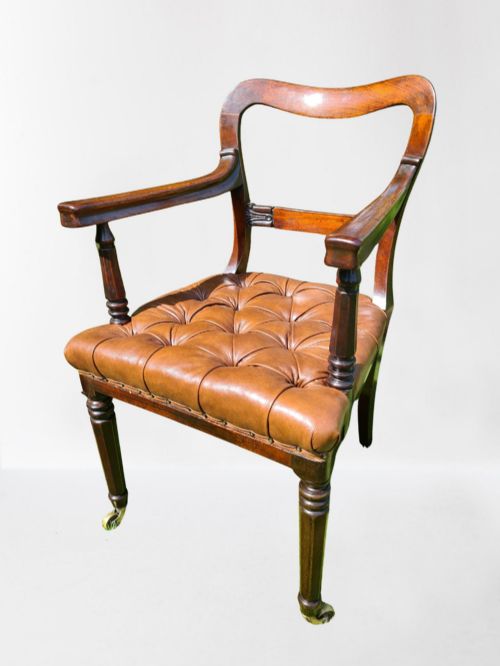
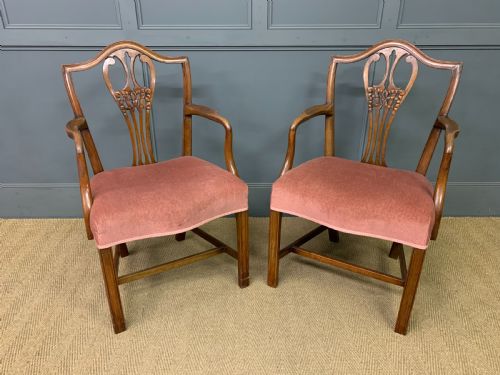
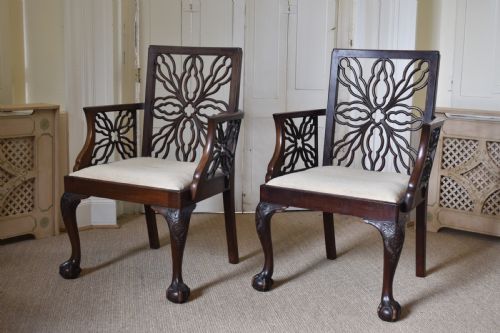
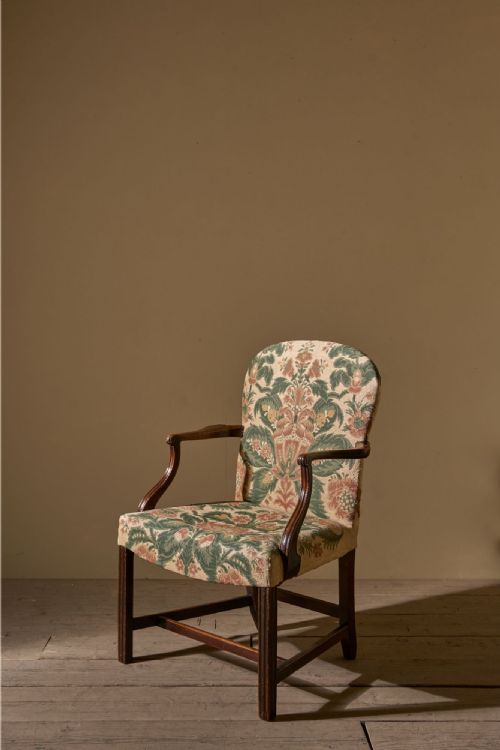
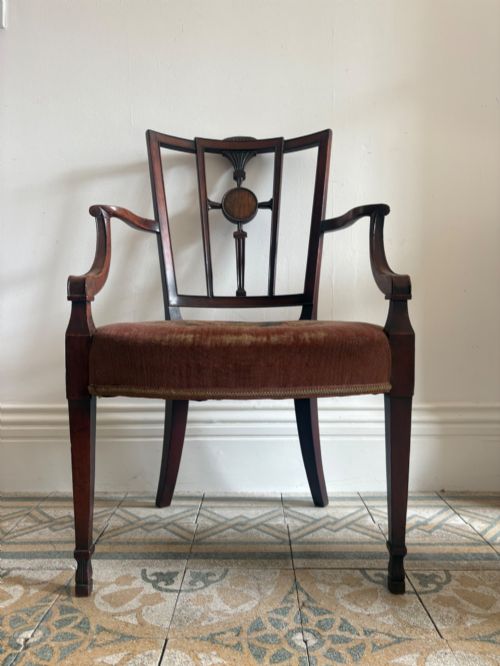
Georgian Mahogany Open Armchair
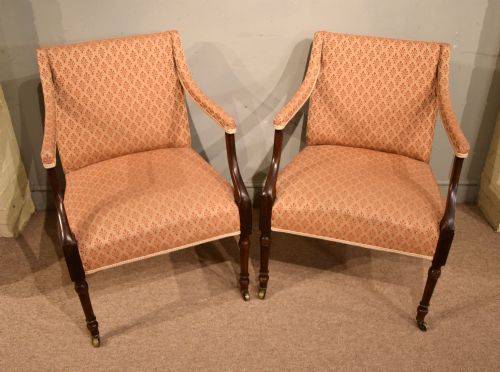
A georgian mahogany open armchair is a sturdy timber seat with supportive armrests designed for reading, writing or dining.
Georgian Mahogany Open Armchair
A georgian mahogany open armchair brings substantial presence to a room through solid timber construction and generous proportions. These seating forms span dining armchairs, desk chairs and library models designed for specific domestic tasks.
The versions most commonly met on this page date from the eighteenth and nineteenth centuries, including later revival pieces. Makers utilised established regional designs such as ladder-back frames and open upholstered forms.
Makers shaped these seating options for functional rooms like libraries, drawing rooms and studies. They appear as single carver chairs or in matched pairs.
How They Were Made
Craftsmen built these frames primarily from dense imported timber, often finished with carved details such as blind fretwork or cabriole legs. Structural support relied on sturdy mortise and tenon joinery.
Upholstery materials varied from hand-dyed hide leather and woolwork to tapestry fabric, velvet and plain linen secured over webbing. Secondary additions included brass inlay, cane panels and rosewood roundels.
The listings include eighteenth-century pieces alongside nineteenth-century revival items made from mahogany, fabric, brass, velvet, leather and cane.
What Varies in Quality
The distinction between standard workshop output and superior production rests in the depth of hand-carving and the choice of timber figure. Crisp detailing along the arm supports and splats indicates careful execution by skilled makers.
Proportion and structural integrity define the higher end of the range, where frames remain balanced and solid without excessive replacement timber. Original upholstery materials and branded stamps elevate historical significance.
Gillows·Spillman & Co·Giles Grendey
The Georgian Mahogany Open Armchair Glossary
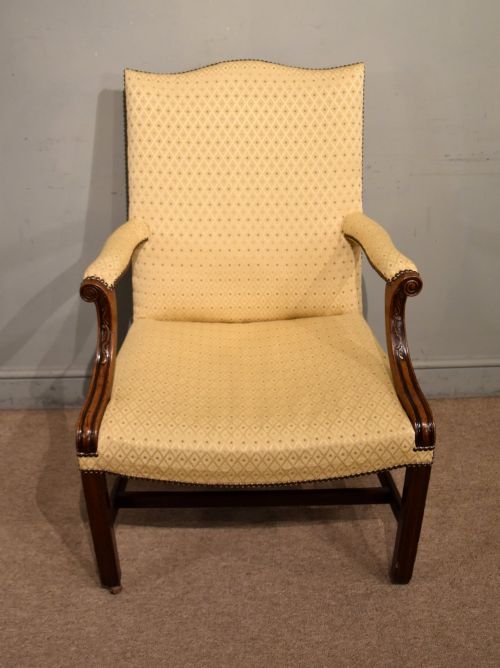
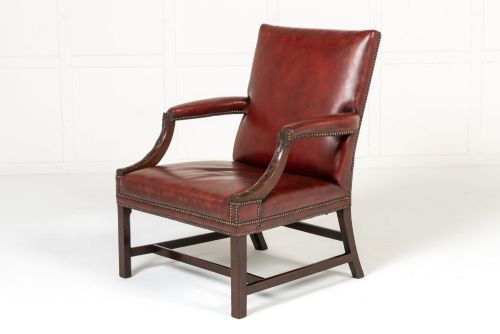
- Gainsborough chair
- A wide, upholstered armchair with open padded arms, designed in the eighteenth century for reading or writing. These seats usually feature mahogany frames raised on straight or cabriole legs.
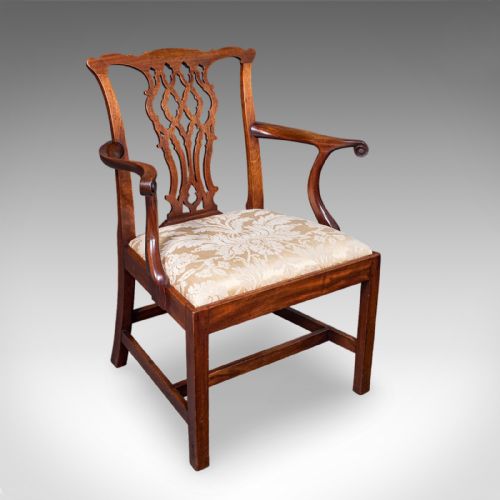
- Carver chair
- An armchair used traditionally at the head of a dining table or as a desk seat. The open sides accommodate bulky clothing styles of earlier centuries.
- Elbow chair
- An alternative term for an open armchair, referencing the supportive wooden armrests. These seats appear frequently in libraries and morning rooms.
- Blind fretwork
- Low-relief carved ornamentation applied to furniture legs and rails, popular in Chippendale designs. This technique mimics intricate pierced carving without weakening the structural timber.
- Bar back
- A horizontal curved wooden slat across the upper backrest of a chair. This detail appears frequently on dining carvers from the georgian and regency periods.
Georgian Mahogany Open Armchair: Frequently Asked Questions
What is a carver chair used for?
A carver chair serves as an armchair placed typically at the head of a dining table or beside a desk. The open arms provide additional support while remaining compact enough for domestic rooms.
Historically, these seats accommodated formal clothing styles that required extra width in the seating area. They function today as occasional chairs in hallways or bedrooms.
What wood is used for these chairs?
Makers constructed these frames primarily from mahogany, a dense and durable timber imported during the eighteenth and nineteenth centuries. The wood took fine carving details and darkened gracefully with age.
Secondary materials such as rosewood and brass appeared occasionally for inlay work. Frames were left with a polished finish to highlight the grain.
How do I care for antique upholstery?
Antique upholstery requires gentle cleaning methods appropriate to the specific textile, whether leather, woolwork or velvet. Regular dusting prevents particulate buildup in the fabric weave.
Direct sunlight should be avoided to protect dyed leather and woven tapestries from fading. Professional conservation helps preserve fragile historical textiles.